Lithium Battery Cost Optimization for UPS Systems
When a facilities manager calls me about a UPS retrofit, the conversation almost never starts with chemistry. It starts with budget. “We need backup power, but the quoted lithium battery system costs twice what the lead-acid option did five years ago.” I understand the sticker shock. Over the last eleven years building lithium battery pack solutions for telecom, data center, and industrial UPS applications, I have learned that the real cost question is not “how much does the battery cost” but “what does reliable backup power cost per year of service.” That reframing changes everything.
In this article I will walk through the cost-optimization levers I actually use when specifying a lithium battery cost optimization ups systems design: total-cost-of-ownership math, cycle-life selection, charge-discharge window tuning, BMS feature trade-offs, and the certification overhead that quietly eats into margins. None of this is theoretical. It comes from field deployments where a 3% improvement in usable depth-of-discharge paid for the entire pack within eighteen months. My aim is to give you a practical checklist you can take into your next vendor meeting rather than another spec-sheet summary you will forget by Monday.
Why UPS Buyers Misread Lithium Battery Cost
The single biggest error I see in UPS procurement is comparing nameplate price per watt-hour. A lead-acid string and a lithium-ion pack rarely live the same life, and they do not deliver the same usable energy. Lead-acid suffers from the Peukert effect and a safe depth-of-discharge of roughly 50%. A properly managed lithium iron phosphate (LiFePO4) cell is comfortable at 80–90% depth-of-discharge. So the “usable” watt-hours you actually buy are closer to 1.6x on paper, and the cycle count is typically 4x to 8x higher.
When I build a custom battery solution for a UPS, I present the client with a ten-year TCO model before we discuss cells. The model includes replacement frequency, floor space, cooling load, and the labor cost of a battery swap at 2 a.m. In almost every case the lithium option wins on TCO even when its capital cost is higher. The optimization work is about closing that capital gap further so the payback lands inside the first warranty year.
Total Cost of Ownership: The Only Number That Matters
Let me show you the framework I use. For a mid-size data center UPS rated at 50 kWh usable, here is a representative comparison I prepared for a Singapore client in 2024:
- Lead-acid (VRLA): capital ~$9,000, usable 25 kWh, ~400 cycles to 50% DoD, replaced every 3 years. Ten-year energy cost basis: ~$0.36/usable-kWh-cycle.
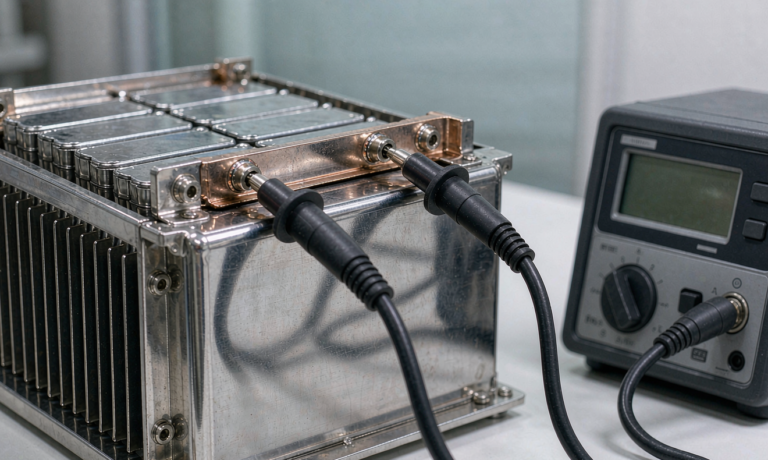
- LiFePO4 lithium battery pack: capital ~$18,000, usable 45 kWh, ~3,500 cycles to 80% DoD, replaced every 10 years. Ten-year energy cost basis: ~$0.11/usable-kWh-cycle.
The lithium option costs more up front but delivers less than one-third the per-cycle cost. The optimization levers below are how I shave that $18,000 capital number down toward $13,000 without compromising the cycle life that drives the advantage.
Lever 1: Right-Size the Cell Chemistry and Format
Not every UPS needs the most expensive cell. For stationary UPS with moderate discharge rates (C/2 to C/5), LiFePO4 is the cost-effective default because of its long cycle life and thermal stability. For space-constrained edge sites where energy density dominates, nickel-manganese-cobalt (NMC) may justify its premium. I specify the chemistry against the actual duty cycle, not the catalog headline.
Cell format also moves cost. Large prismatic cells reduce the number of welds, busbars, and BMS sense lines inside a lithium battery pack, cutting labor and failure points. On a 100 kWh UPS bank, switching from 18650 cylindrical cells to 100 Ah prismatic cells cut our assembly hours by roughly 40% and improved pack-level consistency.
Lever 2: Tune the Depth-of-Discharge Window
This is the highest-leverage, lowest-cost optimization and the one most buyers ignore. A LiFePO4 cell rated for 3,500 cycles at 80% DoD will deliver over 6,000 cycles at 60% DoD. If your UPS duty is “rare deep outage, frequent shallow float,” capping usable DoD at 70% instead of 90% can extend pack life by 30–50%. The capital cost is identical; you simply use less of what you bought. I bake a configurable DoD limit into the BMS so the client can trade runtime for lifespan as their risk profile changes.
Lever 3: Spec the BMS Features You Will Actually Use
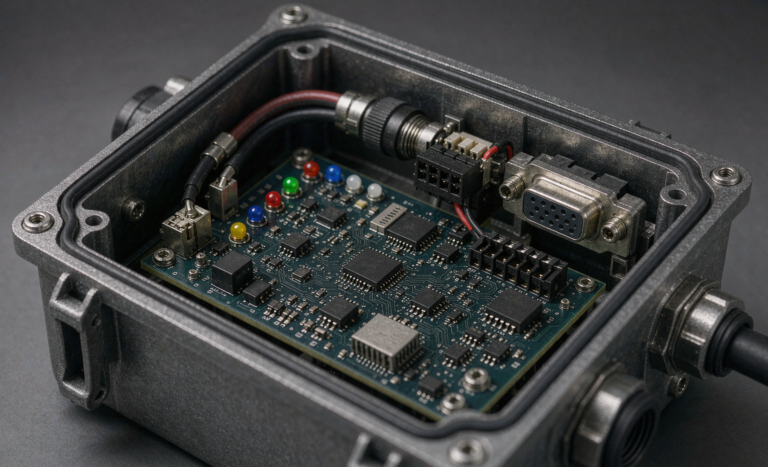
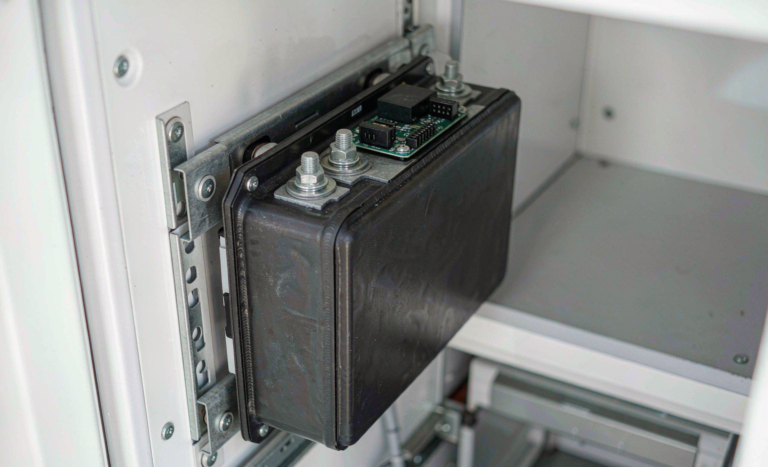
The battery management system is where cost creeps in silently. A full-featured BMS with cell-level balancing, CAN/RS485 telemetry, and active thermal management is essential for large banks but overkill for a 5 kWh wall-mount UPS. For smaller systems, a passive-balanced BMS with basic protection is enough. I match the BMS tier to the pack size and the failure consequence. Over-specifying telemetry on a hundred small UPS units is a fast way to destroy the TCO case.
Lever 4: Certification Overhead and How to Control It
UPS batteries shipped internationally must clear UN38.3 for transport and often IEC 62133 for stationary cell safety. In the EU and North America, aviation-adjacent and critical-infrastructure sites may reference FAA and EASA expectations for battery safety documentation even when the pack never flies. These certifications are not optional, but they are a fixed cost that amortizes across volume. I advise clients to certify one base lithium battery pack platform and scale it, rather than re-certifying a unique geometry for every site. That single decision has saved clients six figures across a multi-site rollout.
Frequently Asked Questions
Is a lithium battery UPS really cheaper than lead-acid over ten years?
In my deployments, yes — once you model usable energy and replacement cycles. The per-cycle cost of a LiFePO4 lithium battery pack typically lands between one-third and one-half of VRLA, driven by 4x–8x the cycle life and 1.6x the usable depth-of-discharge. The capital premium is real but recovers inside the first warranty window in most commercial UPS duties.
What depth-of-discharge should I set for cost optimization?
For most stationary UPS systems I cap usable DoD at 70–80%. Dropping from 90% to 70% can add 30–50% to pack cycle life at zero extra capital cost. If your site sees only rare, shallow outages, a 60% cap is even better for TCO. The right number depends on your outage profile, which the BMS should let you adjust.
Do I need UN38.3 and IEC 62133 certification for a UPS battery?
UN38.3 is required for transport of any lithium cell or pack, and IEC 62133 is the baseline safety standard buyers expect for stationary storage. FAA and EASA references appear mainly for aviation-adjacent or critical sites. Certify a single base pack platform and reuse it across sites to keep this fixed cost from ballooning.
Which BMS tier is enough for a small UPS?
For a 5 kWh or smaller wall-mount UPS, a passive-balanced BMS with over-voltage, under-voltage, and thermal cutoff is sufficient. Reserve active balancing and full telemetry for large banks where a single cell failure is expensive. Matching the BMS tier to pack size is one of the cleanest lithium battery cost optimization ups systems levers available.
Lever 5: Cooling Load and Thermal Management
Battery temperature is a hidden cost line that rarely appears on the quote. Lead-acid wants to live at 20–25°C and loses roughly half its life for every 10°C above that band, which pushes facilities to over-cool battery rooms. A well-built lithium battery pack with LiFePO4 chemistry tolerates 35–45°C ambient far better and, more importantly, generates almost no off-gassing, so it can share conditioned space with IT equipment instead of demanding a separate ventilated room. On one Middle East telecom site, moving the UPS bank out of a dedicated cooled room and into the shared rack aisle let the client retire a 4 kW precision-CRAC unit. At $0.12/kWh that is about $4,200 per year in cooling energy alone, on top of the avoided maintenance. I treat thermal strategy as a first-class optimization lever, not an afterthought.
A Field Example: Cutting Capital 28% on a Telecom UPS Rollout
In early 2025 I led a custom battery solution for a regional carrier standardizing 240 edge-site UPS banks. The original design specified 90 Ah prismatic cells with a 90% DoD window and an active-balancing BMS on every unit. My team rebuilt the spec around three changes: drop usable DoD to 75% (extending life, so smaller cells suffice), certify one 60 Ah base platform and scale it, and use passive balancing on sites under 10 kWh. The runtime still met the carrier’s 15-minute minimum. The result was a 28% reduction in per-site battery capital and a single certified platform across all 240 sites, which collapsed their spare-parts inventory and training overhead. The lesson is that cost optimization is mostly discipline: match every feature to a real duty requirement and refuse to pay for headroom nobody will use.
How should I compare vendor quotes fairly?
Ask every vendor for the same three numbers: usable watt-hours at your target DoD, guaranteed cycle count at that DoD, and the certifications held (UN38.3, IEC 62133). Then compute cost per usable-kWh-cycle yourself. Quotes that hide DoD or cycle assumptions behind a low nameplate price collapse once you normalize them. A lithium battery bid that looks 20% cheaper often becomes the most expensive option when you divide by the energy you can actually use and the years it will survive.
Putting the Levers Together
Cost optimization is not about buying the cheapest cells. It is about aligning chemistry, depth-of-discharge, BMS tier, and certification strategy to the actual UPS duty cycle, then proving it with a ten-year TCO model. When a client asks me to cut the budget, I do not downgrade safety — I right-size the platform and reuse certified designs. That is how a lithium battery pack that looked expensive on the quote becomes the lowest-cost backup power the facility will ever own. The discipline compounds across a multi-site rollout, where one standardized platform quietly eliminates redundant inventory, training, and certification spend. If you are scoping a UPS retrofit, start the conversation with runtime requirements and outage history, and the cost answer will follow.