Lithium Battery for Robotics and AGV Platforms
Over the past twelve years as a lithium battery engineer, I have designed lithium battery systems for everything from consumer drones to grid-scale storage. But few applications stress a cell the way autonomous mobile robots (AMRs) and automated guided vehicles (AGVs) do. The brief sounds simple: keep a heavy, constantly-moving machine running for a full shift without a thermal event, a sudden voltage collapse, or premature capacity fade. In practice, specifying a lithium battery for robotics and AGV platforms means balancing energy density, discharge profile, cycle life, and certification inside a mechanical envelope that was never designed to hold a battery in the first place.
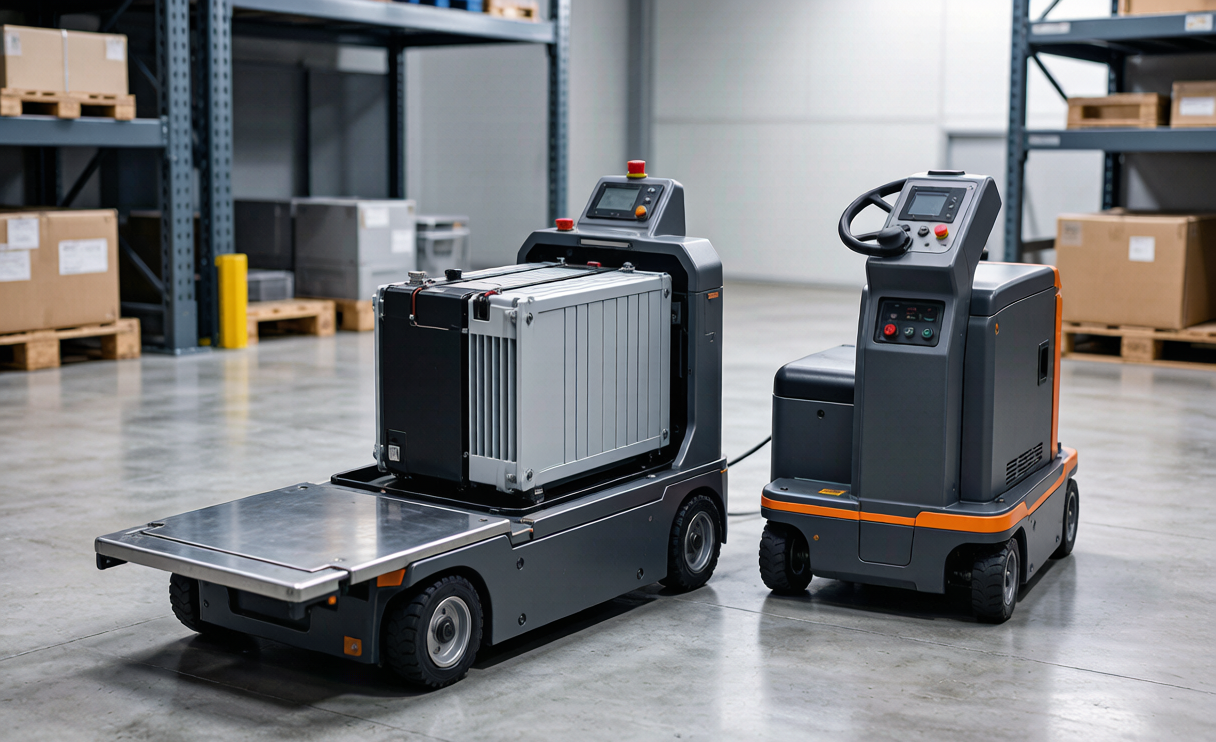
This article is the field guide I wish I had when I built my first AGV pack. It covers chemistry choice, sizing math, BMS communication, mechanical and thermal design, and the certifications every B2B buyer should verify before signing a purchase order. Everything below reflects real engineering decisions, not marketing copy.
Why Robotics and AGV Platforms Are a Different Battery Problem
A robot is not a laptop. It does not draw a steady current and then sleep. An AGV pulling pallets across a warehouse hits hard acceleration spikes, holds a cruise load, decelerates, and feeds energy back through regenerative braking — all in a cycle that repeats every few minutes. That duty profile is brutal on a lithium battery pack because it combines high C-rate pulses with frequent partial-state-of-charge (PSoC) operation.
From experience, the three killers of AGV batteries are: (1) sustained high current that overheats cell interconnects, (2) deep daily discharges that erase cycle life, and (3) unbalanced cells that drift until one reaches end-of-life while the rest are fine. A well-engineered pack attacks all three at the chemistry, BMS, and mechanical levels simultaneously.
Chemistry Choice: LFP vs NMC for Mobile Robots
For indoor robotics fleets, lithium iron phosphate (LFP, LiFePO4) is my default recommendation. It offers 3,000–6,000 cycles at 80% depth of discharge, excellent thermal stability, and a working voltage window that tolerates abuse. Its downside is lower energy density — roughly 150–160 Wh/kg — so the pack is heavier for a given capacity.
Nickel-manganese-cobalt (NMC) flips that trade-off. At 200–250 Wh/kg, it lets a robot carry more energy in less mass, which matters for lightweight AMRs or long-range inspection robots. The cost is stricter thermal management and a tighter safety envelope. For any robot operating near people indoors, I lean LFP; for weight-constrained or outdoor platforms, NMC becomes worth the extra engineering.
Either way, the cells should meet IEC 62619 for industrial applications, which sets clear requirements for thermal runaway propagation resistance — a standard I verify on every robotics project.
Sizing the Pack: From Duty Cycle to kWh
Sizing is arithmetic, not guesswork. Start with the robot’s average power draw, then add the peak current for acceleration and payload. Multiply average power by shift length, divide by your allowed depth of discharge, and add a reserve. A typical mid-size AMR drawing 500 W average with 2 kW acceleration peaks over an 8-hour shift needs roughly 4–5 kWh of usable energy at 80% DoD. Oversize by 15–20% and you extend calendar life dramatically because the pack rarely sits at full stretch.
I always model the worst-case rather than the nameplate case. A robot that nominally needs 4 kWh will occasionally face a jammed pallet, a longer route, or a cold dock floor that cuts available capacity. That headroom is what keeps the fleet from stranding itself mid-shift.
BMS and Communication: CANBus, RS485, SMBus
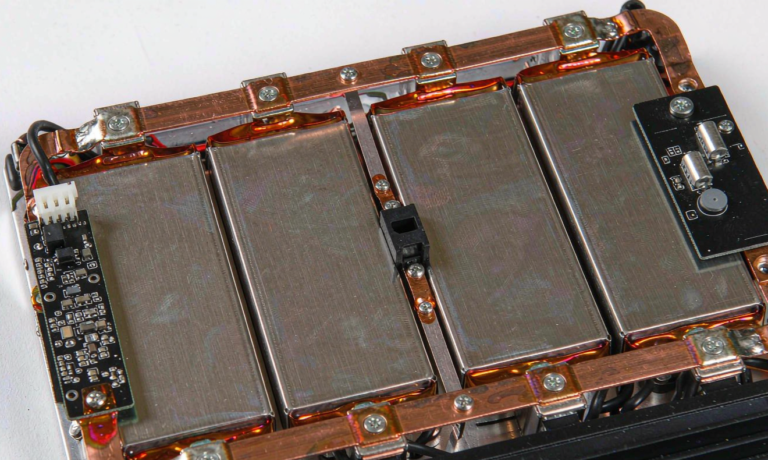
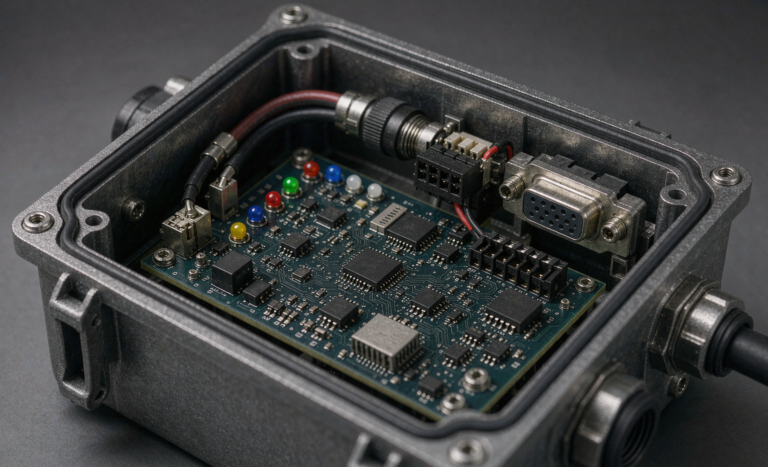
The battery management system is the difference between a safe pack and a liability. For robotics, the BMS must do continuous cell balancing, track state-of-charge (SOC) and state-of-health (SOH), and monitor temperature across every parallel group — not just one sensor on the bus bar. When a cell group drifts, the BMS should flag it to the robot controller before it becomes a failure.
Communication matters as much as protection. I specify CAN 2.0B for real-time fleet telemetry on most AGVs because it is robust on a noisy industrial bus. Modbus/RS485 works well for simpler telemetry dashboards, and SMBus remains common on smaller AMRs. Whatever the protocol, the robot needs live access to voltage, current, temperature, and remaining runtime so its scheduler can route the robot to a charger before the pack hits cutoff.
Thermal, Mechanical and Ingress Considerations
An AGV lives on a concrete floor that vibrates, gets forked, and occasionally gets hosed down. The pack must survive random vibration per IEC 60068-2-64 and shock loads that would crack a poorly bonded cell stack. I design for IP54 as a baseline and IP65 for any robot that goes outdoors or into washdown environments.
Mechanically, the cells need compression fixtures that hold them under vibration without inducing internal stress, and bus bars rated for the peak current plus margin. Thermally, the enclosure should contain a single-cell failure so it does not propagate — a design requirement that maps directly to the IEC 62619 propagation test.
Certifications Buyers Must Verify
Before procurement, I insist on four things. First, UN38.3, which governs safe transport of lithium cells and is non-negotiable for shipping packs internationally. Second, IEC 62133 for portable cell safety and IEC 62619 for industrial stationary/motive applications. Third, CE and FCC for the BMS electronics so the robot passes EMC compliance. Fourth, region-specific marks — UL 1973 in North America for motive batteries, or KC in Korea. A custom battery solution that skips these marks will stall your product launch at the border, not in the lab.
Fleet Operations: Swapping, Opportunity Charging and Rotation
How you operate the pack matters as much as how you build it. Opportunity charging — topping up during breaks instead of full cycles — works well with LFP because it hates being kept at 100% far more than it hates shallow cycles. Battery swapping suits 24/7 operations where downtime is expensive. And a simple fleet rotation policy, where packs are tracked by cycle count and retired on a schedule rather than by failure, keeps availability high.
Cell Form Factor: Prismatic vs Cylindrical for Robotics
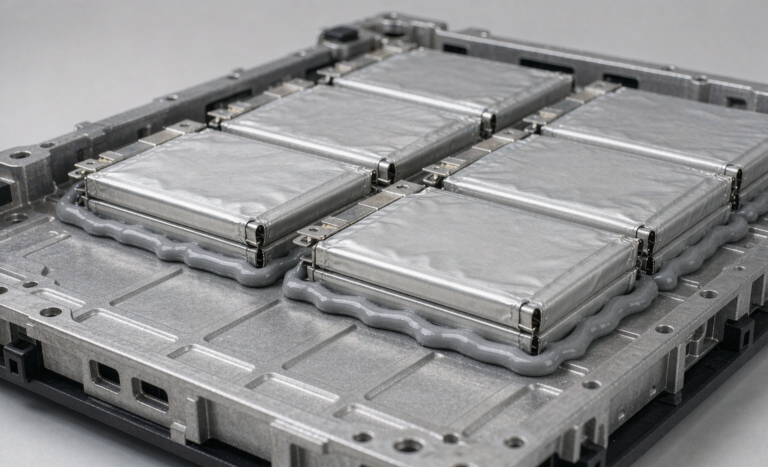
The cell shape you choose changes everything downstream. Cylindrical cells — the familiar 18650 or 21700 — are mechanically robust, cheap to source, and easy to replace individually, which is why many first-generation AGVs used them. Their weakness is packing efficiency: the round shape leaves gaps that waste volume, and the high cell count multiplies your spot-welding and balancing workload.
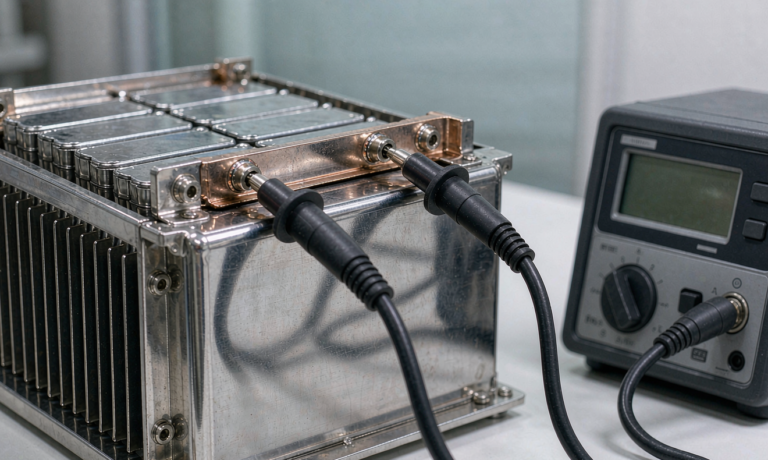
Prismatic cells, by contrast, fill the enclosure efficiently and reduce the number of series groups, which simplifies the BMS and lowers interconnection resistance. For robotics platforms where every millimeter of the chassis matters, prismatic is often the better fit despite a higher per-cell cost. Pouch cells exist too, but I avoid them in mobile robots because they need external compression fixtures and are less tolerant of mechanical shock.
My rule of thumb: if you are building hundreds of identical robots and volume efficiency is critical, go prismatic; if you are prototyping or need drop-in replaceability, cylindrical buys you flexibility. Either way, grade the cells so their internal resistance stays within a tight band — mismatched cells are the silent cause of most early pack failures I have been called in to diagnose.
Conclusion
A lithium battery for robotics and AGV platforms is not a generic power bank with brackets. It is a system engineered around a specific duty cycle, a specific chemistry, and a specific safety regime. Get the sizing, BMS communication, and certifications right, and the robot disappears into reliable background operation. Get them wrong, and you get stranded fleets and angry procurement managers. If your team is scoping a robotics battery, bring the duty-cycle data early — it is the single input that shapes every downstream decision.
Frequently Asked Questions
What is the typical cycle life of a lithium battery in an AGV?
With LFP chemistry and an 80% depth-of-discharge limit, expect 3,000–6,000 full-equivalent cycles. NMC packs typically deliver 1,000–2,000 cycles under similar conditions. Real-world life depends heavily on thermal management and how aggressively the robot is discharged.
Can AGV batteries use opportunity charging without damaging cells?
Yes, especially with LFP. Shallow, frequent top-ups are gentler than deep daily cycles and avoid the stress of sitting at 100% state of charge. The key is a BMS that manages balancing during these short charge windows so cells stay aligned.
Which certification matters most for AGV lithium batteries?
There is no single “most important” mark, but UN38.3 is mandatory for transport, and IEC 62619 is the critical industrial safety standard covering thermal runaway propagation. Pair those with CE/FCC for the electronics and any regional motive-battery mark such as UL 1973.
How do I size a battery for a robot with regenerative braking?
Regeneration reduces net energy draw but creates reverse-current spikes the BMS and charger must absorb. Size the pack from average power over the shift, keep depth of discharge at 80% or below, and confirm the charge circuit can sink the braking current without overvoltage. The recovered energy typically extends range by 5–15% depending on duty cycle.