Lithium Battery Maintenance for Mobility Devices (Guide)
Why Mobility Duty Is the Hardest Job a Lithium Battery Will Ever Have
I have spent eleven years designing and servicing lithium battery packs, and I will say something that surprises most people: a mobility scooter or power wheelchair is a tougher assignment for a battery than an electric bicycle. An e-bike rider comes home, plugs in, and stops. A mobility device user often rides until the battery can barely turn the motor, parks it in a cold hallway or garage, leaves the charger plugged in for days, and depends on the machine for groceries, medical appointments, and independence. When the battery dies, the user loses freedom — not just transportation.
That is why lithium battery maintenance for mobility devices deserves its own playbook instead of borrowed advice from e-bike or solar forums. In this article I will walk you through what I check when a fleet of mobility scooters or power wheelchairs comes through our workshop, what I measure month by month, and the five failure patterns that cause almost every callback we see. Whether you maintain a single chair for a family member or manage fifty scooters in a rental fleet, the principles are the same: respect the chemistry, respect the BMS, and write everything down.
What Makes a Mobility Device Battery Different
A typical mobility scooter uses a 12V, 24V, or 36V system. The moment a customer asks me about upgrading from two 12V 35Ah AGM batteries to a 12v lithium battery pair, the first thing I explain is that the duty cycle is brutal in three specific ways:
- Deep, irregular discharge. Mobility users rarely plan routes around state of charge. A long grocery trip can pull the pack from 90% to 15% in one afternoon, and deep discharge is the fastest mechanical way to age a lithium cell.
- Long periods at extreme SoC. Either the chair sits plugged into a charger at 100% for days (calendar aging), or it sits unused in a garage drifting toward over-discharge while the BMS quiescent draw slowly drains the cells.
- Load spikes from stops, ramps, and curbs. A stall torque event when climbing a ramp can draw two to three times the rated current for several seconds, and marginal busbar connections reveal themselves exactly there.
On top of that, mobility devices carry a human consequence that industrial equipment does not: a low-voltage cutoff in a warehouse robot is an outage; in a power wheelchair it can strand the user away from home. Every maintenance habit below exists to prevent that single scenario.
Chemistry and Pack Choice: What I Actually Recommend
For mobility devices I specify LiFePO4 (LFP) chemistry in nearly every case. The reasons are practical, not fashionable:
- Thermal stability. LFP does not propagate thermal runaway the way NMC does. In a device that sits against a user’s leg or under a seat, that margin matters more than energy density.
- Calendar life at high SoC. Mobility users will leave packs at 100% whether I like it or not. LFP at 100% SoC and 25°C loses roughly 2.5–3.5% capacity per year; an NMC pack in the same conditions can lose 6–9%.
- Flat discharge curve. A 4S 12V LFP pack sits near 13.2–13.3V through most of its discharge, which keeps controller behavior predictable.
The one place I accept NMC is when the user genuinely needs range in a small frame and the device has a rigid, ventilated battery bay. Even then, I require a BMS with cell-level fusing and a hard over-temperature cutoff at 60°C.
A word on sourcing: buy from a lithium battery manufacturer who can produce a UN38.3 test summary and IEC 62133-2 cell certificates on request. I have opened retail-replacement packs that contained recycled cells with mismatched date codes — no legitimate factory does that. If a supplier cannot document cell traceability, their custom battery solution is not one; it is a lottery ticket. For volume buyers, a proper lithium battery pack for mobility devices should ship with a DCIR report at at least two temperature points, and the cell date codes should be under nine months old.
Charging: Where Most Batteries Die Quietly
Charging abuse causes more silent damage than every other factor combined. Here is my field checklist.
Retire the lead-acid charger profile
Legacy AGM chargers run absorption at 14.6–14.8V and equalization cycles at 15.5–16.0V. LFP accepts absorption up to about 14.4V (3.60V per cell) and must never see equalization voltage — the BMS will usually protect the pack, but you are asking the protection board to absorb a 0.5–1V overage every cycle, which cooks the balancing FETs. The first thing I do on any conversion is verify the charger: absorption 14.4V, float either disabled or set at 13.6V, and a low-temperature charge lockout below 0°C.
Do not float at 100% all week
A charger left plugged in Monday through Friday holds the pack at 100% SoC at elevated temperature from the charger’s own heat — the worst calendar-aging combination. My recommendation: charge fully, then unplug, or use a charger with a timed float termination. For users who cannot manage that, I set the charger’s target SoC to 90% during the week and allow 100% only before long trips.
Respect the 0°C charge ban
Charging a lithium ion battery below 0°C plates lithium metal onto the anode. The capacity loss is invisible for three to six months and then appears as a sudden runtime collapse. LFP cells tolerate cold charging slightly better than NMC, but I do not rely on “slightly better”: the BMS charge FET must be disabled below 0°C with a 3–5°C hysteresis, and I verify this on the bench by putting the pack in a cooler with ice packs and attempting a charge. If the pack accepts current at −2°C, the BMS fails my inspection.
The 90-minute charger verification
Twice a year I measure charger output with a DC clamp meter and a multimeter: confirm the voltage profile matches specification at the connector (not the charger terminals — cable drop matters at 10–15A), confirm charge current tapers correctly near full, and confirm the connector runs under 45°C at full current. A corroded Anderson or XLR connector that adds 150 mV of drop quietly truncates every charge by several percent.
The Monthly 10-Minute Check
This is what I ask fleet operators and families to actually do. It requires a multimeter and fifteen dollars of tools.
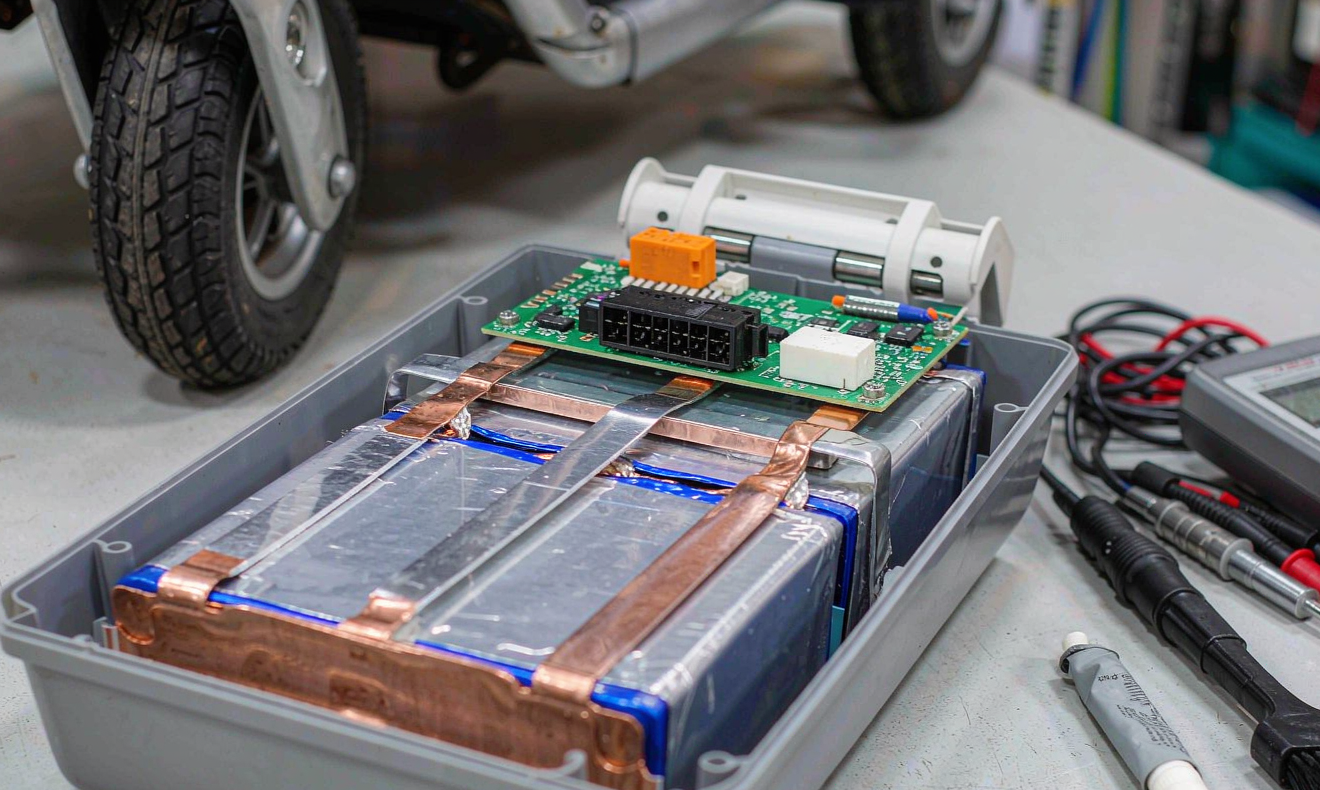
- Resting voltage. After at least four hours off the charger, a healthy 4S 12V LFP pack rests at 13.2–13.3V. Below 13.0V means the pack is not holding charge; investigate before it strands someone.
- Cell or block voltage difference. On packs with accessible balance taps, anything under 30 mV between cells is healthy; 30–50 mV is a yellow flag that balancing is falling behind; above 50 mV, book a service.
- Case temperature symmetry. After a 20-minute drive, place a hand on each cell block. Any spot noticeably hotter than its neighbors (more than about 5°C) suggests a high-resistance connection or a failing cell.
- Connector and terminal inspection. Look for green-white corrosion on ring terminals, heat discoloration, or loose hardware. M6 terminals get 8–10 N·m; M5 gets 4–6 N·m. I dab a paint pen across each fastener so the next inspection takes two seconds.
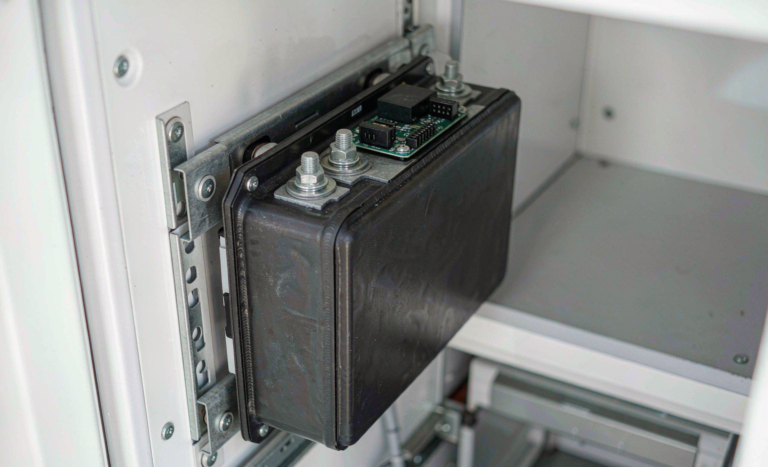
- Physical mount check. The pack must not rattle. Vibration works fasteners loose and fatigues busbar solder joints; a $2 foam pad under the case solves most of it.
The Quarterly 45-Minute Service
Once per quarter — or every 60 charge cycles, whichever comes first — I run a deeper protocol:
DCIR pulse test
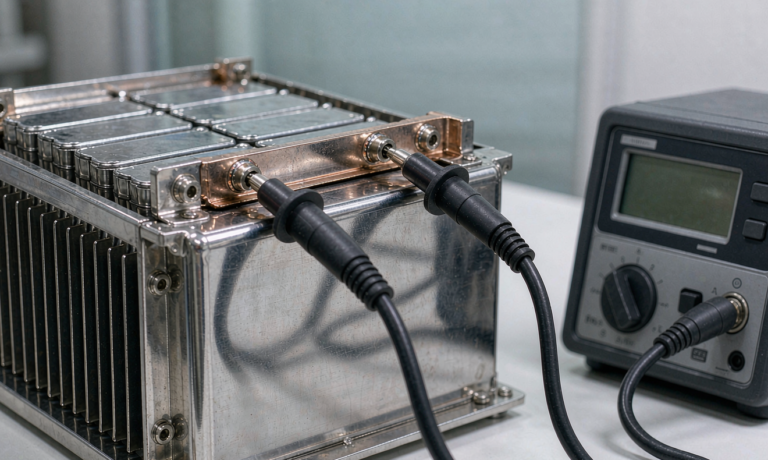
A 0.5C, 10-second pulse at 50% SoC tells me more about pack health than any voltage reading. A healthy 12V 30Ah LFP pack should measure roughly 15–25 mΩ. I flag at +30% above baseline and pull the pack at +50%. Because every pack is different, the absolute number matters less than the trend: log it every quarter in a spreadsheet with the date and ambient temperature.
Full-charge balance audit
Charge to 100% and read each cell’s voltage as the charger enters the CV phase. Cells that lag their neighbors by more than 60 mV at the top of charge indicate rising self-discharge — often the first symptom of internal micro-shorts from plating damage.
BMS event log review
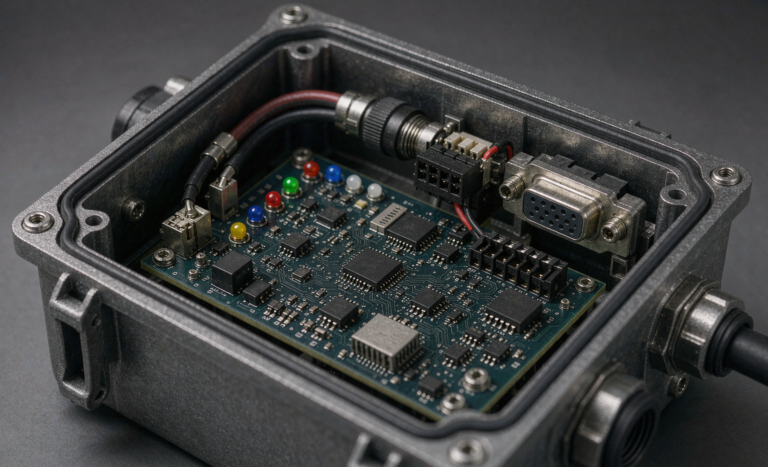
Any BMS with Bluetooth or a CAN/UART interface is worth reading. I look for over-current trip counts (a sign the user is overloading the chair on ramps), undervoltage events below 2.5V per cell (deep-discharge abuse), and over-temperature events. Three or more undervoltage events per quarter is a coaching moment for the user, not a battery problem.
Torque re-check and contact grease
Re-verify all busbar and terminal torques with a calibrated driver, then apply a thin layer of dielectric grease to exposed contacts. Do not grease the threads themselves before torque measurement — grease changes friction and produces false torque readings.
Storage, Winter, and the Garage Problem
Mobility devices sit unused more than almost any other powered product — post-surgery recovery, seasonal residents, hospital stays. Stored incorrectly, a lithium pack can drift below the BMS deep-discharge lockout in three to six months, and once a cell sits below 1.5V for weeks, it is scrap.
My storage protocol:
- Store at 40–60% SoC (about 13.1–13.3V resting on a 4S 12V pack), not at 100% and never at “whatever was left after the last ride.”
- Disconnect the battery from the device or pull the main fuse. The controller’s standby draw plus the BMS quiescent current (typically 20–100 µA each) will drain an unprotected pack in months.
- Keep it at 10–25°C. An unheated garage that cycles from −10°C to 35°C across the year ages cells roughly twice as fast as a stable indoor shelf. If the chair must live in the garage, the battery can live indoors.
- Top up every 90 days. One reminder per quarter: measure resting voltage, return to 50–60% SoC if it has drifted below 12.9V.
For winter use in cold climates: LFP delivers about 80% of rated capacity at −10°C and 65–70% at −20°C, so plan range accordingly, and never charge below 0°C as discussed above. A small self-heating pack option (with a thermostatic heating film, not a “warming pad” wired to the charge port) is worth the premium for users who commute daily through real winters.
Air Travel: The Rules You Must Know Before You Fly
Mobility devices are one of the few consumer categories where battery regulation directly affects travel plans, so I brief every flying customer on the current framework:
- UN38.3 is mandatory. Every lithium battery shipped or flown, installed or spare, must have passed UN38.3 transport testing. Airlines can and do ask for the test summary; get a copy from your manufacturer and keep it with your travel documents.
- Installed batteries: Under IATA/ICAO rules adopted by the FAA, a non-spillable wheelchair battery installed in a mobility aid may be up to 300 Wh for lithium ion (259 Wh is the common conforming size, e.g. 25.2V × ~10Ah class packs are well under). Anything larger needs airline pre-approval.
- Spare batteries: Maximum two spares, each ≤160 Wh, carried in carry-on only, with terminals individually protected against short circuit.
- IEC 62133-2 cell certification is the baseline safety standard reputable manufacturers meet for packs in this class; UL 2271 is the pack-level standard used for light electric vehicles and is worth requesting for new purchases.
- ISO 7176-25 governs batteries and chargers for wheelchairs specifically — if a replacement pack and charger combination is not evaluated to it, the warranty conversation after an incident will not go well.
I also remind travelers that disassembly matters: a pack in a hard case with an exposed switch and protected terminals clears airline inspection in two minutes; a shrink-wrapped pack with bare ring terminals can be refused at the gate regardless of its certificates.
The Five Failure Patterns Behind Almost Every Callback
After reviewing our service records for mobility-sector packs, five patterns account for the overwhelming majority of failures:
- Charger mismatch after conversion. The lead-acid charger was never replaced or reprofiled. Symptom: balancing FET failure or BMS overvoltage trips within 6–18 months.
- 0°C charging damage. The BMS cold-charge lockout was missing or bypassed. Symptom: sudden capacity collapse 3–6 months later, confirmed by DCIR up 40%+.
- Connector corrosion from outdoor use. Scooters live outside under covers; moisture wicks into unsealed connectors. Symptom: intermittent power loss over bumps, then heat damage at the contact. Fix: IP67-rated connectors and dielectric grease at conversion time.
- Storage over-discharge. The chair sat unplugged-but-connected for a season. Symptom: BMS in deep-sleep lockout, pack won’t wake. If resting cell voltage is above 2.5V, a gentle recovery charge at 0.05C usually saves it; below that, the pack is done.
- Never-verified fasteners. Terminal torque was never checked after the first month. Symptom: melted connector or dead-on-hills symptoms that a $0 paint-pen mark would have caught in quarter one.
None of these are exotic. All of them are cheap to prevent and expensive to explain to a user standing next to a dead scooter.
End of Life: When to Replace, and What “80%” Really Means
I replace a mobility pack when measured capacity falls below 80% of rated and the user’s real-world range drops below their minimum weekly needs with a 30% margin. The 80% figure comes from standard practice (UL 1973 and similar standards define end of life at 80% for stationary duty), but for mobility the practical test matters more: if a user needs 15 km per week for groceries and the pack delivers 20 km at 50% SoC confidence, we replace early — because the alternative is a call from a parking lot.
Documented maintenance history also protects your warranty. Manufacturers honor claims based on cell date codes, DCIR drift, and charge-cycle records; the customers who win warranty conversations are always the ones with the spreadsheet.
Frequently Asked Questions
Can I replace my mobility scooter’s AGM batteries with lithium?
Usually yes, with three conditions: the charger must be reprofiled or replaced for LFP (14.4V absorption max, no equalization), the BMS current rating must exceed the controller’s peak draw with margin, and the physical footprint must be secured. A like-for-like 12v lithium battery replacement typically cuts battery weight by 60–70%, which noticeably improves hill climbing and extends the life of the chair’s drivetrain.
How long does a lithium battery last in a power wheelchair?
A quality LFP pack under mobility duty cycles delivers 1,500–2,500 full cycles and, with the maintenance routine above, 5–8 years of service. The dominant aging mode in this application is calendar aging from sitting at 100% SoC — which is exactly why the charging habits in this article matter more than cycle count.
Can I take my mobility scooter battery on a plane?
Yes, with preparation: the battery must be UN38.3 certified, installed batteries are generally permitted up to 300 Wh with airline notification, and spares (max two, ≤160 Wh each) travel in carry-on with protected terminals. Contact the airline at least 48 hours ahead and carry your test documentation.
Is it bad to leave my scooter plugged in all the time?
With a proper LFP charger that terminates or floats at ≤13.6V, occasional over-plugging is harmless. But week after week at 100% SoC with a warm charger accelerates calendar aging. If the device is used daily, unplug after charge; if it is used weekly, charge the night before use and store the pack at 50–60% the rest of the time.
Why did my lithium battery suddenly lose range after winter?
The two usual suspects are 0°C charging damage (plating that shows up months later as a DCIR increase and capacity cliff) or storage over-discharge below the BMS lockout. A DCIR pulse test and a full capacity measurement will tell you which within an hour — and whether a warranty claim is worth filing.
What should I look for when buying a replacement pack?
Cell date codes under nine months, UN38.3 and IEC 62133-2 documentation, a BMS with low-temperature charge lockout and cell balancing, a DCIR report, and a connector spec matched to your device. A manufacturer who answers all five questions in one email is a manufacturer worth buying from.