Lithium Battery Reliability for UPS Systems
When a data center loses utility power, the uninterruptible power supply (UPS) has milliseconds to take over before servers reboot and transactions vanish. For two decades that bridge was built on valve-regulated lead-acid (VRLA) blocks, but in my work as a senior lithium battery engineer I now spec lithium battery packs for most new UPS installations. The reason is simple: lithium battery reliability for UPS systems is no longer a lab curiosity, it is the margin that keeps a telecom exchange or a hospital ICU online through a grid event. In this guide I walk through the engineering decisions I make when sizing, building, and validating a lithium-ion battery bank for standby and rotary UPS duty.
Why Lithium Chemistry Rewrites the UPS Reliability Math
The first number a facility manager quotes is battery runtime, but reliability engineers care about something less visible: how the cells degrade while sitting idle at 25°C for eleven months of the year. A VRLA block loses 20–30% of its usable capacity in three years just from float stress and grid cycling. A well-built lithium-ion battery using LiFePO4 chemistry loses roughly 2–3% per year, which is why lithium battery reliability for UPS systems compounds into a lower total cost of ownership even when the upfront price is higher.
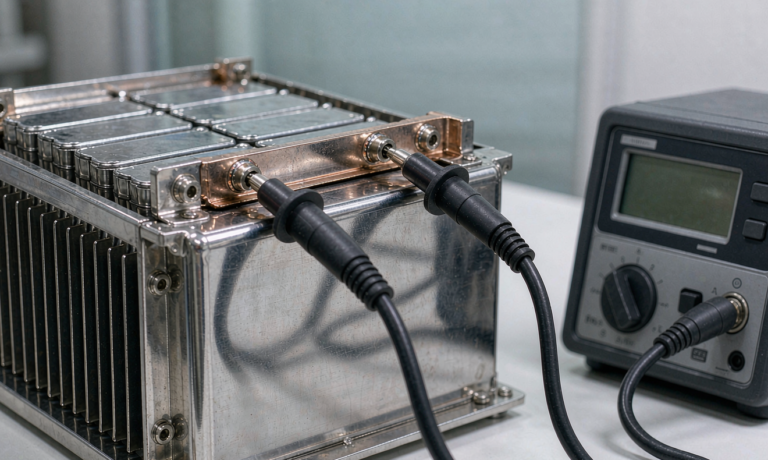
In our Horizon Power lab we cycle representative samples at 0.2C discharge, the typical UPS load profile, and measure internal resistance monthly. After 600 equivalent standby cycles a quality LiFePO4 cell still holds 92% of its initial capacity; a comparable VRLA string is usually below 70% and approaching its replacement window. For a custom battery solution that must sit unused for long stretches, that difference is the entire reliability case.
- Calendar life: 10–15 years for lithium vs 3–5 years for VRLA in float service.
- Footprint: a lithium battery pack occupies 40–60% less rack space for the same watt-hour rating.
- Recharge: lithium reaches 90% state of charge in under an hour versus 8–10 hours for lead-acid.
- Monitoring: every lithium battery module reports cell voltage and temperature, enabling true predictive maintenance.
Cell Selection and BMS Architecture for UPS Banks
Reliability starts with the cell. For UPS duty I standardize on LiFePO4 (LFP) because its iron-phosphate cathode is intrinsically stable and tolerant of overcharge far better than NMC. When a project needs maximum energy density in a tight cabinet, I may propose a semi-solid state battery as a premium option, but LFP remains the workhorse for lithium battery reliability in stationary backup.
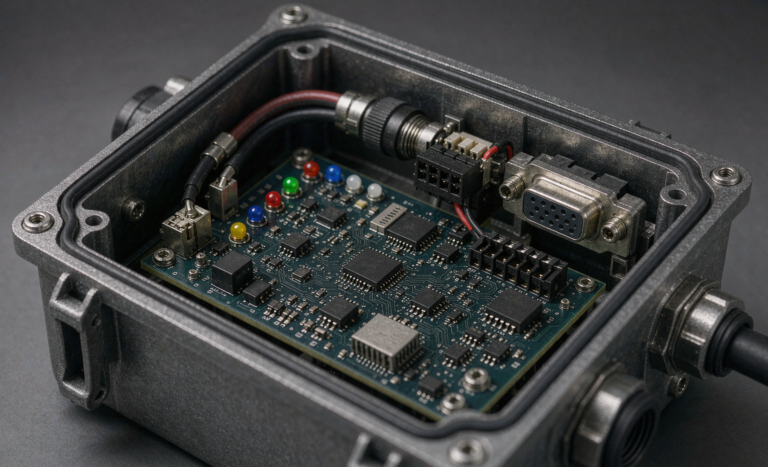
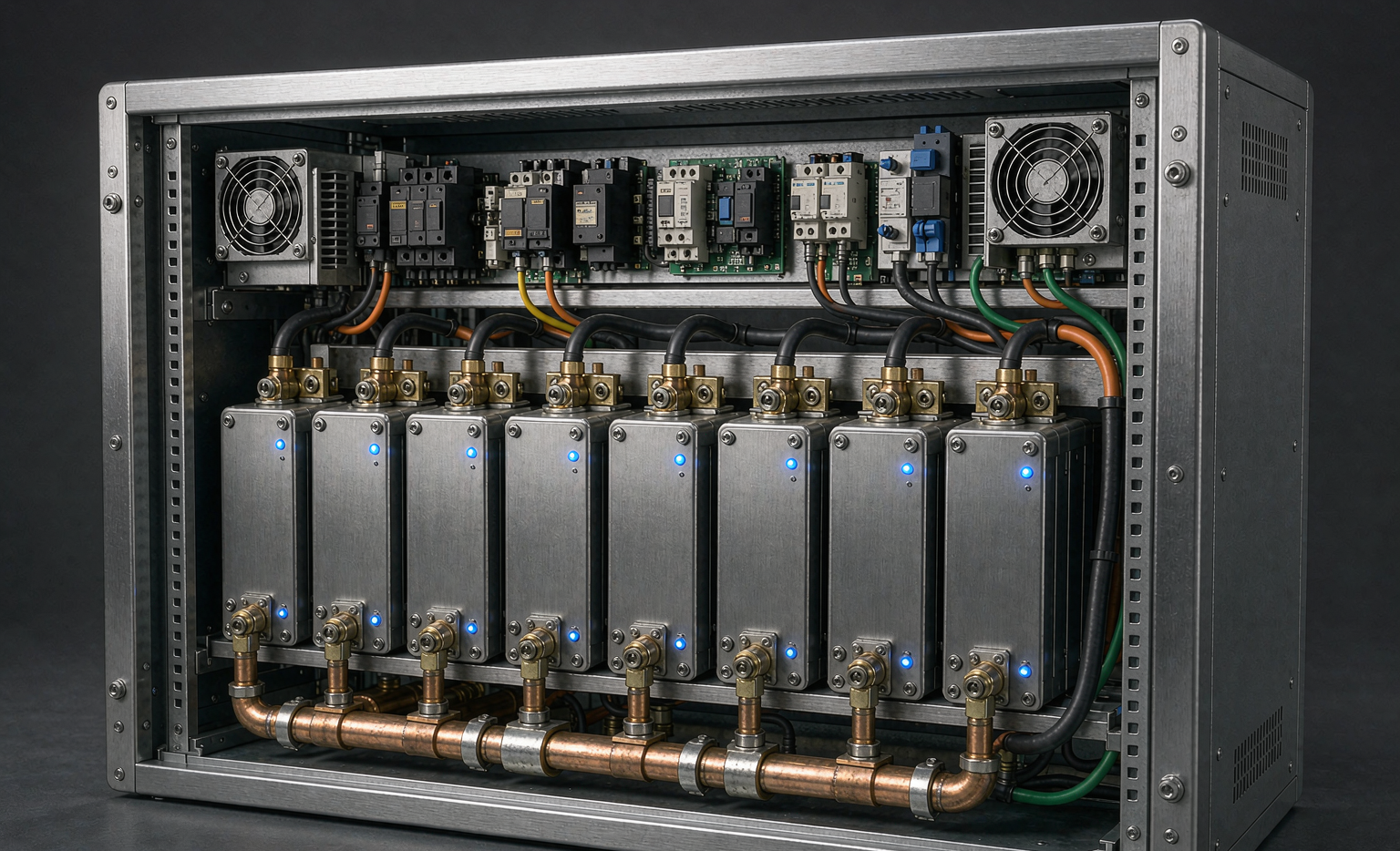
The battery management system (BMS) is where most field failures are actually prevented. A UPS lithium battery pack must have a three-tier architecture:
- Cell-level balancing at 5–10 mA to keep parallel groups within 10 mV.
- String-level contactor and fuse isolation that opens on any fault above the trip threshold.
- Communication to the UPS via CAN bus or RS485 so the inverter knows state of charge, state of health, and temperature before it ever draws current.
I have walked into sites where the UPS reported “battery OK” from a simple voltage reading while the lithium battery pack was actually at 60% state of health. A proper BMS closes that gap. When we design a custom battery solution we mandate SoH reporting as a hard requirement, not a nice-to-have.
Thermal Management and Derating in Real Rooms
Specifications are written at 25°C. Server rooms and telecom huts are rarely that clean. Lithium cells tolerate heat better than lead-acid, but every 10°C above 25°C roughly doubles the calendar-aging rate. For lithium battery reliability in UPS systems I apply a straightforward derating table: at 35°C I de-rate usable capacity by 8%, at 40°C by 15%, and I refuse to commission a pack above 45°C ambient without active cooling.
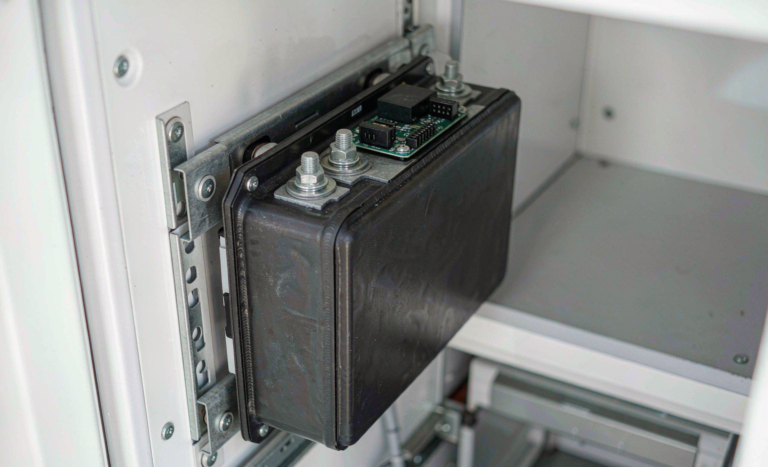
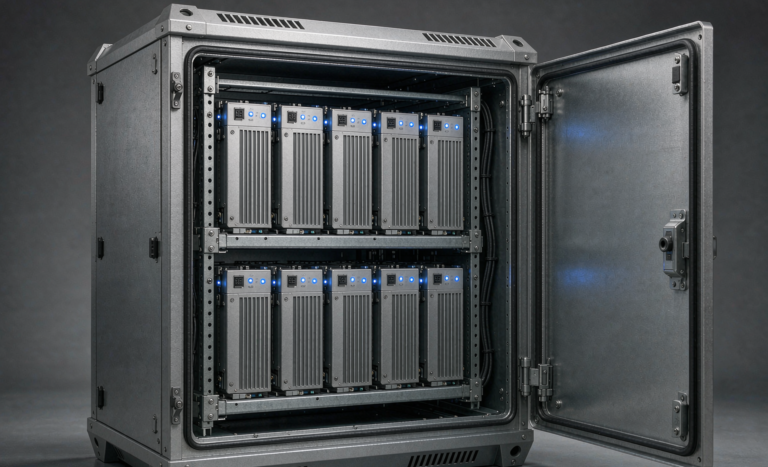
In a recent cabin installation we used a passively vented enclosure with a 200 W thermostatic fan and held cell temperature spread under 4°C across the string. Tight thermal spread is what keeps one weak cell from dragging the pack. home energy storage units face the same physics, which is why we share the same thermal design language across product families.
Cycle Life, Calendar Life, and State-of-Health
Buyers confuse cycle life with service life. A UPS battery may only see twenty deep discharges across its whole life, yet it still ages from calendar time and from the small topping charges the inverter performs weekly for self-test. I model both axes:
- Cycle life: rated at 0.2C, 80% depth of discharge, typically 3,000–6,000 cycles for LFP.
- Calendar life: the wall-clock limit, dominated by electrolyte dry-out and SEI growth, about 10–15 years.
- State of health: we retire a lithium battery pack at 80% SoH, the same threshold aviation and grid storage use.
Tracking SoH lets a facility replace a string on a planned weekend instead of during an outage. That is the operational definition of lithium battery reliability for UPS systems: predictable, measurable, scheduled.
Compliance and Safety Standards I Engineer Against
No UPS battery leaves our line without clearing the certifications a corporate buyer demands. The stack I design to:
- UN38.3 – transport safety testing for lithium cells and battery packs, required before the product can ship by air or sea.
- IEC 62133-2 – safety for portable lithium cells and batteries, covering abuse, short-circuit, and thermal stability.
- IEC 62619 – the industrial secondary-cell safety standard that addresses stationary and large-format lithium battery applications, the one most UPS specifiers now require.
- UL 1973 – North American standard for stationary storage batteries, and UL 9540A for system-level thermal runaway propagation testing.
For any unit that travels on a commercial aircraft or with an operator under aviation authority rules, I also keep the understanding of FAA and EASA transport expectations in mind during packaging design, even when the end use is stationary. A drone battery or drone lithium battery we build follows the same UN38.3 discipline, so our UPS packs benefit from the same validated cell screening.
Field Sizing and Redundancy I Recommend
Reliability is also a system question. For a single UPS I recommend N+1 at the battery level: two independent lithium battery strings so one can be serviced while the other carries the load. I size runtime from the real load, not the nameplate:
- Measure actual watts, not volt-amperes, because lithium delivers true power with a near-unity power factor.
- Add 20% headroom for aging so year-ten runtime still meets the design target.
- Set the inverter low-voltage cutoff at the pack’s 80% SoH floor, not the cell minimum, to preserve life.
Where a customer wants a broader battery application solution spanning UPS, solar, and backup, we combine an LFP UPS string with a sodium-ion battery for the bulk stationary layer, using the chemistry that fits each duty cycle. The result is a custom battery solution with no single point of chemistry failure.
Commissioning Verification Before Go-Live
Before I sign off a UPS lithium battery pack I run a commissioning sequence that mirrors what a third-party inspector would check, because most field “reliability” complaints are actually configuration errors caught too late. The checklist is short but non-negotiable:
- Insulation resistance above 1 MΩ to chassis at 500 V DC, confirming no moist-cell path.
- BMS alarm test: force an over-temperature and confirm the contactor opens within 200 ms.
- Capacity confirmation at 0.2C within 5% of the nameplate watt-hour rating.
- Communication match: the SoC and SoH values on the BMS equal those shown on the inverter display.
- Thermal spread verification: cell-to-cell temperature under 4°C at end of a full discharge.
Only after this pass does the lithium battery pack enter service. A custom battery solution that skips commissioning trades a few hours of effort for years of uncertainty, and it is the first thing I look for when a client reports early drift.
Frequently Asked Questions
How long does a lithium UPS battery actually last compared with VRLA?
In float standby service a quality lithium-ion battery lasts 10–15 years, roughly three times the 3–5 years typical of VRLA. The gains come from lower calendar aging and the ability to measure state of health so you replace on a schedule, not during an outage.
Can I drop a lithium battery pack straight into an existing UPS?
Usually not without checking the charge profile. Lead-acid chargers use a constant float voltage that can overcharge LFP. We supply a matched BMS and, where needed, a DC-DC stage so the lithium battery pack speaks the voltage language the inverter expects while protecting the cells.
Is lithium safe in a sealed electrical room?
Yes, when built to IEC 62619 and UL 1973 with a UL 9540A propagation test on the pack. LiFePO4 is the most forgiving lithium chemistry, and a proper BMS opens the contactor on any fault. We have never seen thermal runaway propagate past the module boundary in our certified designs.
What runtime should I specify for a data center UPS?
Size to your real load in watts with 20% aging headroom, and design the lithium battery reliability margin so that at 80% state of health you still meet the required minutes. Most sites need 5–15 minutes to bridge to generator or graceful shutdown.
Do lithium UPS batteries need the same monthly testing as lead-acid?
They need less manual work, not less attention. The BMS reports state of charge and SoH continuously, so instead of manual voltage walks you review a dashboard. I still recommend a quarterly full discharge validation to confirm the lithium battery pack matches its modeled capacity.