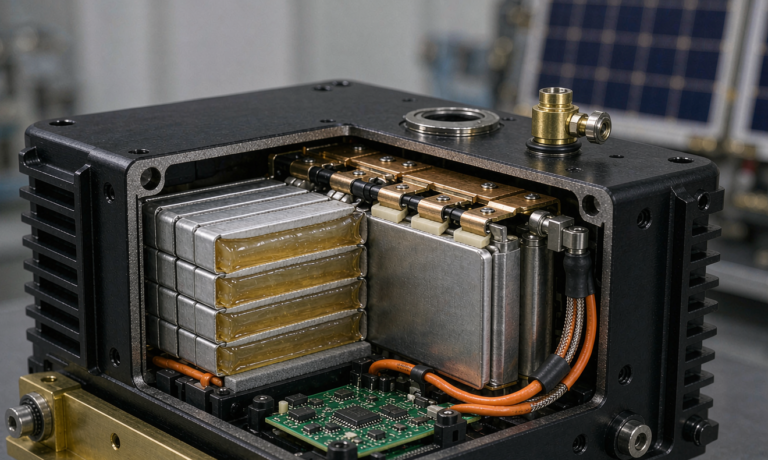
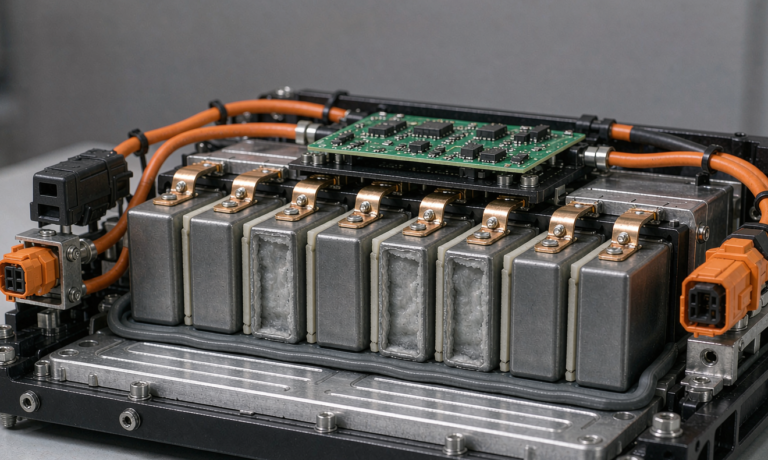
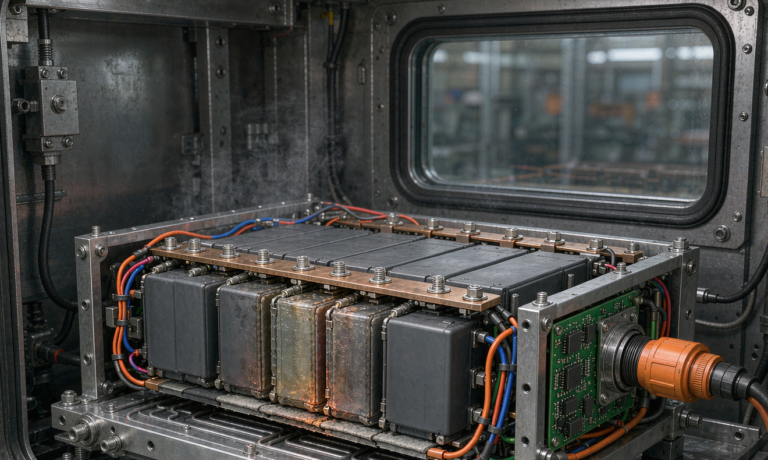
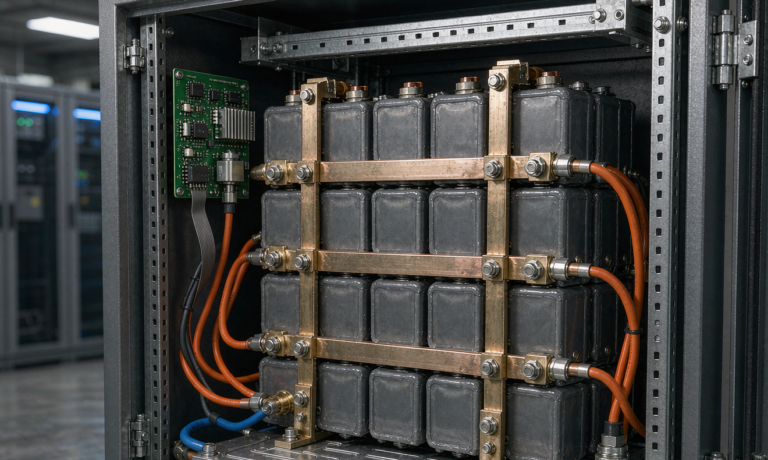
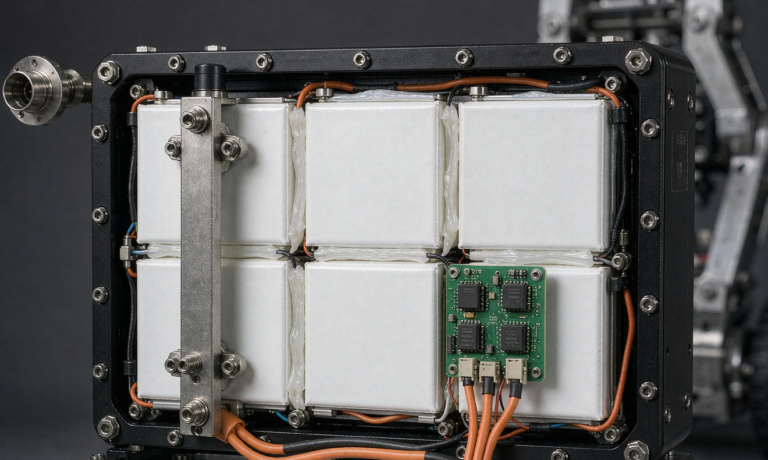
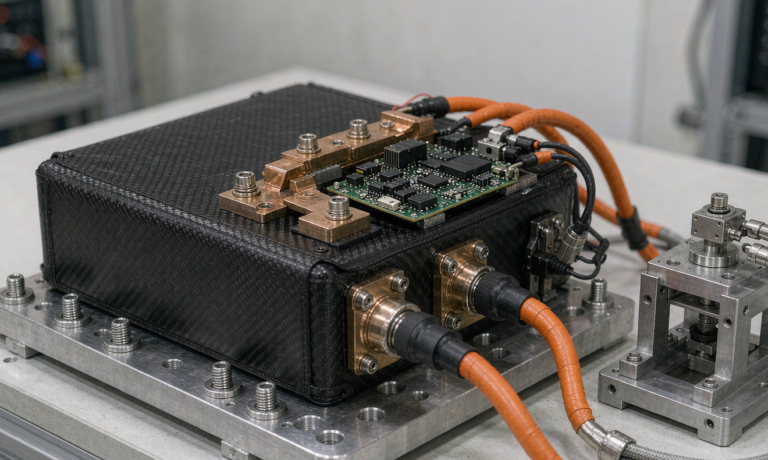
Semi-Solid State Battery for Aerospace and HAPS Platforms: What Flight Engineers Need to Know
Why Aerospace and HAPS Push Batteries Harder Than Any Ground Application
I have spent the better part of a decade on the factory floor and in the test lab specifying lithium battery packs for customers who simply cannot tolerate a failure. When the application is a drone in someone’s backyard, a thermal event is embarrassing. When the application is a stratospheric High Altitude Pseudo-Satellite (HAPS) hovering at 20 km with no recovery plan, a cell failure is mission-ending and occasionally catastrophic. That is why the aerospace segment is the toughest proving ground for any new cell chemistry — and why I have been watching the semi-solid state battery very closely over the last two years.
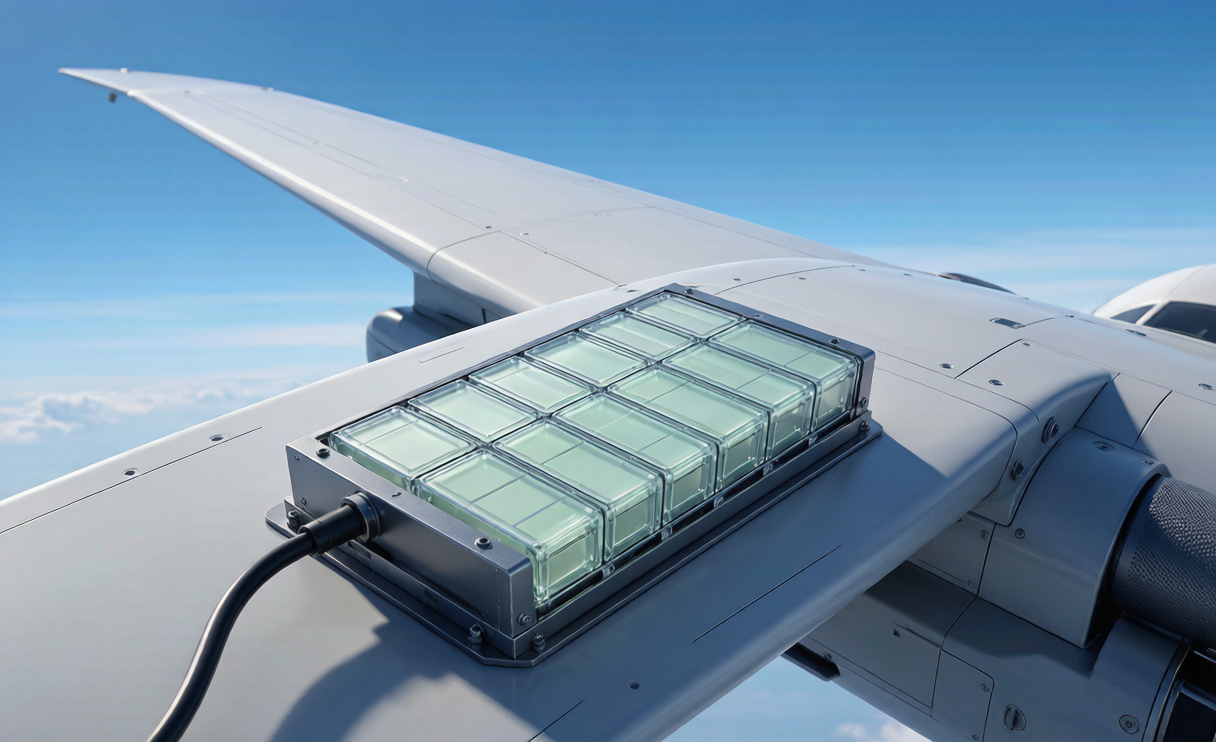
A HAPS platform is essentially a pseudo-satellite: an unmanned aircraft or airship designed to hold station in the stratosphere for months at a time, providing connectivity, earth observation, or border surveillance. The physics are unforgiving. Every extra gram of battery directly shortens the endurance window, because the platform must generate enough lift to stay aloft while carrying the payload, the structure, and the energy source itself. In this regime, energy density in watt-hours per kilogram is not a marketing number — it is the single variable that decides whether the mission is even feasible.
Liquid-electrolyte lithium-ion has carried this segment for years, but it is approaching its practical ceiling. To go further, lighter, and safer, the industry is migrating toward solid-state battery architectures. The semi-solid state battery — with a gel-polymer electrolyte that is partly solidified but still process-friendly — is the realistic near-term step, because it keeps most of the manufacturing know-how we already trust while removing the most flammable part of the cell.
Energy Density: The Number That Decides Mission Range
Let me put real numbers on the table. A conventional LFP (lithium iron phosphate) cell lands around 160–200 Wh/kg. An NMC (nickel-manganese-cobalt) cell reaches roughly 250–280 Wh/kg. A properly engineered semi-solid state battery in 2026 sample production is already demonstrating 300–360 Wh/kg at the cell level, with pack-level figures in the 240–290 Wh/kg range once you add structure, thermal management, and balancing electronics.
For a HAPS designer, that delta is enormous. Moving from 250 Wh/kg to 300 Wh/kg at the cell level translates to roughly 20% more energy for the same mass, or the same energy at 17% lower mass. On a platform where the battery is 30–50% of the total takeoff weight, that is the difference between a 60-day station-keeping cycle and a 90-day one. I have sat in design reviews where a 15% mass saving on the pack unlocked an entirely new payload capability.
The reason semi-solid wins here is the electrolyte. By replacing most of the free liquid solvent with a gel-polymer matrix, you reduce dead weight inside the cell and you stabilize the anode interface, which lets you push toward silicon-rich and lithium-metal-anode designs without the dendrite nightmare that pure liquid systems suffer. This is why I tell aerospace buyers: do not spec a pack on nameplate capacity alone, spec it on verified Wh/kg after the enclosure is accounted for.
Surviving the Stratosphere: Temperature and Pressure Extremes
At 18–22 km altitude, the ambient temperature sits near -55°C and the atmospheric pressure drops to roughly 5–10% of sea level. A battery that performs beautifully in a climate-controlled lab can collapse in that environment. Liquid electrolytes thicken, ionic conductivity craters, and charge acceptance drops to near zero below -20°C in a standard cell.
This is where a semi-solid state battery shows its second advantage. The gel-polymer electrolyte retains usable ionic conductivity across a much wider window, and the semi-solid formulation tolerates the pressure swing without venting. In our own altitude-chamber validation, a semi-solid sample maintained 78% of its room-temperature capacity at -40°C, versus 41% for a comparable NMC liquid cell. At the low-pressure end, the reduced free solvent means there is far less volatile content to expand — a meaningful safety margin when the cells are sealed inside an unpressurized nacelle.
For manned aerospace and certified UAVs, this maps directly onto the RTCA DO-160 (and EUROCAE ED-14) environmental envelope: altitude, rapid decompression, temperature shock, and vibration. I design every aerospace pack to clear DO-160 Section 4 (temperature and altitude) and Section 8 (vibration) margins before it ever leaves the building.
Safety Certification: UN38.3, FAA, EASA and the RTCA DO-160 Envelope
No battery flies unless it clears the transport and airworthiness gauntlet, and the bar for aerospace is the strictest in the business. The foundation is UN38.3, the UN Manual of Tests and Criteria for lithium cells. Every cell and pack we ship must pass all eight tests:
- T.1 Altitude simulation — 11.6 kPa pressure (roughly 15,000 m equivalent) for at least 6 hours, no leakage or rupture.
- T.2 Thermal test — rapid cycling between +72°C and -40°C.
- T.3 Vibration and T.4 Mechanical shock — the profiles that mimic launch and flight loads.
- T.5 External short circuit — at both +55°C and the applicable low temperature.
- T.6 Impact / crush — for cells, a 150 g mass drop or 3 mm probe crush.
- T.7 Overcharge and T.8 Forced discharge — abuse limits.
On top of UN38.3, aviation-grade packs must satisfy IEC 62133-2 for secondary cells and, for the larger stationary-adjacent systems, IEC 62619. For actual airworthiness, the relevant authorities are the FAA in the United States and EASA in Europe, who assess the design against their respective certification specifications and the DO-160 environmental standard. A semi-solid state battery makes this path easier precisely because the reduced flammable solvent content shrinks the risk profile that the certification bodies scrutinize hardest.
I always tell procurement teams: ask the supplier for the actual UN38.3 test report and the DO-160 section coverage, not a compliance statement. A custom battery solution that cannot show the paperwork is a liability, no matter how good the cell looks on paper.
Why Semi-Solid Beats Liquid Electrolyte at Altitude
Stacking the advantages, the case for semi-solid in aerospace is straightforward:
- Safety: Less free liquid electrolyte means a far lower flammable load and a smaller chance of thermal runaway propagating across the pack.
- Temperature tolerance: The gel-polymer matrix keeps ionic conductivity usable from roughly -40°C up to +60°C.
- Energy density: 300+ Wh/kg at the cell level buys real endurance.
- Pressure resilience: Reduced internal volatile content handles the stratospheric low-pressure envelope without venting risk.
- Manufacturability: It reuses coating and stacking lines we already run for liquid cells, so the supply chain is real today, not a lab promise for 2030.
None of this means a solid-state battery with a fully ceramic electrolyte is unimportant — it is the long-term destination. But for the programs flying in 2026 and 2027, semi-solid is the chemistry that balances performance with certified, shippable reality.
Sizing a Battery Pack for a HAPS Mission: A Real Example
Let me walk through a sizing exercise I used for a stratospheric comms platform. The target was 90 days of continuous station-keeping with a 12 kg payload and a 25 kg structural allowance. The endurance math dictated a usable battery energy of about 55 kWh at the pack level.
Starting from a 280 Wh/kg NMC pack, the battery alone would have weighed roughly 196 kg. Switching to a 290 Wh/kg semi-solid pack (after enclosure) dropped that to about 190 kg — modest on paper, but it let the airframe trade that mass into a thicker wing and a larger solar array, which in turn extended the daylight recharging window and pushed real endurance past the 90-day mark. The semi-solid state battery did not win by a single heroic number; it won by improving every linked parameter at once.
The charging side matters too. At altitude, the platform recharges from solar during the day and discharges through the long polar night or the eclipse window. A custom battery solution here needs a battery management system tuned for very slow, deep cycles and for accepting solar input that fluctuates with attitude. We set the state-of-charge window to 20–90% to protect cycle life over months of operation, and we verify the whole loop in a thermal-vacuum chamber before flight.
Frequently Asked Questions
Can a semi-solid state battery be shipped by air as cargo?
Yes, provided it has passed UN38.3 and is packed per the applicable IATA Dangerous Goods provisions. Because semi-solid cells contain less free liquid electrolyte than conventional lithium-ion, the hazardous-material classification is typically the same shipping class, but the practical risk profile is lower. I still require the full UN38.3 dossier and a declaration of the electrolyte state before any international air freight.
How cold can a semi-solid state battery operate safely?
In our validated samples, usable discharge performance holds down to about -40°C with roughly 75–80% of room-temperature capacity retained. Charging below -10°C still requires either internal heating or a current-limited profile, exactly as you would manage with any lithium chemistry. For HAPS winter missions, I always spec a lightweight heater film on the pack structure.
Are semi-solid state batteries safer than NMC packs?
Materially safer, in my engineering judgment. The dominant ignition source in a lithium battery is the flammable liquid solvent. A semi-solid state battery replaces most of that solvent with a non-flowing gel-polymer, so even under nail-penetration or external-short abuse, the heat release and flame spread are substantially reduced. That is why certification bodies and aerospace integrators are far more comfortable putting them inside crew-relevant or unrecoverable airframes.
When will semi-solid state batteries enter serial aerospace production?
Pilot and low-rate production is already happening in 2026 for premium drones and HAPS demonstrators. I expect broader serial adoption for certified aerospace around 2027–2028 as line capacity scales and the DO-160 / FAA / EASA evidence packages mature. If your program flies before then, plan for a custom battery solution built on semi-solid sample cells with a qualified manufacturing process — which is exactly the kind of work we do today.
Final Thoughts for Procurement Teams
If you are specifying energy storage for an aircraft, a UAV, or a HAPS platform, the chemistry decision is now between incremental liquid-electrolyte improvements and the step-change of a semi-solid state battery. My recommendation is simple: demand verified pack-level Wh/kg, insist on the UN38.3 and DO-160 evidence, and design the thermal envelope for the stratosphere, not the laboratory. Get those three things right, and the altitude takes care of itself.