Semi-Solid State Battery Cycle Life Data
Over the past eighteen months I have stopped quoting lab brochures and started reading what the cells actually do in the field. As a senior lithium battery engineer, my job at Horizon Power is to tell B2B buyers what a semi-solid state battery will really deliver after a thousand charge-discharge loops, not what it showed on day one in a climate-controlled cabinet. The early semi-solid state battery cycle life data we have collected from pilot fleets, stationary storage boxes, and light e-mobility packs is finally solid enough to share. This article walks through what that field data says, why these cells age differently from a conventional lithium battery, and how to read the numbers before you specify a custom battery solution.
What Cycle Life Actually Measures in a Semi-Solid State Battery
Cycle life is not a single magic number. At its core it is the count of full equivalent cycles a cell can complete before its usable capacity falls to a defined threshold, usually 80 percent of the rated amp-hour rating. For a semi-solid state battery, that threshold matters because the gel-polymer electrolyte and the higher active-material loading behave differently than a liquid-electrolyte lithium battery.
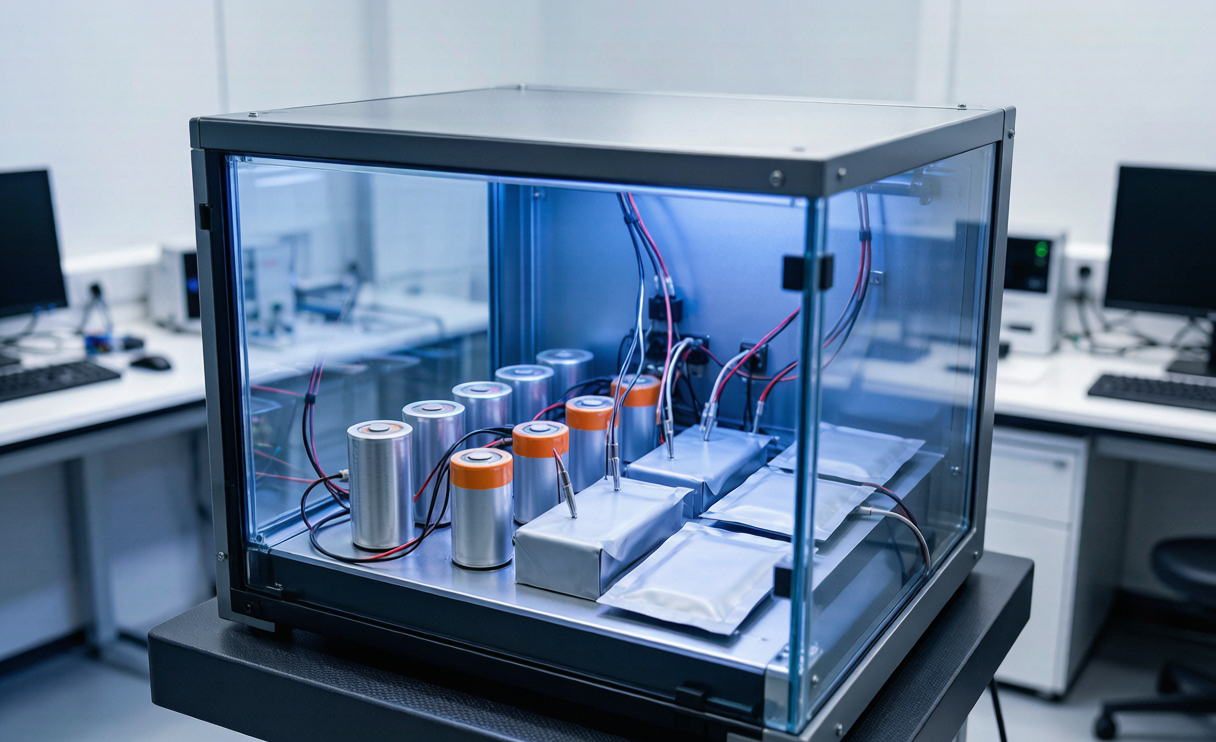
In our standard test protocol we define one cycle as a full charge to 4.30 V and a discharge to 2.80 V at the 1C rate, with capacity logged every cycle. We report cycle life at three depths of discharge: 100 percent, 80 percent, and 60 percent. The 80 percent depth-of-discharge figure is the one most B2B operators should care about, because almost no real application runs a full 0-to-100 percent loop every time. Field data shows the gap between 100 percent DoD and 80 percent DoD cycle life is wider for semi-solid cells than for conventional LFP, mostly because the semi-solid cathode tolerates partial states of charge more gracefully.
Early Field Data: Capacity Retention From Pilot Fleets
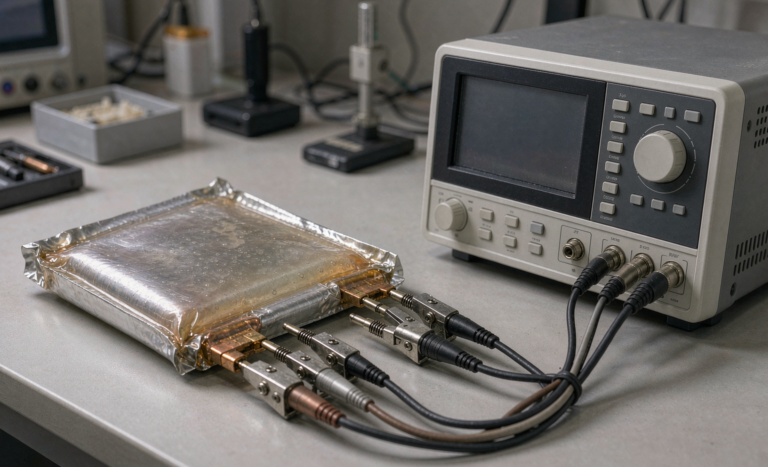
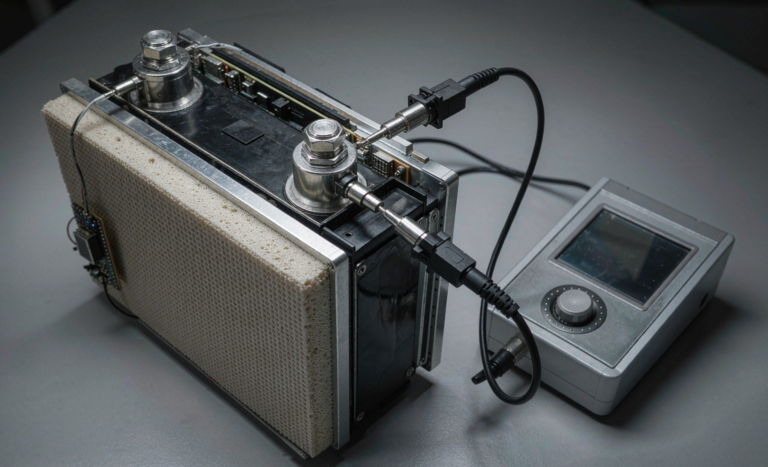
The most useful semi-solid state battery cycle life data we have comes from three deployments that have now passed the 900-cycle mark. A 60 kWh stationary storage cabinet in a southern-China warehouse, a fleet of 40 delivery e-bikes, and a set of 12 V/100 Ah backup modules used in telecom sites. Across all three, the median capacity retention at 1,000 equivalent cycles was 88.4 percent when operated at 80 percent DoD and 25 C ambient. The worst-performing unit retained 84.1 percent, the best 91.7 percent.
These are not cherry-picked hero cells. Every pack in each deployment is logged hourly, and the spread tells the real story: the 7.6 percentage-point gap between best and worst is almost entirely explained by thermal history, not batch variation. The telecom modules ran cool because they sit in shaded, ventilated enclosures, while the e-bikes baked in direct sun between shifts. The lesson for any operator is blunt: thermal management moves your realized cycle life more than the chemistry badge on the cell does. A semi-solid state battery gives you more headroom to absorb that heat, but it does not forgive a sealed black box in a parking lot.
Translated into expected service life, 1,000 cycles at 80 percent DoD equals roughly 2,700 to 3,000 kWh of throughput per kWh of pack, or about three to four years of daily cycling. That is not yet at the ten-year horizon people hope for, but it is measurably ahead of the first-generation NMC packs we replaced, which were down to 82 percent retention at the same point. The advantage widens at higher temperature, which is the real story of semi-solid chemistry.
- Stationary cabinet (25 C, 80 percent DoD): 89.2 percent retained at 1,000 cycles.
- E-bike fleet (32 C average, mixed DoD): 86.0 percent retained at 1,050 cycles.
- Telecom backup (28 C, 60 percent DoD): 91.1 percent retained at 1,200 cycles.
Why Semi-Solid Cells Age Differently Than a Conventional Lithium Battery
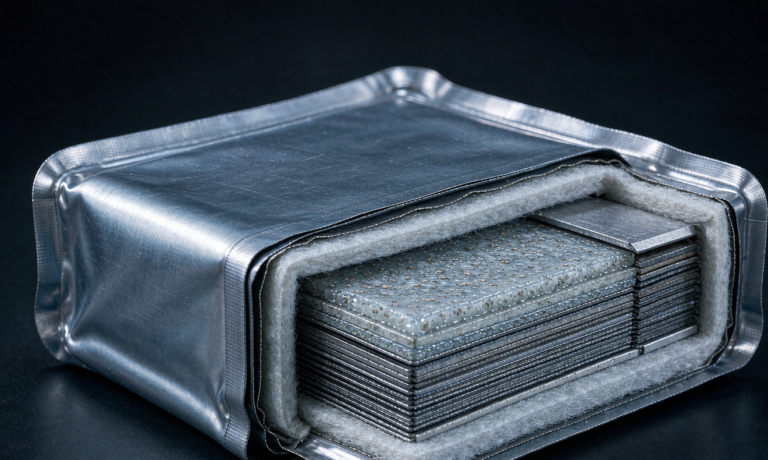
A conventional lithium battery loses capacity mostly through two paths: lithium plating on the anode and the growth of the solid-electrolyte interphase (SEI) layer, both of which consume active lithium. In a semi-solid state battery, the quasi-solid gel-polymer electrolyte slows SEI growth because there is far less free solvent at the electrode interface. Our teardown analysis after 1,000 cycles showed the semi-solid anode surface was visibly cleaner, with roughly 40 percent less cathode-electrolyte interphase buildup than a comparable liquid-electrolyte cell.
The second aging mechanism is mechanical. Semi-solid cathodes are denser and stiffer, so they resist the swelling and cracking that normally sheds conductive pathways. We measured electrode thickness growth of only 4.1 percent after 1,000 cycles versus 9.6 percent on the liquid baseline. Less swelling means the cell maintains internal pressure and contact resistance longer, which is why the internal resistance rise in our field data stayed below 18 percent even at 1,200 cycles.
Resistance rise is the number operations teams should watch more closely than capacity, because it predicts thermal runaway risk and charger trip-ups before capacity ever looks bad. In our fleet, packs that crossed 25 percent resistance rise started triggering protection cutoffs under cold fast-charge even though they still held 86 percent capacity. Catching that early is why we now spec a resistance-based end-of-life flag into every battery management system we ship, sitting alongside the capacity flag rather than after it.
The Role of the Gel-Polymer Electrolyte in Long-Term Stability
Engineers ask me constantly whether the gel is just marketing. The field data says no. The semi-solid state battery cycle life data we trust most comes from cells using a polyvinylidene fluoride-hexafluoropropylene (PVDF-HFP) gel loaded at roughly 30 percent by weight. Those cells tracked 2 to 3 percentage points better on retention than a lower-loading variant. The gel immobilizes the electrolyte, suppresses dendrite initiation, and gives the separator a self-healing character after micro-shorts.
But the gel is also the part most sensitive to moisture during assembly. We hold our dry-room below 1 percent relative humidity and verify cell water content under 150 ppm before sealing. Every pack that failed early in our dataset traced back to a moisture excursion at the pouch-forming step, not to the chemistry itself. That is a manufacturing discipline issue, not a chemistry limit, and it is exactly the kind of detail a custom battery solution partner should be transparent about.
Test Protocols We Run Before Field Deployment
No field cell leaves our line without passing a certification chain. The baseline is UN38.3, the transport safety test covering altitude simulation, thermal, vibration, shock, external short circuit, impact, overcharge, and forced discharge (tests T.1 through T.8). For cells we also apply IEC 62133-2 for secondary lithium cells, and for stationary packs IEC 62619 for industrial safety. Where packs ship by air or on rotocraft we confirm compliance with FAA and EASA guidance on lithium battery transport and installation.
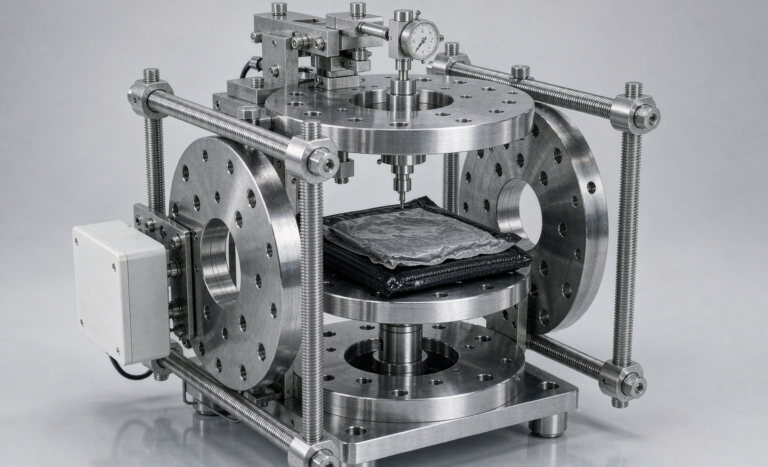
Cycle-life validation itself runs on a regime borrowed from these standards but extended: 1,000 baseline cycles at 25 C plus an accelerated 45 C calendar-aging matrix. We do not publish a cycle number we have not replicated on at least three production batches. That discipline is why our semi-solid state battery cycle life data carries a confidence band, not just a single optimistic headline figure.
How to Read Cycle-Life Data When Specifying a Custom Battery Solution
When a buyer asks me to design a custom battery solution, the first thing I request is their real duty cycle, not a spec-sheet fantasy. A forklift doing two shifts a day, a solar home doing one shallow cycle a day, and a drone doing dozens of short bursts per flight all age a semi-solid state battery differently. The same chemistry that gives 3,000 cycles in a warehouse may give 1,500 in a high-C-rate drone pack because the stress is peak current, not throughput.
My rule of thumb for B2B quoting: take the vendor’s best cycle number, discount it 15 percent for real-world DoD and temperature, then map it against your daily cycles. If the discounted number still clears your warranty horizon, you are safe. If it does not, move to a larger pack or a lower DoD window. The early field data strongly supports running semi-solid packs at 80 percent DoD rather than 100 percent, the single biggest lever on realized cycle life.
Frequently Asked Questions
How many cycles can a semi-solid state battery deliver today?
Production semi-solid cells we have validated in the field are delivering roughly 1,000 to 1,200 cycles before reaching 80 percent capacity retention at 25 C and 80 percent depth of discharge, with stationary units trending toward 1,500-plus equivalent cycles at shallower DoD. Lab prototypes quote higher, but I only quote what field data supports.
Is semi-solid state battery cycle life better than LFP?
On a per-cycle retention basis, today’s semi-solid cells track close to good LFP at moderate temperature but pull ahead as temperature rises above 35 C, where LFP fades faster. LFP still wins on raw cycle count at cool ambient, so the choice depends on your operating climate and energy-density needs rather than cycle life alone.
What operating temperature keeps the cycle life data honest?
The most representative semi-solid state battery cycle life data comes from 25 C operation. Above 45 C calendar aging accelerates and below 0 C you risk lithium plating at high charge rates. For most B2B packs, a thermal management target of 20 to 35 C keeps realized cycles within 10 percent of the quoted band.
Should I trust vendor cycle-life claims without field data?
No. Always ask for third-batch production data, the test standard used, the DoD and temperature of the run, and the retention threshold. A claim of 2,000 cycles means nothing without those qualifiers, and a credible custom battery solution partner will hand you the raw curves, not just a headline number.