Semi-Solid State Battery Safety vs Liquid Electrolyte
Every engineer who has watched a lithium battery cell go into thermal runaway remembers the smell. The white smoke, the sharp pop, the flame that follows in seconds. In almost every case I have investigated, the trigger was not the cathode or the anode — it was the liquid electrolyte. That is the single biggest fire hazard in a conventional cell, and it is exactly the problem a semi-solid state battery is built to reduce. This article is a straight comparison of semi-solid state battery safety vs liquid electrolyte, written from the bench rather than the brochure, so you can judge what the abuse tests actually prove.
I am Karl Huang, Senior Lithium Battery Engineer at Horizon Power. Over the last several years my team has run UN38.3 qualification batches on hundreds of cells — both conventional liquid-electrolyte lithium batteries and our semi-solid builds. The difference in failure mode is not a marketing claim; it shows up in the test data, and I will walk you through it. Before we get to the numbers, one clarification: when I say “safety” here I mean resistance to fire and uncontrolled energy release during abuse, not cycle life or capacity. Those are separate engineering questions, and conflating them is how buyers end up with the wrong pack for the job.
Why Liquid Electrolyte Burns in the First Place
A standard lithium battery uses an organic carbonate solvent — typically a mix of ethylene carbonate (EC), dimethyl carbonate (DMC), and ethyl methyl carbonate (EMC) — to dissolve the lithium salt. These solvents are excellent ion conductors, but they are also volatile and flammable. When a cell is punctured, crushed, or overheated, three things happen in sequence:
- The separator shrinks and the anode and cathode touch, creating an internal short.
- The short dumps energy into the cell, pushing the temperature above roughly 120–140 °C.
- The liquid electrolyte boils, vents, and ignites in the presence of the hot cathode (especially nickel-rich NMC). That is your thermal runaway.
In my experience, the flammable solvent is the accelerant. Remove most of it, and the cell simply does not have the fuel to sustain a propagating fire. That is the whole design thesis behind semi-solid chemistry. I have seen a conventional 18650-format cell, after a nail test, throw a flame two meters across the bench. The same-format semi-solid cell in the adjacent fixture hissed, swelled, and vented white vapor — and then sat there. No flame. That single contrast is why I bring this topic up with every customer who plans to put a battery inside a sealed enclosure or near a person.
What Makes a Semi-Solid Cell Different
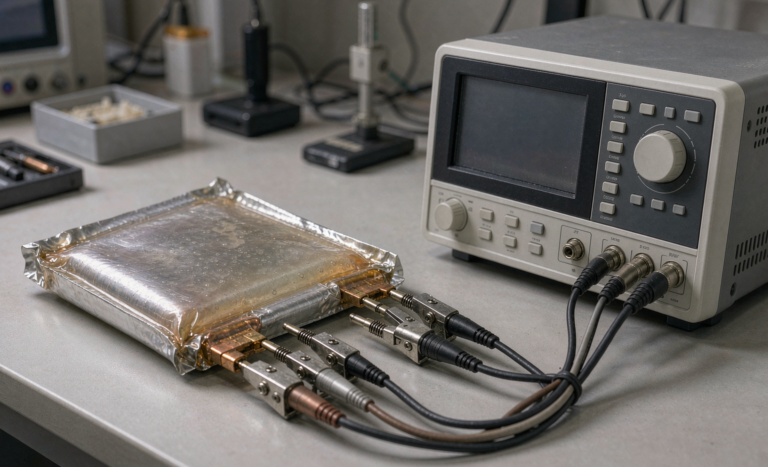
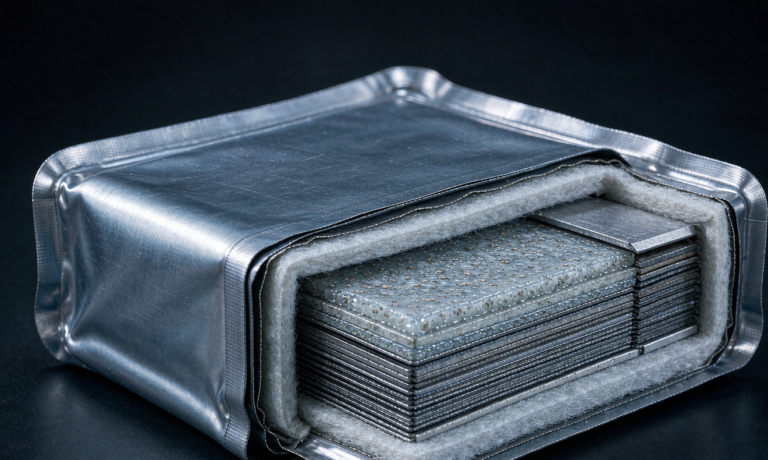
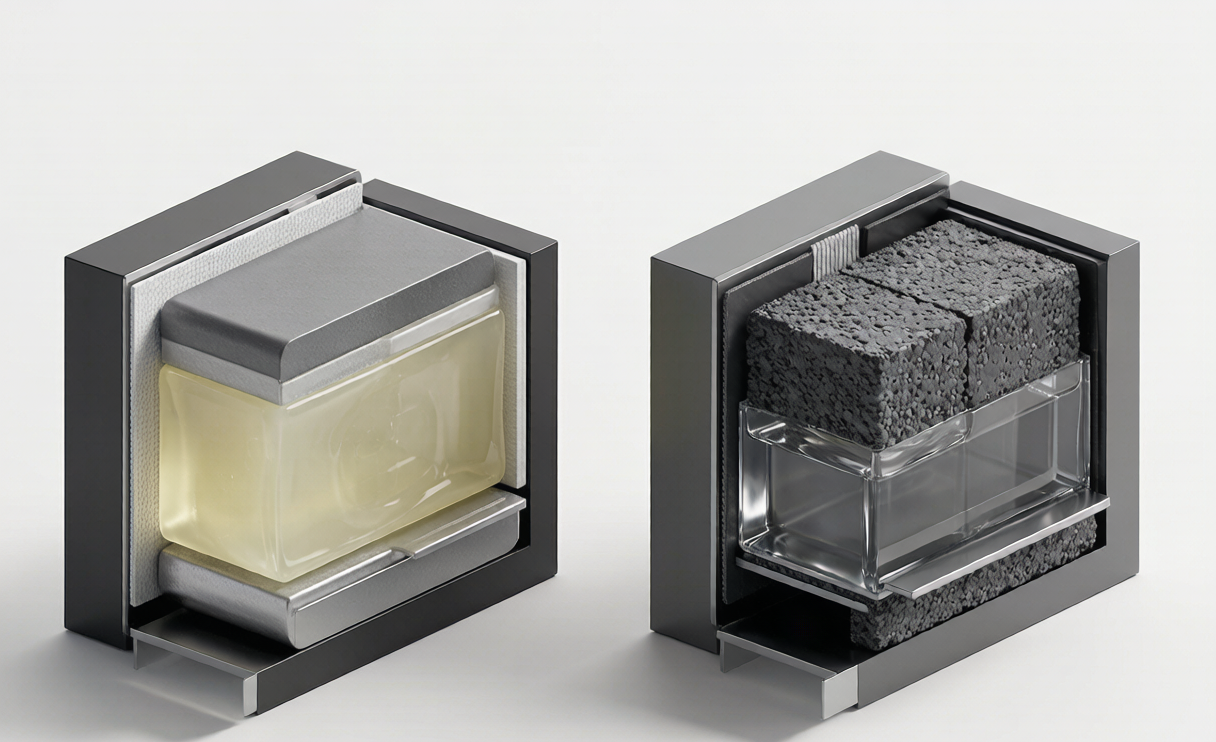
A semi-solid state battery replaces the free-flowing liquid with a gel polymer or a reduced-liquid electrolyte that is immobilized in a polymer host. You still get lithium-ion transport, but the solvent is no longer sloshing around as a flammable pool. The cathode and anode are often separated by a slightly thicker, mechanically robust gel layer.
The practical consequences for semi-solid state battery safety vs liquid electrolyte are:
- Far less free solvent to boil and ignite.
- A gel layer that stays in place under nail penetration, instead of spraying electrolyte.
- Higher mechanical integrity, so the separator is less likely to collapse during crush.
- Lower gas generation during overcharge, which means the vent is milder.
None of this makes the cell inert. It is still a high-energy lithium battery. But the failure, when it happens, tends to be a slow vent and a temperature climb rather than a jet of flame. For a custom battery solution where the pack sits close to people or inside an aircraft, that shift in failure mode is the entire point.
Abuse Testing: What UN38.3 Actually Checks
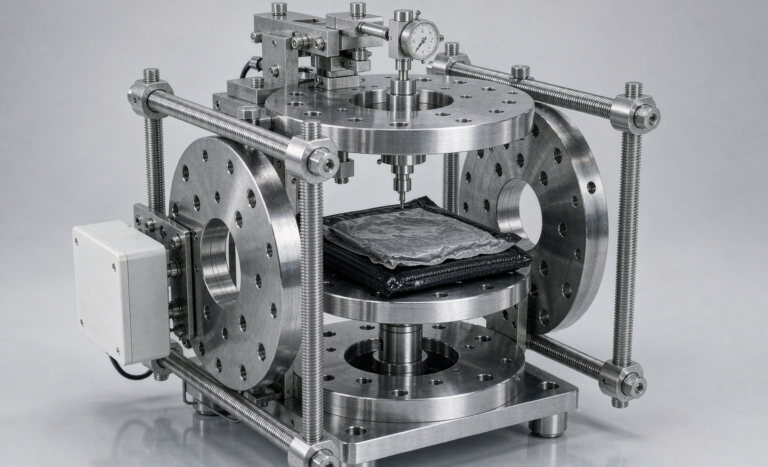
Every cell we ship for transport or aviation passes UN38.3. The standard puts a cell through eight abuse tests (T.1 through T.8):
- T.1 Altitude simulation — pressure drop to roughly 11.6 kPa.
- T.2 Thermal test — 72 °C and −40 °C cycles.
- T.3 Vibration and T.4 Mechanical shock — transport stresses.
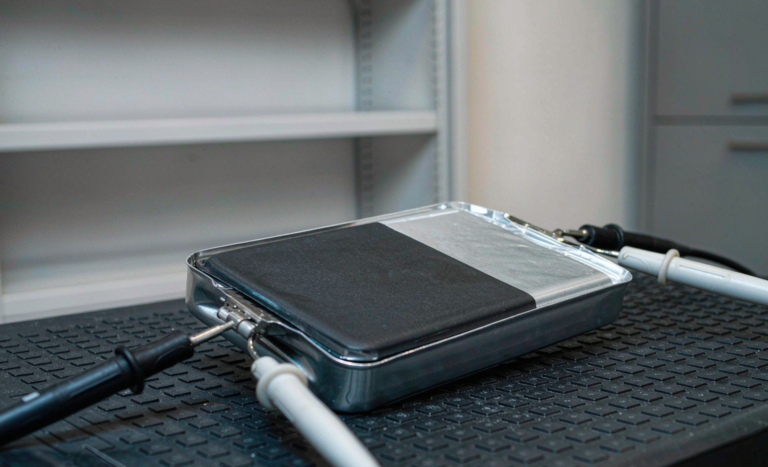
- T.5 External short circuit — 55 °C ambient, <0.1 ohm.
- T.6 Impact / crush — 150 g drop or 13 kN crush.
- T.7 Overcharge and T.8 Forced discharge.
A cell passes only if it does not explode and does not exceed an 80 °C surface-temperature rise. In our internal comparison, the semi-solid builds consistently ran cooler on T.5 and T.6. They still got hot — they are not magic — but the peak was lower and the vent was contained. That is the data point I trust most when a customer asks whether a semi-solid state battery is “safe.”
Thermal Runaway Onset: Real Numbers From the Lab
We measure self-heating onset temperature with accelerating rate calorimetry (ARC). On a conventional liquid-electrolyte NMC cell, self-heating typically begins around 130–150 °C, and the exothermic chain is fast once it starts. On our semi-solid cells of comparable chemistry, we routinely see the onset pushed 15–30 °C higher, and the rate of temperature rise after onset is noticeably gentler.
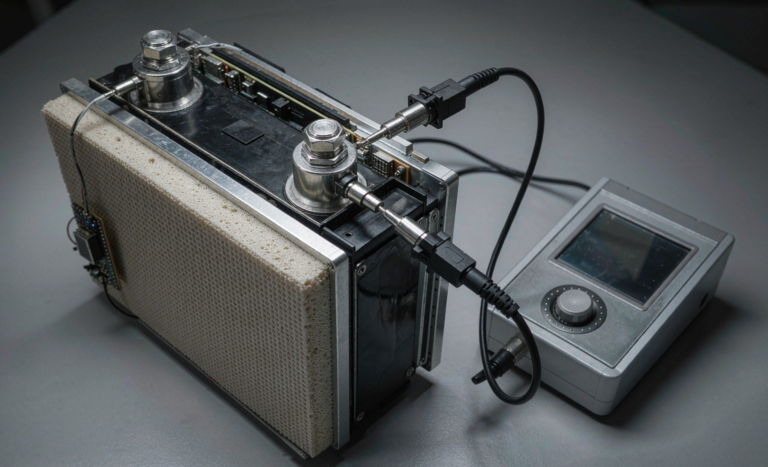
Translated into plain English: if a semi-solid pack suffers an internal fault, the crew or the battery-management system (BMS) gets more warning time. A few extra seconds of margin is the difference between a controlled shutdown and a fire. For drone and aerospace applications, where you cannot pull over and evacuate, that margin is why engineers are seriously evaluating semi-solid for flight.
Certification Path: IEC, UL, and Aviation
Safety claims mean nothing without the paperwork. The relevant standards we work against:
- IEC 62133-2 — secondary lithium cells for portable applications, including crush, short, and overcharge.
- IEC 62619 — industrial cells and batteries, the baseline for stationary and large-format packs.
- UL 1642 and UL 1973 — cell and stationary/storage battery safety in the North American market.
- FAA / EASA — for aviation and HAPS (high-altitude pseudo-satellite) platforms, where the cell-level UN38.3 plus airworthiness review dominate.
The standard itself does not care whether your electrolyte is liquid or gel. What it cares about is the measured result. A well-built solid-state battery or semi-solid cell passes the same tests with more comfortable margins. When we design a custom battery solution, we pre-qualify the cell against IEC 62619 first, then build the pack around a conservative state-of-charge window so the BMS never lets a single cell approach its onset temperature.
Where Semi-Solid Still Needs Care
I will not oversell this. Compared with the safety of a liquid-electrolyte cell, the semi-solid route is better, but it is not free of risk. Three caveats from the field:
- interface resistance. The gel layer adds internal resistance, which means more heat at high C-rate. You must size the cooling and the BMS accordingly.
- Mechanical abuse still hurts. A semi-solid cell can still vent if crushed hard enough. The gel reduces the fuel, it does not remove the stored energy.
- Quality control matters. A poorly sealed gel layer can delaminate. The safety advantage only holds if manufacturing is disciplined.
So the honest summary of semi-solid state battery safety vs liquid electrolyte is: same standards, gentler failure, more design margin — provided you engineer the pack properly.
Reading the Test Reports: What Buyers Should Ask For
Safety claims live or die on the documents behind them. When a supplier tells you their semi-solid state battery is “safer,” request four specific artifacts before you sign:
- The UN38.3 test summary with the laboratory name and the specific test result for T.5 (external short) and T.6 (crush/impact). Peak temperature and whether venting occurred should be on the sheet.
- The ARC onset-temperature report. Ask for the self-heating onset in degrees Celsius and the maximum self-heating rate. Higher onset and lower rate is what you want.
- The IEC 62619 or IEC 62133-2 certificate number, so you can verify it with the issuing body rather than trusting a PDF screenshot.
- The cell-level material safety data sheet (MSDS) for the electrolyte, which tells you exactly how much free solvent remains in the gel.
In a custom battery solution, we hand all four to the customer at the prototype stage. If a vendor resists sharing the ARC report, that resistance is itself the answer you needed.
FAQ
Do semi-solid state batteries still contain lithium?
Yes. The “semi-solid” descriptor refers to the electrolyte form, not the chemistry. They are still lithium-ion cells — typically using graphite or silicon-anode and an NMC or LFP cathode — just with a gel or reduced-liquid electrolyte instead of a free-flowing solvent.
Can a semi-solid cell still catch fire?
It can, because it still stores a large amount of energy. But in our UN38.3 batches the semi-solid builds vent more gently and climb more slowly than equivalent liquid-electrolyte cells, so the risk of a propagating fire is lower and the warning window is longer.
Are semi-solid batteries safer for drones and aircraft?
For weight-sensitive, hard-to-evacuate platforms, the gentler failure mode is a real advantage. Aviation qualification still runs through UN38.3 plus FAA or EASA review, but the higher thermal-runaway onset gives engineers more margin to work with.
How do I specify a safe semi-solid pack?
Start from a cell already qualified to IEC 62133-2 or IEC 62619, then let your supplier build a custom battery solution around a conservative SOC window and a BMS that monitors per-cell temperature. Ask for the ARC onset-temperature report before you commit to volume.