Sodium-Ion Battery Cost Optimization for Forklifts (2)
In eleven years of specifying motive power for warehouse fleets, I have watched purchasing departments obsess over one number: the sticker price of the battery. That number has almost nothing to do with what a forklift fleet actually costs to run. When a client asks me about sodium-ion battery cost optimization forklifts projects, I tell them the same thing I told a frozen-food distributor outside Rotterdam last spring: the battery is not a purchase, it is a fifteen-year cash-flow model. Get the model wrong and you will pay for it every shift, in energy bills, in battery-change downtime, and in cells that quietly fade in your cold room. This article is the framework I use on real fleet conversions — the duty-cycle math, the cold-chain derating penalty, and the opportunity-charge economics that decide whether sodium-ion beats lead-acid and lithium iron phosphate in your building, not in a brochure.
Why Forklift TCO Is Different From Every Other Battery Application
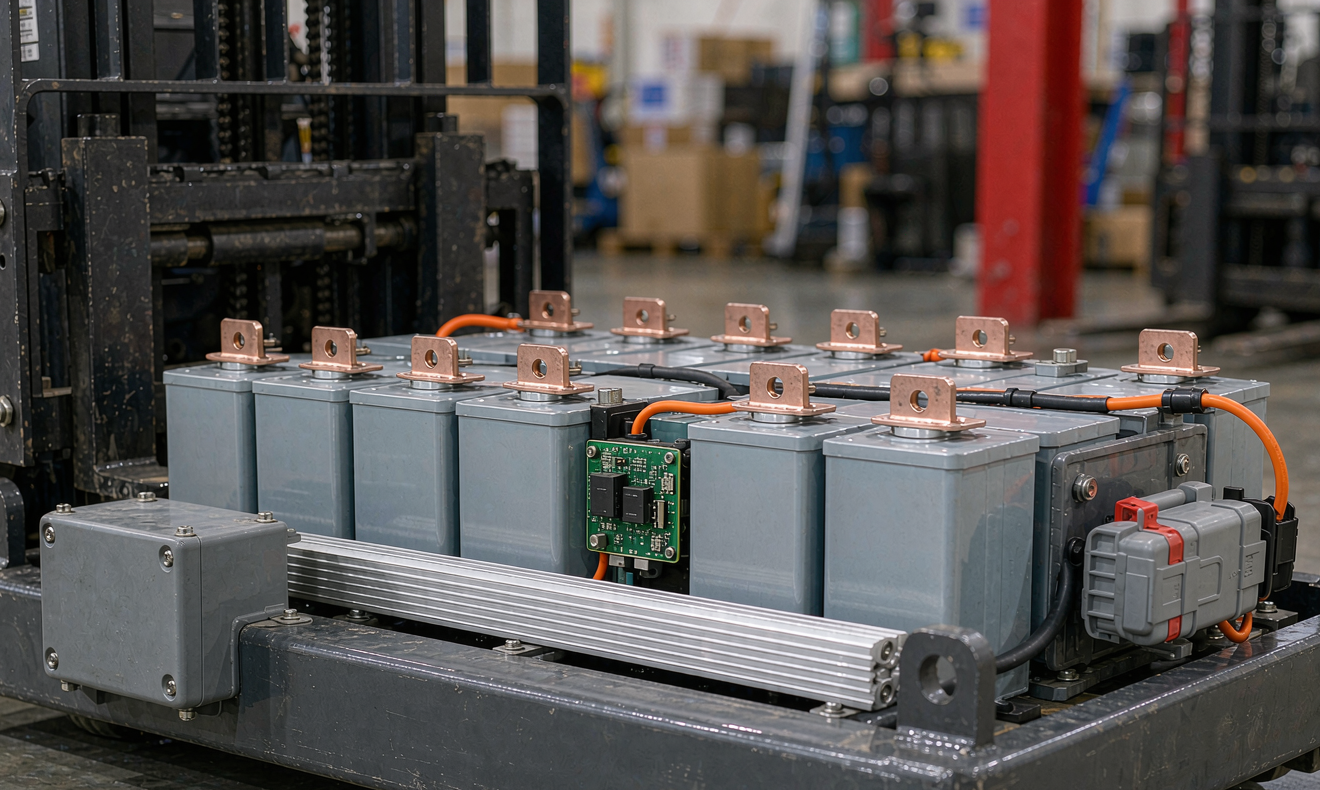
A forklift battery is the most economically brutal duty you can ask of a cell. A Class I counterbalance truck in a two-shift warehouse can cycle its pack once per shift, 250 to 300 days a year. That is 500 to 600 full cycles annually — ten times the stress of a home storage unit. Over a ten-year truck life, the battery may see 5,000 equivalent full cycles, which is beyond what most lead-acid packs survive and right at the edge of some lithium chemistries.
This is why the chemistry you choose is a cost decision, not a technical preference. Three candidates dominate the 2026 conversation:
- Flooded lead-acid: roughly $150–$200 per kWh installed, but 1,200–1,500 usable cycles, eight-hour charges, weekly watering, dedicated charging rooms with hydrogen ventilation, and 80% depth-of-discharge limits that force you to oversize capacity.
- Lithium iron phosphate (LFP): roughly $280–$400 per kWh, 3,000–5,000 cycles, opportunity-charge capable, minimal maintenance. Excellent chemistry, but its low-temperature charge acceptance degrades sharply below 0°C.
- Sodium-ion: currently $200–$280 per kWh and falling as hard-carbon anode supply scales, 3,000–4,000+ cycles in our field packs, full opportunity charging, and charge capability from −20°C without preheating hardware.
The sodium-ion pitch is not that it is cheaper per kilowatt-hour than lead-acid on day one — it usually is not. The pitch is that per usable kilowatt-hour per cycle, the arithmetic flips hard once you model real shifts, real cold rooms, and real labor. Let me show you how I run that arithmetic.
Step One: Model the Duty Cycle, Not the Nameplate
The single most expensive mistake in fleet electrification is buying nameplate kilowatt-hours. I recently audited a three-shift e-commerce hub where the incumbent lead-acid packs were specified at 80 V / 775 Ah. A current-metered duty-cycle study showed the trucks actually consumed 34 kWh per eight-hour shift and returned to the charger with 45–55% state of charge remaining — because the original specification padded for a lift-and-travel profile that changed when the client re-racked the warehouse.
My workflow for a sodium-ion conversion looks like this:
- Instrument five representative trucks for two weeks with a CAN-bus logger or a shunt-based external meter. Capture energy per shift, peak discharge current, regenerative braking recapture, and state of charge at every return.
- Normalize to energy per pallet move. Typical Class I trucks land at 0.9–1.4 Wh per kilogram lifted-and-traveled; reach trucks sit higher. This metric lets you compare sites and forecast growth without re-engineering everything.
- Size usable energy, then divide by depth-of-discharge. If a truck needs 30 kWh usable and your pack policy is 90% usable window, nameplate is 33 kWh. With lead-acid at 50% practical DoD, the same truck needs 60 kWh of lead — plus the mass penalty of roughly 1.8 tonnes on a truck whose counterweight is already engineered.
On that e-commerce audit, right-sizing with sodium-ion cut the specification from 775 Ah lead-acid to 400 Ah-equivalent sodium-ion, and the pack weight dropped by 1.1 tonnes. The client’s racking floor rating became a non-issue, and the battery compartment accepted the pack with no chassis modification.
Multi-Shift Arithmetic: Battery Swapping Versus Opportunity Charging
Two-shift and three-shift operations carry a hidden cost structure that single-shift buyers never see: either you buy spare packs and a battery-change system, or you buy charging infrastructure in the aisles. This is where the drone lithium battery world taught me a lesson that applies here too — energy logistics dominate energy economics.
The swap model (lead-acid legacy)
A two-shift lead-acid fleet typically runs a 1.5:1 pack-to-truck ratio. For a 20-truck fleet with 60 kWh packs, that is 30 packs and 15 spare positions, a side-extraction changer, and a change room with ventilation sized per NFPA 505 and local code. Battery changes consume 10–15 minutes each, twice per truck per day. At a loaded labor rate of $32/hour, that is $64–$96 per truck per day in non-productive labor — $300,000+ per year across the fleet, before you count floor space.
The opportunity-charge model (sodium-ion native)
Sodium-ion accepts charge currents of 1C or better across a wide state-of-charge window and, critically, tolerates partial state-of-life cycling without the memory and sulfation pathologies of lead-acid. Trucks top up during operator breaks: 15 minutes at 100 kW class chargers returns roughly 20–25 kWh — most of a shift for a reach truck. The swap room disappears. Fifteen charging points replace 30 packs, and labor returns to moving pallets.
When I priced this transition for a 22-truck beverage distributor, the sodium-ion + opportunity charging capex came in $118,000 higher than repurchasing lead-acid, but the labor and swap-infrastructure savings modeled at $164,000 per year. Payback was under nine months. That is what sodium-ion battery cost optimization actually means in practice: you are optimizing the operating model, and the chemistry is the enabler.
Cold-Chain Derating: The Economics Nobody Puts in the Brochure
I spend a lot of my year in freezer warehouses, and this is where sodium-ion stops being an alternative chemistry and becomes the default answer. LFP’s charge acceptance below 0°C collapses: charging a cold LFP pack risks lithium plating, so OEM solutions add preheating circuits, insulation, or interlock logic that blocks charging until the pack is warm. In a −25°C cold room where a truck cycles in and out of the dock every six minutes, an LFP pack never gets warm. The derating chart becomes fiction.
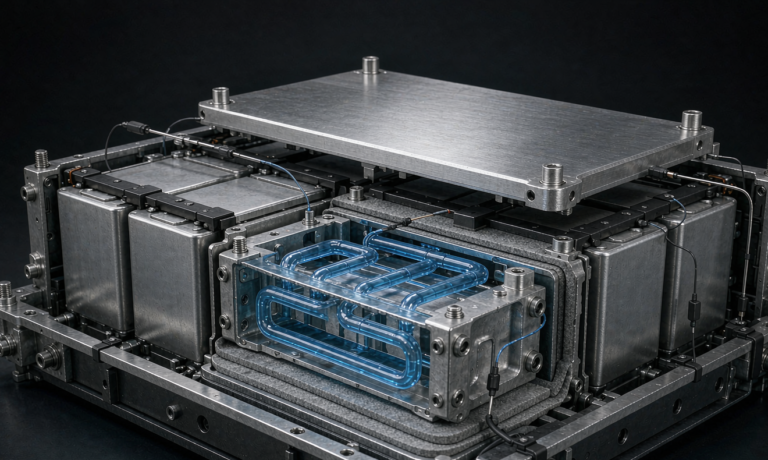
Sodium-ion electrolytes retain ionic conductivity at low temperature far better. Our field packs deliver roughly 88–92% of rated capacity at −20°C and accept charge at 0.3–0.5C without preheat hardware. The cost consequence is concrete:
- Capex: no preheat blankets, no heated battery compartments, no charger-side thermal management adders. On LFP cold-room builds I have seen this add $2,500–$5,000 per truck.
- Opex: no “conditioning” idle time outside the freezer while packs warm up. One client calculated 40 minutes per truck per day lost to LFP thermal conditioning; across 12 cold-room trucks that was 4,800 labor-hours a year recovered.
- Reliability: lead-acid in freezers suffers electrolyte stratification and plate stress; capacity loss accelerates above 3% per month. Sodium-ion calendar aging in our −25°C installations has been effectively flat versus 20°C storage.
If your fleet touches a cold chain, run your TCO with the derating penalty attached to the lithium and lead-acid columns honestly, not ideally. It is usually the largest single line item in the comparison.
Energy Cost and Demand Charges: The Bill Detail That Decides Payback
Battery energy cost is not the utility rate; it is the utility rate multiplied by charger efficiency, divided by usable window, adjusted for demand charges. My checklist:
- Wall-to-wheel efficiency: lead-acid chargers run 75–82% efficient and degrade further with age; modern sodium-ion fast chargers with power-factor correction achieve 92–94%. On 900 MWh of annual charging (a 20-truck fleet), that difference is 100–150 MWh — $12,000–$22,000 per year at industrial tariffs.
- Demand charges: uncoordinated opportunity charging can stack peaks. I specify chargers with site-level load management (open OCPP backends are standard now) so the site never exceeds its contracted demand. Skipping this has cost clients $3,000–$8,000 per month in avoidable demand penalties.
- Off-peak shifting: sodium-ion tolerates deep partial cycling gracefully, so trucks can be scheduled to bulk-charge overnight at off-peak rates and opportunistically top up on-peak only as needed. In markets with 2:1 on/off-peak spreads this is worth 20–30% of the charging bill.
One more line item buyers omit: water. A 30-pack lead-acid fleet consumes thousands of litres of distilled water annually, plus labor, plus the single-bottler spilling incidents that corrode truck frames. It is small money individually and real money summed.
Fifteen-Year TCO: A Worked Comparison
Here is a modeled 20-truck Class I fleet, 2 shifts/day, 280 days/year, 30 kWh usable per truck per shift, $0.12/kWh industrial rate, 8% discount on capex, labor at $32/hour loaded. Numbers are from projects I have specified; your mileage will differ, which is exactly why you should model it:
| Cost line (10 years) | Lead-acid (swap) | LFP (opportunity) | Sodium-ion (opportunity) |
|---|---|---|---|
| Battery capex (incl. spares) | $540,000 (30 × 60 kWh + 2 replacements) | $620,000 | $520,000 |
| Charging infrastructure | $180,000 (change room + chargers) | $140,000 | $120,000 |
| Energy (10 yr, wall-to-wheel) | $196,000 | $156,000 | $152,000 |
| Change/conditioning labor | $2,900,000 | $310,000 | $240,000 |
| Maintenance & consumables | $210,000 (water, equalize, ventilation) | $35,000 | $30,000 |
| Cold-chain derating penalty | site-dependent | $60,000–$150,000 | minimal |
| Indicative 10-year total | ≈ $4,026,000 | ≈ $1,321,000 | ≈ $1,062,000 |
Two honest caveats. First, the lead-acid labor number dominates everything — if your operation genuinely runs single-shift with long idle windows, that line shrinks and lead-acid remains rational for trucks that sit all weekend. Second, sodium-ion cell pricing is moving down 10–15% annually as supply chains mature; every quarter you defer a conversion decision, the math improves further in sodium’s favor. I treat these tables as living documents and re-run them annually for clients — you should too.
Procurement Guards: What I Negotiate Into Every Sodium-Ion Contract
Price is set at the table; cost is set in the contract. The clauses that have saved my clients the most money:
- Cycle-life warranty with a capacity-retention schedule: I require ≥80% retention at 3,000 cycles or 8 years, whichever comes first, verified by an annual BMS data export. A warranty without a data-access clause is a promise, not a guarantee.
- Field-failure response: defined module-level replacement within 30 days, with the pack remaining in service at derated capacity in the interim.
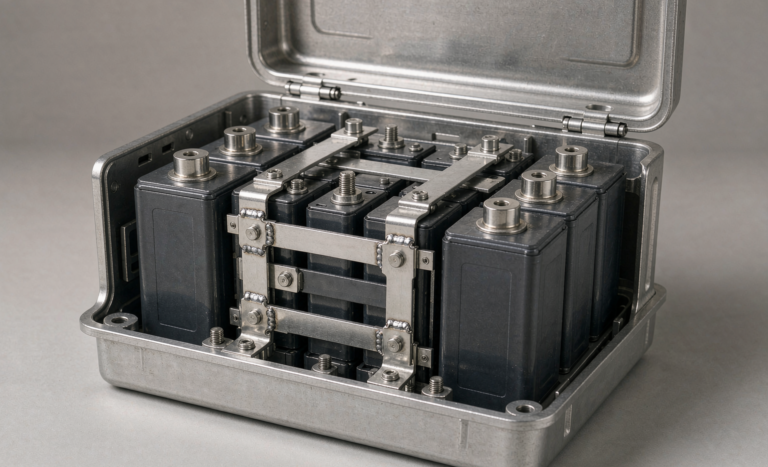
- Serviceability: modules ≤25 kg, tool-less access to the BMS, and published CAN DBC files. Proprietary locked packs are cheap to buy and expensive to own.
- Certification package: UN 38.3 transport tests, IEC 62619 for industrial stationary/motive safety, and for European fleets the Machinery Directive and EMC conformity. I also ask for cell-level IEC 62133-2 compliance where the supplier claims it — it costs them nothing if true and it is revealing if they hesitate.
- End-of-life terms: sodium-ion packs contain no cobalt and little lithium, so recycling economics differ from NMC. Contract a take-back path now; disposal liability compounds.
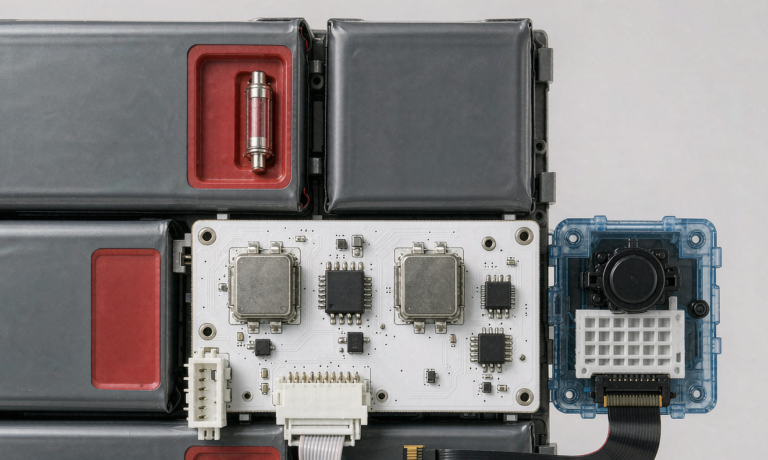
A note on supplier evaluation from the manufacturing side: ask to see the pack assembly plant’s end-of-line test data — capacity grading, hipot, and thermal-cycle screening. Suppliers who grade cells into tight capacity bins and document series-parallel matching deliver packs whose fleet capacity stays uniform as they age. Poorly matched cells age at the rate of the weakest cell, and your “80% at 3,000 cycles” quietly becomes 80% at 1,800.
Common Mistakes That Erode the Sodium-Ion Cost Case
- Oversizing “just in case.” Every excess kWh is capex you carry for a decade. Trust the duty-cycle study, not the sales sheet.
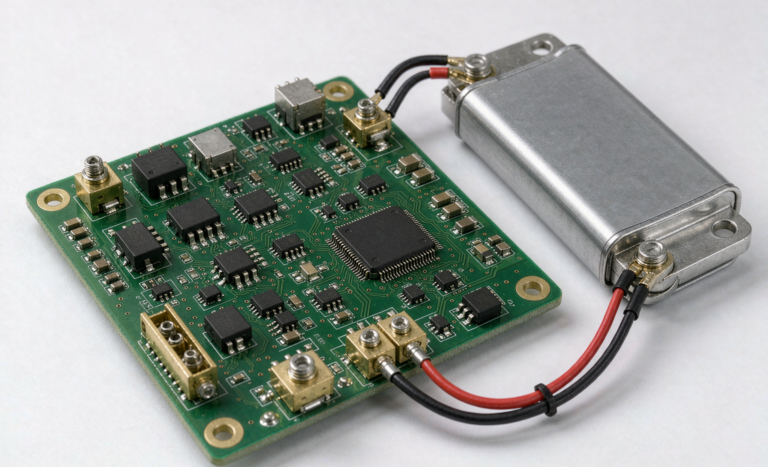
- Ignoring charger-to-truck communication. A sodium-ion pack without a proper CAN/J1939 handshake with the charger will either charge conservatively (losing opportunity-charge benefits) or aggressively (accelerating aging). Insist on validated charger compatibility lists.
- Skipping the pilot. I never convert a full fleet cold. Two trucks, 90 days, instrumented, with the same KPIs as the TCO model. A pilot costs $40,000 and de-risks a $1M decision.
- Treating all sodium-ion packs as equal. Chemistry variants (layered oxide versus Prussian blue cathodes) have different cycle life, energy density, and thermal behavior. Ask which variant you are buying and demand the test report behind the cycle-life claim.
- Forgetting the floors. Removing 1–1.5 tonnes of battery mass changes truck dynamics — often for the better (less floor loading, faster travel), but axle-load recalculation and, on some sites, racking load review are due diligence items.
FAQ
How much cheaper is a sodium-ion forklift battery than lithium iron phosphate?
At pack level in 2026 I see sodium-ion landing 15–30% below comparable LFP builds, and the gap widens when cold-chain capability removes preheating hardware. The bigger financial difference is rarely the cell price — it is the avoided swap-room labor and infrastructure in multi-shift operations.
Can sodium-ion packs really charge at −20°C?
Yes, within limits. Our field packs accept 0.3–0.5C charging at −20°C and retain roughly 88–92% of rated discharge capacity, without preheating circuits. I still derate fast-charge current below −20°C and specify charger-side interlocks as a belt-and-braces measure, but no pack-heating cycle is required — which is precisely why cold-chain fleets adopt the chemistry.
What cycle life should I demand from a forklift sodium-ion pack?
For a two-shift operation, contract ≥80% capacity retention at 3,000 cycles or 8 years, with annual BMS data verification. Quality layered-oxide cells in a well-managed pack (50–90% operating window, active balancing, site load-managed charging) will exceed that; the contract number is a floor, not a target.
Do I still need a battery change room if I convert to sodium-ion?
In nearly every multi-shift case, no. Opportunity charging during breaks replaces swapping, so the change room, side extractors, spare packs, and ventilation system are all removable from your cost model. Single-shift operations with relaxed schedules sometimes keep one shared spare pack as insurance, but that is a judgment call per site.
How does sodium-ion perform against opportunity charging long term?
Favorably. Unlike lead-acid, sodium-ion has no sulfation mechanism and no memory effect; partial cycling throughout the day is its native operating mode. Our oldest opportunity-charged forklift packs, now past 2,600 cycles, show capacity trajectories consistent with or better than their full-cycle laboratory aging curves.
What is the first step in a sodium-ion forklift conversion project?
Instrument your fleet. Two weeks of current-metered duty-cycle data across five representative trucks converts this entire article from theory into your numbers — energy per shift, returns state of charge, cold-room exposure, and labor attached to battery handling. Every dollar of optimization starts with that dataset.
Closing Perspective
Sodium-ion will not win every forklift battery bid on price per kilowatt-hour, and it does not need to. The chemistry earns its place where shifts stack up, where freezers run, and where the swap room’s labor bill finally gets counted. Run the duty-cycle study, price the derating honestly, negotiate data access into the warranty, and pilot before you scale. Do those four things and the cost model will tell you what eleven years of field conversions have taught me: for a growing share of warehouse fleets, the cheapest kilowatt-hour is the one that keeps working at −20°C — and sodium-ion is increasingly the chemistry that delivers it.