Sodium-Ion Battery Safety for Forklifts: Thermal,
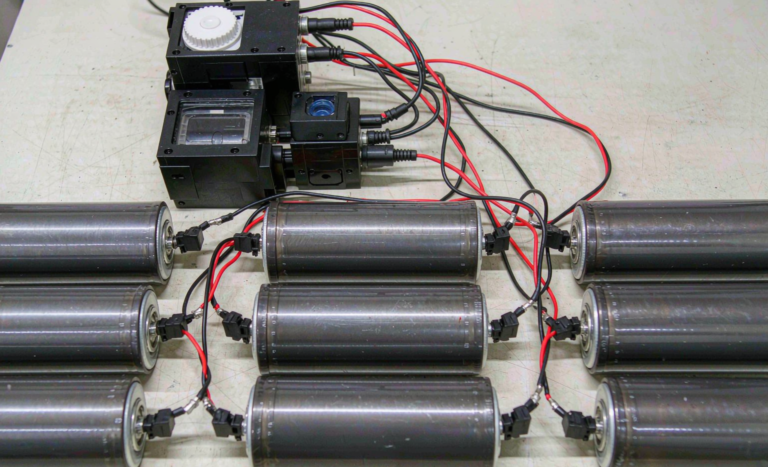
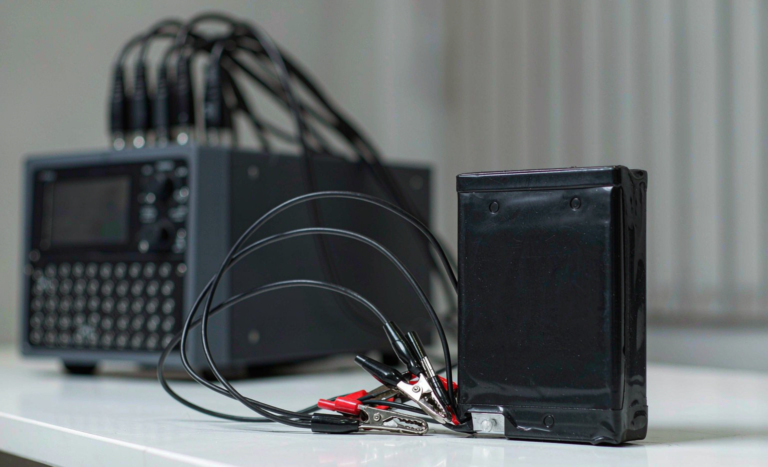
After eleven years designing lithium and sodium-ion packs for material handling equipment, I have welded more forklift battery busbars than I can count, and I have also watched a poorly specified lead-acid swap-out fail a customer audit because nobody had thought through the safety case. sodium-ion battery safety for forklifts is not a marketing checkbox — it is an engineering discipline that spans cell chemistry, pack mechanics, battery management system (BMS) logic, charging infrastructure, and operator behavior on the warehouse floor. In this guide I will walk you through how I evaluate safety for a sodium-ion forklift battery, what the data actually says about thermal behavior compared with lithium iron phosphate (LFP), and which standards and operational controls I insist on before any pack leaves our factory floor for a customer site.
Why Sodium-Ion Changes the Forklift Battery Safety Conversation
Electric forklifts are one of the most demanding mobile battery applications in industry. A Class I or Class II counterbalance truck may draw 300–600 A continuously during lifting peaks, operate in multi-shift duty cycles with opportunity charging, and work in environments where collision damage, dust, and moisture are routine. Traditionally this meant lead-acid — forgiving chemically but heavy, slow to charge, and corrosive — or LFP lithium, which brought fast charging and long cycle life but required careful thermal management.
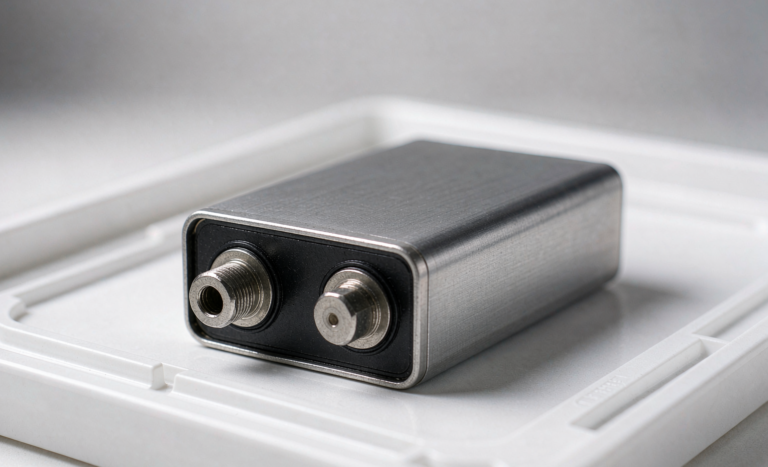
Sodium-ion cells sit in an interesting position. Typical prismatic sodium-ion cells based on layered oxide cathodes (for example, NaxNi-Fe-Mn-O2 type chemistries) operate in a voltage window of roughly 2.0–4.0 V per cell and deliver 140–170 Wh/kg at the cell level. That energy density is lower than LFP’s 160–200 Wh/kg, which sounds like a disadvantage — but from a safety engineering standpoint, lower stored energy per kilogram is genuinely helpful. Less energy in the same volume means less energy available to drive a thermal event if something goes wrong.
The second chemical advantage is the absence of lithium metal plating concerns in the same form. Sodium-ion cells tolerate low-temperature charging far better than lithium cells; most commercially available sodium-ion cells can accept charge at 0°C and many down to –20°C at reduced rates, where lithium-ion charging below 0°C without preheating risks lithium plating and internal short circuits. For cold-chain warehouses, unheated docks, and outdoor yard trucks, that is a real safety margin, not a spec-sheet nicety.
Thermal Runaway Behavior: What the Testing Data Shows
Every safety conversation in this industry eventually arrives at thermal runaway. In my own abuse testing experience and in the published literature, sodium-ion cells behave meaningfully differently from lithium-ion cells under abuse conditions:
- Peak exothermic temperatures. Nail penetration and overcharge testing of sodium-ion prismatic cells typically shows peak surface temperatures in the 200–400°C range for layered oxide chemistries, versus 500–800°C+ for NMC and frequently 300–500°C for LFP under comparable abuse. Lower peak temperatures mean less propagating damage to adjacent cells.
- No oxygen release from the cathode in the same way. Layered sodium oxides release oxygen less aggressively at elevated temperature than high-nickel lithium cathodes, which starves the fire of one of its three ingredients.
- Gas generation. Sodium-ion cells still vent during failure — mostly CO2, CO, H2, and some hydrocarbons — so a sodium-ion forklift battery still needs a venting strategy and pressure relief path. Do not let anyone tell you “sodium-ion cannot catch fire.” It can, under sufficient abuse; the point is that the initiation energy threshold is higher and the consequences are smaller.
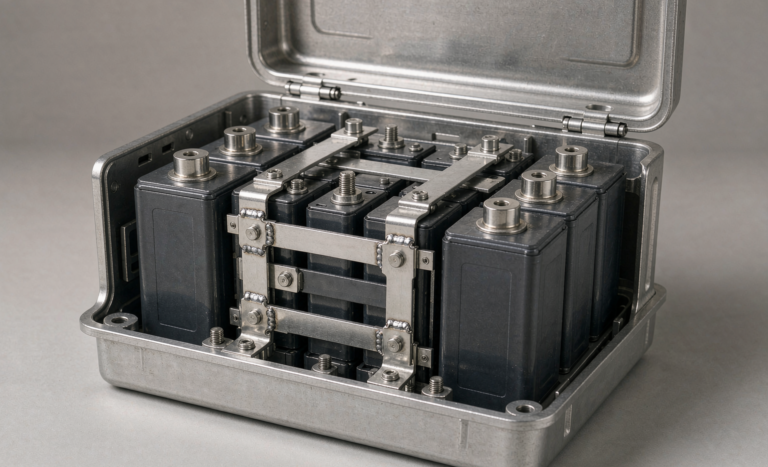
- Propagation behavior. In module-level tests I have reviewed, single-cell failure in a well-designed sodium-ion module with 3–5 mm inter-cell spacing and appropriate mica or aerogel barriers frequently does not propagate to neighbors. The same test on a tightly packed NMC module often propagates.
The engineering takeaway is this: sodium-ion gives you a wider safety envelope, but the envelope only exists if the pack around the cells is engineered correctly. Cell chemistry is roughly 40% of the safety story; the remaining 60% is mechanical design, BMS protection, and thermal design.
BMS Protection Layers: The Non-Negotiables for Forklift Duty
The BMS is where safety theory becomes enforced reality. For a forklift sodium-ion battery — which faces vibration, moisture, and aggressive duty cycles — I insist on the following protection architecture:
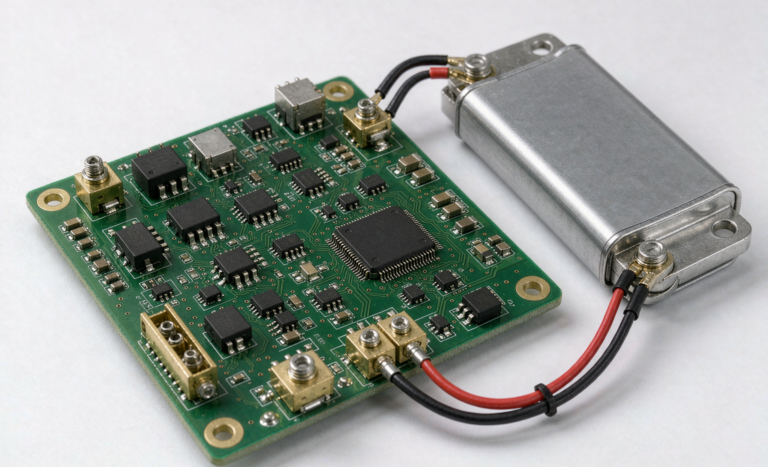
- Cell-level supervision. Voltage monitoring on every series cell group with ±5 mV accuracy, sampled at least 10 times per second. Sodium-ion cell voltages sit lower than lithium (nominal ~3.1 V vs 3.2–3.7 V), so the BMS thresholds must be calibrated for the specific chemistry — reusing an LFP BMS profile on sodium cells is a dangerous shortcut I have seen attempted more than once.
- Overcurrent protection with staged response. Software current limits, followed by a hardware disconnect (typically a pyro-fuse or high-current DC contactor), followed by a conventional fuse as the last line. Forklift lift currents spike hard; the BMS must distinguish legitimate transient loads from fault currents with correct time-current curves.
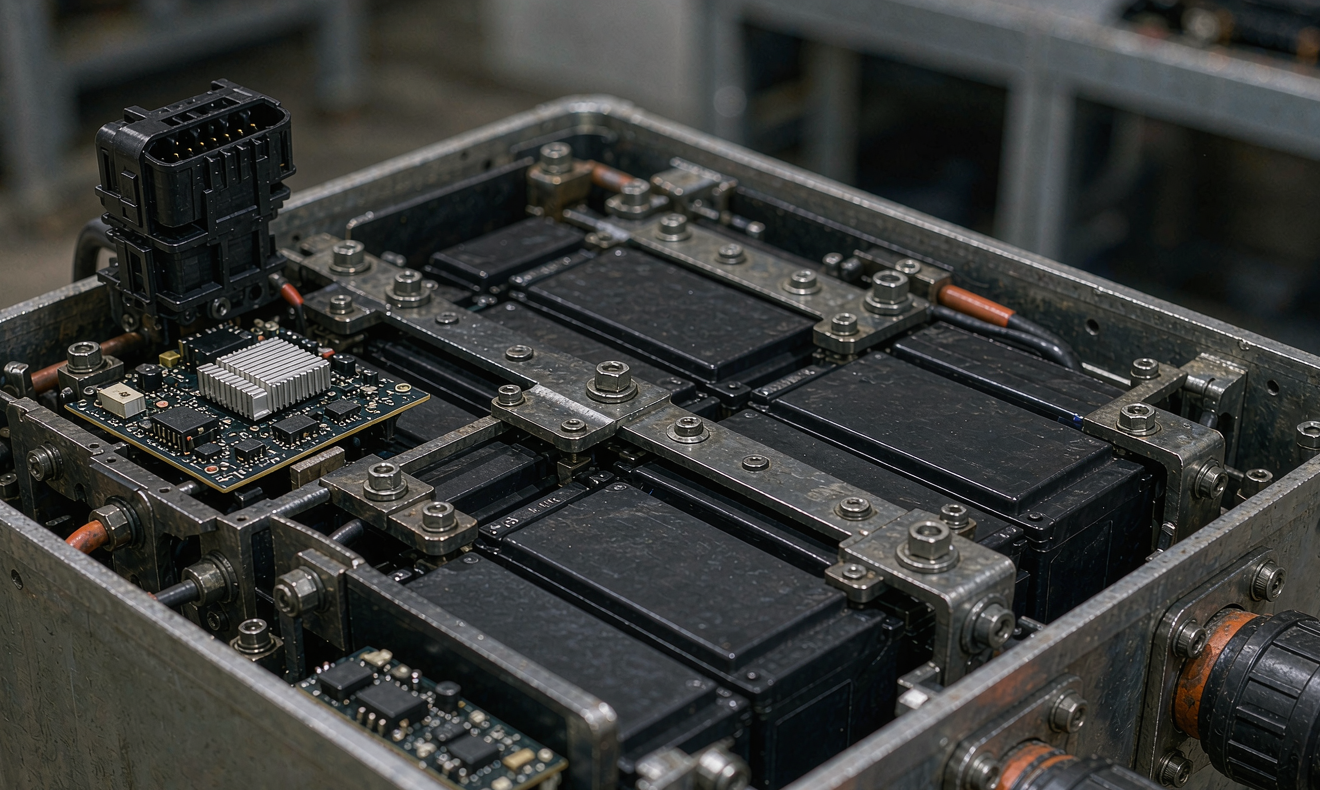
- Temperature sensing density. At minimum one sensor per 4–6 cells plus one on each busbar joint. Busbar joint temperature rise is the earliest indicator of a loose connection — the most common real-world failure mode in industrial packs I have investigated.
- Insulation monitoring. Forklift packs at 48–80 V nominal are usually treated as SELV-class systems, but moisture ingress in washdown environments can degrade isolation. Continuous insulation resistance monitoring with a threshold around 500 Ω/V catches degrading harnesses before they become shock or arc hazards.
- Contactor weld detection. The BMS must verify on every startup that the main contactors open properly. A welded contactor on a forklift that gets parked with a fault can keep the traction circuit energized — an avoidable and serious hazard.
Mechanical and Environmental Safety: Designing for Warehouse Reality
Forklifts crash. Racks get clipped, loads shift, and battery compartment covers take impacts. A safety case that assumes gentle handling will fail in the field within months. My mechanical safety checklist for a sodium-ion forklift battery includes:
- Cell fixation and compression. Prismatic sodium-ion cells swell with age and with temperature cycling. The module frame must maintain uniform compression (typically 200–500 N per cell for common formats) across the cell’s 2,000–4,000 cycle life without loosening — I use preloaded spring washers or Belleville stacks on terminal fasteners, because plain bolted joints relax under vibration.
- IP rating matched to application. IP54 minimum for indoor general warehousing; IP65 for washdown, food processing, and cold storage environments where condensation cycles are aggressive.
- Vibration compliance. IEC 61373-class vibration testing (or the equivalent in EN 1175 for industrial trucks) — random vibration in three axes with the pack energized. Loose hardware discovered on the shake table is infinitely cheaper than a busbar short discovered in a fruit-processing cold store.
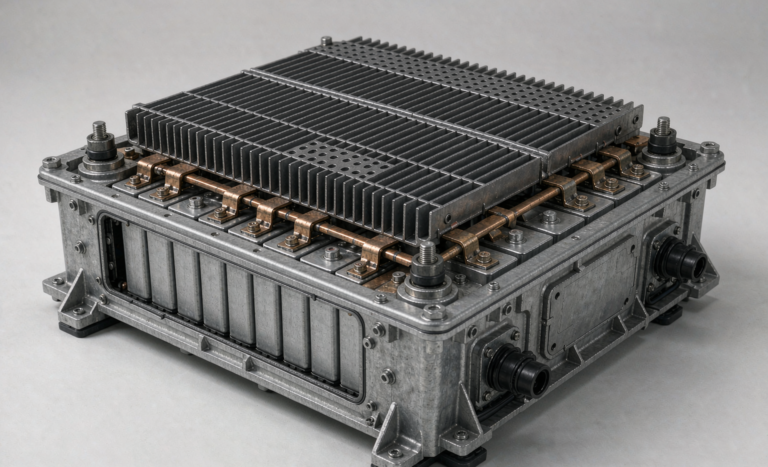
- Crush and impact provisions. The battery tray should withstand a defined corner impact without intruding into cell space, and prismatic cells should be oriented so that their vent directions (where present) do not point at the operator compartment or at adjacent cell faces.
- Thermal path design. Sodium-ion cells have lower thermal runaway risk but still need normal heat rejection at high discharge rates. Passive air cooling suffices for most 48 V forklift packs up to around 30 kWh if the discharge C-rate is kept near 1C continuous; above that, cold plates or forced air are warranted.
Charging Safety: Bays, Opportunity Charging, and Electrical Infrastructure
In industrial truck safety statistics, charging areas cause more incidents than the batteries themselves — hydrogen ventilation from lead-acid, damaged connectors, and improvised wiring being the usual culprits. Sodium-ion simplifies part of this picture and leaves other parts unchanged.
Because sodium-ion packs do not gas during normal charging, you eliminate the hydrogen ventilation requirement that dominates lead-acid charging bay design (per standards such as EN 62485-3 in Europe and NFPA 505 in North America). That removes ventilation ducting cost and allows charging infrastructure to sit closer to storage racks. What remains is conventional electrical safety: correctly rated DC output, proper connector interlocks, and ground-fault protection.
Opportunity charging — short top-ups during shift breaks — is where sodium-ion genuinely shines. The chemistry tolerates partial-state-of-charge operation without the plate sulfation that plagues lead-acid, and it accepts high charge rates at moderate temperatures. From a safety standpoint, the BMS must still gate charging on temperature and voltage, and the charger-to-BMS communication link (CAN bus, typically J1939-derived profiles in material handling) must fail safe: no communication means no charge current.
One practical note from field service: specify mechanical connector retention that survives forklift drivers. Broken charge connector latch mechanisms are among the most common warranty items we see, and a loose connection at 100+ A charging is a genuine thermal hazard. Interlocked connectors that disable charge current before unmating are worth the premium.
Standards and Compliance: What Applies to Sodium-Ion Forklift Batteries
Regulatory coverage for sodium-ion in industrial trucks is still maturing, and buyers should ask pointed questions here. The framework I apply to a new sodium-ion forklift pack:
- UN 38.3 — mandatory for transport regardless of chemistry (T.1 through T.8 tests: altitude, thermal cycling, vibration, shock, external short, impact/crush, overcharge, forced discharge). Every shippable sodium-ion pack needs current UN 38.3 test summaries and correct classification for dangerous goods documentation.
- IEC 62133-2 — the safety standard for portable sealed secondary cells; its abuse-test philosophy (short circuit, overcharge, thermal abuse, crush) is widely borrowed for industrial pack cell qualification even where not strictly required.
- EN 1175 — the European safety standard for electrical systems on industrial trucks, covering traction battery construction, connector interlocks, and insulation resistance. For packs sold into European fleets, EN 1175 compliance assessment is essential.
- IEC 62619 — safety requirements for industrial-application lithium cells and batteries; while written for lithium, most certification bodies currently apply IEC 62619’s test framework to sodium-ion industrial packs by analogy, and I design to it until sodium-specific standards mature.
- Cell-level certifications. Ask for the cell manufacturer’s third-party abuse test reports — nail penetration, overcharge to 150% SOC, and thermal stability by ARC (accelerating rate calorimetry). Reputable sodium-ion cell suppliers publish peak self-heating temperatures well above 200°C; a supplier who will not share this data is a supplier to avoid.
Operational Safety: Procedures and Training That Close the Loop
Engineering controls fail without operational discipline. When we commission a sodium-ion fleet, my team delivers and walks through a site-specific safety procedure covering:
- Damage response. Any pack that has taken a significant impact gets quarantined in a designated area (ideally outdoors or near an exit, on non-combustible ground) for a 24-hour observation period while the BMS logs are reviewed for cell voltage divergence or temperature anomalies before it returns to service.
- Warning sign literacy. Train operators to treat a hot pack housing smell, electrolyte-solvent odor (sweet, ester-like), or a BMS fault indicator as stop-work conditions, not as symptoms to “push through to end of shift.”
- Fire response planning. Sodium-ion pack fires respond to the same playbook as lithium: if it is venting, evacuate the immediate area, do not open the pack, and if feasible move or flood with copious water to prevent propagation. Standard ABC extinguishers will not stop a cell-level thermal event, though they protect surroundings. Update your site’s emergency plan — many facility fire risk assessments still assume lead-acid.
- End-of-life handling. Sodium-ion packs should be discharged to storage voltage (typically 30–40% SOC), have terminals protected, and be routed to a recycler that has confirmed sodium-ion acceptance. The recycling channel is younger than lithium’s, so contract this before packs age out, not after.
A Practical Risk Comparison: Sodium-Ion vs LFP vs Lead-Acid for Forklifts
To put it all together, here is how the three chemistries compare on the safety dimensions that matter for material handling:
- Thermal runaway threshold: sodium-ion and LFP both substantially higher than NMC; sodium-ion’s initiation energy is the highest of the three in most published abuse data.
- Low-temperature charging safety: sodium-ion is clearly best-in-class; LFP and lead-acid both need temperature gating (lead-acid for efficiency and freezing behavior, LFP for plating risk).
- Chemical hazard exposure: lead-acid carries sulfuric acid and hydrogen gas risks that sodium-ion and LFP eliminate; this is why many facilities are migrating away from lead-acid beyond pure performance arguments.
- Energy per kilogram: lead-acid’s 30–40 Wh/kg is the “safest” in a crash-energy sense but delivers terrible runtime; sodium-ion’s mid-range energy density is a rational compromise.
- Maturity of standards and field data: lead-acid has a century of data, LFP has a decade in high volumes, sodium-ion is the newcomer — its chemistry is intrinsically safe-leaning, but specify from suppliers with transparent third-party test data.
Frequently Asked Questions
Can a sodium-ion forklift battery still catch fire?
Yes, under severe abuse such as major mechanical damage combined with a high state of charge, or sustained external fire. The difference is quantitative: higher initiation energy, lower peak temperatures, and less vigorous gas generation than high-nickel lithium chemistries. Design the pack properly and the practical fire risk in a forklift duty cycle is comparable to or lower than LFP.
Do sodium-ion forklift batteries need special chargers?
Yes. Sodium-ion cells use different voltage limits (typically 1.5–4.0 V per cell operating range) than LFP, so the charger profile and the BMS-to-charger CAN protocol must be configured for sodium chemistry. Using an LFP charger profile is a real overcharge risk. Any credible supplier delivers a matched charger or a validated charger specification with the pack.
Are sodium-ion batteries safe in cold storage warehouses?
They are among the safest options for cold environments because they accept charging at low temperatures where lithium cells risk plating. I still recommend BMS-gated charging with reduced current below 0°C, and insulating the pack bay in freezers below –20°C for both safety and runtime reasons.
What maintenance does a sodium-ion forklift battery require?
Far less than lead-acid: no watering, no equalization charges, no acid handling. The remaining tasks are periodic torque checks on accessible power connections, connector latch inspection, keeping vents clear, and an annual BMS log review to catch cell divergence trends early.
How do I verify a supplier’s sodium-ion safety claims?
Ask for three documents: current UN 38.3 test summary, third-party cell abuse test reports (nail penetration and ARC data), and the pack-level IEC 62619 or EN 1175 assessment. Then ask which BMS protection functions are hardware-backed versus software-only — a pack whose only overcurrent protection is a software limit is not one I would install in a multi-shift warehouse.
Is sodium-ion safe for indoor charging bays without ventilation?
Generally yes for normal charging, because the chemistry does not evolve hydrogen, and EN 62485-3’s ventilation requirements are driven by lead-acid gassing. You should still confirm local code interpretation with your authority having jurisdiction, provide normal room ventilation for heat rejection, and locate charging bays away from combustible storage per general fire code.