Battery Solutions for Agricultural and Mining Equipment
Why Agricultural and Mining Equipment Are Moving to Battery Power
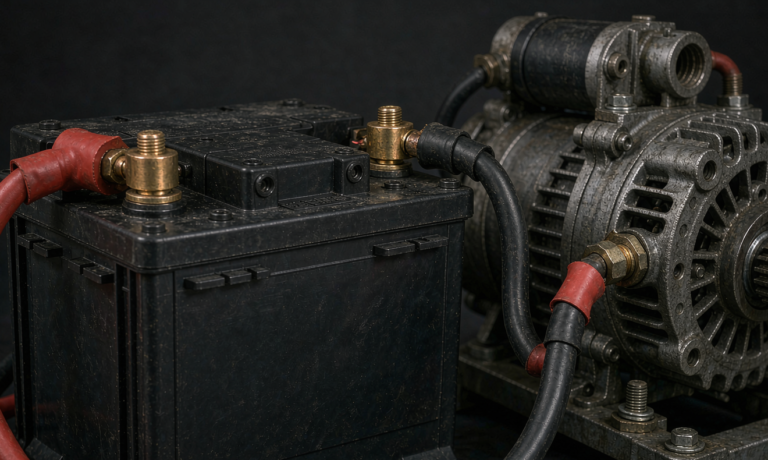
Over the last four years on the factory floor and in the field, I have watched two of the most conservative equipment segments in the world—agriculture and mining—quietly electrify. As a lithium battery engineer at Horizon Power, I have spec’d packs for 300 hp tractors, autonomous crop sprayers, and 60-tonne load-haul-dump (LHD) machines running underground. The drivers are the same in both sectors: diesel is expensive, emissions rules are tightening, and operators want less heat, less noise, and predictable uptime. A well-designed battery solution does more than replace a fuel tank—it reshapes how the whole machine is built.
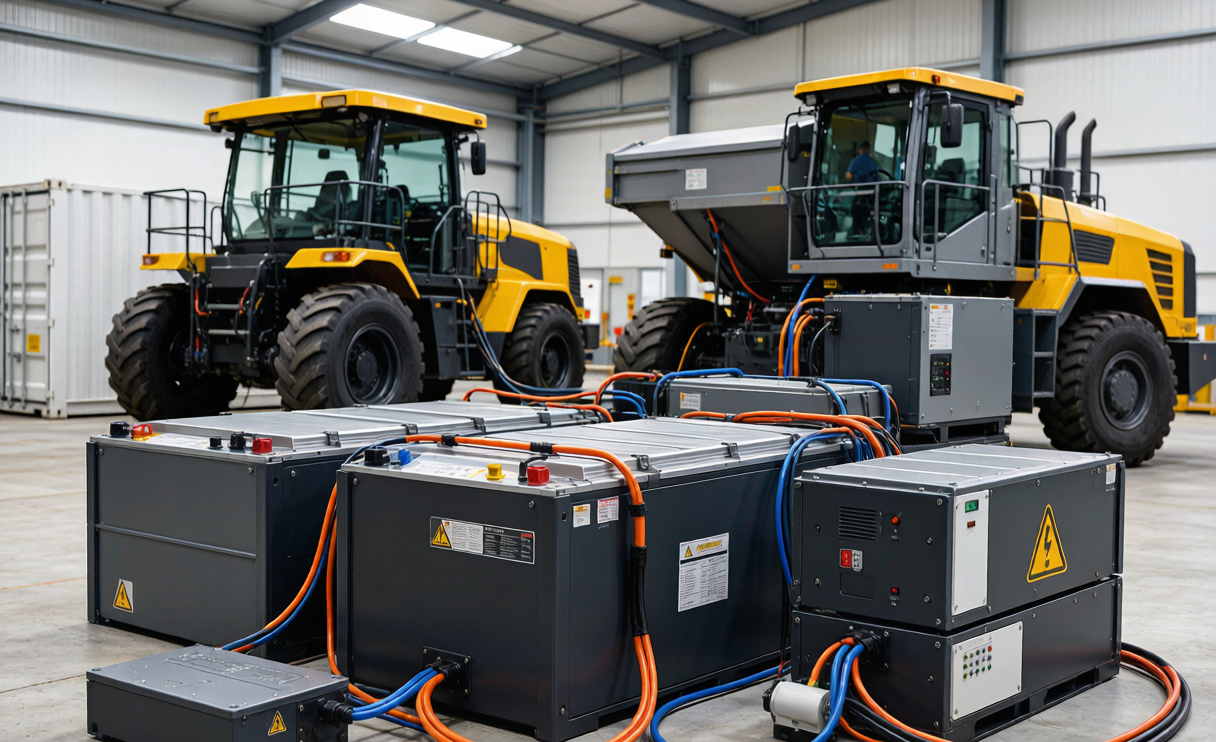
In agriculture, the shift is led by tractors, sprayers, and autonomous weeding robots that run fixed daily routes. In mining, it is led by underground fleets where ventilation is a literal life-safety cost: every litre of diesel burned underground must be pushed out by enormous ventilation fans. Replace diesel with a battery application solution and you cut both the fuel bill and the ventilation energy at the same time. The economics are compelling once you look past the sticker price.
Load Profiles: What the Cells Actually See
The single biggest mistake I see in RFQs is treating agricultural and mining duty cycles as one category. They are not. A row-crop tractor pulling a planter has a steady, moderate draw—often 0.3C to 0.5C for hours. A mining LHD dumping a 12-tonne load has violent current spikes: 5C to 8C for seconds, then full regeneration on the downhill return. If you put a tractor pack into an LHD, the busbars melt. If you put an LHD pack into a tractor, you have paid for cells you never use.
For agriculture, I typically specify LFP (LiFePO4) cells at 1C continuous, 3C peak, with a generous thermal margin because machines sit in direct sun. For mining, I move to high-rate NMC or LFP-with-high-rate-grading, rated 3C continuous and 8C peak, derated for the 45°C ambient you find near a crusher. A custom battery solution starts by logging the real current profile for at least one full shift—not by trusting the nameplate.
Chemistry, Energy Density and the Vibration Problem
Both sectors punish batteries with shock and vibration far beyond consumer electronics. A combine harvester transmits 5–15 g of broadband vibration to its chassis; an underground truck hits potholes that would destroy a laptop. This is why cell choice and mechanical design matter more than chemistry headlines.
- LFP is my default for both sectors when weight is not the binding constraint. It is thermally stable, tolerant of abuse, and passes nail-penetration and UN38.3 transit testing with margin. Cycle life of 3,000–6,000 cycles at 80% depth of discharge is realistic in field data.
- NMC earns its place only when mass or volume is the limit—long-distance autonomous survey drones aside, this means mining equipment where every kilogram of battery reduces payload. You pay for it in thermal management and stricter BMS limits.
- Semi-solid-state is now appearing in pilot mining fleets where energy density (300–350 Wh/kg) extends shift length, but it remains a premium option I recommend only above 1,000-unit annual volume.
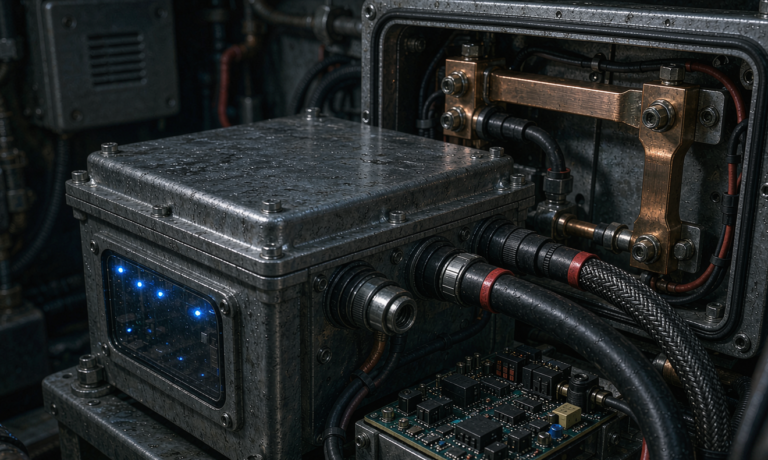
Mechanically, I insist on potted modules, stainless bracket hardware, and vibration qualification to IEC 60068-2-64 random-vibration profiles. A pack that passes the lab but rattles apart in week six is not a battery solution—it is a warranty claim.
Thermal Management in Dust, Mud and Heat
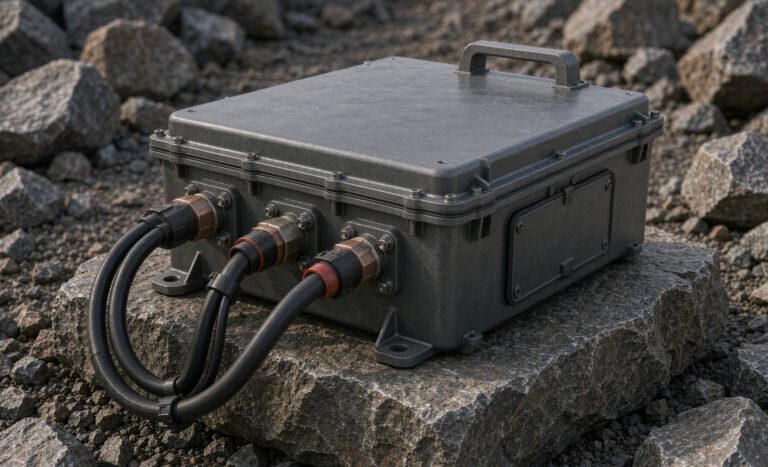
Agricultural environments are dusty and often humid; mining adds explosive-gas risk underground. Sealing is not optional. I design to a minimum IP67 enclosure for above-ground agriculture and IP68 with intrinsically-safe (IEC 60079) compartment isolation for underground coal and potash mines.
Thermal strategy differs by duty. Tractors and sprayers tolerate passive cooling with smart derating—if cell temperature crosses 45°C, the BMS trims output rather than cutting power mid-field. Mining machines, with their C-rate spikes, need liquid cooling loops with dielectric fluid, because an air-cooled pack in a 45°C stope will throttle to uselessness within twenty minutes. The cooling circuit itself must be isolated from the cells so a leak cannot create a fault path.
The BMS: Where a Battery Solution Lives or Dies
A pack is only as good as the battery management system watching it. For agriculture I specify a BMS with CAN bus (ISO 11783 / ISOBUS) so the tractor’s display shows state of charge natively. For mining, I add redundant current sensing and a hardware contactor that physically disconnects on fault—because underground, a thermal event is a confined-space emergency, not a nuisance.
Key BMS functions I will not compromise on:
- Per-cell voltage monitoring with <5 mV accuracy.
- Balancing current of at least 60 mA passive (or active above 100 Ah).
- SOH estimation that actually learns from cycle history, not a fixed counter.
- Black-box logging of fault events for root-cause analysis after a failure.
When a client asks me to “keep it simple,” I explain that the BMS is the cheapest insurance in the whole machine. A battery solution provider that ships a dumb pack is shipping a liability.
Charging, Swapping and Shift Math
Both sectors run on shift calendars, so energy logistics decide whether electrification works. A tractor that needs eight hours to charge between two four-hour shifts is a non-starter. I model three strategies:
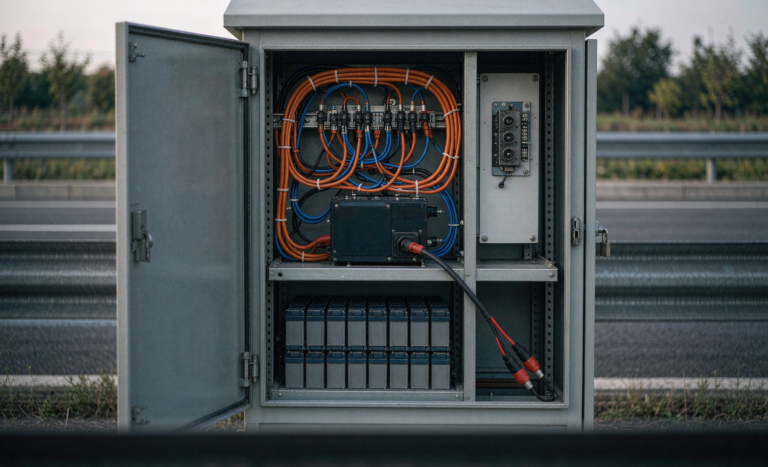
- Opportunity charging—a 30-minute DC fast top-up at lunch using a 50–150 kW charger. Works for agriculture with predictable breaks.
- Hot-swapping—a second pack on a cart, exchanged in under five minutes. This is my default for continuous mining fleets because ventilation down-time costs more than the spare pack.
- Sequential shift rotation—enough packs that some charge while others work. Capital-heavy but operationally simplest.
Whichever we choose, the charger must handshake cleanly with the BMS over the right protocol (CCS for heavy rigs, or a controlled proprietary CAN link), and the pack must report real temperature so the charger tapers correctly. I have seen packs destroyed by chargers that ignored the BMS’s “too hot” flag.
Certifications You Cannot Skip
These machines move across borders and into regulated sites, so paperwork is part of the engineering. Every pack I release carries UN38.3 (transport), IEC 62133 (safety for portable cells), and CE marking for the EU market. For North America, UL 2580 covers the battery and UL 1741 covers the inverter/charger interface. Mining equipment bound for the EU also needs ATEX or IECEx certification for hazardous zones—this is where a generic consumer pack fails instantly. I build the enclosure and isolation strategy around the zone classification from day one, not as a retrofit.
Field Data: What Owners Actually See
Across the agricultural and mining deployments I support, the pattern is consistent. Energy cost per operating hour drops 60–80% versus diesel. Maintenance intervals lengthen because there is no engine, no oil, no filters. Underground mines report ventilation electricity savings of 25–40% after removing diesel load. The honest caveats: cold-start in winter still needs pack pre-heating (I add a 200–400 W pad heater controlled by the BMS), and total cost of ownership only beats diesel when daily utilisation is high. A tractor used four hours a week will not pay back as fast as one running two shifts.
FAQ
Can one battery platform serve both agriculture and mining?
Structurally, yes—the same LFP cell and BMS architecture can be shared. But the enclosure, cooling, and certification layers differ enough that I treat them as two derivative products from one core design, not a single SKU. The mining derivative adds IP68, intrinsic safety, and IECEx; the agricultural one adds ISOBUS and dust-resistant passive cooling.
How long do these packs last in the field?
With LFP and 80% depth of discharge, expect 3,000–6,000 cycles. For a tractor running one shift daily, that is roughly 8–12 years. Mining fleets with hot-swap and shallower effective DoD often exceed that because no single pack absorbs every cycle.
Is fast charging safe for large equipment packs?
Yes, when the BMS and charger are married by design. I cap charge C-rate at 1C for LFP and taper hard above 45°C cell temperature. The danger comes from third-party chargers that ignore BMS flags—never pair an unqualified charger with a heavy pack.
What about fire risk underground?
This is the question every mine safety officer asks, and rightly so. I use LFP for its thermal stability, isolate the pack in an IECEx-compliant enclosure, add a hardware disconnect contactor, and log every fault. Combined with the removal of diesel as an ignition source, a certified battery solution is generally safer than the diesel alternative it replaces.
How do I start an RFQ for my equipment?
Send me one full-shift current and voltage log, your target runtime, the operating temperature range, and the certification regions you sell into. That is enough for me to propose a custom battery solution with a realistic cost and payback model. Guessing from nameplate specs is how projects go over budget.