Battery Solution for Drones in Surveying and Mapping
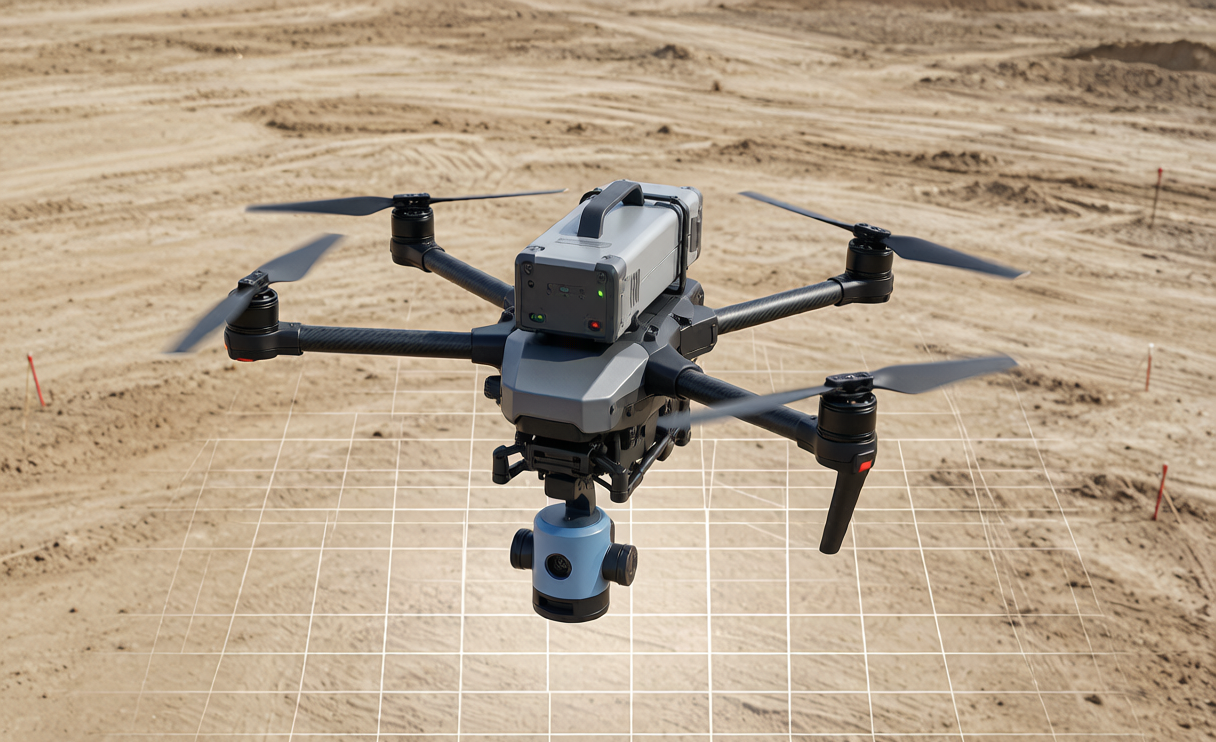
From my bench at Horizon Power, I have specced power systems for more mapping and surveying airframes than I can count. A surveying drone is not a toy quadcopter. It carries a heavy payload, a thermal camera, an RTK-GNSS receiver, and often a LiDAR pod, then flies precise grid patterns for 30 to 90 minutes while logging telemetry every second. The battery solution you bolt under that airframe decides whether your crew finishes the site before the light dies or spends the afternoon swapping packs on a windy hill.
This field guide walks through how I approach a battery application solution for survey and mapping drones: the energy math, the chemistry tradeoffs, the BMS that keeps it honest, and the certifications that let you actually fly and ship it. I will keep the engineering concrete and the numbers real.
Why Surveying and Mapping Drones Have Unique Power Demands
Survey drones live in a narrow, unforgiving operating window. The platform must hold a stable hover while the sensors stream data, climb and descend between flight lines, and tolerate repeated full-throttle transitions when wind gusts hit the airframe. Unlike a cinematic drone that cruises at partial throttle, a mapping drone spends most of its mission near its maximum sustained discharge.
That duty cycle changes the battery design. A typical agricultural or mapping airframe draws 60 to 120 amps continuously from a 6S or 12S pack. The cells must sustain that load without voltage sag, because a sag below the flight-controller cutoff triggers an unwanted landing. In my experience the single biggest cause of mid-mission failures is undersizing the pack for sustained C-rate, not for total capacity.
Wind and altitude compound the problem. A 10 m/s headwind roughly doubles the required thrust and therefore the current. A custom battery solution that is tuned to the platform’s actual thrust curve, rather than a generic off-the-shelf pack, is what separates a reliable survey program from a frustrating one.
Sizing the Battery: Energy vs Endurance vs Payload
When a customer asks me how big the battery should be, my first question is never “how many amp-hours.” It is “what is your payload mass and your target flight time.” Energy, endurance, and payload are locked in a triangle, and you cannot maximize all three.
Here is the practical math I use. A 6S (22.2 V) pack at 16,000 mAh holds about 355 Wh. At a realistic system efficiency of 12 to 15 Wh per minute of hover for a mid-size mapping drone, that yields roughly 24 to 30 minutes of usable flight before the reserve. Add a 2 kg LiDAR pod and you lose 20 to 30 percent of that endurance immediately. I always reserve 15 percent state-of-charge for the return-to-home buffer and another 5 percent for cold-weather margin.
The takeaway for specifiers: do not chase the highest mAh at any cost. A heavier pack increases rotor load, which increases current, which heats the cells, which reduces cycle life. A balanced battery solution picks the smallest pack that meets the mission plus reserve, then optimizes the cell format for mass.
Chemistry Choices: Why We Default to High-Discharge Li-ion and LFP
For most mapping drones I spec high-discharge lithium-ion in a 6S or 12S configuration, and for ground-control or ruggedized field kits I lean toward LFP. The reason is the discharge profile. NCM lithium-ion gives the best energy density, around 200 to 250 Wh/kg in a quality cylindrical or pouch cell, which directly extends flight time. LFP trades some energy density for dramatically longer cycle life and superior thermal stability, which matters for base-station packs that cycle daily.
I avoid pushing cells past 1C continuous in sustained-hover missions unless the cell is explicitly rated for it. A cell datasheet that says “15C peak” tells you nothing about how it behaves at 3C for forty minutes straight. We validate every battery application solution with a discharge profile that mirrors the real flight log, not the marketing number.
Temperature is the silent killer. Below 0 degrees C, lithium-ion plating risk climbs sharply if you fast-charge or pull high current. For surveys in alpine or northern regions, I spec cell heating or a pre-condition protocol and keep the pack above 10 degrees C before launch. This is where a custom battery solution earns its budget: the thermal envelope is designed in, not bolted on.
BMS and Telemetry: The Brain Behind a Reliable Battery Solution
A cell stack is only as trustworthy as the management electronics watching it. For survey drones I specify a BMS solution with per-cell voltage monitoring, balanced passive or active topping, and a robust communication link to the flight controller over UART, CAN, or SMBus. The drone should know cell 3 is sagging before the pilot does.
Telemetry is where the real value shows up in the field. A good BMS streams state-of-charge, internal resistance trend, and per-cell temperature to the ground station. After a season of flights, that data lets us predict which packs are drifting out of spec and pull them before they fail. For fleet operators running dozens of airframes, this telemetry-driven maintenance is what keeps a survey program airborne through a whole season.
I also insist on redundant protections: over-current, over-temperature, and short-circuit cutoff at the pack level, plus a physical disconnect the pilot can trigger. Redundancy is not optional when your payload is a 40,000 dollar LiDAR pod hanging two hundred feet up.
Certifications and Field Compliance
None of this matters if you cannot legally fly or ship the pack. Every survey-drone battery we build passes UN38.3, the transport safety test that covers altitude simulation, thermal, vibration, shock, external short, impact, and overcharge. For cell-level safety we design to IEC 62133, and for the airframe’s electrical system we keep the pack compatible with the regional limits set by the FAA in the United States and EASA in Europe.
On the ground, the math is simple but strict. A pack above 100 Wh per cell or 300 Wh total crosses into the “must ship as Class 9 dangerous goods” category, which changes how your crew travels with spares. I spec survey kits to stay just under those thresholds where the mission allows, because a battery solution that strands your team at customs is a failed battery solution.
I tell every OEM client the same thing: build the compliance file before the first flight, not after the recall. Keep the test reports, the cell traceability, and the UN38.3 documentation in one folder, and your audits become a formality instead of a fire drill.
A Custom Battery Solution Workflow for OEMs
When an OEM comes to us with a new mapping airframe, the engagement follows a fixed path. First, we log the real flight data: thrust curve, peak and sustained current, ambient range, and payload mass. Second, we run cell-level discharge validation against that profile. Third, we design the pack mechanically, accounting for mounting, vibration, and the connector the airframe already uses.
Fourth, we build a prototype and fly it against the customer’s own mission. Fifth, we tune the BMS parameters and telemetry reporting. Finally, we lock the bill of materials and certify. This is the difference between a generic pack and a true custom battery solution: the design is proven against your flight, not someone else’s brochure.
If you are an OEM planning a survey-drone launch, the cheapest time to involve a battery partner is at the airframe design review, not at the production ramp. A late-stage pack change cascades into mounting, wiring, and firmware work that costs far more than getting it right early.
Frequently Asked Questions
How long should a mapping drone battery last per flight?
For a mid-size survey drone with a light camera payload, target 25 to 35 minutes of usable flight, holding a 15 percent return buffer. Heavy LiDAR pods typically cut that to 18 to 25 minutes. The right battery solution balances endurance against payload and reserve rather than maximizing raw minutes.
Can I use the same battery pack for both surveying and cinematic drones?
Sometimes, if the voltage and connector match and the discharge profile is similar. But survey missions pull sustained high current while cinematic flights cruise at partial throttle, so a pack tuned for one will underperform on the other. A purpose-built battery application solution is usually worth it for production fleets.
What discharge rating (C-rate) do surveying drones need?
Most mapping airframes need continuous discharge around 3C to 6C depending on payload and rotor size. I validate against the actual flight log, not the peak C-rate on the cell label, because sustained draw is what degrades cells and triggers voltage sag.
How do I ship surveying drone batteries internationally?
Every pack must pass UN38.3 and travel as Class 9 dangerous goods once it exceeds 100 Wh per cell or 300 Wh total. Keep cells under those thresholds where the mission allows, carry the test reports, and brief your logistics team before the trip. This is a non-negotiable part of any field-ready battery solution.
Is a custom battery solution worth it versus off-the-shelf packs?
For a single hobby build, no. For an OEM shipping dozens or hundreds of airframes, absolutely. A custom pack is tuned to your thrust curve, mounting, and telemetry, which improves endurance, reliability, and certification speed. The earlier you engage the battery partner, the lower the total cost.
How does cold weather affect mapping drone battery performance?
Below 0 degrees C lithium-ion loses capacity and gains plating risk under high current or fast charge. For alpine surveys I spec cell pre-conditioning or heating and keep the pack above 10 degrees C at launch. Skipping this step is the fastest way to lose endurance and shorten cycle life.