Battery Solution for Wearable and Body-Worn Devices
As a senior lithium battery engineer at Horizon Power, I have spent the better part of a decade designing power systems that people literally strap to their bodies. A battery solution for wearable and body-worn devices is unlike any other brief I take on. The moment a cell sits against human skin, the rules change: safety margins tighten, form factors shrink to millimeters, and a single thermal event is not a product recall in a distant warehouse — it is a personal injury on someone’s wrist or chest. That reality shapes every decision we make, from chemistry selection to the glue we use in the enclosure.
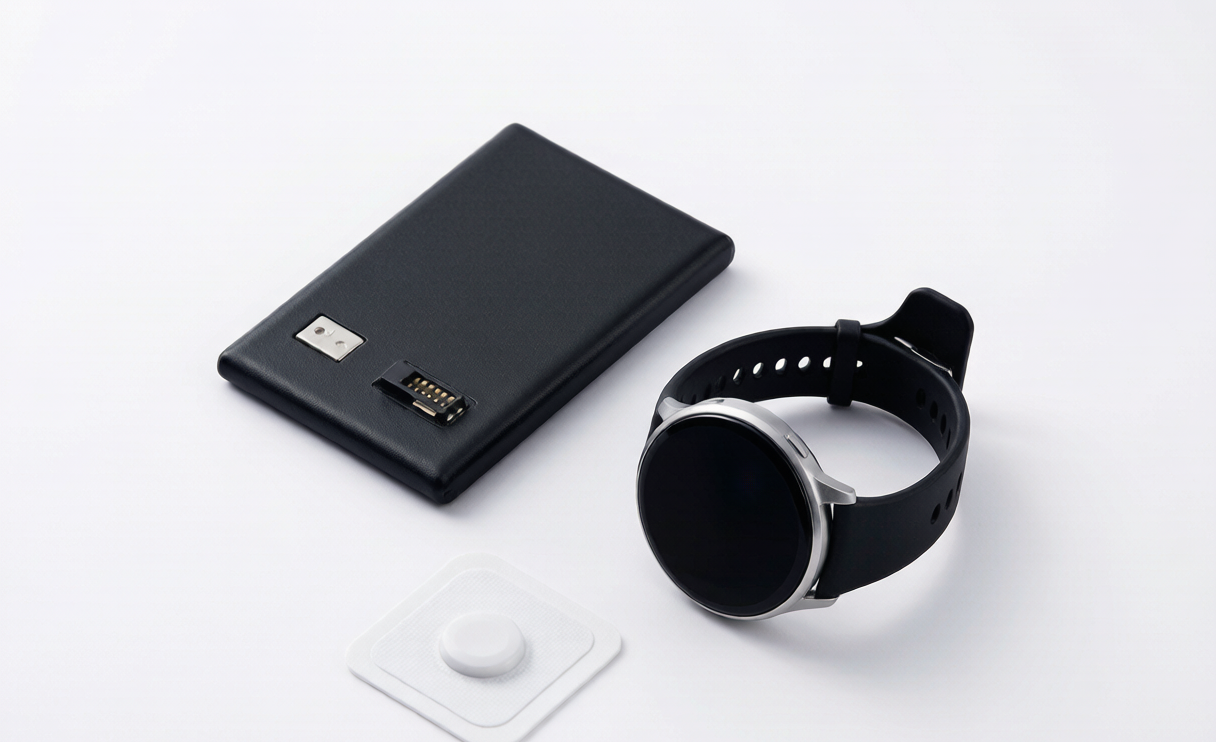
Why Body-Worn Power Is a Different Engineering Problem
When I brief a new wearable program, the first thing I tell the OEM is that “small” is the easy part. The hard part is the operating envelope. A body-worn device lives between roughly 0°C and 40°C ambient, but it also sits against skin that runs at 32–36°C and can trap heat against the enclosure. That means the cell must stay safe even when its only cooling path is a layer of cloth and epidermis. For a drone battery or an ESS rack, you have airflow and metal enclosures; for a wearable, you have a 1–2 mm plastic shell and almost no thermal mass to absorb a fault.
This is why a generic lithium battery cell rarely survives a body-worn brief without full re-validation. Heat that would dissipate in seconds inside a metal pack can linger for minutes against skin. We design the thermal path first, then the cell — never the reverse. A reliable battery solution starts from the constraint that the human body sets the ceiling, not the datasheet.
Chemistries That Actually Work Against the Skin
In our lab we qualify four families for wearables, and each earns its place:
- Primary coin cells (Li/MnO2, e.g. CR2032, CR2025). Best for ultra-low-drain devices like continuous glucose monitors that sip microamps. A CGM running about 3 mAh/day spans 14 days on a single cell with room to spare.
- Rechargeable Li-ion pouch cells. The workhorse for smartwatches and earbuds: 300–500 mAh in a 3–4 mm envelope, with hundreds of charge cycles.
- LiPo (lithium polymer) for shaped, curved enclosures — AR glasses, head-mounted displays, and rings where a rectangular pouch simply will not fit.
- Thin-film solid-state cells (lithium metal anode on a ceramic electrolyte). Still niche, but they eliminate the flammable liquid electrolyte entirely, which is the dream for skin-contact safety.
A battery solution here is rarely “buy a cell off the shelf.” It is picking the chemistry, then wrapping it in a skin-safe, crush-resistant, breathable enclosure that still lets the cell breathe thermally. That integration step is where most wearable projects either win or quietly fail.
Sizing Real Devices: From Hearing Aids to Body Cameras
Let me put numbers on the table, because buyers love datasheets and I love shutting down unrealistic RFQs before they burn a budget. Energy density for these chemistries lands around 250–300 Wh/kg for Li-ion pouch and 450–550 Wh/kg for primary Li/MnO2 coin cells:
- Hearing aid: 10–20 mAh, primary zinc-air or Li-ion; replaces weekly or charges nightly.
- Smartwatch: 300–500 mAh; an AMOLED watch at ~5 mA average draws roughly 0.4 Wh, giving 18–36 hours.
- ECG / health patch: 50–100 mAh; a 24-hour holter patch at 4 mA needs about 0.1 Wh.
- Body-worn camera: 1,500–3,000 mAh; an 8-hour shift at 5 V / 1 A is ~40 Wh, so a 2,000 mAh 3.7 V pouch is realistic.
Each of these is a different battery application solution, and confusing them is the number-one cause of failed wearable launches. The energy density that makes a coin cell last two weeks is useless for a body camera, and the current capability a camera needs would cook a patch. Match the cell to the load, not to the catalog.
Safety Standards You Cannot Skip
Body-worn means regulated, and the standard stack I certify against is non-negotiable:
- UN38.3 — transport safety for all lithium cells, mandatory before the unit ships anywhere by air, sea, or ground.
- IEC 62133-2 — safety requirements for portable sealed secondary lithium cells; the global baseline for anything rechargeable.
- IEC 60086 — button and coin cells, including the child-safety and ingestion labelling rules that now apply to consumer wearables.
- UL 2054 / IEC 62368-1 — system-level safety for the device the cell lives inside.
- ISO 13485 — if the wearable is a medical device, the battery process must be part of a certified quality system, not a afterthought.
I have watched promising products miss a launch window by a full quarter simply because nobody scoped IEC 62133 early. Build the standard into the battery solution on day one, validate against abuse tests while the cell is mounted in its actual shell, and the certification phase becomes a formality instead of a fire drill.
The Role of a Compact BMS Solution
A wearable has no room for a 20-gram battery management board. The modern answer is a protection-and-fuel-gauge IC smaller than a grain of rice — typically a 1–2 mm² package that handles over-current, over-temperature, and cell balancing, plus a coulomb counter for accurate state-of-charge. A good BMS solution for wearables also includes a thermal cutoff that trips before the enclosure warms past skin-safe limits, and it reports remaining capacity to the host so the user is never surprised at 2% in the field.
At Horizon Power we co-design the cell and the protection IC so the two are validated as one assembly, not bolted together after the fact. That integrated approach is what lets a 400 mAh smartwatch cell survive 500 cycles while staying cool against the wrist. A disconnected battery solution, where the cell and the BMS come from different suppliers, is where most hidden field failures are born.
Designing a custom battery solution for Your Wearable
If your enclosure is curved, flexible, or sub-2 mm thick, you need a custom battery solution rather than a catalog part. The brief I want from an OEM is small but specific: target watt-hours, maximum dimensions (including bend radius for flexible printed cells), operating temperature range, required charge cycles, and the certification path. With that, we can move from concept to a certified pack in roughly 10–14 weeks.
The biggest lever is cycle life versus capacity. Squeezing 20% more mAh usually costs 30% of lifespan, and for a medical wearable the lifespan wins every time. For a fashion ring, the opposite trade may be correct. There is no universal answer — only the one your product’s duty cycle demands. A custom battery solution is the process of finding that balance and then proving it with data, not opinion.
From Prototype to a Trusted Product
The path from a promising wearable concept to something people wear against their skin all day is paved with validation: thermal, mechanical, and electrical abuse testing; drop and crush resistance; and skin-contact material safety. We treat each as a gate, not a checkbox. When a battery solution clears all of them with margin, the result is a device users forget they are wearing — which, for body-worn electronics, is the highest compliment an engineer can earn.
Frequently Asked Questions
How long does a typical wearable battery last?
It depends entirely on chemistry and load. A primary coin cell in a glucose monitor lasts about 14 days; a smartwatch Li-ion lasts 1–2 days per charge but 300–500 cycles; a body camera pack runs a full 8–12 hour shift. There is no single number — only the one your duty cycle defines.
Are solid-state batteries ready for wearables?
Partially. Thin-film solid-state cells are already shipping in niche, low-drain medical wearables because they remove the flammable electrolyte. For high-drain devices they remain capacity-limited and expensive, so a lithium battery pouch is still the default in 2026. Expect solid-state to expand downward into more skin-contact products as capacity improves.
What certifications does a body-worn medical device battery need?
At minimum UN38.3 for transport and IEC 62133 for the cell, plus device-level IEC 62368-1 / UL 2054, and for medical products an ISO 13485 quality system covering the battery process. Plan for these from the first prototype, not the pre-launch scramble.
Can I use the same cell for a smartwatch and a body camera?
No. The smartwatch needs ~400 mAh and a tiny footprint; the body camera needs ~2,000 mAh and high sustained current. They are different battery application solutions and must be designed separately, with separate safety cases and validation plans.
How do you keep a skin-contact battery safe?
Three layers working together: a crush-resistant enclosure, a micro-BMS with thermal cutoff, and chemistry selection (or solid-state) that minimizes flammable content. We validate all three against IEC 62133 abuse tests while the cell is mounted in its actual wearable shell, because a cell that passes standalone can still fail once it is bent against a wrist.
A battery solution for wearable and body-worn devices is where engineering discipline meets the human body. Get the chemistry, the standards, and the micro-BMS right, and you ship a product people trust against their skin. Get any one of them wrong, and you do not get a second chance to make a first impression.