Battery Solution for Satellite and Space Applications
When you design a battery that has to work in orbit, “good enough on the ground” is not a category that exists. As a senior lithium battery engineer at Horizon Power, I have spent the last decade qualifying packs for environments that would destroy a consumer cell in minutes. A satellite battery solution is the unforgiving extreme of our craft: it must deliver flawless power through launch vibration, hard vacuum, cryogenic eclipse, intense solar flux, and years of accumulated radiation — and once the fairing jettisons, no technician will ever touch it again. In this guide I walk through how we engineer a dependable battery solution for orbital and deep-space missions, from cell chemistry selection to the qualification standards that decide whether a pack ever leaves the cleanroom.
Why Orbit Is the Hardest Battery Environment Off Earth
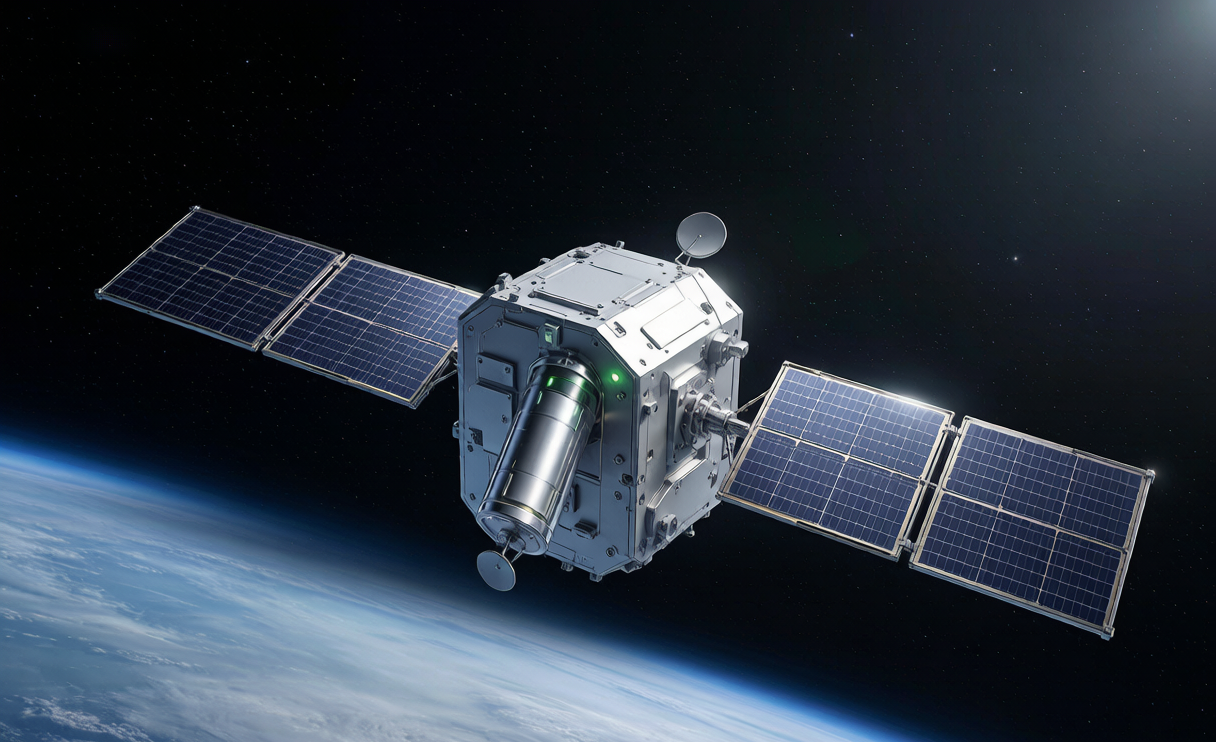
The first thing engineers outside the space sector misunderstand is that a satellite pack never gets a break. A ground pack cools, rests, and gets serviced. An orbital pack cycles between deep shadow and full sunlight on a rigid clock: a low Earth orbit (LEO) sees roughly 35 minutes of eclipse inside every 90-minute orbit, while a geostationary (GEO) satellite can sit in continuous sunlight for months and then drop into eclipse for up to 72 days around the equinoxes. The pack is thermally and electrically hammered on a schedule it cannot escape.
Then there is the launch. A payload sees random vibration in the 20–30 g RMS range, acoustic loading past 140 dB, and pyroshock spikes from stage separation that can exceed 1,000 g. Any weak weld, loose terminal, or poorly balanced cell gets exposed on the pad. On top of that, the vacuum of space removes convective cooling entirely, so every watt of heat must be managed by radiation alone. A credible battery application solution for space is really a thermal, mechanical, and electrical co-design problem wearing a battery costume.
Cell Chemistry: What Actually Flies Today
For most of the 1990s and early 2000s, nickel-hydrogen (NiH2) was the default satellite chemistry because it tolerated abuse and partial state-of-charge well. Today, space-grade lithium-ion has taken over almost everywhere. The cells we qualify — typically 18650 or 21700 cylindrical formats from suppliers such as Samsung SDI, LG Energy Solution, Saft, and EaglePicher — offer two to three times the specific energy of NiH2, which directly buys launch mass savings that mission planners will pay almost any price for.
Within Li-ion, lithium iron phosphate (LFP, LiFePO4) and nickel-cobalt-manganese (NCM) both fly, but for different reasons. LFP gives an extraordinary cycle life and a thermal-runaway onset near 270°C, which is a gift for safety. NCM trades that margin for higher energy density. For a custom battery solution on a mass-critical LEO Earth-observation bus, I usually lean NCM to hit the watt-hour-per-kilogram target; for a long-life GEO communications satellite where cycle count and calendar life dominate, LFP or a blended chemistry wins. I also track lithium-sulfur (Li-S) and solid-state cells as emerging options — Li-S in particular offers specific energy above 400 Wh/kg in lab demonstrators, which would be transformative for deep-space probes.
Thermal Management Across Shadow and Sunlight
In uncontrolled orbit, a bare cell can swing from about -150°C in eclipse to over +120°C in direct sunlight. Neither is survivable for a lithium cell. Our job is to hold the cell stack inside a narrow band — typically -20°C to +50°C — using a combination of multi-layer insulation, radiator surfaces, and often small survival heaters driven by the battery management system.
The clever part is that the eclipse itself can be the heat source. During sunlight, we dump heat through radiators; during eclipse, the pack is the only warm thing on the bus, so we wrap it carefully to retain that heat and only fire survival heaters if the cell temperature approaches its lower limit. A well-designed battery solution turns the orbital cycle into a thermal seesaw you can ride instead of a shock you must survive. Radiator sizing follows simple but unforgiving radiative heat-transfer math: at GEO, the absorbed solar flux is roughly 1,367 W/m², and every watt not radiated becomes a degree of cell temperature.
Vacuum, Outgassing, and Radiation: The Silent Enemies
Hard vacuum does two nasty things. First, it eliminates convective cooling, as noted. Second, it pulls volatile compounds out of every material — a process called outgassing. If a cell wrapper, adhesive, or potting compound releases condensed volatile matter (CVCM), that fog can deposit on an optical sensor or solar cell and quietly degrade the mission. We therefore qualify every material to ASTM E595 with a total mass loss (TML) under 1% and collected volatile condensable material (CVCM) under 0.1%. That single spec rules out most commercial adhesives and forces a custom battery solution built from space-approved bill of materials.
Radiation is the slow killer. A GEO satellite accumulates on the order of 100 krad of total ionizing dose over a 15-year life, while a LEO mission might see 10–30 krad. That dose degrades cell capacity and, more dangerously, can upset the electronics of the protection circuit. We select radiation-tolerant components for the BMS, shield the most sensitive nodes, and de-rate the pack so that even after end-of-life capacity fades to 80% of its beginning-of-life value, the mission still closes its power budget.
A Space-Grade BMS Solution for Autonomous Operation
On the ground, a weak cell gets swapped. In orbit, the BMS is the only thing standing between a normal mission and a total loss. A proper BMS solution for space does everything a terrestrial BMS does — cell voltage and temperature monitoring, passive or active balancing, current limiting, and fault isolation — but it must do it for a decade with zero physical intervention and a radiation-hardened brain.
I design these systems with redundant protection paths: a primary analog front-end for balancing and telemetry, plus a secondary independent hardware disconnect that fires on over-voltage, under-voltage, or over-temperature without needing firmware to cooperate. Communication runs over an isolated bus (RS-422 or SpaceWire) so the spacecraft’s flight computer can read state-of-charge and state-of-health in real time. Because the pack will never be opened, the BMS also logs every cycle so ground controllers can watch capacity fade and plan the end-of-life power margin years in advance. A compromised BMS solution is the most common root cause of premature satellite battery failure, so this is where I spend the most qualification hours.
COTS vs Space-Qualified Cells: Managing Risk and Cost
A recurring question from cost-conscious program managers is whether commercial off-the-shelf (COTS) cells can fly. The honest answer: sometimes, with heavy screening. COTS cells are vastly cheaper than fully space-qualified parts, and the “New Space” wave has flown COTS Li-ion in constellations where a single satellite is disposable. But flying COTS means you inherit unknown lot-to-lot variation, so we add a brutal screening flow — electrical characterization, thermal cycling, and X-ray inspection — to cull weak units, then over-provision the pack so a few latent failures do not end the mission.
For any flagship or crewed-adjacent mission, I insist on space-grade cells with full traceability and a published lot history. The price delta is real, but a battery application solution that fails on orbit has a replacement cost measured in the tens of millions, not the thousands you saved on cells. The right call depends entirely on mission criticality and the cost of failure, and I always present both paths with that trade-off explicit.
Qualification and Transport: UN38.3, ECSS, and IEC 62133
Before a satellite battery ever reaches orbit, it must survive two very different rulebooks. The first is transport. Shipping lithium cells by air or sea requires passing UN38.3, the test suite covering altitude simulation, thermal, vibration, shock, external short circuit, impact, overcharge, and forced discharge. Every Horizon Power space pack ships with a valid UN38.3 test summary and the correct hazmat documentation, because an unmarked battery is a battery that misses its launch window.
The second rulebook is space qualification. In Europe that means the ECSS-E-ST-20C family of standards covering electrical, mechanical, and environmental test levels for space products; in the United States, NASA and AIAA documents such as AIAA S-122 guide the program. On the cell side, IEC 62133 still anchors the safety baseline for portable secondary cells, and we layer mission-specific thermal-vacuum and life-test requirements on top. A credible battery solution is not “tested until it works” — it is qualified against a written standard that a review board can sign.
Sizing a Battery Solution for LEO vs GEO Missions
Sizing is where theory meets the mission profile. For a LEO Earth-observation satellite, the dominant load is the eclipse: the pack must carry the bus through ~35 minutes of darkness every orbit, so energy capacity is sized to that eclipse load plus margin, while cycle life matters because the pack sees 5,000–15,000 charge-discharge cycles over its life. I typically cycle space Li-ion between 30% and 80% state-of-charge — shallow, but it is the price of decade-long life.
A GEO communications satellite is the opposite problem. Eclipse is rare but, around equinox, lasts up to 72 days, so the pack must store enormous energy and then recover it. Cycle count is low, but calendar life and radiation dose dominate. The same custom battery solution framework bends differently for each mission: LEO optimizes for cycle endurance per kilogram, GEO optimizes for stored energy and long-term survival. Getting this balance wrong is the difference between a pack that retires gracefully and one that strangles the spacecraft’s power budget in year six.
FAQ
What battery chemistry do most satellites use today?
Space-grade lithium-ion has replaced nickel-hydrogen in almost all new designs because of its two-to-three-times higher specific energy. LFP is chosen for long-life, safety-critical buses; NCM where mass is the binding constraint. Lithium-sulfur and solid-state cells are emerging for future high-energy missions.
How long do satellite batteries last in orbit?
Designed life ranges from 5 to 15 years depending on mission and orbit. LEO packs are sized for 5,000–15,000 cycles using shallow 30–80% state-of-charge cycling; GEO packs prioritize calendar life and radiation tolerance over cycle count. End-of-life target is typically 80% of beginning-of-life capacity.
Can commercial off-the-shelf cells fly in space?
Yes, in disposable or constellation-class missions, but only after aggressive screening for lot variation and with over-provisioning to absorb latent failures. Flagship or crewed-adjacent missions should use fully space-qualified, traceable cells to control the cost of in-orbit failure.
What standards govern space battery qualification and transport?
Transport requires UN38.3 with valid test summaries and hazmat documentation. Space qualification follows ECSS-E-ST-20C in Europe and NASA/AIAA guidance such as AIAA S-122 in the US, with IEC 62133 anchoring the cell safety baseline beneath mission-specific thermal-vacuum and life tests.
How do you protect satellite batteries from radiation?
We select radiation-tolerant BMS components, shield the most sensitive nodes, de-rate the pack so end-of-life capacity still closes the power budget after the expected total ionizing dose (roughly 100 krad for GEO over 15 years), and validate electronics against the mission’s radiation environment.
How is a custom battery solution for space different from an industrial pack?
A space pack is built from ASTM E595 low-outgassing materials, qualified to ECSS or NASA standards, thermally controlled for a -150°C to +120°C environment, and protected by a radiation-hardened redundant BMS that must run autonomously for a decade. An industrial pack simply never faces that combination of vacuum, radiation, and no-second-chances operation.