Battery Solution for E-Mobility Sharing Fleets
When a shared e-scooter or e-bike rolls out onto a city street, the battery inside it is doing a job that looks nothing like the battery in your laptop. It is not pampered. It is swapped by gig workers, dumped in weather-sealed cabinets, fast-charged on a schedule, and expected to survive 800+ cycles before anyone talks about retirement. Over the last nine years at Horizon Power I have designed packs for three different shared-mobility operators, and the lesson is always the same: a generic drone lithium battery or consumer cell pack will fail the fleet economics within a single season. You need a purpose-built battery solution engineered for abuse, telemetry, and swap logistics. This field guide walks through how we architect reliable power for e-mobility sharing fleets.
Why Shared Fleets Break Conventional Battery Rules
A privately owned e-bike is charged gently at home, rides a few times a week, and lives indoors. A shared fleet pack is the opposite. In a typical dockless deployment a single pack can complete two or three full discharge cycles per day, often back-to-back, inside a metal cabinet that sits in direct summer sun. The effective annual throughput is 10 to 15 times that of a consumer pack.
That throughput changes every design assumption. Calendar aging stops mattering; cycle aging dominates. A pack that degrades from 100% to 80% state-of-health (SOH) in 500 cycles is a write-off; one that holds 80% to 1,000 cycles is the difference between a profitable operation and a recall. When we scope a battery solution for e-mobility sharing fleet work, the first number we fix is the target cycle life at the real duty profile, not the vendor’s idealized 0.2C lab figure.
There is also a safety dimension that consumer products never face. A fleet pack is handled by strangers, stored in public cabinets, and charged unattended. A single thermal event in a streetside swap cabinet is not just a warranty claim — it is a city permit revoked. That is why the mechanical and BMS architecture for shared fleets has to be several notches more conservative than retail.
Swappable vs. Charged-in-Place: The Architectural Fork
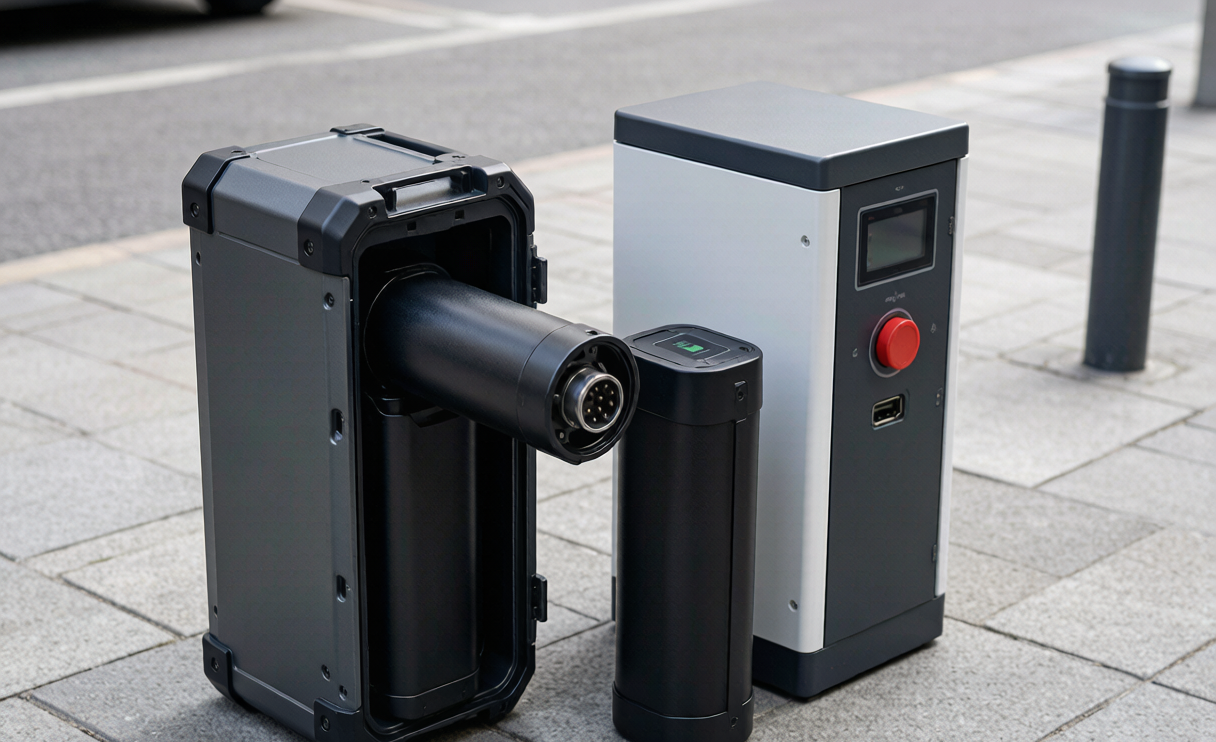
The first design fork is whether the pack leaves the vehicle to charge, or the vehicle parks on a charger. Most successful dockless fleets use manual or cabinet-based swappable packs: a rider or field operator exchanges a depleted pack for a full one in under thirty seconds. The pack is the product; the scooter is just the chassis.
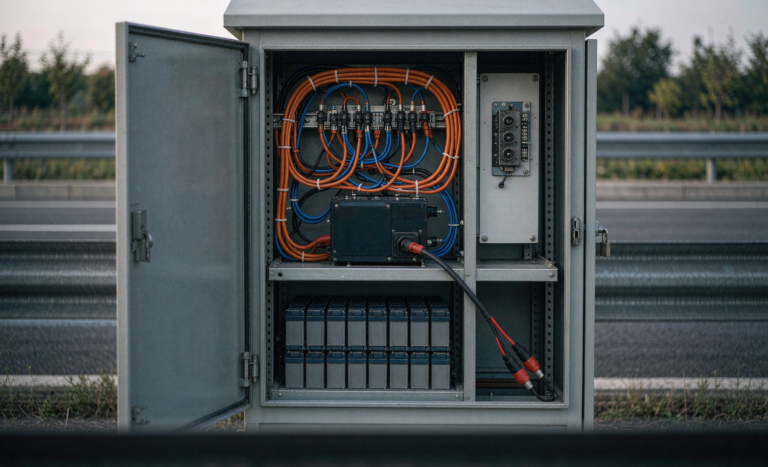
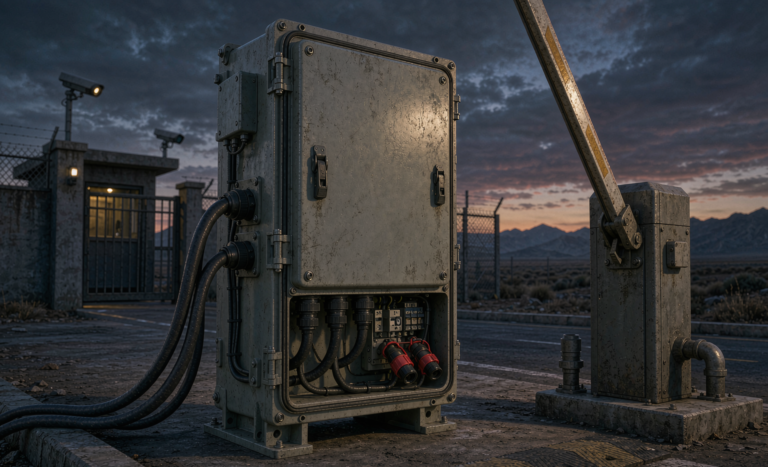
For swappable packs we standardize on a 36V nominal architecture (10s Li-ion) with capacities between 10 Ah and 15 Ah, giving roughly 0.36 to 0.54 kWh per pack. The enclosure carries a ruggedized connector, a mechanical key, and a small RFID or NFC tag so the operator’s software can track which pack is in which vehicle. In our deployments the swap cabinet runs a 48V bus with grid-tied charging racks, and a single cabinet holds 8 to 12 packs.
Charged-in-place designs — think docked bike-share with fixed docks — simplify the pack because it never leaves the frame, but they push all the thermal and connector stress onto the dock. Both models are valid; the battery application solution we recommend depends on the operator’s field labor cost and the density of their service area. In dense cities, swap wins. In sprawling suburbs, docked charging often wins on opex.
Cell Selection and Pack Design for High-Cycle Urban Duty
Cell chemistry is where fleet economics are won or lost. We do not chase the highest energy density; we chase the best cycle life at the real 1C–2C discharge and 0.5C–1C charge the fleet actually uses. For most shared scooters that means a high-quality 18650 or 21700 NMC cell rated at 2,000–3,500 mAh with a cycle-life specification of 800–1,000 cycles to 80% SOH under 1C charge.
Pack topology is 10s with parallel groups sized for the target capacity. We specify a balance current of at least 40 mA on the BMS so that after hundreds of imperfect partial charges the groups do not diverge. Spot-welded nickel strips are out; we use ultrasonic or laser-welded nickel-plated busbars with a minimum 0.2 mm thickness to keep contact resistance low and prevent the localized heating that causes field failures.
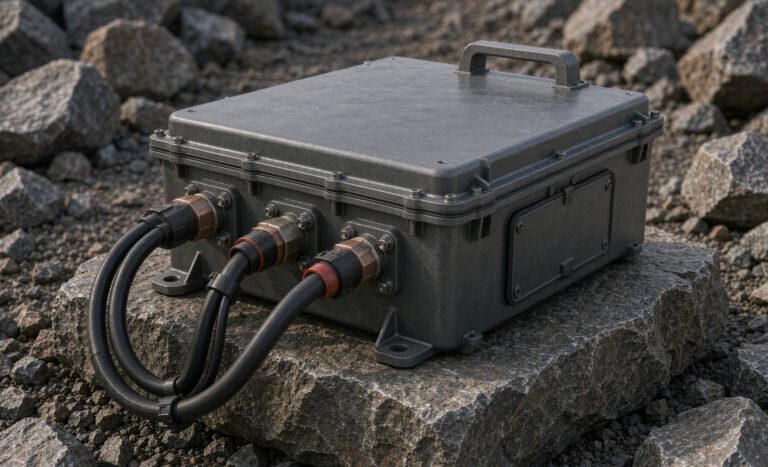
The enclosure is its own engineering problem. A streetside pack needs IP54 minimum, and we usually target IP55 with a drain path so condensation does not pool on the cells. We mold the shell from flame-retardant PC/ABS (UL 94 V-0) and line the interior with a compression pad so the cells do not rattle during curb drops. A good custom battery solution for fleets spends as much effort on the shell as on the cells.
BMS and Fleet Telemetry: The Real Differentiator
In a fleet, the battery management system is not just a safety device — it is the data backbone. A retail BMS reports voltage and cuts off at over-current. A fleet BMS does that and also streams SOH, state-of-charge (SOC), internal resistance trend, and cycle count to the cloud over the vehicle’s cellular or BLE link.
We run a layered protection scheme: hardware fuse and MOSFET switches for hard faults, plus a firmware layer that enforces per-cell voltage windows (2.5V–4.2V), pack current limits, and a temperature lockout band of roughly -10°C to 50°C. Charging is inhibited below 0°C to prevent lithium plating, which is the silent killer of fast-charged fleet packs in winter cities.
For SOC and SOH accuracy we combine coulomb counting with a Kalman-filter estimate that learns each pack’s capacity fade from real usage. This is the core of a credible BMS solution for sharing: the operator’s app tells a field worker exactly which packs are at 80% SOH and should be rotated to lighter routes or pulled for second life. Without that telemetry, packs are either retired too early (wasted money) or run too long (safety and range complaints).
Thermal, Safety and Certification for Public-Facing Packs
Because these packs sit in public cabinets and vehicles, certification is non-negotiable. Every pack we ship for a sharing fleet carries UN38.3 transport certification and IEC 62133 cell-level safety, and the pack-level system is built toward the regional marks the market requires — CE for Europe, and for North American micro-mobility we design to the relevant UL guidance (e.g., UL 2272 for self-balancing and personal e-mobility classes) so the operator can obtain local approvals quickly.
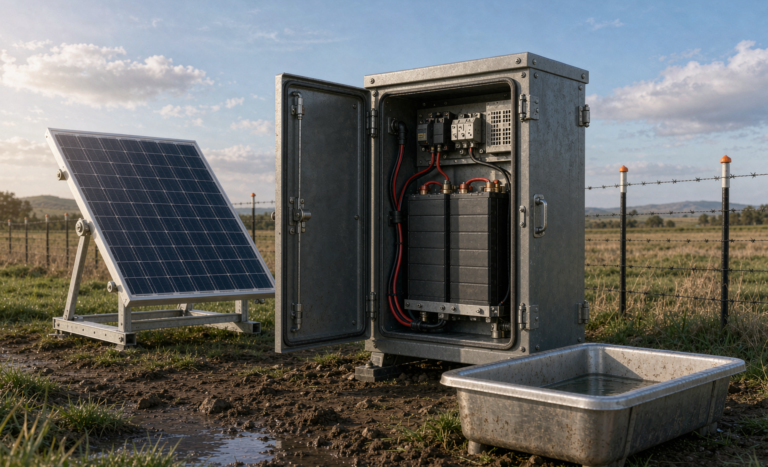
Thermally, the dominant risk is cabinet charging in summer. We specify a charge temperature cutoff and, in hot markets, add a passive vent path or a thermal pad that couples the cells to the metal cabinet wall. We also enforce a maximum charge rate of 0.5C–1C; pushing 2C on a publicly accessible pack buys you a little faster turnaround and a lot more risk. For aviation-adjacent logistics (moving packs between cities) the same UN38.3 file that satisfies transport authorities also satisfies most municipal fire reviews.
Mechanically, the pack must survive being dropped, kicked, and rained on. We validate to a 1.5 m drop onto concrete and a 30-minute IP55 spray test before a design is released. A battery solution provider that skips these tests is shipping future incident reports.
Lifecycle, Second-Life and Total Cost of Ownership
The honest way to price a fleet pack is total cost of ownership per ride, not price per kilowatt-hour. A pack that costs 20% more but lasts 2x the cycles is cheaper by a wide margin once you include swap labor, cabinet space, and the downtime of a failed pack.
We model TCO as (pack price + swap labor + failure replacements) divided by (cycles × capacity × utilization). In practice, pushing SOH retirement from 500 to 1,000 cycles roughly halves the per-ride battery cost. That is why we invest in cycle-life cells and accurate SOH telemetry rather than chasing the cheapest cell on the spot market.
At 80% SOH the pack is not dead — it is just no longer ideal for a 30 km urban ride. We route retired fleet packs into second-life uses: warehouse floor scrubbers, stationary backup for cabinet lighting, or training stock. A disciplined second-life program recovers 15–25% of pack cost and keeps thousands of cells out of the waste stream. That circular logic is increasingly part of the operator’s municipal license to operate.
From Prototype to Certified Volume Production
Bringing a fleet pack from bench to 50,000 units is mostly a manufacturing-quality problem. We lock the cell batch, qualify the weld process with destructive pull tests, and run 100% end-of-line testing on every pack: impedance check, charge-discharge verification, and a BMS communication handshake. One bad weld in a 10,000-pack run becomes a hundred roadside failures.
We also keep a digital twin of each pack’s build record so a field failure can be traced to a specific cell lot and weld station. For a sharing operator, that traceability is what turns an angry city inspector into a manageable engineering fix. If you are scoping a battery solution for e-mobility sharing fleet program, insist on this level of production discipline before you sign volume.
Frequently Asked Questions
What battery voltage and capacity works best for shared e-scooters?
For dockless scooters we standardize on 36V nominal (10s) with 10–15 Ah, roughly 0.36–0.54 kWh. That gives a 25–35 km real-world range at a pack weight a field worker can swap one-handed. Higher voltage helps efficiency but complicates the swap cabinet, so 36V is the sweet spot for most urban fleets.
How many charge cycles should a fleet battery last?
Target 800–1,000 cycles to 80% SOH under the real 1C–2C duty, not the vendor’s lab number. Below 500 cycles the per-ride battery cost blows up the business case. Accurate SOH telemetry is what lets you actually capture that lifespan instead of retiring packs early on guesswork.
Why can’t we charge a fleet pack below 0°C?
Charging lithium-ion below freezing causes metallic lithium plating on the anode, which permanently damages the cell and raises internal resistance and fire risk. We hard-lock charging below 0°C in the BMS. In winter cities this matters: a pack left in an unheated cabinet overnight must simply wait for the temperature window.
What certifications does a shared-mobility battery need?
At minimum UN38.3 for transport and IEC 62133 at the cell level. For the pack, CE for Europe and UL-aligned guidance (such as UL 2272 for personal e-mobility) for North America. Municipal permits in many cities also want evidence of IP rating and drop testing, so we keep those reports ready.
Is a swappable pack better than charging in the dock?
In dense cities, yes — swap cabinets cut vehicle downtime to seconds and let one worker service dozens of packs per shift. In low-density areas, docked charging wins on operating cost because you avoid the cabinet capital and the swap labor. The right battery application solution follows the operator’s service geography.
What happens to packs at 80% state of health?
They rotate out of long urban rides into second-life roles — warehouse equipment, cabinet backup, or training stock — recovering 15–25% of pack cost. A planned second-life path is both an economic win and increasingly a condition of the operator’s municipal operating license.