Lithium Battery Temperature Operating Range and Thermal
I have lost count of how many “dead” lithium battery packs I have revived on a cold hangar floor simply by warming them up. Temperature, more than state of charge or even chemistry, is the master variable that decides whether a cell delivers its rated power or sulks at half capacity. After fifteen years specifying lithium battery packs for drones, telecom sites, and industrial equipment, I can tell you that the operating window is not a suggestion on a datasheet — it is the line between a reliable product and a warranty nightmare. This guide walks through the numbers I actually design to, the standards that back them up, and how to build thermal management that survives the field.

Why Cell Temperature Is the Master Variable
Every lithium battery chemistry shares the same uncomfortable truth: its internal resistance rises as it gets cold and its degradation accelerates as it gets hot. At 0°C a typical NMC cell can show 2× to 3× the internal resistance it has at 25°C, which directly cuts usable capacity and pushes voltage sag under load. At the other end, sustained operation above 45°C quietly doubles the calendar aging rate. When I brief a new client, I frame the entire power system around one question: what temperature band will this pack actually live in, hour after hour, season after season?
The answer drives cell selection, the BMS thresholds, and the enclosure. A lithium ion battery rated for 500 cycles in a lab at 25°C may deliver under 300 in a rooftop cabinet that bakes at 55°C every summer afternoon. Thermal management is not an accessory; it is the difference between a specification and a field-proven product.
The Standard Operating Window: 0°C to 60°C
For the cells we most often build with, the practical envelope is tighter than marketing implies. Discharge is generally safe from –20°C to 60°C, but charging is the constrained side: most lithium battery packs should only charge between 0°C and 45°C. Charge a cold cell below 0°C and you plate metallic lithium on the anode — permanent capacity loss, and in the worst case a soft internal short. We encode a hard 0°C charge lock in firmware; the pack simply refuses to accept current until it warms.
Storage is a third, separate window. Long-term storage at 25°C and ~50% state of charge is the sweet spot for calendar life. Leave a pack at 100% SOC and 40°C for months and you will measure the damage on the next capacity check. I tell every fleet manager: storage temperature matters as much as operating temperature, and almost nobody monitors it.
Cold-Weather Behavior and Pre-Heating
Below about –10°C, even a discharge-rated lithium battery pack loses meaningful punch. The electrolyte thickens, ion mobility drops, and voltage collapses under high C-rate loads — exactly when a drone needs maximum thrust to hold altitude in a winter wind. In our cold-climate builds we add a self-limiting heater film laminated to the cell stack and powered from a small reserve, bringing the core to 5°C–10°C before the main discharge begins. The energy cost is tiny (1–3% of pack capacity) compared with the alternative: a forced landing.
The same logic applies to charging in the field. A self-heating LFP battery can accept a controlled warm-up cycle, after which a normal CC-CV charge completes safely. This is why I always specify a temperature sensor on every parallel group, not just one probe on the bus bar — gradients inside a large pack can exceed 8°C between the center and the edge.
Hot-Weather and High-C-Rate Stress
Heat is the enemy of cycle life, and high C-rate discharge is its accomplice. A 5C discharge in a 45°C environment can push internal cell temperature past 60°C, where the separator begins to stress. For high-drain tools and heavy-lift drones we therefore favor LFP battery chemistries where possible: lithium iron phosphate tolerates higher temperatures and deeper cycles better than NCM, trading some energy density for a far more forgiving thermal profile. Where energy density wins — long-endurance aircraft, compact medical gear — we pair NCM cells with active cooling and aggressive BMS thermal trips.
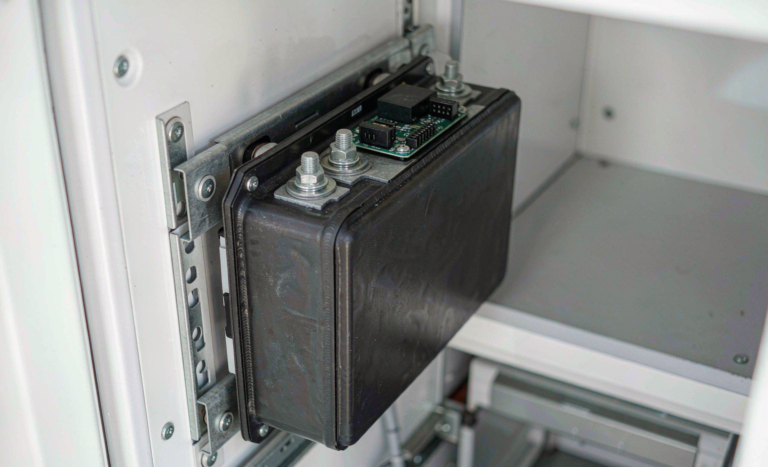
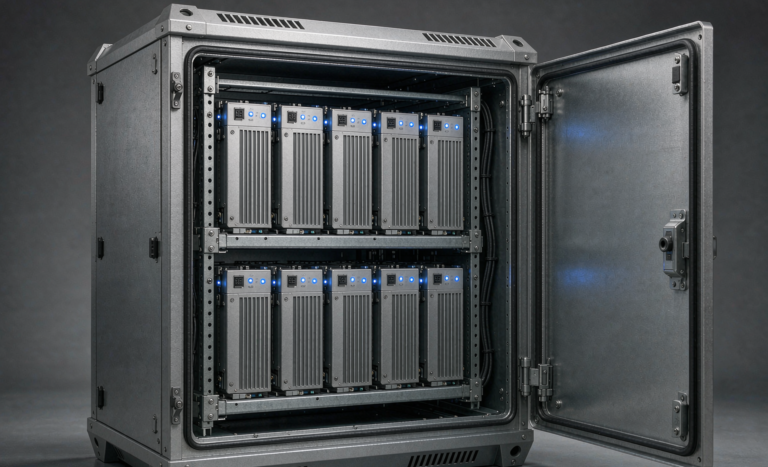
In stationary cabinets we design for the worst afternoon, not the average day. A 10°C reduction in average operating temperature can roughly double cycle life, so a modest fan loop or phase-change pad pays for itself within the first replacement cycle. Where weight is not the priority, an NCM battery can still earn its place through energy density, but only inside an enclosure with a verified cooling budget.
How a BMS Enforces the Temperature Envelope
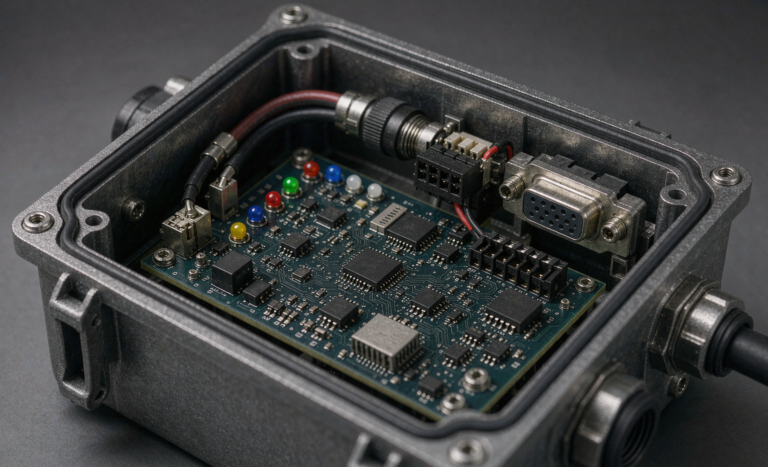
A good BMS solution is, at its core, a thermal referee. It reads NTC thermistors distributed through the pack, compares them against charge and discharge limits, and opens the contactor or throttles current when a threshold is crossed. I specify at least one sensor per parallel group plus one on each bus bar, and I insist the firmware logs temperature histograms — because the data you collect in the first month predicts the failures you will see in the eighteenth.
Beyond trips, the BMS handles cell balancing, which is itself a thermal story: passive balancing dissipates energy as heat, so we keep balance currents low (20–50 mA) in sealed enclosures and move to active balancing where space and heat budget allow. The thermal envelope and the balancing strategy are designed together, never separately.
Thermal Management Architectures: Passive, Active, Immersion
For most products the choice is a spectrum. Passive management — gap fillers, aluminum enclosures, and natural convection — covers low-power and间歇性 loads cheaply. Active air cooling adds fans and ducts for discharge-heavy or hot-climate duty. Liquid and immersion cooling, borrowed from automotive, enter only for very high C-rate or very dense packs where air simply cannot move heat fast enough. I have shipped custom battery solution programs using all three; the decision is driven by sustained heat load, not by what looks impressive on a slide.
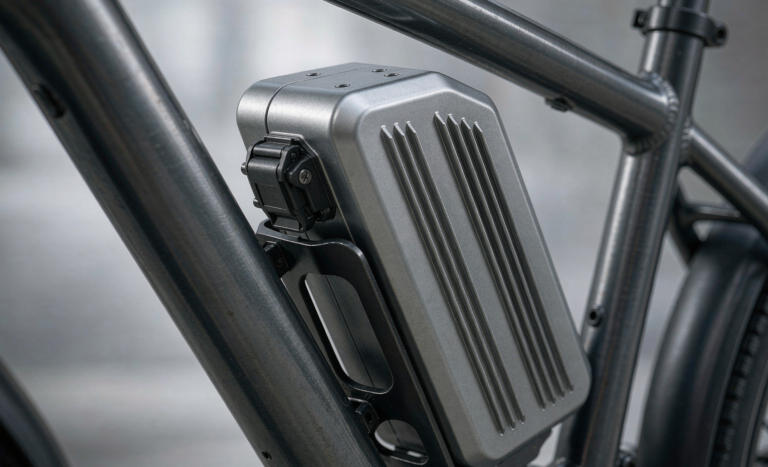
A note on sealing: IP-rated enclosures trap heat. An IP65 drone battery that cannot breathe needs either a larger surface area or a conduction path to an external heatsink. Environmental sealing and thermal management pull in opposite directions, and the engineer’s job is to find the compromise that still meets both the ingress rating and the temperature range.
Sizing a Thermal Design for Your Application
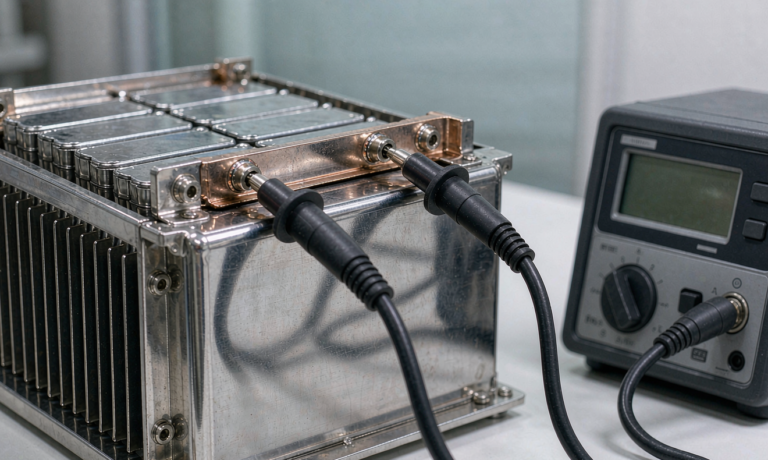
My rule of thumb for a custom battery solution RFQ is to start from the heat equation, not from a catalog. Estimate continuous and peak power, convert to waste heat using the cell’s DCIR at the expected temperature, then size the thermal path so the core stays inside the window at the worst-case ambient. We model this in SPICE and validate with thermal chambers before a single production unit ships. UN38.3 transport testing, IEC 62133 abuse tests (external short, overcharge, forced discharge, and thermal stress), and the FAA / EASA expectations for airborne and carried battery systems all assume a pack that stays within its designed thermal envelope — and our test reports show it does.
Field Telemetry and Predictive Thermal Maintenance
The thermal envelope only protects you if you can actually see it. In every connected build we stream temperature alongside voltage and current to a ground station or cloud dashboard, and we alert on rate-of-rise rather than absolute thresholds alone. A pack that climbs 0.5°C per minute under a steady load is telling you something — a failing cooling fan, a blocked vent, or a cell turning resistive — long before any hard trip ever fires. I have caught more incipient faults this way than from the over-temperature cutoff itself, and each one avoided a mid-mission failure.
For fleet operators this telemetry turns thermal management from a design assumption into a monitored, insurable asset. We correlate temperature histograms with measured capacity fade to predict end-of-life, schedule proactive pack swaps during planned downtime, and keep failures out of the field where they become warranty claims and bad reviews. A custom battery solution that reports its own thermal health is worth more over three years than one that is 5% lighter but silent about what it is doing. The data loop closes the design: what we learn from the first thousand field cycles feeds directly into the next revision’s cooling path and trip setpoints.
Frequently Asked Questions
What is the safe operating temperature range for a lithium battery?
For most lithium ion battery cells, discharge is safe from about –20°C to 60°C, while charging should be limited to roughly 0°C to 45°C. Storage is best near 25°C at partial state of charge. The exact window varies by chemistry, so always design to the cell’s own specification.
Why can’t I charge a lithium battery in freezing weather?
Below 0°C the electrolyte cannot transport lithium ions fast enough, so charging plates metallic lithium on the anode instead of intercalating it. That plating is irreversible, permanently reduces capacity, and can create an internal short. A proper BMS locks out charging until the pack warms.
Does heat really shorten battery life that much?
Yes. Roughly every 10°C of added average operating temperature doubles the calendar aging rate. A pack that runs at 35°C instead of 25°C may lose half its cycle life. This is why thermal management is a lifecycle and warranty decision, not just a performance one.
LFP or NCM for hot environments?
LFP battery chemistries tolerate heat and deep cycling far better than NCM, so they are my default for hot-climate and high-cycle stationary or industrial use. NCM wins on energy density, so we reserve it for weight-critical applications and pair it with stronger cooling and tighter BMS thermal trips.
How many temperature sensors does a pack need?
At minimum one per parallel group plus one on each bus bar. Large packs develop internal gradients of several degrees, and a single probe on the enclosure wall will miss a hot core until it is already damaging cells. More sensors also give you the temperature histograms that predict long-term failures.
Which standards govern lithium battery thermal safety?
IEC 62133 covers cell and pack safety including thermal abuse and external-short testing; UN38.3 governs air and ground transport; and aviation frameworks from the FAA (Part 107) and EASA (SC-VTOL) set expectations for batteries carried or flown on aircraft. We validate every design against all three before release.