Lithium Battery for Forklift Lead-Acid Replacement
Why Warehouses Are Retiring Lead-Acid
When I started as a lithium battery engineer fifteen years ago, almost every forklift on a warehouse floor ran on flooded lead-acid. The routine was familiar to anyone in material handling: pull the truck, wrestle a 500 kg battery out with a crane, drop it into a charging room, top it up with acid and water, and pray the equalize cycle finished before the next shift. After running conversion projects for three of our own OEM clients last year, I can say the economics have flipped. A modern lithium battery pack now beats lead-acid on almost every metric that matters to a fleet manager — and the payback window has shrunk to well under two years.
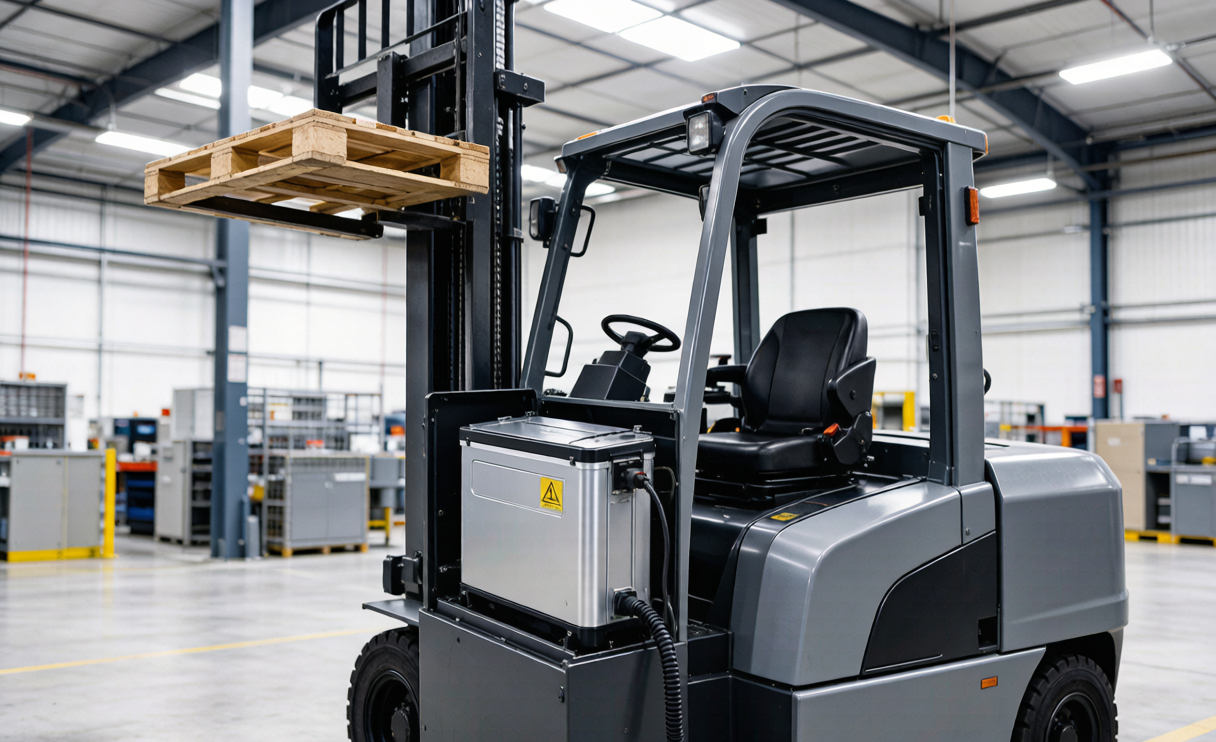
This guide walks through what actually changes when you swap lead-acid for a lithium battery, how to size the pack, which certifications to demand, and the pitfalls I see buyers trip over most often. I write this from the bench, not from a brochure.
Energy Density and Footprint: What Changes on the Truck
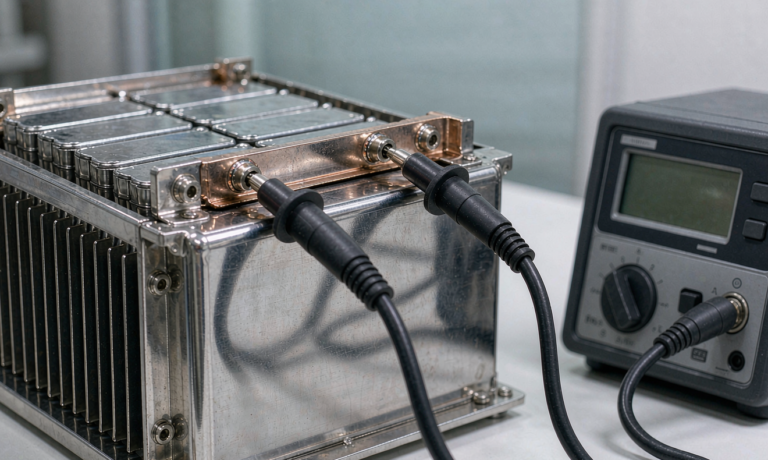
The single biggest difference is gravimetric energy density. A good LFP battery cell delivers roughly 150 Wh/kg versus about 35 Wh/kg for flooded lead-acid. In practice that means a lithium battery pack that delivers the same usable watt-hours weighs roughly a quarter of the lead-acid block it replaces. On a Class I or Class II forklift, removing 400 kg from the chassis raises the available payload and lowers the center of gravity, which improves stability.
There is a second, quieter win. Lead-acid only gives you about 50–60% of its nameplate capacity before voltage sag forces a changeout. A lithium ion battery can safely deliver 90–95% of its rated capacity, so the “nameplate” numbers are far closer to “usable” numbers. When a procurement manager compares a 600 Ah lead-acid block to a 400 Ah lithium battery pack, the lithium unit often does more real work per shift.
Space matters too. The smaller footprint lets some clients reclaim the side pocket of the battery bay for a tool rack or a second hydraulic line. A custom battery solution can be shaped to the cavity instead of forcing the truck to fit a standardized lead-acid box.
Opportunity Charging vs Equalize Charging
Lead-acid hates partial state of charge. You must fully charge it, and you must periodically run a long equalize cycle to balance cells. That is why lead-acid fleets need battery rooms, spare blocks, and changeout cranes. Lithium does not have that constraint.
With a lithium battery you move to opportunity charging: plug the truck into a charger during a coffee break, a lunch shift, or a lull in dispatch. The BMS solution manages each cell, so short top-ups do no harm. In one distribution center we converted, the fleet went from three battery changeouts per truck per day to zero changeouts. The charging room was repurposed into 180 m² of additional picking space.
The trade-off is that you need chargers compatible with lithium charge profiles (CC-CV with a precise termination current). You cannot simply bolt a lead-acid ferroresonant charger onto a lithium battery pack and expect good cell life.
Sizing a Lithium Battery Pack for a Forklift
Sizing is the step where I see the most expensive mistakes. Start from the duty cycle, not the old battery’s amp-hour label. Record the average draw, peak draw, and hours run per shift for a representative week. A counterbalance forklift moving 1.2 t pallets up a 4 m mast typically pulls 120–200 A under load with peaks near 400 A during hoist.
From that, compute watt-hours per shift and add a 20–30% buffer for cold storage, aging, and degraded cells. Then match voltage to the truck’s traction system — 24 V, 48 V, 80 V are common. We usually build a 48 V or 80 V lithium battery pack from LFP prismatic cells in a series string, then parallel groups to hit the amp-hour target.
Do not oversize wildly. A pack that is twice as large as needed costs more, weighs more, and spends its life under-cycled, which is its own kind of waste. A good custom battery solution vendor will model the duty cycle with you rather than quoting the biggest block that fits the bay.
BMS, Safety and Compliance
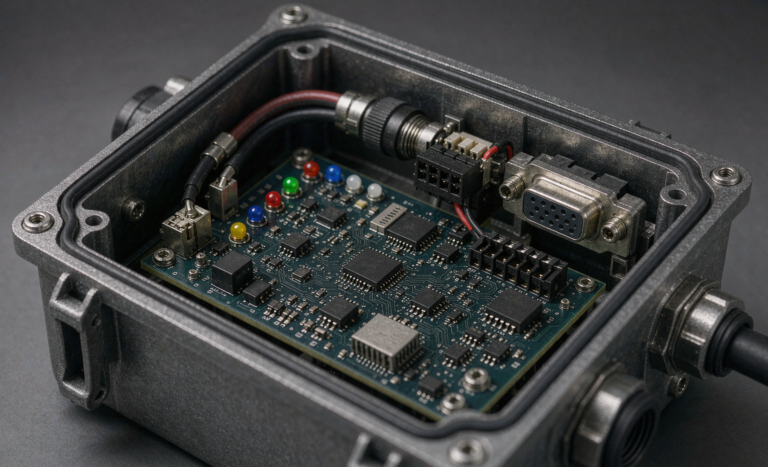
The battery management system is the difference between a safe pack and a liability. At minimum the BMS solution must do cell-level voltage monitoring, pack and cell temperature sensing, balancing, and contactor control with pre-charge. For a forklift that sees vibration, dust, and occasional thermal shock, I also spec conformal-coated boards and IP54-rated enclosures.
Compliance is not optional for a B2B buyer. Require UN 38.3 (transport), IEC 62619 (industrial cells), IEC 62133 (safety), and UL 2580 for the pack if it ships to North America. In the EU, UN R136 covers rechargeable energy storage systems for industrial vehicles. Our lithium battery packs ship with the test reports on file; if a supplier cannot show you the actual certificate number, walk away.
Remember that LFP chemistry is inherently more stable than NCM. For a warehouse environment where a thermal event means evacuating the building, I steer most forklift programs toward LFP battery chemistry. The slightly lower energy density is a small price for the safety margin.
Total Cost of Ownership Over Five Years
Lead-acid looks cheap on the quote. It is not cheap over the lifecycle. Factor in: the spare batteries and changeout infrastructure, the water and equalize electricity, the ventilation and acid-spill containment, the floor space for the charging room, and the roughly 1,200-cycle life before capacity drops below 80%.
A lithium battery pack typically delivers 2,500–4,000 cycles to 80% state of health, charges in a fraction of the time, needs no watering, and carries no acid-handling overhead. Across a 20-truck fleet over five years, the lithium route usually lands 25–40% below the lead-acid total cost of ownership once you include labor and floor space. That is the number your CFO cares about, not the sticker.
Retrofitting and Common Pitfalls
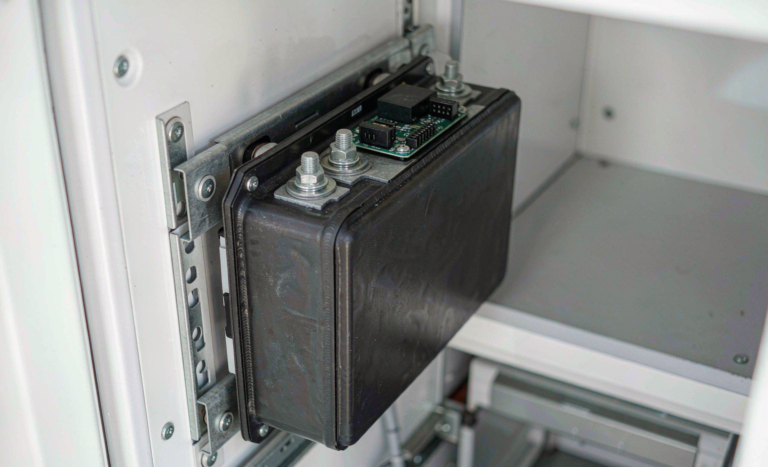
Most Class I–III forklifts retrofit cleanly. The work is mechanical (brackets, connectors, weight ballast to keep counterbalance) plus electrical (charger and the truck’s battery-present interlock). Two pitfalls dominate. First, buyers reuse the old charger; a ferroresonant or taper charger will not terminate correctly on lithium and will either undercharge or cook the pack. Budget for matched lithium chargers. Second, they ignore the truck’s battery compartment cooling — a sealed bay with no airflow can let a pack hover 10–15°C above ambient, and while LFP tolerates heat better than NCM, every 10°C of sustained temperature cuts cycle life.
If your fleet mixes voltages or duty cycles, treat each truck as its own sizing problem. A one-size pack from a catalog rarely fits the whole yard. That is exactly where a custom battery solution pays for itself: the vendor models each duty cycle and delivers a pack shaped to the cavity and rated to the load.
Cold Storage and Thermal Management
Forklift fleets that work in chilled or frozen zones deserve a dedicated note, because temperature is where a lithium ion battery and a lead-acid block behave most differently. Below 0 °C, LFP charge acceptance collapses: force a fast charge into a cold cell and you plate lithium metal on the anode, permanently shedding capacity. For freezer operations we spec low-temperature cells with an internal heating element, or we put the charger in a warmed enclosure so the pack reaches 5–10 °C before the bulk-charge phase. On the discharge side the pack actually outperforms lead-acid, which loses far more capacity in the cold. In a frozen-food distribution center we converted last winter, the lithium battery pack held 88% of its room-temperature runtime at −25 °C, while the lead-acid units they replaced were barely clearing 55%.
Thermal management is not only about cold. A sealed battery bay with no airflow lets a pack sit 10–15 °C above ambient during a heavy hoist cycle. We route the BMS temperature sensor onto the hottest cell group and set a derating threshold so the truck eases the load instead of cooking the pack. Simple passive venting through the bay door is often enough; active cooling is rarely needed for LFP in material handling.
Commissioning and Operator Training
The conversion is not finished when the pack is bolted into the bay. A proper commissioning pass checks BMS communications over the chosen bus, exercises the contactor and pre-charge circuit, verifies insulation resistance to the chassis, and confirms the charger handshakes and terminates correctly. I have rejected more than one “drop-in” install because the truck’s battery-present interlock was left floating and the truck thought the pack was missing.
Operator training is the cheapest reliability you will ever buy. The habits change completely: there is no watering, no equalize cycle, and no spare block to swap. Teach crews to opportunity-charge during breaks, to read state of health from the display rather than guessing, and to report a pack that will not reach full voltage. A lithium battery pack that is understood by its operators outlasts one that is mystified by them, often by a full year of service life.
Frequently Asked Questions
How long does a lithium forklift battery last compared to lead-acid?
A quality lithium battery pack delivers 2,500–4,000 cycles to 80% state of health, versus roughly 1,200 cycles for flooded lead-acid. In a single-shift operation that is typically four to six years of service before meaningful capacity loss, versus two to three years for lead-acid.
Can I keep using my existing lead-acid charger?
Usually no. Lead-acid ferroresonant and taper chargers do not follow the CC-CV profile a lithium battery needs and will not terminate at the correct current. Use a charger matched to the lithium charge profile, or have your vendor supply one as part of the custom battery solution.
Is it safe to leave a lithium battery on the forklift overnight?
Yes, provided the pack carries proper certification (IEC 62619 / UL 2580) and the BMS solution controls contactors and balancing. Unlike lead-acid, there is no off-gassing, so the truck can stay parked in the aisle. Still follow your site’s fire code for ESS placement.
Does cold storage affect lithium forklift batteries?
LFP performs far better than lead-acid in the cold, but capacity and charge acceptance drop below 0°C. For freezer operations we specify low-temperature cells and a heated jacket or a charge enclosure so the pack warms before a fast charge.
What certifications should I require from a supplier?
At minimum UN 38.3 for transport, IEC 62619 and IEC 62133 for the cells and pack, and UL 2580 (North America) or UN R136 (EU vehicles). Ask for the actual certificate numbers, not a generic compliance statement, before you sign.