Home Energy Storage Fire Safety Codes by Region
Why Fire Codes Matter for Home Battery Systems
When I spec a home energy storage system for a client, the chemistry and the kilowatt-hours get all the attention—but in my fifteen years as a lithium battery engineer, the thing that actually decides whether a project gets switched on is the fire code. A residential battery bank stores enough energy to do real damage if it is installed wrong, and every region I have shipped product to interprets that risk through a different rulebook. If you are an installer, a homeowner, or a procurement lead evaluating a home battery backup project, understanding the regional fire safety codes is not optional paperwork—it is the gatekeeper between a safe installation and a failed inspection.
Fire codes for stationary storage exist because lithium cells, like every energy-dense chemistry, can enter thermal runaway. The job of a code is not to ban batteries; it is to force the design, spacing, ventilation, and detection features that keep a single cell failure from becoming a room-level event. In this guide I will walk through the home energy storage fire safety codes I reference most often—UL 9540, UL 9540A, NFPA 855, IEC 62933, and the national wiring codes—and show how they map onto the major regions where Horizon Power deploys home energy storage systems.
The Core Standards Every Installer Quotes
Before we get regional, you need the backbone. Almost every residential battery storage rule in the world rests on a handful of test standards, and knowing them lets you read any local code with confidence.
- UL 9540 – the safety standard for energy storage systems and equipment. It covers the complete installed system: the battery modules, the inverter/charger, and the controls as one listed assembly.
- UL 9540A – the test method for evaluating thermal runaway fire propagation. This is the test that tells an authority having jurisdiction (AHJ) whether a fire in one module will spread to the next.
- NFPA 855 – the Installation of Stationary Energy Storage Systems standard in the United States. It sets separation distances, room sizing, and suppression expectations by energy capacity.
- IEC 62619 – the international safety requirement for industrial lithium cells and batteries, increasingly cited for residential modules too.
- IEC 62933 – the family of standards for electrical energy storage (EES) systems, covering performance and safety of grid-connected units.
- UN38.3 – the transport test. It does not govern installation, but any pack that passed UN38.3 T.1–T.8 has survived altitude, thermal, vibration, shock, and short-circuit abuse testing, which is a good baseline for build quality.
In my experience, the single most common rejection at inspection is a system where the battery is UL 9540A tested but the complete assembly was never listed as a UL 9540 system. Always confirm the inverter and battery carry a shared listing—not just the cells.
United States — NEC Article 706 and the Patchwork of AHJ Rules
In the U.S., the National Electrical Code (NEC) is the starting point, and for home energy storage the relevant article is NEC Article 706 (formerly 480 for some legacy systems). Article 706 governs the installation of energy storage systems: disconnecting means, labeling, overcurrent protection, and the requirement that the ESS be listed to UL 9540. The 2020 and 2023 cycles tightened ventilation and spacing language, and most jurisdictions have adopted one of those.
On top of the NEC sits NFPA 855, which is where the fire-safety specifics live. NFPA 855 sets maximum allowable quantities per fire area and requires a fire propagation analysis (the UL 9540A result) when you exceed certain thresholds. For a typical whole-house home battery backup, you are usually under the threshold that triggers sprinklers, but you still need proper wall separation and signage.
The catch is the AHJ. I have had the same UL 9540 system pass in one county and require an external temperature sensor and a dedicated smoke detector in the next. Local amendments vary, so my rule is simple: pull the AHJ’s adopted code edition before you order hardware. It is cheaper to design to the local amendment than to re-rack a installed battery wall.
Canada — CEC and the CSA C22.2 Path
Canada runs on the Canadian Electrical Code (CEC, CSA C22.1), and energy storage is addressed through Section 64 (and related rules). Products need certification to Canadian standards—typically CSA C22.2 No. 107.1 for power conversion and CSA C22.2 No. 330 for energy storage equipment, which mirrors UL 9540 but under the Canadian certification body.
For fire safety, the Canadian approach leans heavily on the building and fire codes (NBC/NFC) at the provincial level. British Columbia and Ontario, for example, have issued specific guidance on Li-ion storage spacing that an installer must respect. A residential battery storage unit that is UL 9540 listed but lacks CSA certification will not pass a Canadian inspection, so we always ship our north-bound systems with dual marks.
European Union — IEC 62933, EN 50604 and Country Add-Ons
The EU does not have a single fire code; it has the Low Voltage Directive and Battery Regulation at the union level, with product safety expressed through harmonized standards like IEC 62619, IEC 62477-1 (for power electronic converters), and the emerging EN 50604 for light EV and stationary Li-ion packs.
What matters for installers is that fire safety is enforced at the member-state building level. Germany’s VDE-AR-E 2510-50 and the Bavaria-specific rules, France’s fire resistance expectations for garage installs, and the UK’s building regulations after the 2022 product-safety shifts all demand documentation of thermal propagation behavior. When we deliver a home energy storage system into Europe, we provide the IEC 62933 safety file plus a country-specific installation note, because the product standard alone will not satisfy a local fire officer.
Australia and New Zealand — AS/NZS 5139
Down under, the definitive document is AS/NZS 5139:2019, the Requirements for installation and safety of battery systems for use with power conversion equipment. This standard is unusually specific about fire safety: it restricts battery location relative to habitable rooms, limits installations in sleeping areas, and sets the famous “1 meter rule” for certain battery types relative to doors, windows, andBoundaries.
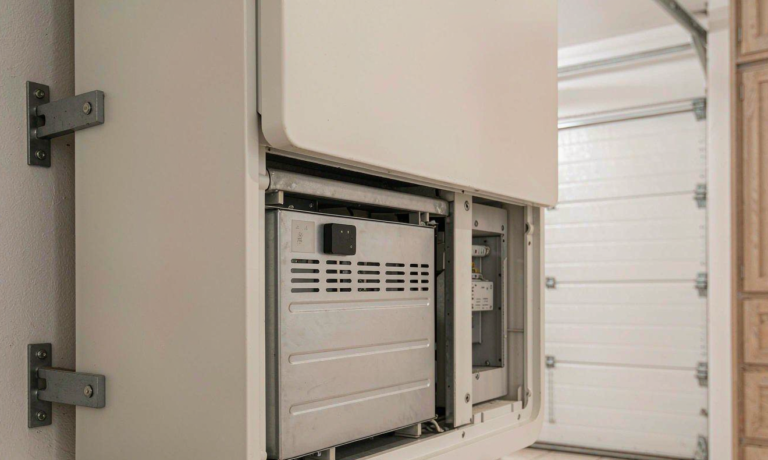
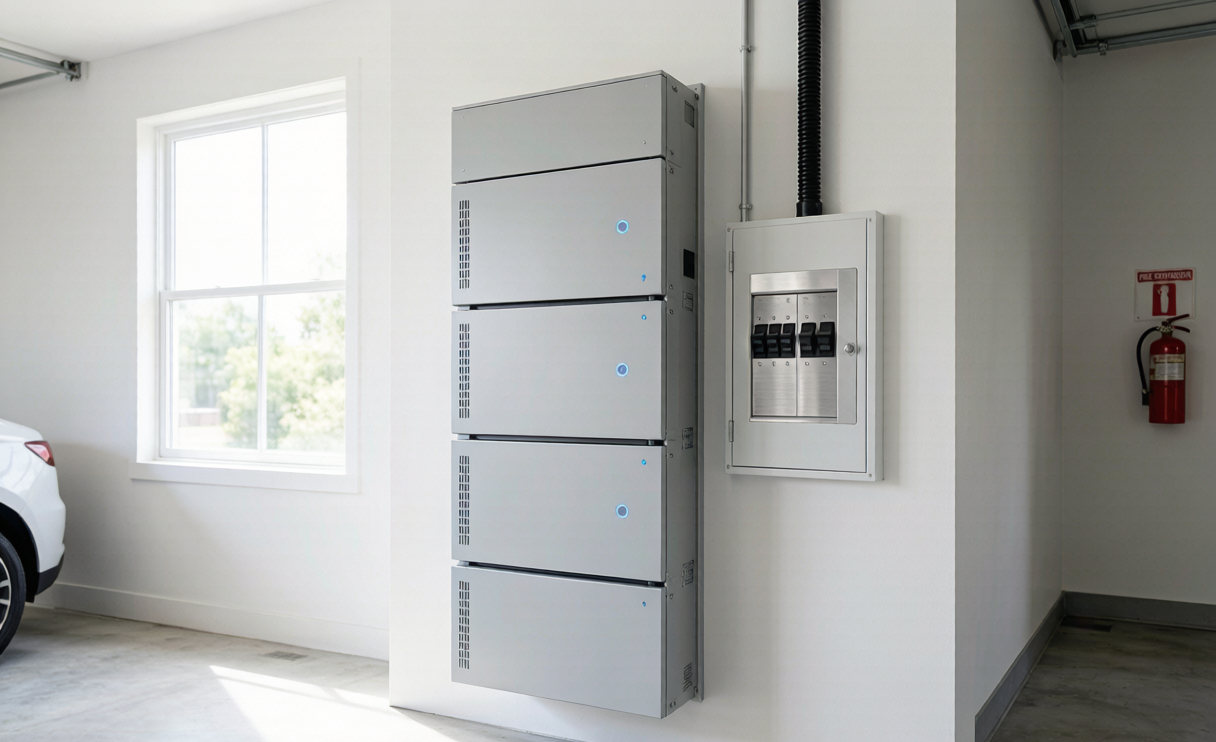
For a home battery backup in a garage, AS/NZS 5139 forces a clear decision: is the battery a “non-separated” unit (subject to the 1 m exclusion zone) or a “separated” unit inside a fire-rated enclosure? We habitually design our AU/NZ enclosures to the separated standard so the installer has maximum flexibility on wall placement. I have seen too many DIY installs fail because the battery sat on the wrong side of a window.
Asia-Pacific — China GB, Japan and Korea
China regulates stationary storage through the GB/T family and, increasingly, GB 44240 (the mandatory safety baseline for lithium cells and batteries) that took effect in 2025. Provincial fire bureaus also issue their own spacing and detection rules, and a home energy storage product destined for the Chinese market needs both the national standard and the local fire department’s sign-off for demonstration projects.
Japan follows METI guidelines and the JIS C 8715-2 stationary battery safety standard, with very strict expectations on overcharge and external-short protection. South Korea, after its 2018–2019 ESS fire incidents, rewrote its fire-safety expectations around mandatory early-smoke detection and physical separation. The lesson from Korea is one every region is now adopting: detection speed matters more than you think, and a battery without an integrated gas/smoke sensor is a liability.
Practical Compliance Checklist for a Safe Install
After dozens of deployments, here is the checklist I hand every installer before they mount the first module:
- Confirm the complete system (battery + inverter) carries a single ESS listing—UL 9540, CSA C22.2 No. 330, or the local equivalent—not just the cells.
- Keep the UL 9540A fire-propagation test report on file; the AHJ will ask for it when you exceed local quantity thresholds.
- Verify separation distances against the adopted code edition: NEC 706 / NFPA 855 in the U.S., AS/NZS 5139 in Australia, local building code in the EU.
- Install marked disconnecting means within sight and reach of the equipment, and label it per the wiring code.
- Add dedicated smoke/heat detection in the battery room or enclosure, and consider an external temperature sensor for the AHJ.
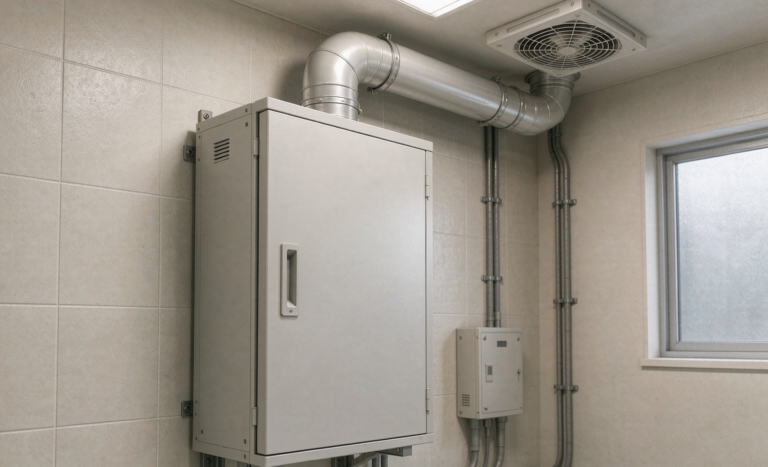
- Document ventilation—natural or mechanical—consistent with the manufacturer’s installation manual and the code’s airflow language.
- Train the homeowner on the disconnect and on what to do if the system alarms. A safe home energy storage system includes an informed user.
None of this is optional, and none of it is exotic. The codes exist because the physics is real, and a well-documented install sails through inspection while a fast-and-loose one gets torn out.
Frequently Asked Questions
What is the difference between UL 9540 and UL 9540A?
UL 9540 is the safety standard for the complete energy storage system as an installed assembly, while UL 9540A is the test method that evaluates whether a thermal runaway event propagates from one cell or module to the next. You need the UL 9540A result to demonstrate to the AHJ that your system will contain a failure, and you need the UL 9540 listing to prove the whole package is safe to install.
Can I install a home battery in my bedroom or living room?
In most regions, no. Standards like AS/NZS 5139 in Australia explicitly restrict battery location relative to habitable and sleeping spaces, and NFPA 855 in the U.S. drives separation and fire-area limits. Garages, utility rooms, and outdoor enclosures are the typical approved locations. Always check the adopted code for your specific jurisdiction.
Do I need a fire sprinkler for a single home battery backup?
Usually not for a typical residential capacity, because most whole-house home battery backup units fall under the threshold that triggers suppression in NFPA 855 and equivalent codes. However, if you install multiple large cabinets or exceed the local quantity limit, supplementary suppression and detection become mandatory. The UL 9540A report and your AHJ determine the exact threshold.
Why do regional codes differ so much for the same battery?
Because each region weighs risk, building stock, and firefighting doctrine differently. A lithium cell behaves the same in Toronto and Tokyo, but the garage construction, firefighter access, and local amendment history vary, so the code that governs spacing, detection, and separation varies too. That is why we ship region-specific installation notes with every residential battery storage order.
Is UN38.3 enough to satisfy my local fire code?
No. UN38.3 only proves the pack is safe to transport (altitude, thermal, vibration, shock, and short-circuit abuse). It says nothing about installed fire safety. You still need the UL 9540 / IEC 62619 / regional listing and the NFPA 855 or equivalent installation compliance for a permanent home energy storage install.