Home Energy Storage for Off-Grid Cabins
After fifteen years of specifying battery packs for everything from survey drones to grid-scale cabinets, I still get a particular kind of phone call: the cabin owner who bought land two hours from the nearest pole transformer and now wants lights, a fridge, and Wi-Fi without a diesel generator humming all night. A well-designed home energy storage off-grid cabin system is absolutely achievable in 2026 — but only if you size it honestly and respect the cold. In this guide I will walk through the load math, the chemistry choice, and the certification realities I apply on every off-grid build.
The good news is that the component economics have flipped in the buyer’s favor. LFP cell prices have fallen for five straight years, MPPT controllers are mature and cheap, and a 48 V rack now costs a fraction of what a comparable lead-acid bank did a decade ago — with none of the maintenance. The bad news is that the internet is full of cabin “kits” sized by marketing, not by watt-hours, and those are the systems I get called to rescue. Read the math below before you buy anything.
Sizing the Battery Bank: kWh Math That Actually Holds Up
Everything starts with a load audit, not a catalog. I ask clients to list every device they intend to run, with its wattage and daily hours of use. A typical off-grid cabin draws 6–12 kWh per day once you include a 120 L compressor fridge (1.2 kWh/day), LED lighting (0.4 kWh), a laptop and router (0.5 kWh), a water pump (0.8 kWh), and a few hours of television or tools (1–2 kWh). In winter, with shorter days and a deeper freezer cycle, plan for the worst week, not the average.
From there the autonomy calculation is straightforward. If you want three days of backup with no sun, and your daily use is 9 kWh: 9 × 3 = 27 kWh of usable energy. Divide by an 80% depth-of-discharge (DoD) allowance and a 90% round-trip efficiency, and you land near 37.5 kWh of nameplate capacity. I always round up, so a 40 kWh home energy storage system is the honest answer for that cabin. Undersizing here is the single most common off-grid failure I am called in to fix.
- Daily load (winter worst case): 9 kWh
- Autonomy target: 2–4 days depending on solar reliability
- Usable fraction: ~72–80% of nameplate for LFP
- Round-trip efficiency: 88–92% including inverter loss
Why LFP Is the Only Chemistry I Specify for Cabins
For an unattended building that may sit cold and unused for weeks, lead-acid is a liability and NMC is a thermal risk I will not accept. Lithium iron phosphate (LiFePO4, or LFP) is the chemistry I put in every residential battery storage project. It is inherently more stable — the iron-phosphate cathode does not release oxygen under abuse the way layered oxide chemistries do — and it delivers 4,000–6,000 full cycles at 80% DoD, which translates to a 10–15 year service life at cabin duty.
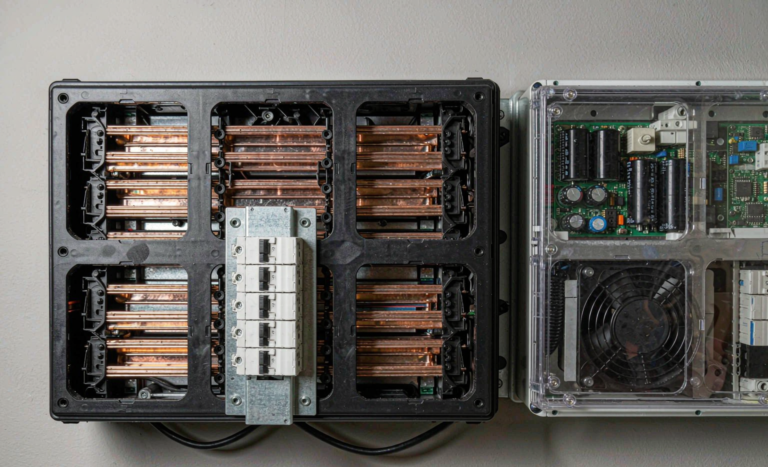
From an engineering standpoint the numbers matter. An LFP cell holds a flat voltage curve around 3.2 V nominal, tolerates high charge/discharge rates, and shows negligible capacity loss between 10°C and 35°C. For a cabin where the owner shows up once a month, that forgiveness is worth more than a few percent of extra energy density. I verify every pack against IEC 62619 for industrial stationary use and IEC 62133-2 for the cell-level safety envelope before it leaves our line.
Inverter and Charge Controller Selection
The inverter is where most off-grid systems quietly waste energy. I specify a pure sine wave inverter with a continuous rating at least 1.3× your largest steady load and a surge rating that covers motor starts — a well pump or compressor can draw 3–5× running current for a few hundred milliseconds. A 3 kW continuous / 6 kW surge unit is the sweet spot for most cabins; larger homes with heat pumps need 5–8 kW.
On the DC side, a 48 V battery bus is the modern standard: it keeps current low, so cabling is thinner and cheaper, and charge controllers run cooler. I use MPPT (maximum power point tracking) controllers rather than PWM because they harvest 15–30% more from the same array in cold, bright conditions. Any inverter I ship carries UL 1741 listing and is configured to IEEE 1547 anti-islanding behavior, even off-grid, so it can later be grid-tied without rewiring.
Solar Array Sizing for Real Seasons
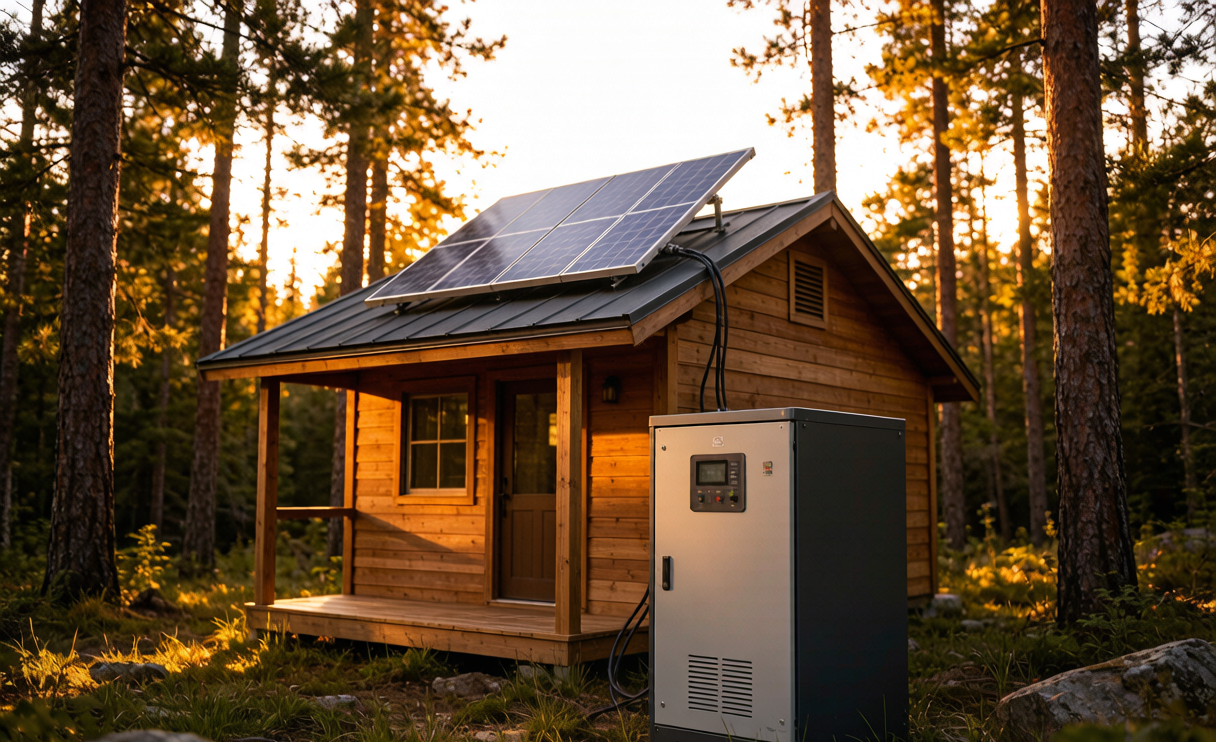
Here is the mistake I see constantly: people size the panels for summer. A cabin used year-round needs winter production, and winter sun in northern latitudes can be a third of summer output. I size the array to refill the battery bank in roughly two good sun-days even in December. For a 40 kWh bank at 90% efficiency, that is about 22 kWh of generation per day, which means 6–8 kW of panels in a snowy climate and 4–5 kW in a milder one.
Tilt matters as much as count. A steep tilt — latitude plus 15 degrees — sheds snow and catches the low winter sun. I also oversize the PV-to-battery ratio deliberately: an oversized array means even a weak February day still tops the bank, and any excess simply spills to a dump load or water heater. A reliable home energy storage design leaves margin everywhere.
Cold-Weather Behavior and How to Manage It
This is the section cabin owners skip and then regret. LFP loses usable capacity as temperature drops — roughly 10–15% at 0°C and up to 30% at −20°C — but the real danger is charging. You must never charge an LFP cell below 0°C; plating lithium metal on the anode is permanent and unsafe. Every off-grid pack I deploy includes a battery management system (BMS) that blocks charge under freezing and, on better units, a self-heating film that warms the cells using a small slice of array or battery energy before accepting charge.
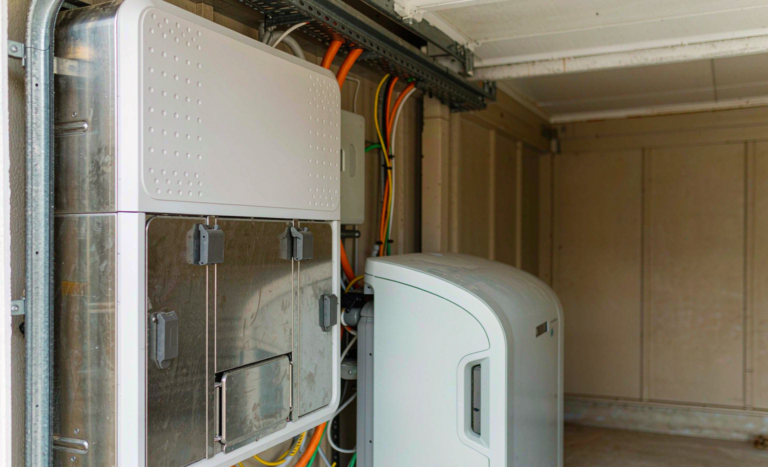
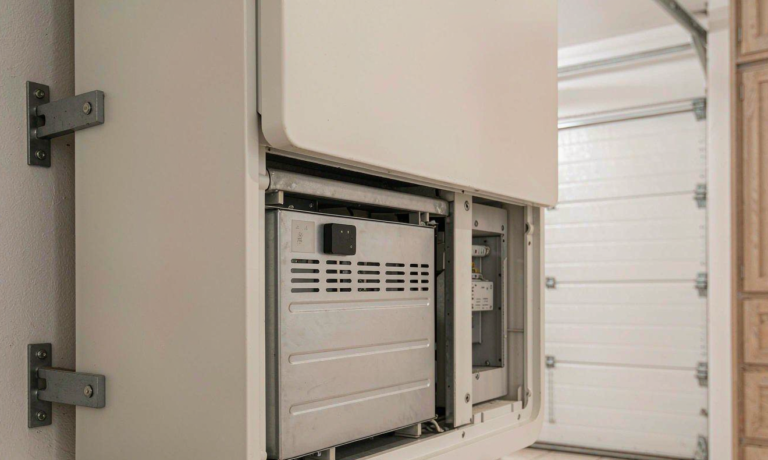
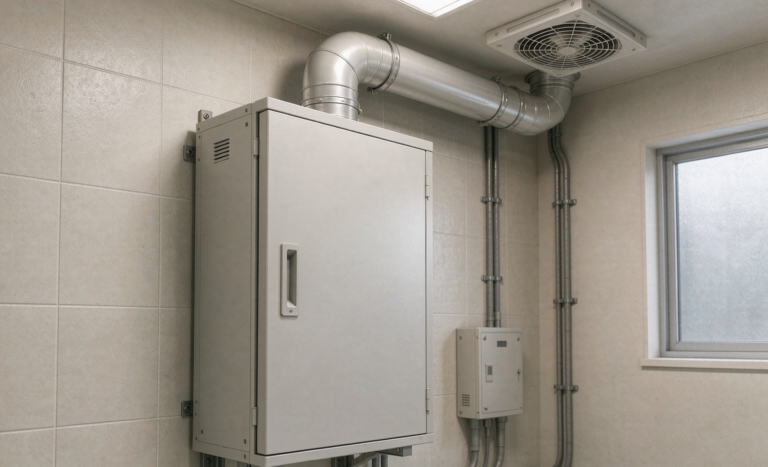
For cabins in hard winter regions I specify an insulated, vented enclosure — often inside the building envelope or in a buffered utility room — so the bank stays above freezing. That single decision is the difference between a system that lasts a decade and one that bricks in its second February. Our cells are UN38.3 certified (T.1–T.8 abuse testing) so they are legal to ship and safe to site, but the installation discipline is what protects your investment on site.
Safety, Enclosure and the Codes You Cannot Skip
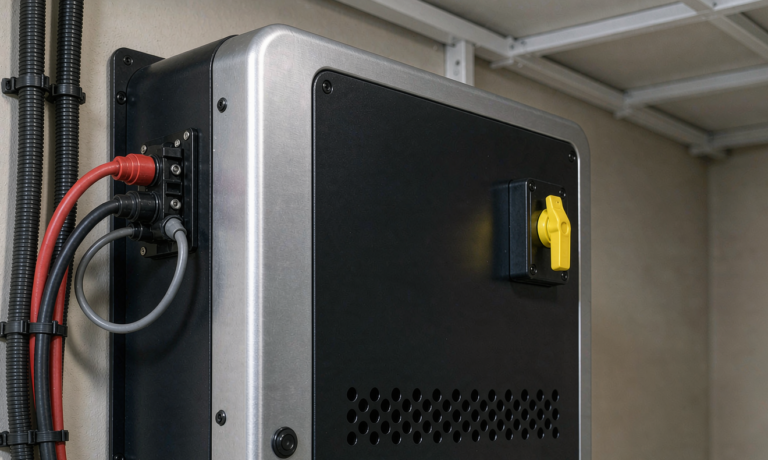
Off-grid does not mean code-free. In most jurisdictions a stationary home battery backup bank still falls under NFPA 855 (energy storage safety) and the National Electrical Code Articles 706 and 710. That means a non-combustible, weather-rated enclosure with defined clearance from habitable space, smoke detection, and proper overcurrent protection on every conductor. I specify outdoor-rated cabinets with an IP54+ rating and a thermal runaway vent path so a single cell fault cannot propagate.
Certification is not paperwork — it is the proof the pack was tested. I look for UL 9540 (system) and UL 9540A (fire propagation) on the enclosure, UL 1973 on the battery modules, and IEC 62619 on the industrial cells. A cabin three hours from service is the worst place to discover a cut corner, so I would rather over-specify the enclosure than gamble on a cheap one.
Final Commissioning Checklist
Before I sign off an off-grid cabin install, I run three checks: a full discharge test to confirm real capacity matches the nameplate, a cold-soak charge test to prove the BMS blocks sub-zero charging, and a ground-fault test on the inverter. Only then do I hand over the monitoring login. A good home energy storage off-grid cabin system is invisible — the owner just notices the lights are always on.
I also document the daily energy budget on a sticker inside the enclosure door: nameplate kWh, recommended DoD, winter solar estimate, and the one phone number to call if the state-of-charge ever hits the low alarm. Most cabin failures are not engineering failures — they are owners who added a space heater and a welder without re-running the numbers. Give the next user the guardrails in writing, and the system will outlive the mortgage.
Frequently Asked Questions
How big a home energy storage system do I need for a weekend cabin?
For a part-time cabin used mainly in summer, 10–15 kWh is often enough if you add a small generator for edge cases. For a full-time residence or winter use, plan 30–50 kWh plus 4–8 kW of solar. Always size from your own load audit, not a rule of thumb.
Can I charge an off-grid cabin battery from my truck alternator?
Yes, with a DC-DC charger sized to your alternator. It is a useful backup when the sun disappears for days, but it is fuel-dependent — I treat it as a supplement to solar, not the primary source, and always confirm the BMS allows charging at the alternator’s temperature.
Will my batteries survive a winter unused?
If the bank is LFP and stored at 40–60% state of charge in a space that stays above freezing, it will. Self-discharge is tiny (<3% per month). The risk is a frozen, fully charged pack — so I set the BMS to a storage target and advise a monthly top-up from the array.
Do I still need a generator as home battery backup?
For a well-sized solar-plus-storage cabin in a sunny region, often no. But for cabins in deep winter or heavy tree cover, a small propane or inverter generator is cheap insurance for the multi-day grey stretch. I integrate it through the inverter’s auxiliary input so it auto-charges without manual switching.