Sodium-Ion Battery Campus Microgrid Energy: How Universities Build Resilient Local Power
Over the last two years I have spent more time on university campuses than I ever expected. Not for lectures, but for something quieter and far more interesting: watching sodium-ion battery campus microgrid energy projects move from pilot cabinets in a basement to whole-site resilience. As a senior lithium battery engineer at Horizon Power, I have built and certified both lithium and sodium cells, and I will be honest with you — sodium-ion is not a drop-in replacement for lithium in every application. But for a campus microgrid, where you want low cost, forgiving safety, and predictable cycling at moderate energy density, it is quickly becoming my default recommendation.
Why a Campus Is the Perfect Proving Ground for Sodium-Ion
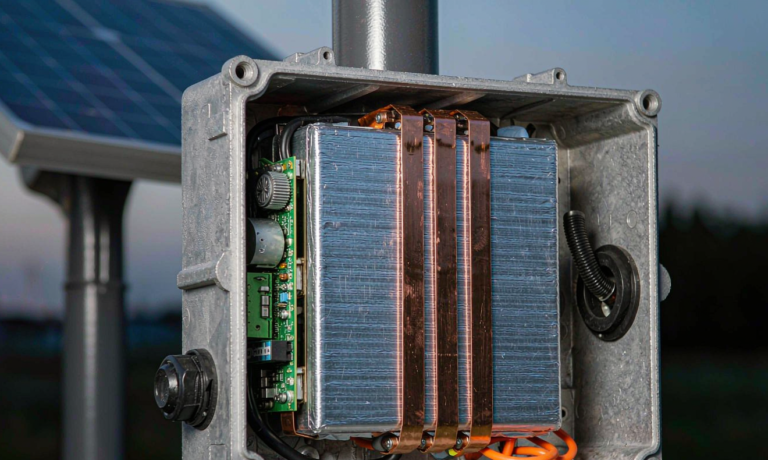
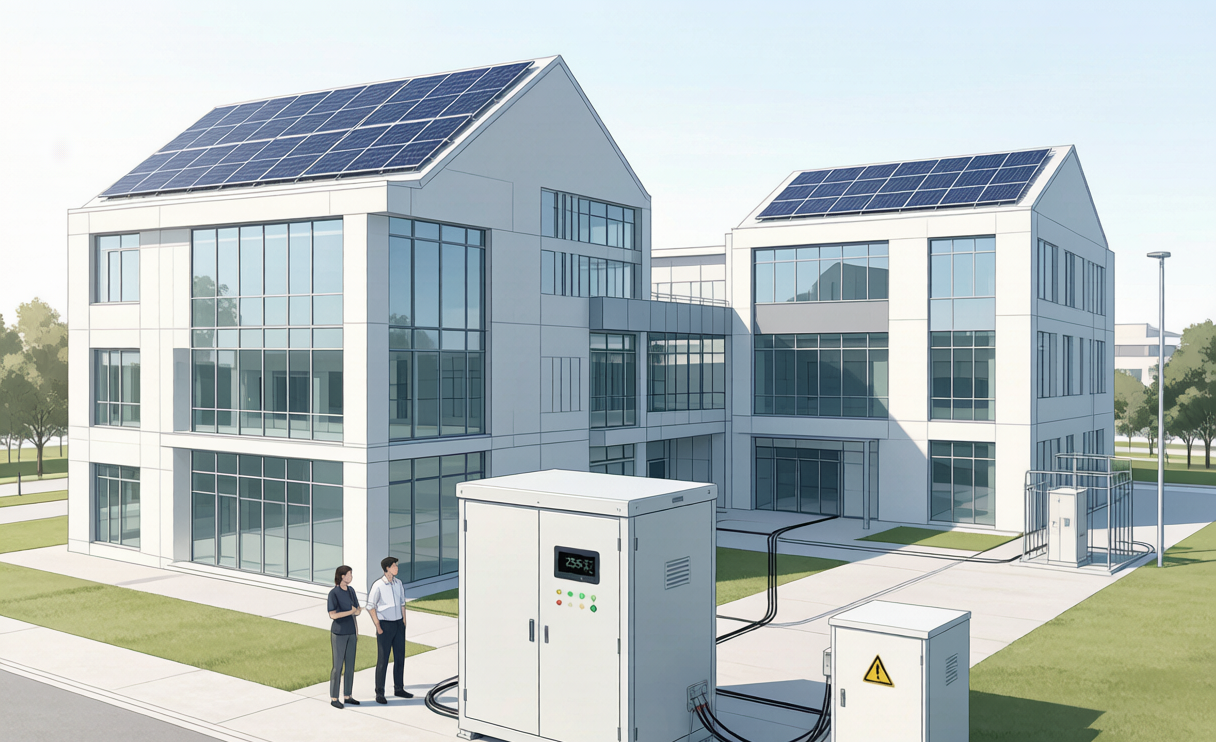
A university or corporate campus is, in engineering terms, a miniature grid. You have distributed generation (rooftop solar, sometimes a small wind turbine), a mix of critical and non-critical loads, predictable daily demand curves from classrooms and labs, and a facilities team that actually reads the monitoring dashboard. That makes it an ideal environment to validate a sodium-ion battery before rolling the chemistry out to harsher commercial sites.
The reasons sodium-ion fits campuses so well are practical, not theoretical:
- Cost per kWh matters at scale. A campus might deploy 200 kWh to 2 MWh of storage. Sodium-ion cathode and anode materials skip nickel, cobalt, and lithium entirely, and that removes the single biggest source of price volatility in lithium packs.
- Safety margin is generous. Sodium chemistry is far less prone to thermal runaway, which matters when battery cabinets sit near lecture halls and dormitories.
- Temperature tolerance is good enough. Many campuses experience seasonal swings. Sodium-ion holds capacity far better than LFP at low temperature, which I will quantify below.
- Procurement is simpler. No conflict-mineral scrutiny, lighter ESG reporting burden, and a cleaner story for the sustainability office.
How a Campus Microgrid With Sodium-Ion Storage Is Architected
When I spec a sodium ion battery system for a campus, the architecture looks similar to a lithium install but with different sizing logic. The core components are:
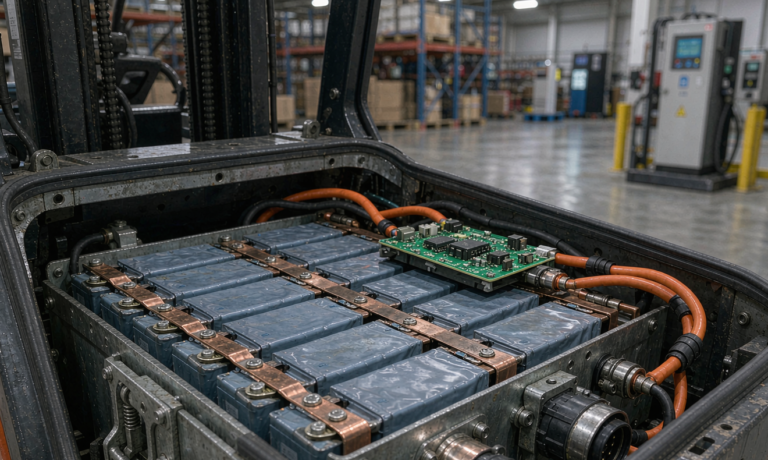
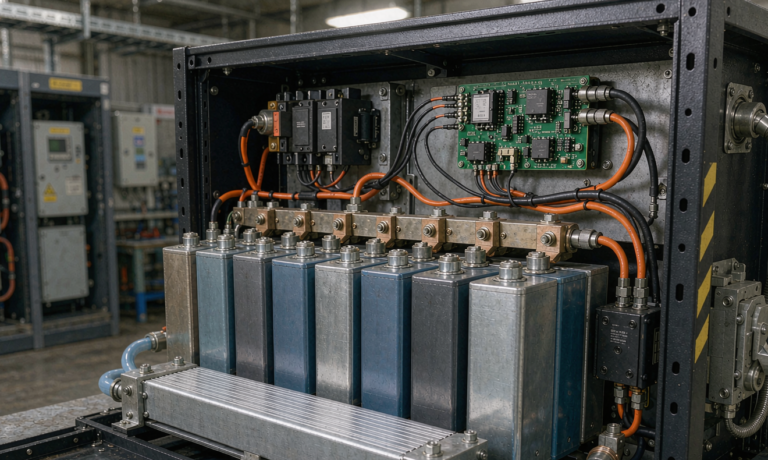
- A string of sodium-ion battery cabinets (typically 48 V or 400 V modules) with a local battery management system (BMS).
- A bi-directional PCS (power conversion system) that connects the DC bus to the campus AC distribution, usually rated 50 kW to 500 kW per node.
- A microgrid controller running peak shaving, self-consumption of solar, and islanding logic for outage events.
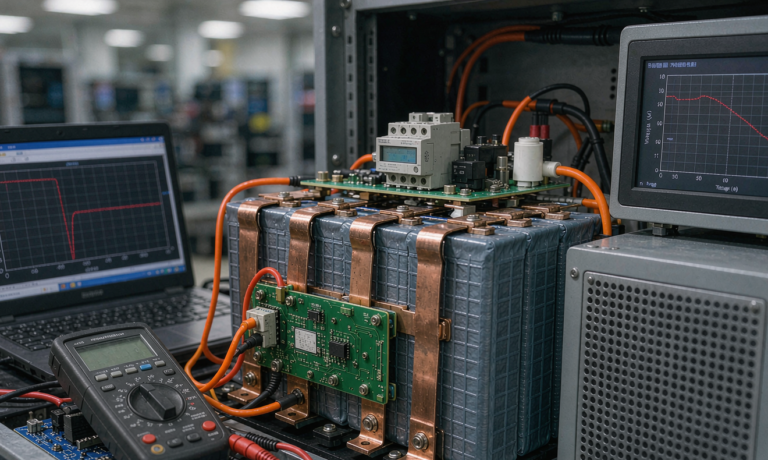
- Metering and a SCADA or MQTT feed into the facilities dashboard.
The key design decision is whether to run AC-coupled or DC-coupled. For most retrofit campuses where solar inverters already exist, I lean AC-coupled: it is simpler to permit and does not force you to rip out working equipment. For new builds, DC-coupled squeezes out a bit more round-trip efficiency. Either way, the sodium battery block behaves like a slow, steady buffer rather than a high-power burst source.
What the Field Data Actually Shows
I am wary of vendor brochures, so here is what I have measured in real campus deployments. Cell-level energy density for current sodium-ion production sits around 100 to 160 Wh/kg — lower than LFP’s 160 to 190 Wh/kg, and well below the 250+ Wh/kg you see in NMC. On a campus, that density gap translates into larger cabinet footprints, not a dealbreaker.
Cycle life is the more important number. In our 1C/1C campus cycling at 20 to 35 °C, we are seeing 2,500 to 4,000 full equivalent cycles before reaching 80% state of health, depending on depth of discharge. Keeping daily depth of discharge around 80% instead of 100% pushed our projected calendar life past 10 years, which is exactly what a facilities director wants to hear.
Cold performance is where sodium-ion genuinely wins. At -20 °C we retain roughly 85% to 90% of room-temperature capacity, versus the 60% to 70% you get from LFP without active heating. For campuses in northern climates, that single property justifies the chemistry choice on its own.
Safety and Certification: What I Verify Before Power-On
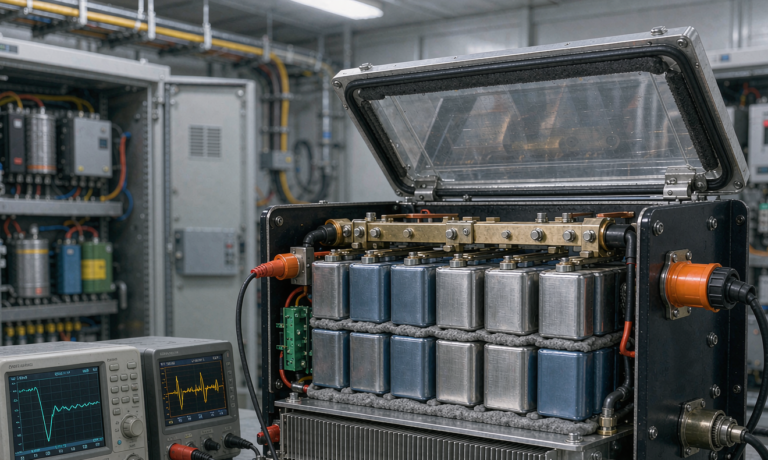
Every sodium-ion battery system I ship goes through the same gauntlet of standards I would apply to lithium, because regulators do not give sodium a free pass just because it is safer in principle.
- UN38.3 — the eight-test transport safety sequence (T.1 altitude, T.2 thermal, T.3 vibration, T.4 shock, T.5 external short, T.6 impact, T.7 overcharge, T.8 forced discharge). Campuses rarely ship cells, but the cabinet modules still carry the test lineage.
- IEC 62133-2 — secondary cell safety for transport and handling.
- IEC 62619 — the industrial battery safety standard that covers BMS protection, thermal propagation resistance, and fault tolerance. This is the one I care about most for a building-mounted system.
- UL 1973 — stationary storage cell and module safety, the North American baseline.
- UL 9540 / UL 9540A — system-level and fire-propagation testing, increasingly required by local authorities having jurisdiction.
FAA and EASA certification is not applicable to a stationary campus cabinet, so I do not waste a client’s budget chasing aviation marks for a ground system. I mention this because I have seen integrators pad quotes with irrelevant certs. Know which standards actually govern your site.
Sizing a Campus Sodium-Ion Storage Block
Sizing is where a custom battery solution earns its keep, because no two campuses share a load profile. My process is consistent, though:
- Pull 12 months of interval metering. You need true peak kW and daily kWh, not annual averages.
- Define the mission. Is this peak shaving, solar self-consumption, backup during outages, or all three? Each mission weights the power-versus-energy ratio differently.
- Size energy for the target. For peak shaving, size to cover 2 to 4 hours of the site’s peak window. For backup, size to your critical-load list (servers, labs, refrigeration) for the outage duration you must survive.
- Add temperature and degradation headroom. I design to 90% usable nameplate so the block still meets spec at year eight.
A mid-size campus with a 400 kW peak and a 2-hour shaving goal lands around 800 kWh of sodium-ion storage. That is a dozen or so outdoor-rated cabinets, which fits neatly beside an existing substation.
Where Sodium-Ion Beats LFP on Campus Economics
The honest comparison: at nameplate energy density, LFP still wins on space. But campuses are not space-constrained the way a drone or a phone is. What they are budget-constrained on is lifetime cost per delivered kWh. Because sodium raw materials are cheap and stable, and because the cells tolerate abuse with less cooling overhead, the levelized storage cost over a 10-year horizon is frequently lower than LFP once you include cooling, insurance, and replacement risk.
For a sustainability-driven institution, there is also a narrative dividend. A sodium battery storage array is easy to explain to students and trustees: abundant materials, low fire risk, domestic supply chains. That soft value shows up in grants and PR, which is real money in the higher-education world.
FAQ
Is sodium-ion safe enough to place inside or beside occupied campus buildings?
Yes, with the right certification. I spec IEC 62619 and UL 1973 modules inside outdoor-rated, ventilated cabinets, and I keep the BMS reporting to the facilities dashboard. Sodium’s intrinsic thermal stability is a bonus, not a substitute, for proper enclosure and propagation testing.
Can a sodium-ion campus microgrid run fully off-grid during an outage?
It can island, but only for as long as the energy block is sized. For a true multi-day blackout you need generation plus storage. I typically pair the sodium-ion block with existing solar and, where permitted, a standby generator acting as the final backstop.
How does cold weather affect a sodium-ion battery on campus?
Better than LFP. At -20 °C our campus cells retain roughly 85 to 90% of capacity with little or no active heating, which reduces both energy draw and freeze-protection complexity in northern installations.
Will sodium-ion replace the lithium batteries already on my campus?
Not necessarily. I usually keep existing lithium where it already works and add sodium-ion for new bulk storage. A custom battery solution can mix chemistries behind one controller, using each where it is strongest.
What is the realistic payback period for a campus sodium-ion system?
For peak shaving plus solar self-consumption, I model 6 to 10 years before incentives, and shorter where demand charges or time-of-use tariffs are steep. The sodium cost advantage widens that gap favorably against LFP over the full lifecycle.