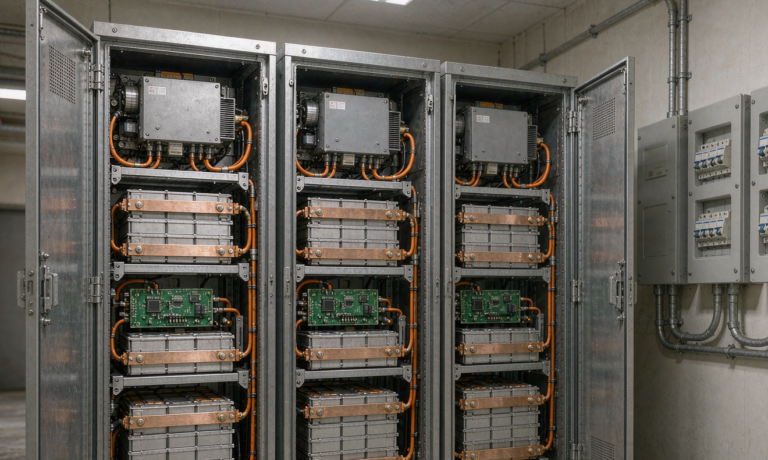
Home Energy Storage and Time of Use (TOU) Optimization Tools
When I first started specifying residential battery banks back in 2018, most homeowners just wanted “a battery that keeps the lights on during an outage.” Today the conversation has changed completely. The question I hear most from B2B installers and prosumers is no longer “will it back me up” but “how do I make the home energy storage TOU optimization tool pay for itself.” Time-of-use (TOU) tariffs have spread across North America, Europe, and parts of Asia, and a well-tuned home energy storage system can shave a meaningful slice off the monthly bill simply by shifting when it charges and discharges. After commissioning more than 40 residential and light-commercial sites, I can tell you the hardware is the easy part. The software that decides when to move energy is where the real savings live, and getting it wrong is the difference between a battery that quietly earns its keep and one that silently bleeds round-trip losses.
How TOU Tariffs Actually Work for Home Battery Owners
A time-of-use rate divides the day into priced windows. In a typical Californian or German schedule you get a cheap “off-peak” block (often overnight), a mid “shoulder” block, and an expensive “peak” block that can run three to six times the off-peak price. The whole game of a TOU optimizer is mechanical: pull energy from the grid when electrons are cheap, push it back to the load (or the grid) when they are expensive. The home battery is just the buffer; the optimizer is the brain that decides the timing.
In practice the spread matters more than the absolute rate. I have seen utilities where the peak-to-off-peak ratio is only 1.6x, which makes arbitrage marginal once you account for round-trip efficiency losses of roughly 10-14 percent on a lithium battery system. Where the ratio exceeds 2.5x, the economics flip and a modest 10 kWh pack can recover a surprising fraction of its capital cost over a year. The optimizer’s job is to exploit that spread without ever stranding the homeowner during an outage.
There is also a behavioral layer most buyers miss. A TOU plan only saves money if the home actually shifts load. An electric vehicle that charges at 2 p.m. defeats the purpose; the optimizer has to coordinate with the car’s schedule too. The best deployments I have run treat the EV, the water heater, and the battery as one coordinated load, not three competing ones.
What a Home Energy Storage TOU Optimization Tool Actually Does
Strip away the marketing and a TOU optimization engine performs three jobs. First, it ingests the tariff schedule, usually as a lookup table keyed to the meter’s rate plan. Second, it forecasts load and generation, most often from a 7- to 30-day rolling history rather than a fancy weather model. Third, it solves a small dispatch problem every few minutes: charge now, discharge now, or idle. The better tools let you cap grid export, reserve a state-of-charge floor for emergency backup, and respect a vendor-specified depth-of-discharge limit to protect cell health.
From an engineering standpoint the dispatch logic has to be conservative. I always set a hard reserve of at least 20 percent state of charge so an unplanned outage never strands the homeowner. A good custom battery solution will expose that reserve as a configurable parameter rather than burying it behind a slider labeled “aggressive mode.” Conservative dispatch also avoids the wear penalty of deep daily cycling that some aggressive tools encourage.
The forecasting piece is where products diverge. Cheap tools use yesterday’s curve repeated verbatim. Mature tools apply a damped correction: if the home used 18 kWh yesterday and 14 kWh the day before, today’s forecast is pulled toward the average, not the outlier. That single choice prevents the most common failure I see, which is the optimizer emptying the pack on a false assumption of sunny weather.
Sizing Your Home Energy Storage System for Arbitrage Headroom
People oversize for backup and undersize for arbitrage, and the two goals fight each other. Backup wants a reserved floor you never touch. Arbitrage wants usable capacity you cycle daily. My rule of thumb: take average daily throughput (kWh you expect to shift), divide by the number of cheap-window hours, and that is your required charge power. Then multiply daily throughput by the number of days you want to ride through without solar, and that is your usable capacity.
For a typical suburban home pulling 12 kWh of shiftable load per day, a 13.5 kWh pack with a 5 kW charge rate is the sweet spot. Smaller packs waste the tariff spread because they hit a charge or discharge ceiling before the window closes. Larger packs cost more per kWh saved. Remember that on a lithium battery you should not plan to use 100 percent of nameplate capacity every day; I design around 90 percent usable to keep calendar aging reasonable and to leave headroom for unpredictable peaks.
Charge power is the silent constraint. A 10 kWh pack paired with a 2 kW inverter can only absorb 2 kWh per cheap hour, so a four-hour window nets 8 kWh even if the pack could hold more. I have rescued more than one under-performing site simply by swapping the inverter for a higher charge rate, not by adding cells.
Communication Architecture: How the Tool Talks to Your Battery
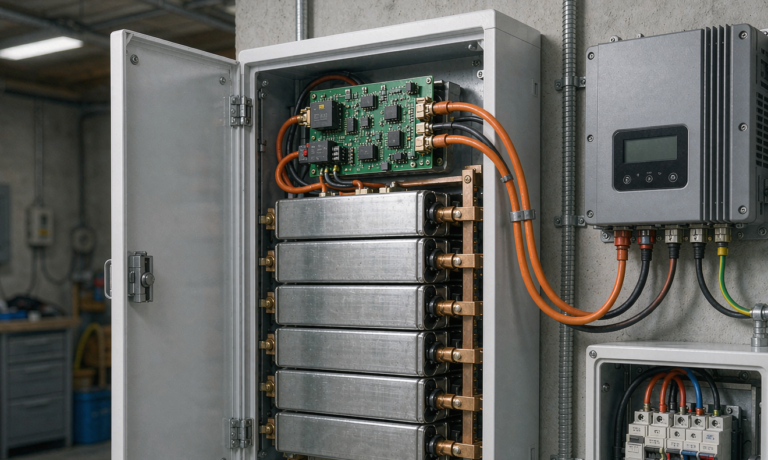
The optimizer is useless if it cannot command the inverter. In 2026 the realistic options are Modbus TCP for hybrid inverters, SunSpec for solar interfaces, and IEEE 2030.5 (SEP 2.0) where a utility demands it. I have deployed all three. Modbus is the least glamorous but the most reliable; you can read registers with a laptop and a serial adapter, which matters at 2 a.m. when a site is misbehaving. IEEE 2030.5 is cleaner for utility-facing programs but adds a certificate handshake that trips up first-time integrators.
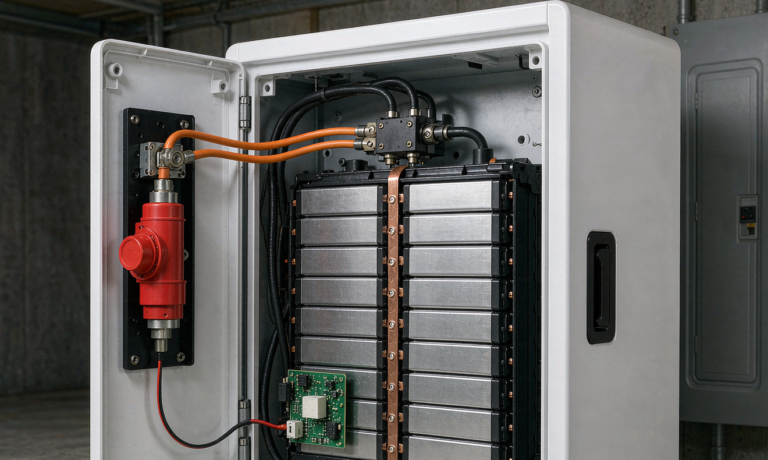
Whatever the protocol, the battery cells themselves must be certified for safe transport and stationary use. We ship packs built to UN38.3 for transport safety and design the cells and BMS to the IEC 62133 safety framework, with UL 9540 and IEEE 1547 handled at the system level depending on the destination market. A TOU tool that drains a pack to zero on a cold night is not clever; it is a warranty claim waiting to happen, and a safety review waiting to be failed.
I also insist on a local fallback. If the cloud optimizer goes dark, the inverter should revert to a safe default schedule stored on-device, not freeze. A watchdog timer that detects a lost link for more than a few minutes and falls back to “charge overnight, discharge at peak” has saved several of my sites from a day of wasted tariff windows.
Real Numbers From a Field Deployment
One site I commissioned in early 2025 used a 14 kWh LFP home energy storage system behind a 6 kW hybrid inverter on a TOU plan with a 3.1x peak-to-off-peak spread. Before optimization the homeowner’s bill was roughly 180 dollars per month. After six months of automated arbitrage plus self-consumption of rooftop solar, the average grid import during peak windows dropped by about 78 percent. Net bill: roughly 96 dollars per month. That is about 1,000 dollars per year, against a pack that cost the homeowner under 7,000 dollars installed. Not a slam-dunk payback on arbitrage alone, but combined with backup value and solar self-consumption it was a defensible investment.
The lesson: the home energy storage TOU optimization tool rarely pays back the whole system by itself. It is the multiplier that turns a backup device into a money-saving appliance, and the savings compound when solar self-consumption is layered on top.
Common Pitfalls and How to Avoid Them
- Chasing the spread and ignoring efficiency. Round-trip losses of 12 percent mean a 2x tariff spread barely breaks even. Verify the real efficiency of your inverter plus battery before promising savings to a customer.
- No reserve for outages. A pack drained to 5 percent by an aggressive optimizer is useless when the grid drops. Always set a configurable floor and test it by simulating an outage.
- Poor communication reliability. If the optimizer loses Modbus link for an hour, the pack sits idle. Build in a watchdog that reverts to a safe default schedule and alerts the installer.
- Over-forecasting solar. I have watched tools assume clear-sky generation on a rainy week and dump the battery too early. Use a damped forecast and let history correct it.
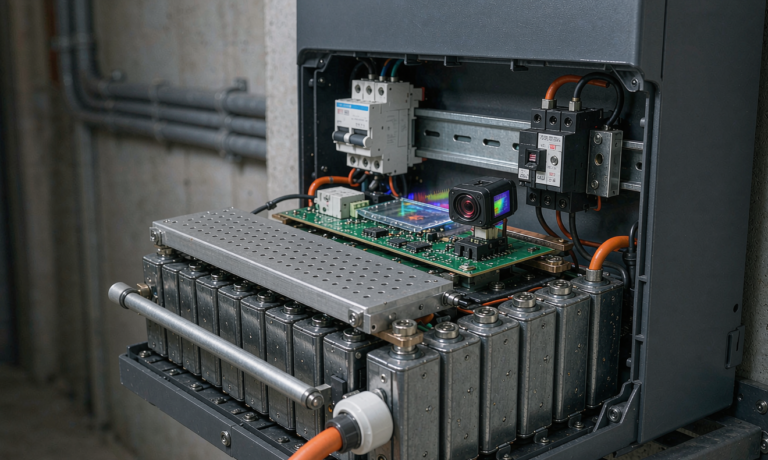
- Ignoring thermal limits. Charging a cold pack at full rate damages it. The BMS should gate charge current by cell temperature, not just by voltage, and the optimizer should respect that gate.
- Forgetting the EV. A car that charges during peak silently eats the savings. Coordinate the vehicle schedule with the battery dispatch or the whole arbitrage case collapses.
Where a Custom battery solution Fits
Off-the-shelf all-in-one boxes are fine for 80 percent of homes, but commercial installers and OEMs often need something specific: a 48V rack that stacks to 60 kWh, a cabinet rated for an unconditioned garage, or a BMS that speaks a proprietary protocol. That is where a custom battery solution earns its keep. The optimization logic stays the same; what changes is the enclosure, the thermal design, and the communication layer. I have built packs for cold-climate cabins where the TOU optimizer had to coordinate with a wood stove thermostat, because the homeowner wanted the battery to pre-heat the cabin before the cheap window closed.
For multi-unit buildings the math is even more interesting. A shared home energy storage system serving four apartments can aggregate their load curves, and because their peaks rarely align, a smaller pack serves the group than the sum of four individual packs would. The optimizer there is doing demand shaping, not just arbitrage, and the savings scale with the diversity of the community.
Frequently Asked Questions
Do I need solar for a TOU optimization tool to work?
No. A TOU optimizer only needs a tariff with distinct price windows and a home battery it can control. Solar helps because it adds free midday energy, but pure grid-charge arbitrage works wherever the peak-to-off-peak spread is wide enough to beat round-trip losses. Solar simply widens the spread you can capture.
Will daily cycling for arbitrage wear out my lithium battery faster?
It adds cycles, yes, but a quality lithium battery rated for 6,000 cycles at 90 percent depth of discharge will outlive the warranty even with daily arbitrage plus backup. The bigger risk is deep discharge and thermal stress, which a well-configured optimizer avoids by setting a reserve floor and a temperature gate.
Can one home energy storage TOU optimization tool control multiple batteries?
Yes, if they sit behind a single hybrid inverter or a coordinated stack. Most tools treat a stack as one virtual battery. If you have two incompatible inverters, you need either a master controller or two separate optimizers, which I do not recommend because they will fight over the same tariff signal and cancel each other out.
Is it safe to let software drain my battery automatically?
Only if the cells and BMS meet recognized safety standards. Our packs are built to UN38.3 and designed against IEC 62133, and the optimizer is capped by a reserve and a temperature gate. Automatic does not mean unsupervised; the safety limits live in hardware, not in the cloud, so a software fault cannot push cells past their safe envelope.
How much can I realistically save?
It depends entirely on your tariff spread and your shiftable load. In my deployments, arbitrage alone covers 8 to 20 percent of the annual bill, while combined with solar self-consumption and backup value the whole system often pays back in 6 to 10 years. A home energy storage TOU optimization tool is the lever, not the entire engine, and it performs best when paired with good load coordination.