Battery Solution for Underwater Exploration Gear: Engineering Reliable Power for the Deep
Why Underwater Exploration Gear Needs a Purpose-Built battery solution
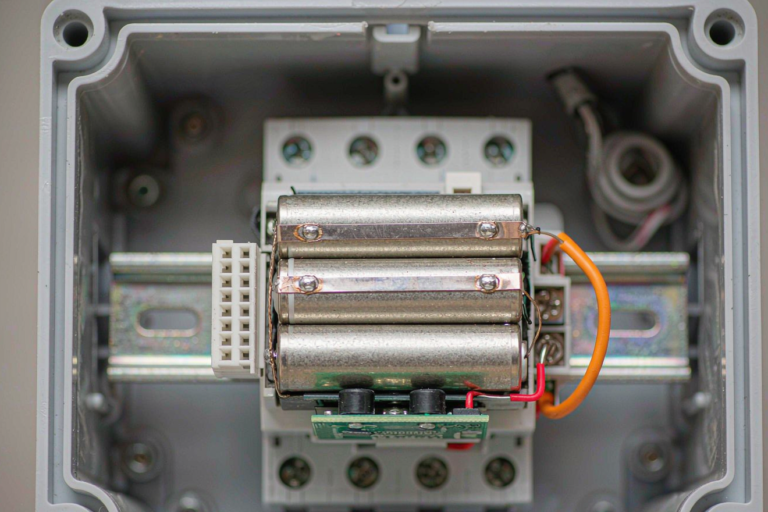
When I first started designing power systems for remotely operated vehicles (ROVs) more than a decade ago, the most common mistake I saw was assuming any off-the-shelf lithium battery pack would survive a deep dive. It will not. A proper battery solution for underwater exploration gear has to withstand pressures that would crush a soft-drink can, stay completely sealed against ingress for weeks at a time, and deliver steady current while the surrounding water pulls heat away far faster than air ever could. Generic consumer packs fail in days — and sometimes fail violently.
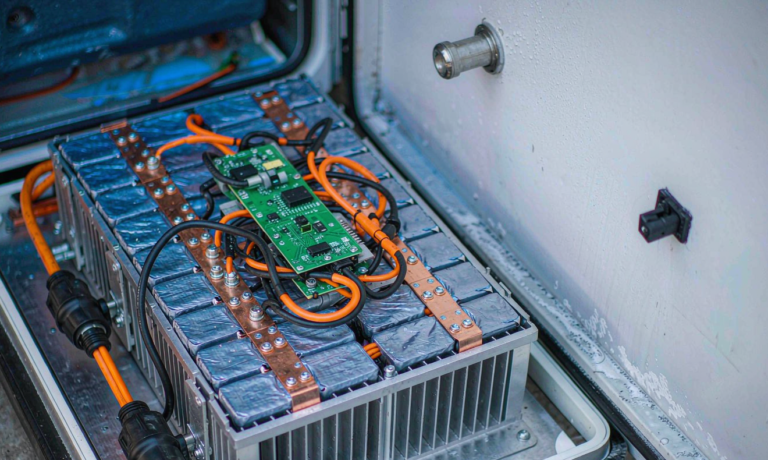
Over the years my team has shipped sealed packs for inspection-class ROVs, autonomous underwater vehicles (AUVs), deep-sea sensors, and manned submersibles. The lesson repeats every time: the enclosure and the cell chemistry are inseparable. You cannot bolt a drone battery into an aluminum tube and call it a marine battery solution. The load profile, the pressure, and the thermal path define the entire architecture.
The Four Engineering Challenges We Design Around
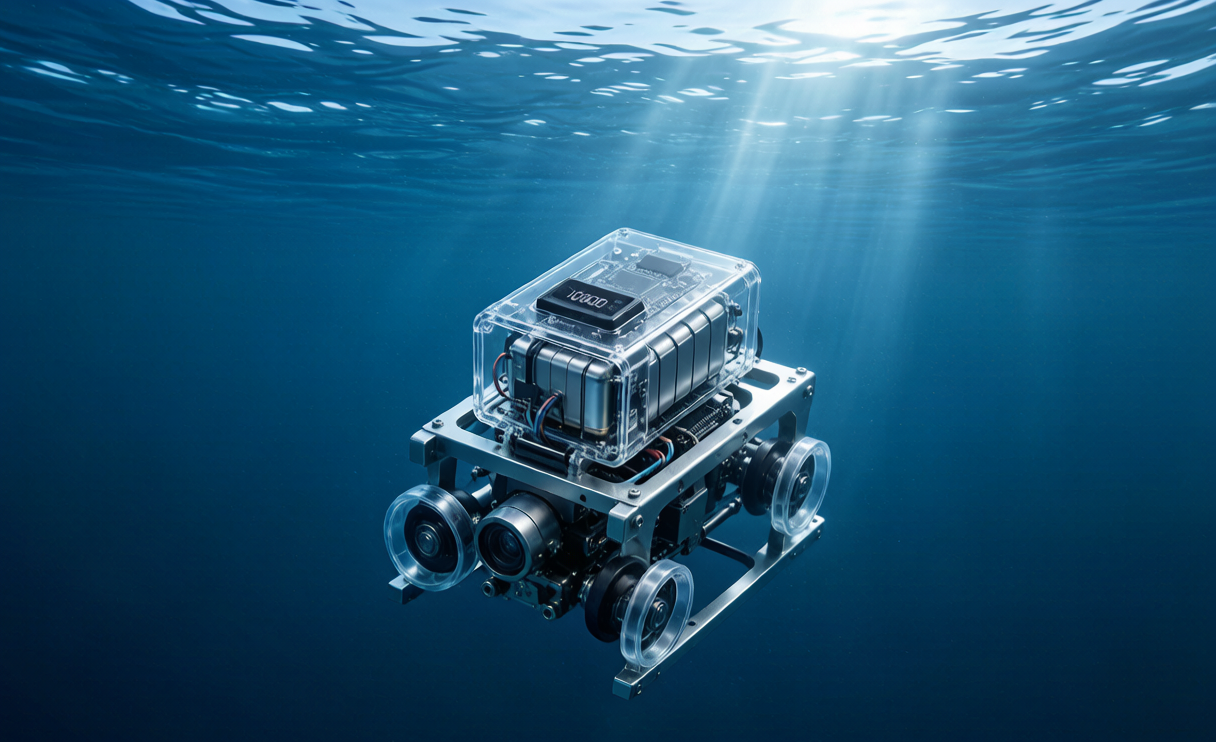
Before I spec a single cell, I model four constraints. They overlap, and ignoring one usually breaks another.
- Hydrostatic pressure. Every 10 meters of depth adds roughly 1 bar. At 1,000 m you are at ~100 bar (about 1,450 psi). Electronics and soft pouches hate that. The housing must be rated with margin.
- Sealing and ingress. A single O-ring failure floods the pack and ruins the mission. We use double O-ring arrangements and pressure-equalizing bladders where the depth range demands it.
- Thermal management. Water is a great heat sink but a poor radiator to air. A pack that is fine on the bench can overheat inside a sealed tube with no convective path.
- Buoyancy and mass budget. Heavy packs make the vehicle negative and burn thrust just to hover. Energy density and mass are as important as capacity.
These four forces are why a custom battery solution — rather than a catalog part — is the right call for anything beyond shallow, short inspections.
Choosing the Right lithium battery Chemistry
For underwater gear, the lithium battery family gives us the best energy density by far, but not every chemistry is a good fit.
- Li-ion (NMC / LCO). High specific energy, mature supply chain. Great where mass matters most. The trade-off is a tighter thermal window, so the BMS and enclosure have to be conservative.
- LiFePO4 (LFP). Excellent thermal stability and cycle life, slightly lower energy density. I recommend LFP for slow, long-duration deployments where safety margin beats range.
- LiPo (pouch). Flexible form factor for odd cavities, but pouches need rigid support and are less tolerant of pressure. I use them only when the shape demands it.
In practice, a deep AUV that must run 20+ hours leans toward high-energy NMC, while a stationary seafloor sensor node running months on a trickle load is better served by LFP for its calendar life. A good battery solution matches chemistry to the duty cycle, not the other way around.
Sealing, Pressure Rating, and Buoyancy
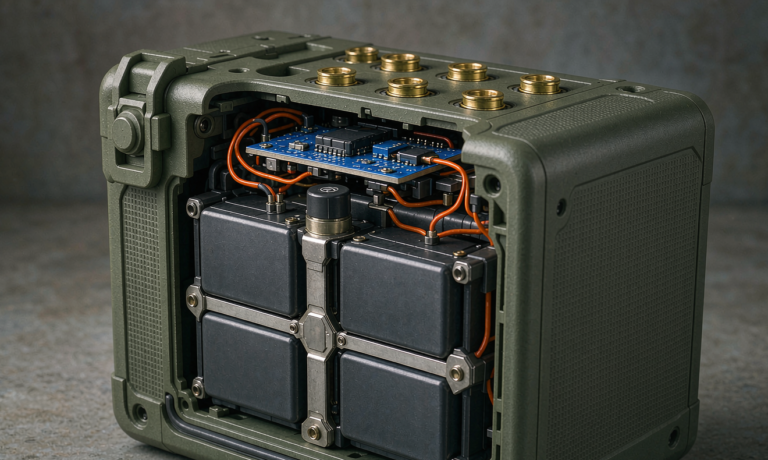
The enclosure is half the product. I specify anodized aluminum or titanium tubes with machined end caps, double redundant O-rings, and a pressure relief path that never opens inward. For shallow gear (under 300 m) a sealed housing is enough. Beyond that, I add an oil-filled, pressure-compensated design where the internal oil matches external pressure through a flexible bladder — this removes the net crushing load on cells and electronics.
Buoyancy is a balancing act. Titanium is lighter than you think but expensive; aluminum is the workhorse. I run a simple mass model: pack mass + device mass must sit near neutral so the thrust system is not fighting gravity all dive. A heavy battery solution is a slow, inefficient vehicle.
Compliance and Safety: UN38.3 and IEC 62133
No marine battery solution leaves our facility without passing the certifications buyers expect. Two matter most for shipping and operation:
- UN38.3. The international transport test for lithium cells and batteries — altitude simulation, thermal, vibration, shock, external short circuit, impact, overcharge, and forced discharge. Required for air and sea freight of every pack we build.
- IEC 62133. The safety standard for portable sealed secondary cells and batteries containing alkaline or non-acid electrolytes. It covers short-circuit, overcharge, and forced-discharge abuse. For any product a third party will handle, this is the baseline.
We also run our own pressure-cycling and dunk tests well beyond the rated depth, because a cert lab in a city is not the North Atlantic in February. If your supplier cannot show UN38.3 and IEC 62133 paperwork, keep looking.
A Real-World Configuration I Recommend
For a mid-size inspection ROV operating to 300 m for 4–6 hours per dive, my standard starting point is a 22.2 V (6S) Li-ion pack built from high-quality 18650 or 21700 cells, ~15–20 Ah, in an anodized aluminum tube with double O-rings and a sealed marine connector. The BMS handles over-current, over-temperature, and cell balancing, and a separate pressure-rated cable feeds the thrusters.
For a deep AUV at 1,000 m running 24 hours, I move to an oil-filled, pressure-compensated NMC pack at higher voltage (e.g., 44.4 V / 12S) with a conservative C-rate and a beefier BMS, because you cannot surface and swap it mid-mission. The exact numbers depend on the vehicle’s thrust, sensors, and payload — which is exactly why we treat each build as a custom battery solution rather than a reskinned drone battery.
Frequently Asked Questions
What is the best battery solution for underwater exploration gear?
It depends on depth, runtime, and mass budget. Shallow short inspections do well with sealed Li-ion in an aluminum tube; deep long missions need oil-filled, pressure-compensated packs, often NMC. Match chemistry and enclosure to the duty cycle.
How deep can these battery packs go?
Sealed housings are practical to roughly 300–600 m. Beyond that, pressure-compensated oil-filled designs can reach several thousand meters. We always rate the housing with a safety margin above the target depth.
Are underwater lithium battery packs safe to ship?
Yes, when built and documented correctly. Every pack must pass UN38.3 transport testing and meet IEC 62133 safety requirements. We provide the test summaries and labeling needed for air and sea freight.
Can you build a custom battery solution for a specific vehicle?
That is the core of our work. We start from your load profile, depth, and buoyancy targets, then select chemistry, cell format, enclosure, and BMS together. A tailored build almost always out-performs a modified off-the-shelf pack.
How long do these packs last?
Cycle life ranges from roughly 500 cycles for high-energy NMC in hard use to 2,000+ for LFP in gentle duties. Calendar life also matters for seafloor nodes that sit idle for months; LFP and careful balancing extend it significantly.