Battery Solution for Warehouse Robotics and AMRs: An Engineer’s Field Guide to Reliable AMR Power
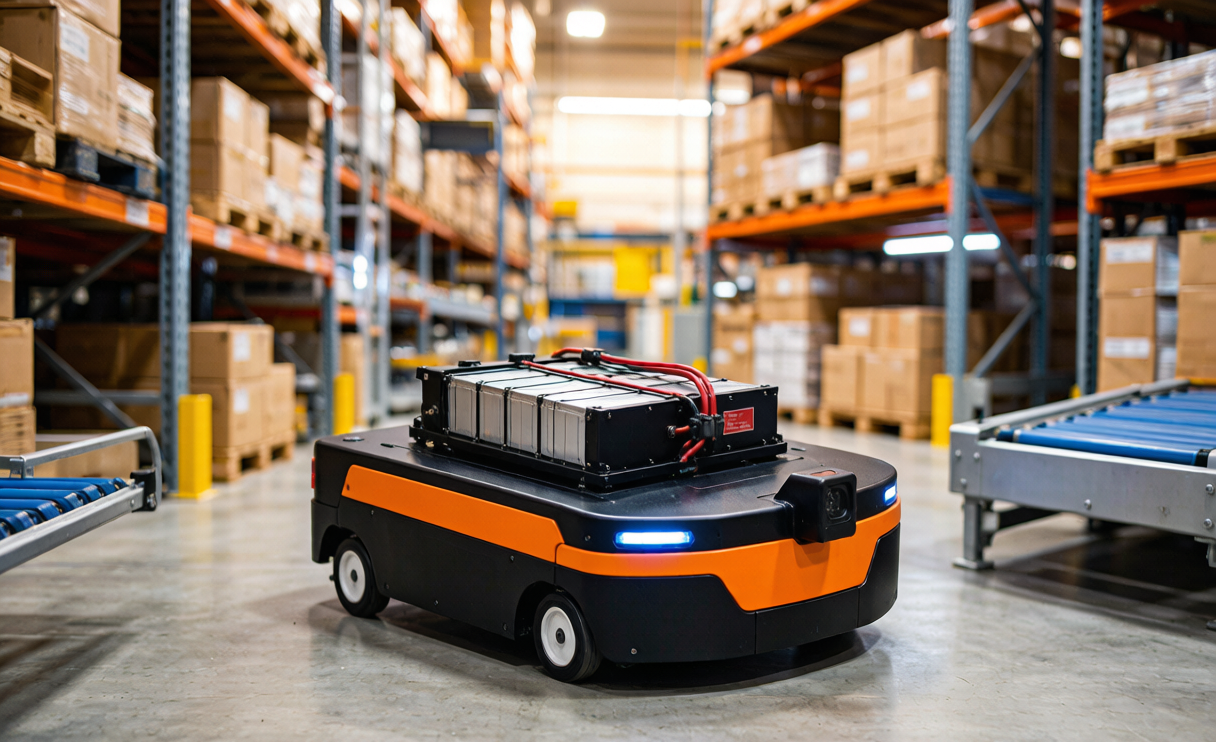
I’m Karl Huang, a senior lithium battery engineer who has spent the better part of a decade on the factory floor and in the integration lab. Over the last few years I’ve watched a quiet revolution move through the logistics world: the rise of Autonomous Mobile Robots (AMRs) and warehouse robotics. If you are specifying power for a fleet of these machines, you quickly learn that a battery solution warehouse robotics AMR program is nothing like dropping a lead-acid block into a pallet jack. The duty cycles are brutal, the floors are safety-critical, and the robots never get to “clock out.” In this guide I’ll walk through how we engineer reliable, certifiable power for warehouse robotics — from cell chemistry to fleet telemetry — based on what actually survives a 24/7 distribution center.
Why AMRs Are a Different Beast Than Traditional Material Handling
A forklift runs a few shifts and sits idle overnight. An AMR in a modern fulfillment center is expected to run nearly continuously, swapping between picking, transporting, and charging windows with almost no human intervention. That changes the engineering calculus completely. The battery is no longer a passive reservoir — it is the single most failure-prone component in the whole robot if it is specced wrong.
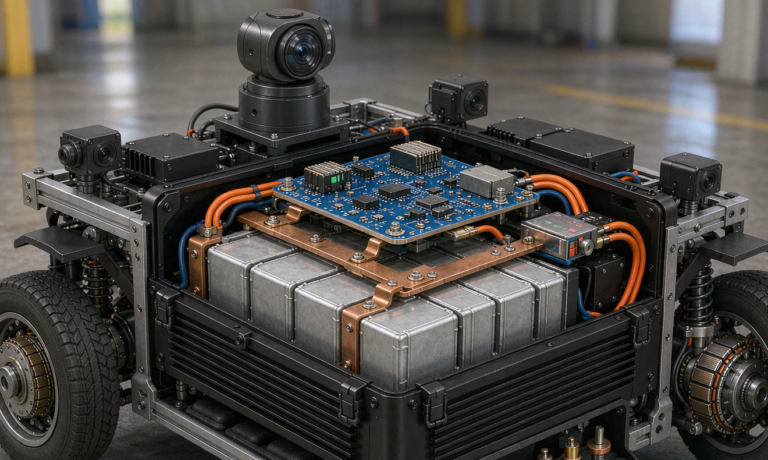
From my experience, the three things that kill an AMR deployment are: (1) capacity that looks fine on paper but collapses under real mixed-load duty, (2) thermal issues in sealed robot chassis with limited airflow, and (3) a battery management system (BMS) that the fleet software can’t actually talk to. A proper custom battery solution treats all three as first-class design constraints, not afterthoughts.
It’s also worth saying what an AMR battery is not. It is not a consumer power bank with a bigger shell, and it is not a repurposed e-bike pack bolted into a robot. The vibration profile, the charge cadence, and the safety expectations of a warehouse are in a different league. When a buyer tells me they “just need something that fits the tray,” I know we’re about to have a longer conversation — because fit is maybe 10% of the problem.
Cell Chemistry: Why LFP Dominates the Warehouse Floor
For warehouse robotics, lithium iron phosphate (LFP, LiFePO4) is almost always the right call. The cells run at a nominal 3.2V, deliver flat discharge curves, and — most importantly — shrug off the abuse that comes with fast charging and high cycle counts. In our lab and field data, quality Grade-A LFP cells deliver 2,000 to 4,000 full cycles before dropping to 80% state of health, which translates to 3–5 years of continuous duty in a typical AMR.
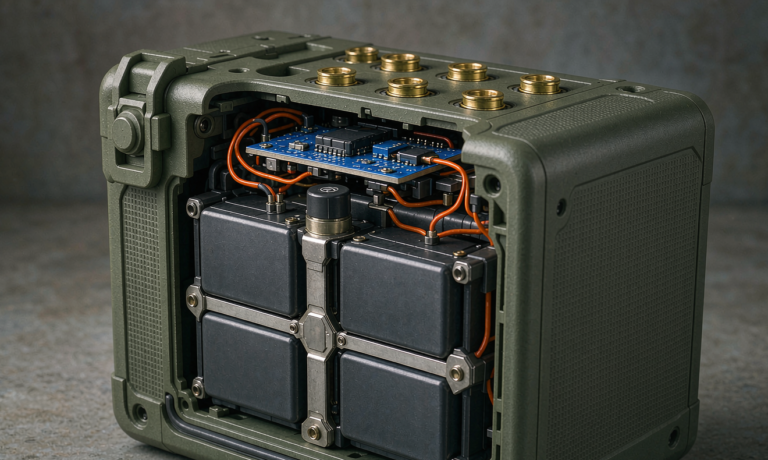
Nickel-based chemistries (NCM/NCA) offer higher energy density, but the thermal margin is tighter and the cost per cycle is worse for a floor robot that charges several times a day. For a battery solution where safety, cycle life, and total cost of ownership matter more than squeezing out the last gram, LFP wins. We pair the prismatic or pouch cells with a rigid, vibration-damped mechanical pack and an IP54-rated enclosure so the pack survives the dust and bump of a live warehouse.
Sizing Capacity for Real 24/7 Duty Cycles
The mistake I see most often is sizing the pack to “average” consumption. AMRs don’t run at average — they accelerate, climb ramps, and haul near-max payload during peak picks. I size to the 95th-percentile load, not the mean. A practical workflow:
- Measure peak draw (motor stall + lifting + onboard compute) — often 3–5C瞬时 for seconds at a time.
- Define the target run-time between charges (typically 2–4 hours for a continuously busy bot).
- Apply a depth-of-discharge ceiling of 80% to protect cycle life.
- Add a 15–20% margin for battery aging over the first year.
For a mid-size 48V AMR drawing ~1,500W average with 3C peak, we typically land on a 48V 30–40Ah pack (roughly 1.5–2.0 kWh). The numbers always come from the robot’s real telemetry, never a catalog guess.
Fast Swap vs Fast Charge: Designing the Energy Loop
There are two ways to keep a fleet running: opportunity charging at a dock, or battery swapping. Both are valid, and the right choice depends on your throughput.
Opportunity charging — short 10–15 minute top-ups whenever the bot is idle — is gentler on labor but demands a charger and BMS handshake that won’t cook the cells. We cap charge current around 0.5–1C and use a temperature-compensated profile so the pack never exceeds ~45°C during charge. Battery swapping, on the other hand, keeps robots moving but requires standardized, hot-swap pack mechanics and a disciplined rotation so no single pack is over-cycled. Either way, the battery solutions we deliver include the charger communication spec, not just the pack.
BMS, Comms and Fleet Telemetry
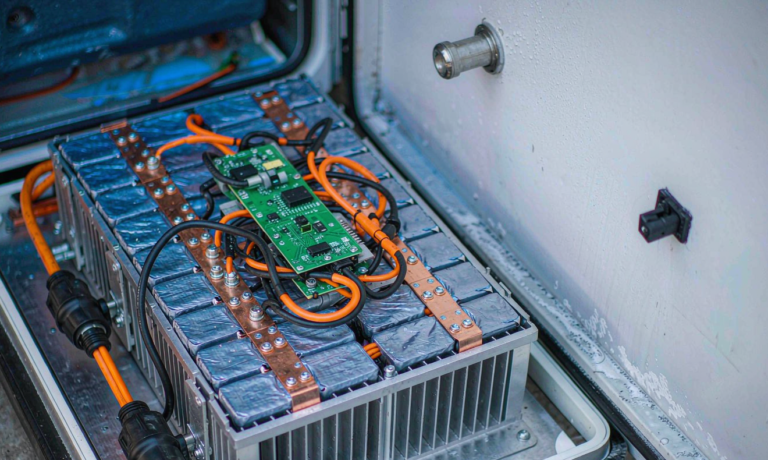
A warehouse robot is only as smart as the data it reports. The BMS must expose state of charge (SOC), state of health (SOH), cell voltages, temperature, and fault flags over a protocol the fleet manager understands — typically CAN bus, RS485, or SMBus/I2C bridging to the robot’s main controller. I insist on a BMS with:
- Per-cell voltage monitoring and active/passive balancing.
- Multi-level thermal cutoff and secondary fuse protection.
- Accurate coulomb counting with periodic SOC recalibration.
- A clear fault taxonomy the robot software can act on (e.g., limp-home on warning).
When the fleet can see each pack’s SOH, you shift from reactive failure to predictive maintenance — pulling a tired pack before it strands a bot mid-aisle. That single capability probably saves more downtime than any chemistry choice.
Safety, Certification and the Warehouse Floor
Warehouse robotics operate around people, so certification is non-negotiable. Every pack we build for this application is designed to pass UN38.3 (transport and abuse testing), and we validate against IEC 62133 for portable cell safety. For the chargers and system integration we track CE/FCC/UL requirements depending on the destination market. We also run our own abuse testing — nail penetration, short circuit, and overcharge — at the pack level, because a cell-level cert doesn’t guarantee a well-built assembly.
Mechanically, the pack gets a sealed enclosure with venting paths, strain relief on every cable, and mounting that survives the repetitive shock of docking and accelerating. In my view, the difference between a consumer power bank and an industrial custom battery solution is exactly this level of abuse-proofing.
Integration, Commissioning and a Clean Fleet Rollout
Even a perfectly designed pack fails if integration is rushed. When we commission an AMR fleet, I insist on a phased rollout. Start with 5–10 robots on live duty while we capture real discharge profiles and compare them against the model. Only after the telemetry matches the spec do we scale. This catches the “paper vs reality” gap early, when swapping one pack design is cheap and not a line-down emergency.
Practically, I also hand the customer three things most suppliers skip: a charger compatibility sheet (so nobody plugs in a charger that speaks the wrong protocol), a recommended storage-and-shipping procedure aligned with UN38.3, and a simple end-of-life plan for recycling the LFP packs responsibly. These aren’t glamorous, but they’re the difference between a pilot that becomes a contract and one that becomes a cautionary tale.
Conclusion: Treat the Battery as a System, Not a Part
Specifying power for warehouse robotics and AMRs is systems engineering. The best results come when the battery team, the robot OEM, and the facility operations sit down together early — defining duty cycles, charge windows, and the telemetry contract before a single cell is welded. Get that right, and your AMRs quietly earn their keep; get it wrong, and you’ll be swapping packs on the floor at 2 a.m. If you’re planning an AMR fleet rollout, bring the power conversation to the front of the project, not the end.
Frequently Asked Questions
What battery chemistry is best for warehouse AMRs?
LFP (lithium iron phosphate) is generally the best choice for warehouse robotics because of its long cycle life (2,000–4,000 cycles), strong thermal margin, and lower cost per cycle. NCM chemistries offer more energy density but run hotter and cost more over the pack’s life — usually not worth it for floor robots.
How long should an AMR battery last between charges?
It depends on duty, but most continuously operating AMRs are sized for 2–4 hours of runtime between top-ups, with opportunity charging used to extend the working day. Capacity is sized to the 95th-percentile load, not the average, to avoid mid-shift stranding.
Do warehouse robot batteries need special certifications?
Yes. At minimum, packs should meet UN38.3 and be validated to IEC 62133, with CE/FCC/UL handled per market for the broader system. Because these robots work near people, we also run pack-level abuse testing beyond the cell cert.
Should I choose fast charging or battery swapping?
Opportunity fast charging is simpler operationally and gentler on labor; battery swapping maximizes robot uptime but needs standardized hot-swap packs and careful rotation. The right pick depends on your throughput and floor layout.
How do I monitor battery health across a robot fleet?
Use a BMS that reports SOC, SOH, temperatures, and faults over CAN/RS485/SMBus to your fleet software. With that telemetry you can predict and pre-empt failures instead of reacting to them — the single biggest reliability win for AMR batteries.