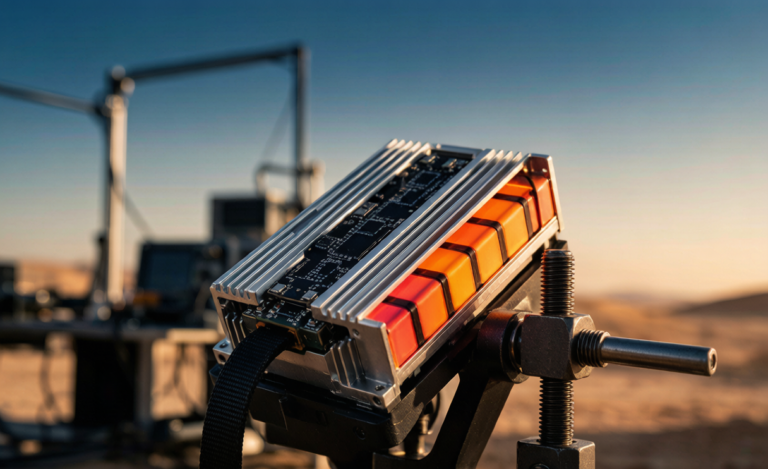
Drone Battery for Urban Delivery and Last-Mile Logistics
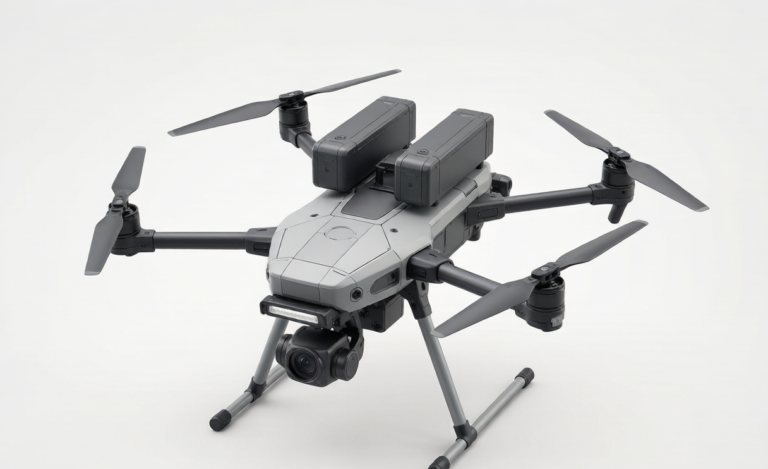
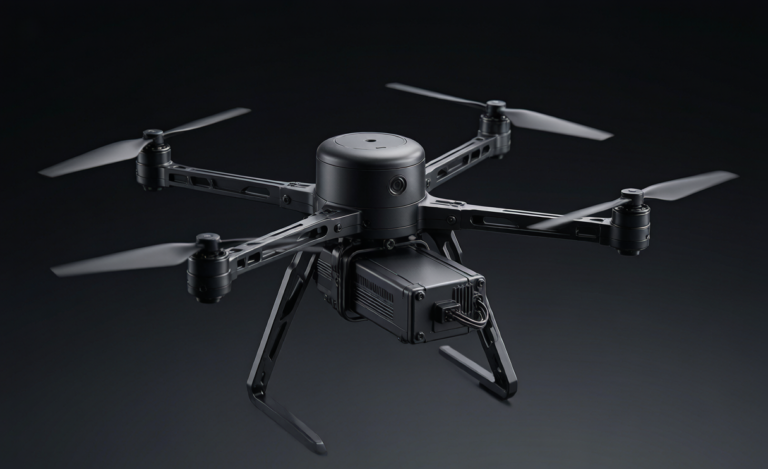
As a senior lithium battery engineer who has spent more than a decade designing power systems for commercial UAVs, I have watched the last-mile delivery conversation move from curiosity to operational reality. The single biggest constraint on urban drone delivery is not the airframe or the autonomy stack — it is the drone battery. For a drone battery for urban delivery and last-mile logistics, the cell chemistry, pack architecture, and battery management system have to survive dense city routes, meet aviation safety standards, and still deliver the energy density operators need to make the economics work. In this article I will walk through what it actually takes to engineer a pack that performs on real rooftops and real streets, based on packs I have built for operators running thousands of flights a month.
Why the Drone Battery Defines Urban Delivery Range
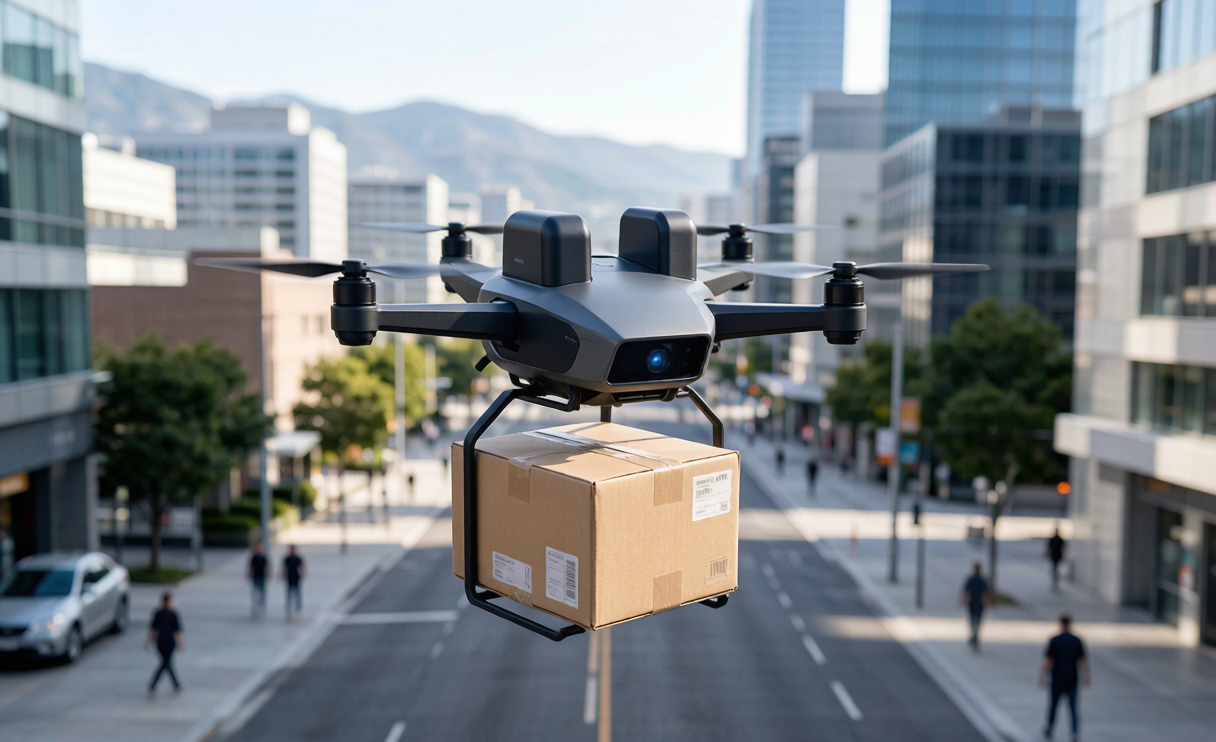
When operators ask me how far a delivery drone can fly, the honest answer is “as far as the drone lithium battery lets it.” Range in urban logistics is a three-way negotiation between payload, weather, and battery energy density. A typical mid-size quadcopter used for parcel drops carries a 6S or 12S lithium-ion pack rated around 300–380 Wh/kg at the cell level. In a real pack, wiring, enclosure, and the BMS bring that down to roughly 220–280 Wh/kg at the system level.
For a 2 kg payload on a 3 km urban loop, I usually budget a pack capacity of 14,000–18,000 mAh at 22.2 V. That delivers about 18–24 minutes of mixed hover-and-cruise flight — enough for three to five drops before returning to base. The catch is that hover draws far more current than forward cruise. In a city canyon with wind shear between buildings, instant power demand can spike to 4C, so the pack has to be designed around peak discharge, not just average cruise. I have measured transient draws above 120 A on a 16 Ah pack during a hard crosswind correction, and the cell impedance at that moment decided whether the drone held altitude or sank.
This is why I treat the drone battery as the heart of the vehicle rather than a consumable. A 5% improvement in usable energy density is worth more than a 5% improvement in aerodynamics for most delivery missions, because the battery weight directly subtracts from payable payload on every single flight.
Energy Density vs. Safety: The Core Engineering Trade-off
Every lithium battery program lives on the same seesaw. High-nickel NMC cells give you the best gravimetric energy density (up to ~280 Wh/kg in production cells) but run hotter and are less forgiving in abuse testing. LFP is safer and longer-lived but tops out near 160–180 Wh/kg, which translates directly into shorter flight time for the same weight.
For urban delivery, I generally recommend NMC or NMC-blended chemistries with a strong, conservative BMS, because the range penalty of LFP is hard to justify when every kilogram of battery displaces a kilogram of parcel. The safety burden then shifts to certification and protection: each pack we build is validated against UN38.3 (the T.1–T.8 test battery covering altitude simulation, thermal, vibration, shock, external short, impact, overcharge, and forced discharge) and designed to the construction requirements of IEC 62133 for secondary lithium cells. Those two standards are non-negotiable for any battery that will cross a border or fly commercially.
In my lab I additionally run nail-penetration and thermal-runaway propagation tests beyond the legal minimum, because a single cell failure in a tightly packed urban drone is a public-safety event, not just a warranty claim. A good pack isolates a failed cell before the heat reaches its neighbors, and the enclosure vents in a controlled direction away from the payload bay.
Designing for the Last-Mile Duty Cycle
Urban delivery is not a single long cruise — it is stop-and-go. Take off, climb to 60 m, cruise, descend, hover at a drop point, release, climb again. That duty cycle is brutal on cells because hover sits at high continuous discharge while repeated climbs add pulse loads.
In my test logs, a last-mile route with four drops ages a pack about 1.4× faster than the same total flight time on a single continuous cruise. The mitigation is twofold: keep operating state-of-charge between 20% and 90% to reduce stress on the anode, and use a BMS with active cell balancing so weaker cells do not become the limiting factor. A well-balanced drone battery should hold above 80% of its original capacity after 400–500 full-equivalent cycles, which for a daily delivery fleet means roughly 12–18 months of service before retirement.
Cycle life is only half the story. Calendar life — the slow capacity fade from simply sitting charged — matters for fleets that charge overnight and fly during the day. I spec packs to retain at least 70% capacity after 24 months of storage at partial state-of-charge, which protects operators who scale up slowly and let early batches sit idle.
Certification and Compliance for Commercial Operations
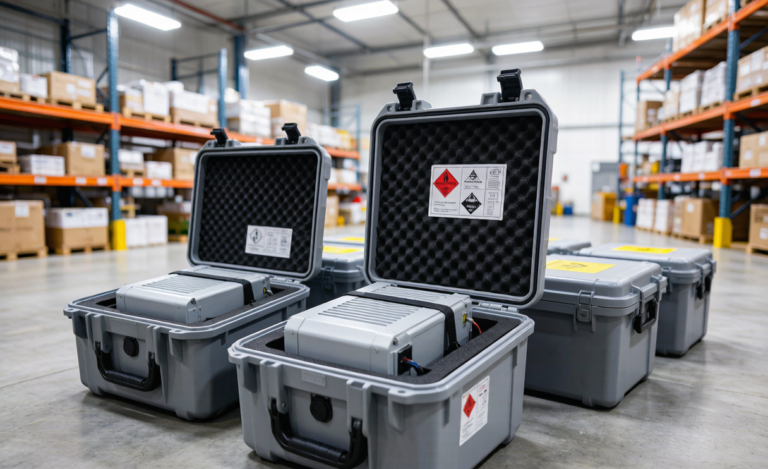
Commercial drone delivery lives under a stack of regulations, and the battery sits at the center of most of them. In the United States, operations fall under FAA Part 107 and the evolving Part 135 air carrier framework; in Europe, EASA U-space rules and SC-VTOL special conditions govern the aircraft and its energy storage. The battery itself must carry valid UN38.3 test summary documentation, proper shipping labels per IATA Dangerous Goods Rules, and CE marking where applicable.
I always tell procurement teams: ask for the UN38.3 test summary before you ask for the price. A pack without verifiable test documentation is a liability that no compliant operator can fly. At Horizon Power we issue a dated test summary with every production lot and keep retention samples so a fleet operator can defend an audit months after delivery. We also maintain a configuration control record, so a pack shipped in January is electrically identical to one shipped in September — something aviation authorities scrutinize closely.
Thermal Management in Dense City Environments
City heat is underestimated. A drone sitting on a sunlit rooftop at 14:00 in summer can see cell surface temperatures climb 15–20 °C above ambient before it even takes off. Lithium cells lose both power and life outside their comfort window, so we design packs to operate reliably from −20 °C to +60 °C with derating above 45 °C rather than shutdowns.
The practical approach is a smart BMS that streams cell temperature and internal resistance to the ground station. If a cell drifts, the system trims discharge limits in real time. For hot-climate fleets I also spec enclosures with passive venting paths and a light-colored shell to cut solar load. None of this is glamorous, but it is the difference between a pack that fails on drop six and one that finishes the shift. In colder markets the same BMS pre-conditions cells during the final approach to the charger, warming them into the efficient window before the first fast-charge pulse.
Charging Infrastructure and Fleet Turnaround
Range is only useful if you can recharge fast enough to keep aircraft in the air. Most operators underestimate how much the charger strategy shapes the drone battery lifetime. A 1C charge is gentle and extends cycle life; a 3C fast charge halves turnaround but can cut pack life by 30–40% if the cells were not designed for it.
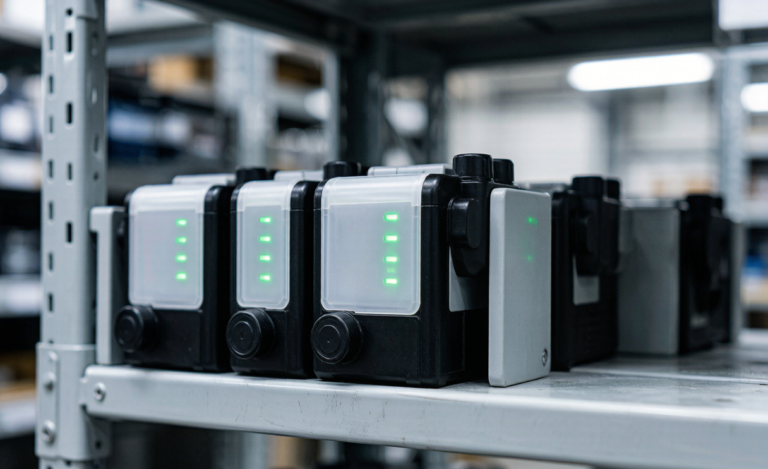
My recommendation for last-mile fleets is a hybrid model: keep a pool of pre-charged swap packs at each base so aircraft never wait, and fast-charge the returned packs overnight at 0.5–1C when time pressure is low. This balances aircraft utilization against battery cost. I also insist on temperature-sensing charging — a charger that ignores cell temperature will quietly cook a pack on a hot afternoon. The BMS and charger should handshake over the communication bus so charging stops the instant any cell leaves its safe window.
Choosing the Right custom battery solution for Your Fleet
No two delivery operations share the same airframe, so off-the-shelf packs almost always leave performance on the table. A proper custom battery solution starts from your actual route profile: average wind, drop count, payload, and charger turnaround time. From there we select cell format (21700 vs pouch), series-parallel layout, connector type, and the communication bus (SMBus, CAN, or RS485) your aircraft already speaks.
I have seen a 14% range gain just from matching the pack’s discharge curve to the real motor demand instead of using a generic high-C racing pack. A custom battery solution also lets you build in the exact certification paperwork and labeling your market requires, which smooths the path through aviation authority approval. If you are scaling a fleet, this is where the engineering pays for itself. The right partner will share the cell-level test data, not just a marketing sheet, so your own airworthiness submission has a defensible foundation.
FAQ
How long can a delivery drone fly on one drone battery?
For a typical 2 kg payload on urban routes, plan on 18–24 minutes of mixed flight per charge, supporting three to five drops. Real endurance depends on payload, wind, and how much time is spent hovering at drop points rather than cruising.
What certifications does a drone lithium battery need for commercial delivery?
At minimum, a valid UN38.3 test summary and IEC 62133-aligned construction. For transport you need IATA Dangerous Goods labeling, and for commercial flight you must satisfy FAA or EASA requirements for the aircraft class you operate. Always request the test summary from the supplier before purchase.
Can a custom battery solution improve last-mile range?
Yes. Matching the cell chemistry, pack layout, and discharge curve to your specific route profile commonly yields 10–15% more usable range than a generic pack, while also simplifying certification and fleet maintenance.
How do weather and city heat affect drone battery life?
High ambient and solar heat raise cell temperature and accelerate aging; cold reduces available power. Designing for a −20 °C to +60 °C window with smart BMS derating keeps the pack safe and productive across seasons without unexpected shutdowns.
Should I fast-charge or swap drone batteries between flights?
A hybrid works best: keep pre-charged swap packs at the base for zero aircraft downtime, and recharge returned packs overnight at 0.5–1C to protect cycle life. Reserve 3C fast charging for emergencies, because it meaningfully shortens pack lifespan.