Drone Battery for Industrial Inspection and NDT: An Engineer’s Field Guide to Reliable Power
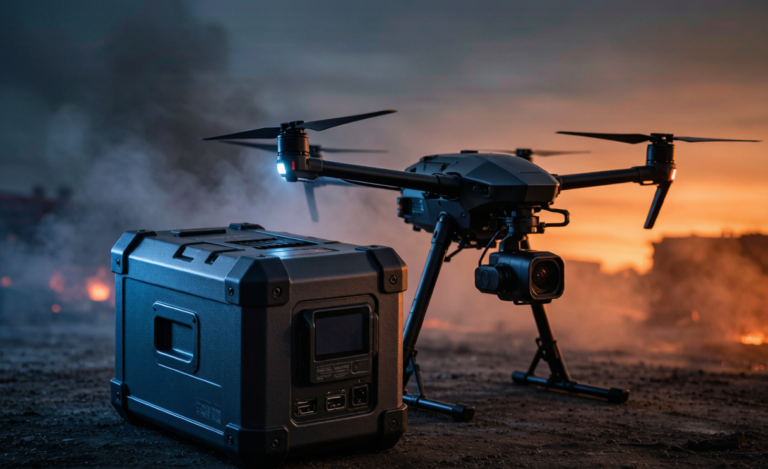
As a senior lithium battery engineer, I have spent the better part of twelve years designing packs for some of the harshest inspection environments you can imagine: internal boiler inspections at 60°C, offshore wind-turbine blade scans in salt spray, and bridge-underbelly non-destructive testing runs where a single power dropout means a crashed airframe and a lost day of work. Industrial inspection and NDT are not recreational flying. They are precision jobs where the aircraft hovers inches from steel, holds station in turbulent updrafts, and carries sensors that draw steady, unforgiving current. In this guide I want to walk through how I spec a drone battery for inspection and NDT work, the standards that keep it legal to ship and fly, and the field habits that separate a reliable pack from a liability.
Why Inspection and NDT Workloads Punish Batteries Differently
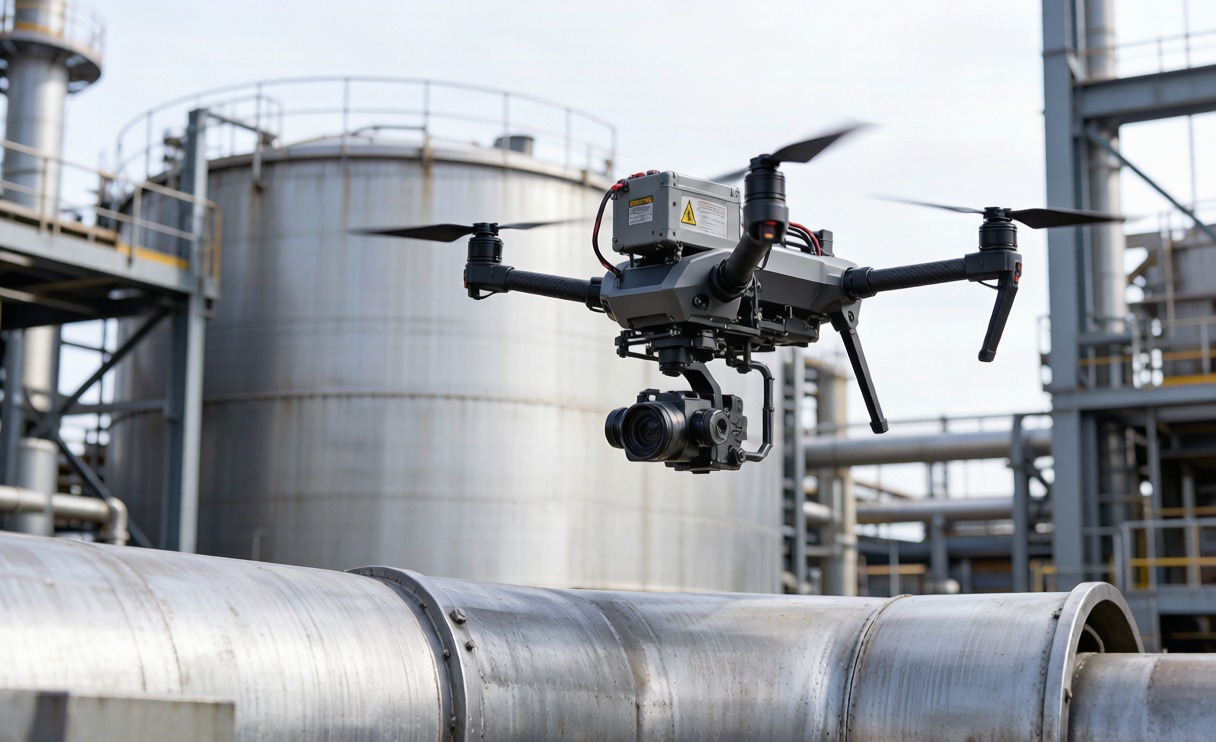
Most consumer and cinematography drones fly a gentle mission profile: climb to altitude, cruise forward, descend, land. An inspection drone lithium battery sees a completely different load. Picture a tank-farm NDT mission: the aircraft lifts off, climbs to the seam, then hovers at 70% throttle for twenty minutes while an eddy-current sensor scans for wall loss. Throttle is rarely steady. The pilot makes constant micro-corrections against thermals rising off sun-warmed steel. That stop-start, hover-dominant profile is exactly what stresses cells, because hovering demands high continuous current while delivering no aerodynamic help to the airframe.
In my lab, a typical 22.2 V, 16,000 mAh inspection pack will deliver around 18–22 minutes of useful hover time with a 600 g sensor payload. Drop that payload to 300 g and you might gain four minutes. Add a magnetometer and a spotlight and you lose three. The point is that inspection missions are payload- and hover-bound, so pack sizing is an energy-budget exercise, not a range exercise.
Cell Chemistry: NMC vs LFP for Field Inspection
When customers ask me which chemistry to choose, I start with the trade-off triangle: energy density, cycle life, and safety. For most inspection airframes, weight is the binding constraint, so a high-energy NMC (nickel-manganese-cobalt) cell is the default. A good 21700 NMC cell today lands around 250–280 Wh/kg. That lets me build a 22.2 V pack at roughly 350–420 g, which a six-rotor inspection airframe can lift without sacrificing payload.
LFP (lithium iron phosphate) is heavier — around 160–180 Wh/kg — but it shrugs off abuse. For indoor NDT inside flammable environments, or for operators who cannot guarantee careful storage, I sometimes recommend LFP because its thermal runaway threshold sits near 270°C versus roughly 210°C for NMC. The lithium battery you choose is a risk decision, not just a spec decision. I have shipped both; the right call depends on where the aircraft works and who maintains it.
Thermal Management in Confined and Harsh Environments
NDT takes drones into places a battery would rather avoid. Internal tank inspections mean ambient temperatures climbing past 50°C with almost no airflow. Confined-space work removes the natural convective cooling that outdoor flight provides. In those cases I design the pack with a thin aluminium heat-spreader plate and keep peak discharge below 3C so cell temperatures stay under 45°C at the core.
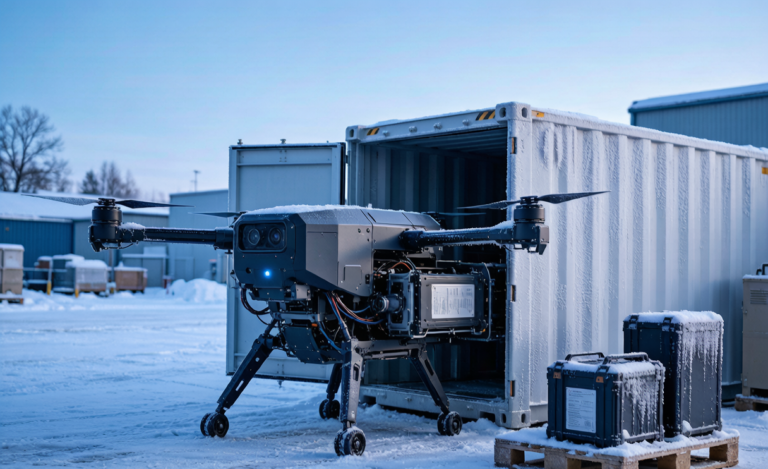
The opposite problem is winter bridge work, where a cold-soaked pack arrives at the site at −10°C. A lithium battery at that temperature can lose 20–30% of usable capacity and gain internal resistance. My field rule is simple: keep packs in an insulated case with warm gel packs until five minutes before launch, and never charge a cold cell. I have watched operators destroy a perfectly good pack by plugging it into a charger at −5°C.
Safety Certification: UN38.3, IEC 62133, and Air Transport Rules
None of this matters if the pack cannot legally travel to the job site. Every inspection drone battery I design is built to pass UN38.3, the transport testing standard that covers altitude simulation, thermal, vibration, shock, external short circuit, impact, overcharge, and forced discharge. For the cells themselves, I specify IEC 62133 compliance as the baseline for safe secondary lithium cells.
For air transport, the practical rules come from the aviation authorities. In the United States, commercial inspection flights fall under FAA Part 107, and spare lithium batteries must travel in carry-on baggage under IATA Dangerous Goods rules — never checked cargo. In Europe, EASA regulates UAS operations under EU 2019/945 and 2019/947, and the same cabin-carry rule applies. I always ship with a test summary sheet referencing UN38.3 so a gate agent or inspector can verify compliance in seconds.
Sizing a Drone Battery for a Full Inspection Route
Here is the calculation I run with every new client. Take a pipeline-corridor inspection: the aircraft needs 6 minutes of transit at 15 A average draw, 22 minutes of hover at 24 A, and a 2-minute reserve at 18 A. At a nominal 22.2 V pack, that is (6×15 + 22×24 + 2×18) × 22.2 ÷ 60 ≈ 218 Wh. Add 20% margin for wind and a degraded cell, and you are specifying a 260 Wh pack — roughly a 12,000 mAh, 22.2 V unit. I never size to the theoretical minimum; the reserve is what gets the airframe home when a gust shows up uninvited.
Swappable Packs, Hot-Swap, and Field Logistics
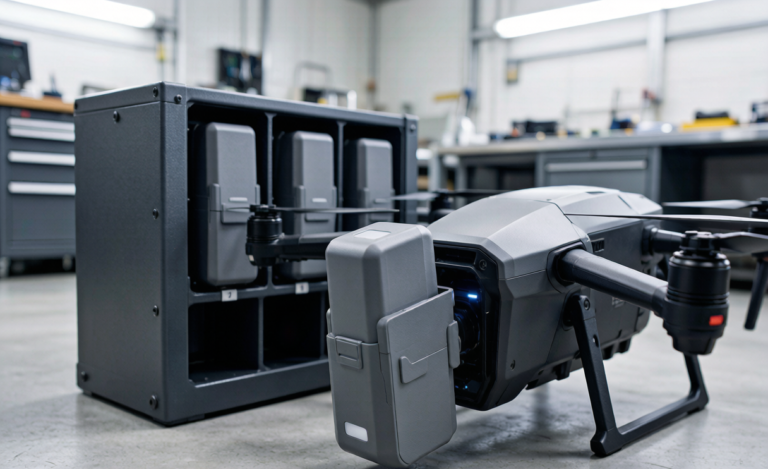
Inspection crews bill by the hour, so downtime is the enemy. I design a custom battery solution around quick-swap enclosures: a tool-free latch, gold-plated connectors rated for 60 A continuous, and a housing that survives a drop onto a catwalk. For multi-shift NDT campaigns I spec two packs per aircraft and a field charger that can bring a pack from 20% to 90% in under 45 minutes. The economics are obvious — one charging pack while the other flies keeps the aircraft earning instead of sitting.
Battery Management Systems and Live Telemetry for Inspection Fleets
A pack is only as trustworthy as the data it reports. For multi-aircraft NDT programs I specify a smart BMS that speaks CAN bus and feeds cell-level voltage, temperature, and cycle count straight to the ground station. Pilots should see remaining energy in watt-hours and a per-cell health score, not just a misleading four-bar icon. In one refinery campaign, that telemetry flagged a single cell drifting 40 mV below its neighbours at 80% state of charge — we pulled the pack before it could strand the aircraft on a catwalk. A drone lithium battery with no telemetry is a black box; in commercial inspection, a black box is a risk you do not need.
Storage, Transport, and Cold-Chain Logistics for NDT Crews
What happens between jobs matters as much as the flight itself. I tell crews to store packs at 30–60% state of charge in a cool, dry place. Long-term storage at 80%+ accelerates capacity fade, while fully discharged cells drift into a depth that a standard charger will refuse. For cross-border NDT campaigns, carry the UN38.3 test summary, keep packs in non-conductive cases, and respect the IATA 100 Wh per pack carry-on ceiling — a 260 Wh inspection pack needs operator approval but is still cabin-only, never checked. Build a custom battery solution with a clear Wh label and a compliance pocket, and gate checks become a formality instead of a fight.
FAQ
What capacity drone battery do I need for industrial inspection?
For a typical six-rotor inspection airframe with a 500–700 g sensor payload, plan on a 10,000–16,000 mAh, 22.2 V pack delivering 18–25 minutes of hover. Run the energy budget from your actual route — transit, hover, and reserve — rather than trusting the manufacturer’s best-case flight time.
Are drone batteries for NDT allowed on commercial flights?
Yes, if they are UN38.3 tested and carried as cabin baggage under IATA rules, with the watt-hour rating clearly marked. I keep a one-page compliance summary with every pack. Checked-cargo transport of spare lithium cells is prohibited, so plan logistics around carry-on limits.
How does cold weather affect a drone lithium battery during inspection?
Below about 0°C, usable capacity can fall 20–30% and internal resistance rises, shortening flight time and weakening throttle response. Keep packs warm until launch, pre-condition them to 15–25°C, and avoid charging a cold cell. This single habit prevents most winter inspection failures I see in the field.
Should I choose NMC or LFP for NDT work?
Choose NMC when payload and flight time matter most — its ~250–280 Wh/kg beats LFP on weight. Choose LFP when you need maximum abuse tolerance and safer chemistry in hazardous or poorly supervised environments. Both are valid; the decision is about where and how the aircraft operates.
How often should inspection drone batteries be retired?
I retire packs at 80% of original capacity, or sooner if internal resistance climbs more than 30% above baseline, a cell swells, or the pack has been through a hard impact. For daily commercial inspection use, that is usually 300–500 cycles. Track each pack’s cycle count; a logged fleet outlasts a careless one.