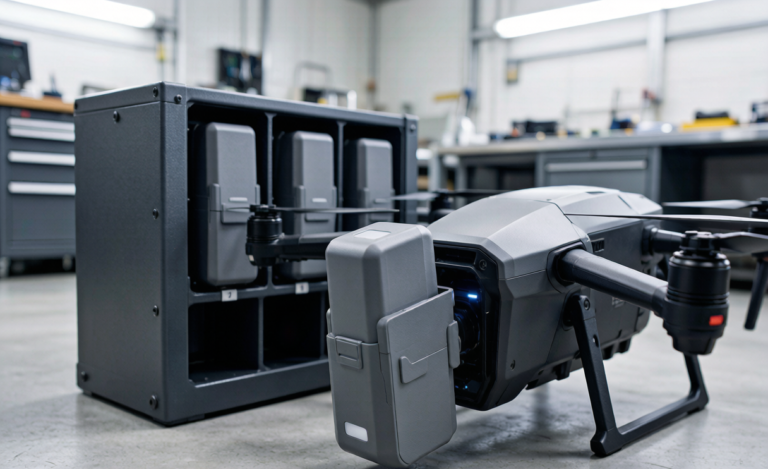
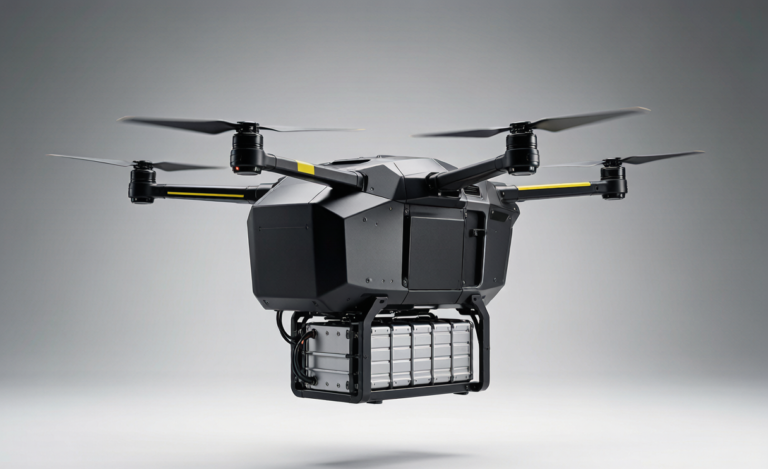
Drone Battery for Firefighting and Rescue Support: Powering Life-Saving Missions
When a structural fire is still venting smoke or a hiker is missing in a canyon after dark, the first responder who can see the situation from above wins minutes that decide outcomes. Over the last eight years as a senior lithium battery engineer, I have spent more hours than I can count on the fireground-adjacent side of this industry: building, testing, and certifying the packs that keep those aircraft airborne when conditions are at their worst. A drone battery built for firefighting and rescue support is not a consumer toy with a longer runtime bolted on. It is a safety-critical component that must survive heat, vibration, water, and rapid duty cycles while delivering predictable power until the mission ends. In this article I will walk through how we specify and validate a drone lithium battery for life-saving operations, what standards actually matter, and the field lessons that separate a pack that works from one that quits when people are counting on it.
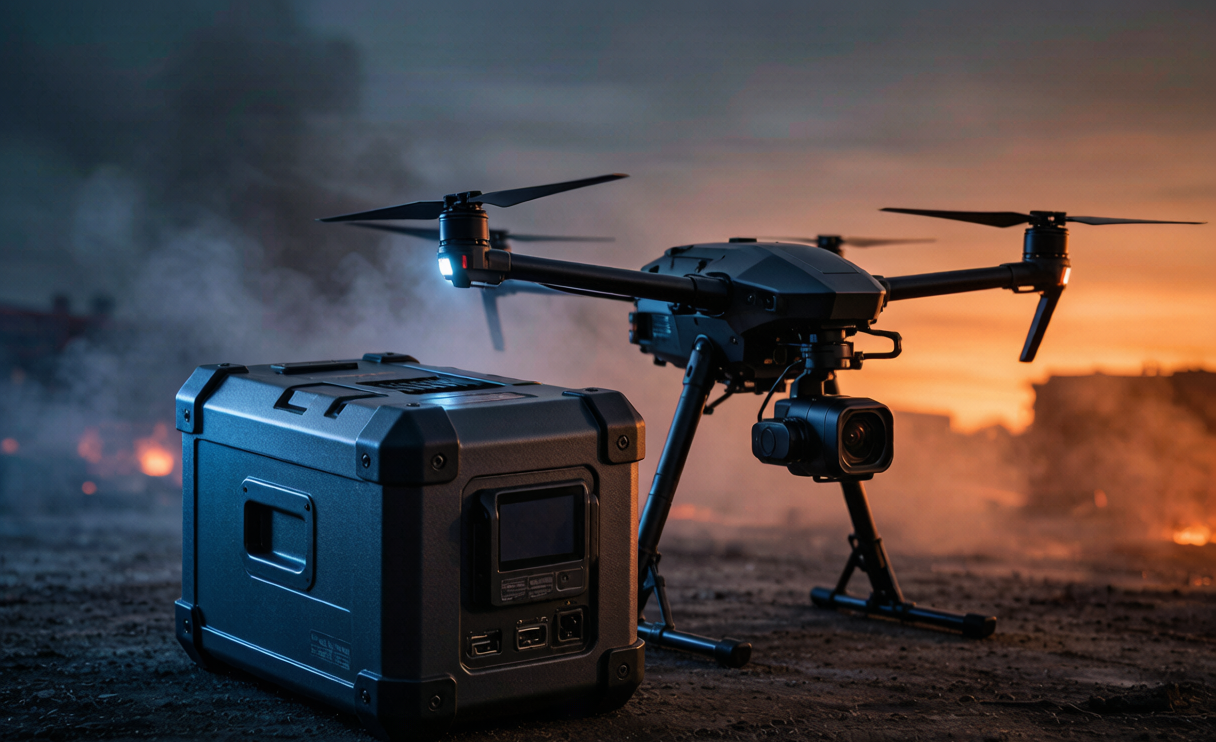
Why Firefighting and Rescue Drones Demand a Different Drone Battery
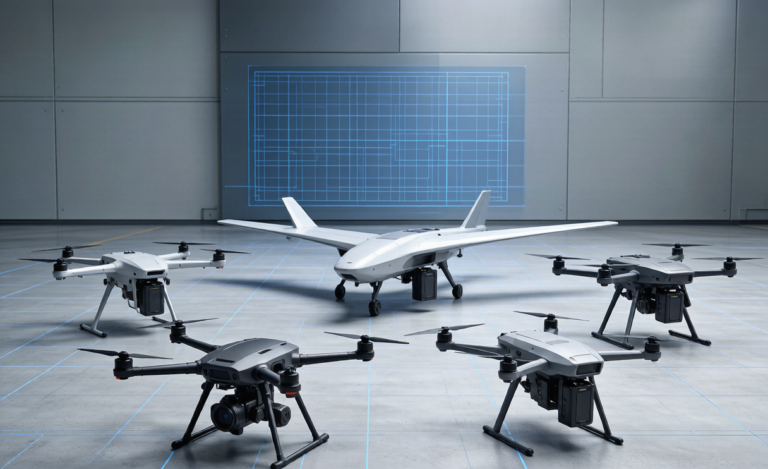
Search-and-rescue and fire-support missions share a profile that is brutal for energy storage. Flights are irregular and often back-to-back: a thermal overview pass, a quick battery swap, a payload drop or a relay of live video to the incident commander, then another sortie. The ambient can swing from freezing alpine air to the radiant heat radiating off a burning facade. A generic recreational pack is tuned for a single smooth flight at moderate temperature; a mission-grade drone battery is tuned for the ugly in-between.
The differences show up in three places. First, discharge behavior: rescue aircraft carry heavy gimbaled thermal cameras, loudspeakers, and sometimes winch or drop payloads, so the pack must hold voltage under sustained high current without sagging. Second, thermal headroom: the pack needs to keep its cells inside a safe window while sitting in a 45°C truck cab or hovering near a heat source. Third, fleet reliability: fire departments run many aircraft on one charging bench, so every lithium battery in the pool must behave identically, which means tight cell grading and a BMS that reports honestly.
Key Performance Requirements for a Drone Lithium Battery in Rescue Ops
When I brief a department or an OEM building rescue airframes, I start from the mission envelope rather than the spec sheet. The numbers below are the ones I ask for before we approve a pack for field use.
- Usable energy and runtime: For a typical 2–4 kg multirotor carrying a thermal gimbal, we target 18–28 minutes of aggressive flight on a 6S or 12S drone lithium battery, with at least 80% of rated capacity usable before the BMS forces a landing-level cutoff.
- Discharge rate: Search-and-rescue climbs are steep. We validate at a continuous 10C with 15–20C burst headroom so the aircraft can punch out of a canyon or fight a downdraft without voltage collapse.
- Cycle life: A department flying daily needs a pack that holds 80% capacity past 300 cycles. We verify this with formation-grade cells, not the recycled or grade-B cells that inflate a first quote.
- Operating window: We test the full pack from −20°C to +60°C ambient, because a battery left in a vehicle on a summer call can start warm and then climb further under load.
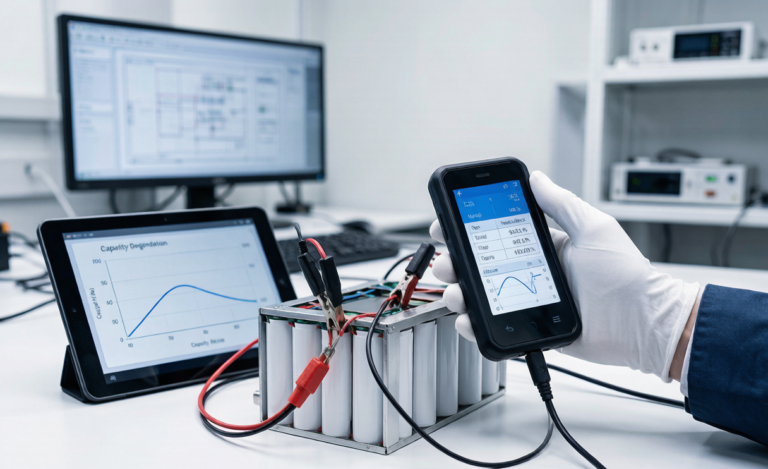
- Telemetry: Every cell voltage, temperature, and state-of-charge must stream to the ground station so the incident commander knows remaining flight time to the second, not to the minute.
Thermal and Environmental Challenges on the Fireground
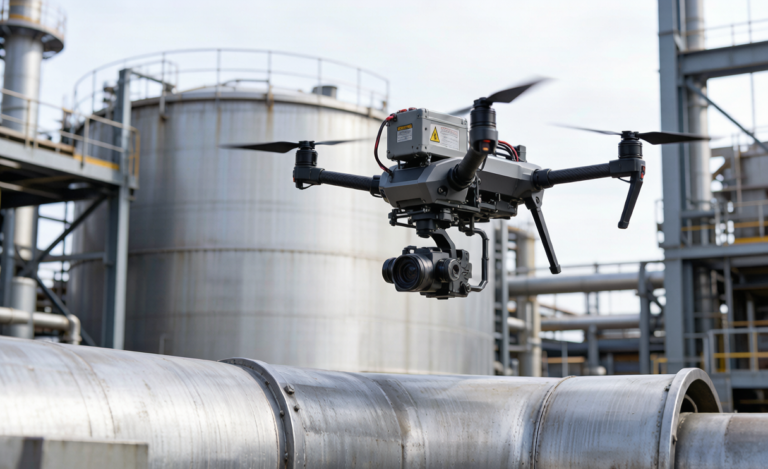
Heat is the silent killer of rescue drone packs. Radiant load from a fire can push the pack surface well above the cell’s comfortable zone even when the air temperature reads moderate. We address this with two layers: a physically separated thermal barrier between the hottest air path and the cells, and an active BMS that throttles or lands the aircraft before any cell approaches its upper limit. I have personally signed off on packs that shut themselves down at 55°C cell temperature rather than risk thermal runaway — an inconvenient early landing beats a fire on the roof of a fire truck.
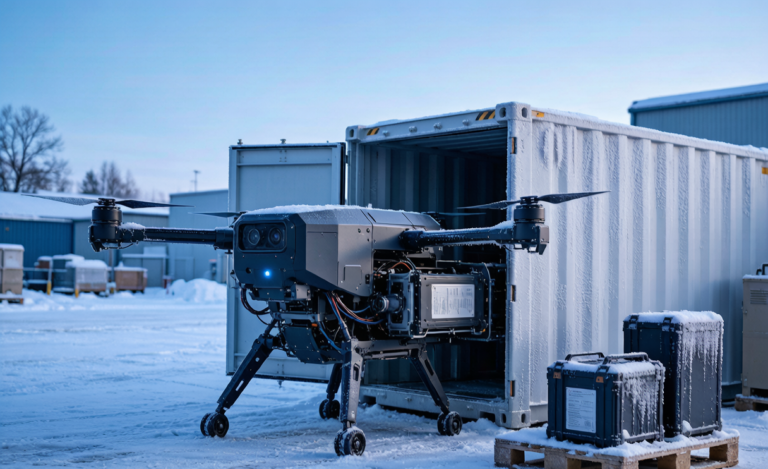
Cold is the other extreme. A drone battery headed into a winter search loses capacity fast if it sits at ambient before launch. Our field protocol is simple and effective: keep packs at 20–25°C in insulated cases and only move them to the aircraft immediately before takeoff. Below −10°C we pre-condition cells with a low-current warm-up cycle the BMS manages automatically.
Water, dust, and impact matter too. Rescue aircraft land on muddy riverbanks and get bumped in transit. We specify an IP-rated enclosure and foam-backed cell retention so a dropped pack does not become an internal-short hazard. None of this is optional for life-safety work.
How We Specify a custom battery solution for Rescue Fleets
Off-the-shelf packs rarely fit a department’s exact airframe, payload, and charging infrastructure, which is why most serious programs end up with a custom battery solution. The process we follow is deliberately boring, because boring is what survives an audit:
- Mission brief: We capture the airframe, typical payload, ambient range, and desired sortie length, then model the required Wh and C-rate.
- Cell selection: We choose grade-A cells with documented traceability and a known formation history, then grade them by internal resistance and capacity so every pack in a fleet matches.
- Mechanical design: Enclosure, connector, and mounting are matched to the aircraft and the charging bench, with strain relief that survives the swap-cycle abuse of daily use.
- BMS tuning: Thresholds are set for the rescue envelope, not the consumer default, and telemetry is mapped to the department’s ground software.
- Validation: Abuse testing, cycle testing, and environmental testing before a single pack ships to the field.
A good custom battery solution also plans for the battery’s own logistics: labeled state-of-health, a swap-rotation system so the oldest packs retire on schedule, and a charging layout that does not become the bottleneck during a multi-alarm incident.
Safety Standards Every Drone Battery Must Meet
For rescue and firefighting use, compliance is not paperwork — it is the difference between a tool and a liability. The standards I require on every pack we ship are well established and internationally recognized.
- UN38.3: The transport safety test covering altitude simulation, thermal, vibration, shock, external short, impact, overcharge, and forced discharge. Any lithium battery moving by air, road, or rail needs this dossier, and departments that mutual-aid across regions depend on it.
- IEC 62133: The core safety standard for portable sealed cells and batteries, covering short circuit, overcharge, and forced-discharge protection — the baseline for a trustworthy drone lithium battery.
- FAA / EASA transport rules: For flights carrying spares, we follow the airline and cargo provisions that gate how many batteries and at what watt-hour rating can travel, plus the marking and state-of-charge limits for shipment.
In practice, I treat these as the floor, not the ceiling. A rescue pack also gets our internal abuse suite: nail penetration, crush, and thermal propagation testing so we understand exactly how a damaged pack behaves before a firefighter ever handles it.
Real-World Deployment Lessons From the Field
The most useful lessons came from deployments, not the lab. One mountain-rescue team we supported originally bought the cheapest packs they could find; within a season they had two in-flight voltage collapses during steep climbs. We migrated them to a graded, BMS-telemetered drone battery and built a simple rotation chart. Their unscheduled landings dropped to near zero, and their incident commander finally trusted the “time remaining” readout.
Another lesson is about charging throughput. A department can buy the best drone lithium battery in the world, but if the bench only charges four at a time and a wildfire runs for twelve hours, the aircraft sit idle while packs trickle up. We now design the battery and the charger count together, and we size spare packs to the longest expected sustained operation.
Finally, training matters as much as hardware. Crews who know how to read telemetry, pre-condition in cold, and rotate by cycle count get dramatically more reliable service from the same lithium battery fleet. The pack is only as good as the discipline around it.
Frequently Asked Questions
How long does a drone battery last on a firefighting mission?
For a typical rescue-class multirotor with a thermal gimbal, plan on 18–28 minutes of active flight per charge under real load, with a safe landing reserve built in. Mission planning should account for multiple sorties and battery swaps, not a single long flight.
Can a drone lithium battery operate in extreme heat?
Yes, within tested limits. We validate rescue packs to 60°C ambient and build in BMS protection that throttles or lands before cells reach dangerous temperatures. Radiant heat near active fires is managed with thermal barriers and conservative cutoff thresholds.
What certifications are mandatory for rescue drone batteries?
At minimum, UN38.3 for transport safety and IEC 62133 for portable cell safety, plus compliance with FAA or EASA rules when batteries move by air. Departments should also expect internal abuse testing from a responsible manufacturer.
Should fire departments choose a custom battery solution?
In most cases yes, once they operate more than a few aircraft. A custom battery solution matches the airframe, payload, and charging bench, enforces fleet-wide consistency through cell grading, and gives the telemetry that incident commanders rely on for safe, predictable operations.