Battery Solution Reliability for Sensors: Engineering
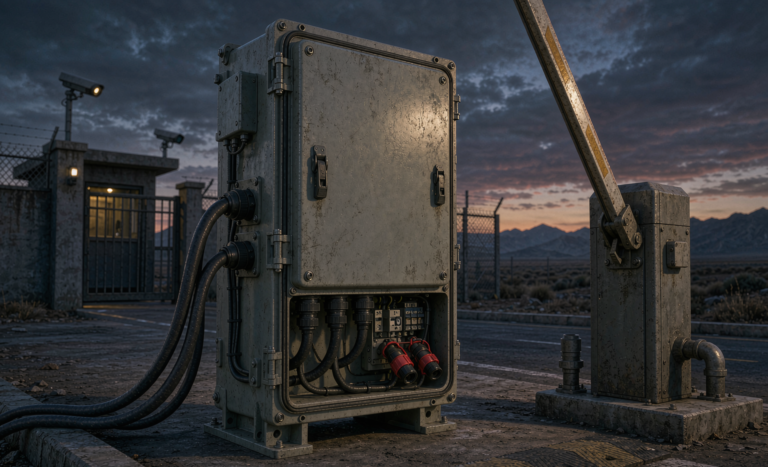
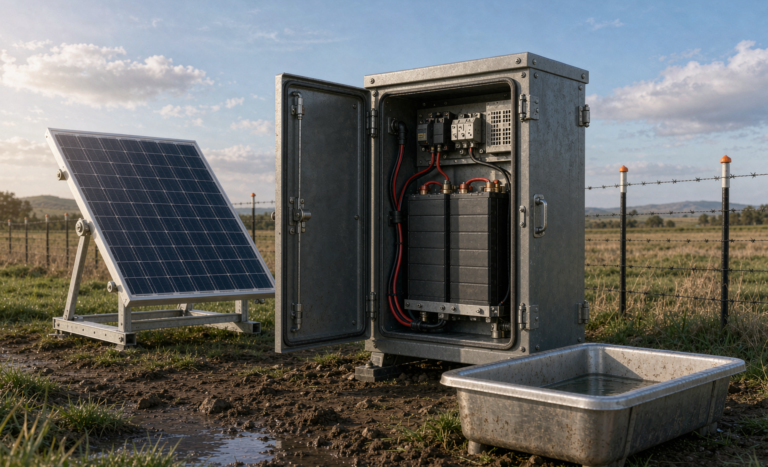
When a battery solution powers a sensor, it is usually the only part of the system nobody ever visits. A temperature node on a pipeline, a vibration probe on a turbine, a soil sensor in a vineyard — these devices are commissioned once and then expected to report for five, ten, or sometimes fifteen years with no maintenance window. In my fifteen years as a senior lithium battery engineer at Horizon Power, I have learned that reliability for sensors is a different discipline from reliability for drones or EVs. There is no pilot to land the asset, no service bay to swap a pack. The battery either survives the full deployment or the entire monitoring program fails silently. This article is the field-tested playbook my team uses to specify, build, and qualify a custom battery solution that will not let a sensor network down.
What “Reliability” Actually Means for a Sensor Battery
Reliability is not a feeling; it is a number. For an unattended sensor node we quantify it three ways, and we refuse to ship a pack that we cannot put a figure against.
- Service life — the calendar time until capacity falls below the threshold the firmware needs to keep reporting. For primaries this is 10–20 years; for rechargeables it is the cycle life translated into the duty interval.
- FIT rate and MTBF — failures in time per billion hours. A mature lithium battery pack we ship for outdoor sensors runs below 200 FIT, which is roughly one failure per 5 million device-hours.
- Bathtub curve — infant mortality from assembly defects, a long random-failure plateau, then wear-out. Our qualification is built to crush the left edge of that curve before the unit ever leaves the building.
The duty cycle decides everything. A smart meter that sleeps 99.9% of the time asks for microamps; a seismic sensor that bursts 50 mA every fifteen minutes asks for pulse capability. We profile the exact current signature before we pick a chemistry — never the other way around.
Picking the Right Chemistry for the Duty
For true long-life sensors, lithium thionyl chloride (Li-SOCl2) remains the workhorse primary cell: 500–1200 Wh/kg, self-discharge under 1% per year, and an operating window of −55°C to +85°C. I have packs still within spec after twelve years in a desert junction box. The trade-off is voltage delay and a hard limit on pulse current, so for bursty loads we pair the primary with a 1 F supercapacitor — a 19 Ah D-cell plus a supercap can deliver a 1.5 A, 50 ms pulse with less than 0.3 V sag.
Where the sensor is rechargeable — solar- or energy-harvesting-powered — LFP is my default lithium battery chemistry: 3.2 V nominal, 160–200 Wh/kg, 2,000–6,000 cycles, and 55–70% capacity retained at −20°C. NMC buys 30–40% more energy density but at the cost of a narrower safety window, so I reserve it for weight-critical drone battery airframes, not ground sensors. We never specify a cell without first confirming its 0 V transport tolerance and its behavior at the coldest month the device will see.
Cell Screening Is Where Reliability Is Won
No two cells off a line are identical, and in a series string the weakest cell sets the pack life. Every cell we admit to a sensor battery solution is graded on three axes:
- Open-circuit voltage matched to ±10 mV so the string does not fight itself through balancing.
- AC internal resistance at 1 kHz sorted to ±0.5 mΩ; we reject any cell more than 2 mΩ off the lot median.
- Capacity verified at 0.5 C to ±3% of label, sampled from every incoming batch.
We store graded cells at 30–50% SoC, 15–25°C, 35–55% relative humidity, first-in-first-out, and re-test any lot older than twelve months. This single discipline removed the largest contributor to early field returns in our 2021 production.
Protection and the BMS That Must Disappear
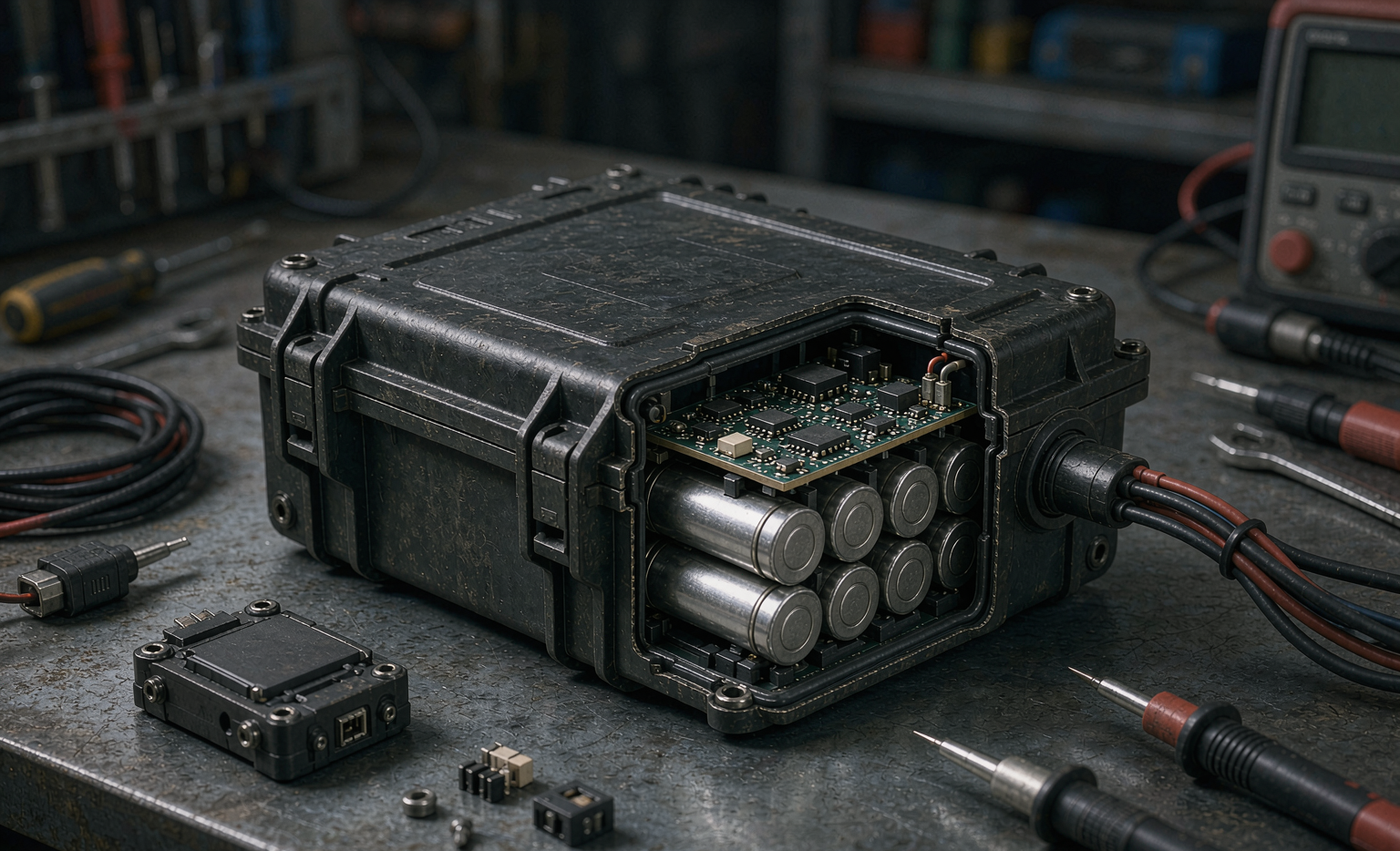
For a sensor node the protection circuit has one job above all others: never let the cell reach deep discharge. A primary Li-SOCl2 cell taken below 2.0 V is chemically damaged and will not recover, so our under-voltage protection trips at 2.5–2.8 V per cell with a hard latch. The enemy here is quiescent current — a protection IC that draws 50 µA will eat a 19 Ah cell in under five years on its own. We specify total pack sleep current below 5 µA and verify it on every build.
The BMS also needs a watchdog. If the fuel-gauge microcontroller locks up, the pack must open its own load switch rather than sit in a stuck state. For any custom battery solution destined for a monitored asset, we add a windowed watchdog and a one-wire authentication so the host can confirm the pack is genuine and alive during each check-in.
Thermal and Environmental Sealing
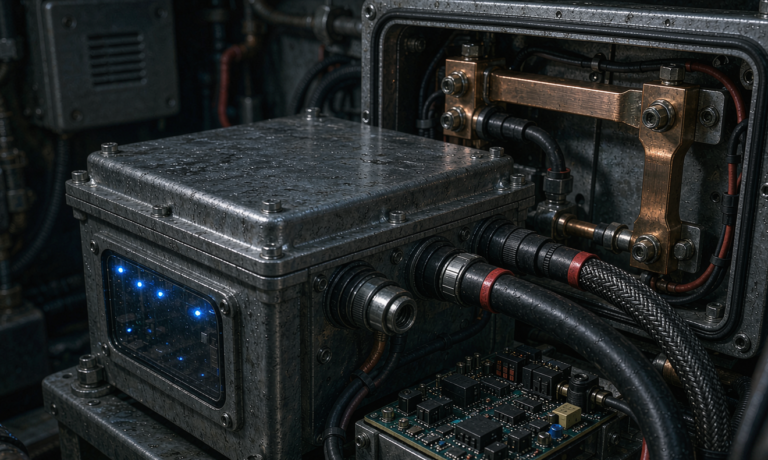
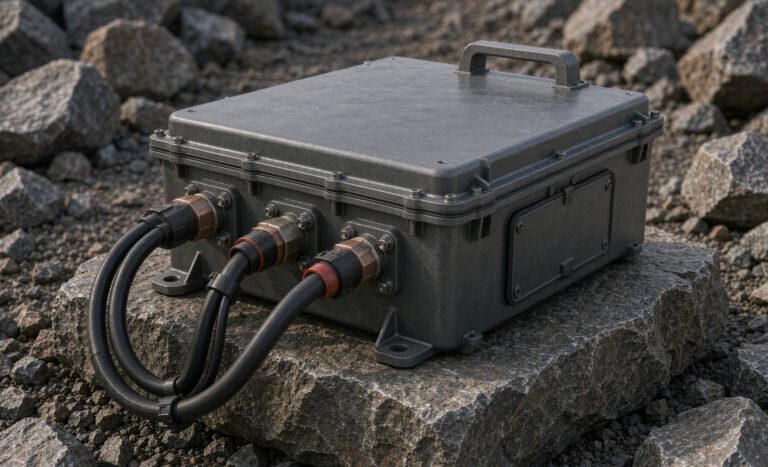
Sensors live where people do not. Our outdoor enclosures are rated IP67 by ultrasonic welding, not glue, with a desiccant charge sized for the internal air volume and a conformal coat on every board. We qualify the seal after the vibration and thermal-shock sequence — a gasket that passes on the bench often weeps after IEC 60068-2 vibration, and we have learned to test in the order the field delivers stress.
Thermal design is mostly about not creating a gradient. A sensor pack that sees −40°C to +85°C needs cell spacing and a thermal mass that keeps the spread under 5°C; otherwise the cooler cells age faster and the string loses balance. We model the worst-case solar load before we commit a layout.
Qualification Against the Standards That Matter
A reliability claim with no test behind it is marketing. Every sensor battery solution we release passes UN38.3 (T.1 altitude 11.6 kPa, T.2 thermal −40/+72°C, T.3 vibration 7–200 Hz at 8 g, T.4 shock 150 g, T.5 external short, T.6 crush, T.7 overcharge, T.8 forced discharge) for transport, plus IEC 62133-2 for secondary cells, IEC 60086 for primaries, and UL 1642 / UL 2054 for component safety. Industrial installations add IEC 62619. For air-freighted deployments we document the FAA and EASA lithium provisions and keep SoC at or below 30% for shipment.
We then run our own accelerated life test: 1,000 hours at the upper rated temperature with periodic capacity checks, and a salt-fog cycle for coastal nodes. Only packs that keep 90% capacity and show no seal weep reach the catalog.
The Field Failure Pareto We Actually See
After millions of device-hours in the field, our returns cluster predictably, and naming them is the first step to designing them out:
- Connector corrosion at the harness — about 30% — fixed by sealed, gold-flashed contacts and potted junctions.
- Enclosure seal ingress — 20% — fixed by post-vibration IP verification.
- Protection IC latch from ESD — 15% — fixed by tighter layout and TVS clamping.
- Self-discharge from a contaminated cell — 20% — fixed by the screening discipline above.
- BMS quiescent drain — 15% — fixed by the sub-5 µA rule.
None of these are chemistry problems. They are discipline problems, and every one is designed out before volume production.
Bringing It Together for an Unattended Node
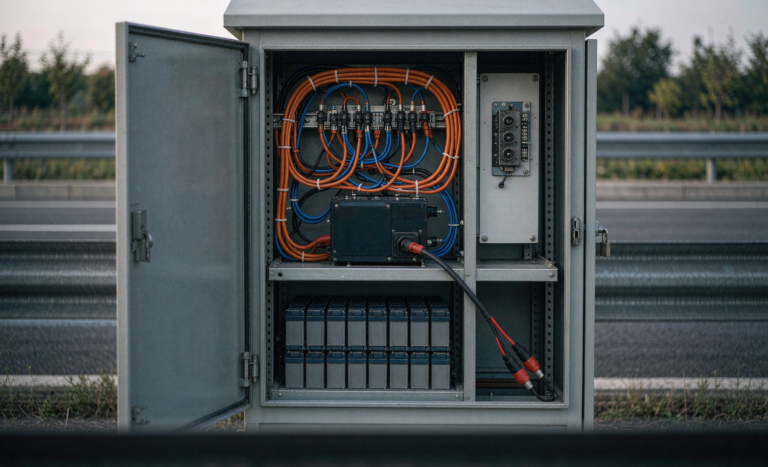
Reliability for sensors is unglamorous and absolute: the pack is either still reporting in year ten or the network is blind. At Horizon Power we treat every sensor battery solution as a sealed, graded, protected, and qualified system rather than a collection of cells. If you are specifying power for an unattended node, start from the current signature and the calendar life, then let the chemistry, the seal, and the BMS follow.
How long should a battery solution for sensors last?
For primary Li-SOCl2 packs we design and warranty for 10–20 years of calendar life at under 1% annual self-discharge. Rechargeable LFP sensor packs are sized by cycle life — typically 2,000–6,000 cycles — translated into the site’s maintenance interval. The right answer is always driven by the duty cycle, not a catalog number.
Why do sensor battery packs need such low quiescent current?
Because the pack spends 99% of its life asleep. A protection or fuel-gauge circuit drawing 50 µA will consume a 19 Ah primary cell in under five years with the sensor never once waking — so we hold total sleep current below 5 µA and verify it on every build.
Is Li-SOCl2 safe for outdoor sensors?
Yes, when qualified. It passes UN38.3 and IEC 60086, and its very low self-discharge suits unattended sites. The main risks are voltage delay after long storage and a hard limit on pulse current, both of which we manage with supercapacitor assist and strict under-voltage protection.
Does a drone battery chemistry work for ground sensors?
Rarely. NMC used in a drone battery trades safety margin for energy density, which matters when every gram of lift is paid for. Ground sensors do not have that constraint, so LFP or Li-SOCl2 give longer, safer field life for the same footprint.
What standards prove a sensor battery solution is reliable?
Transport safety under UN38.3, cell safety under IEC 62133-2 (secondary) or IEC 60086 (primary), component safety under UL 1642 / UL 2054, and industrial installation under IEC 62619. On top of those we run our own accelerated life and salt-fog tests before a pack reaches the catalog.