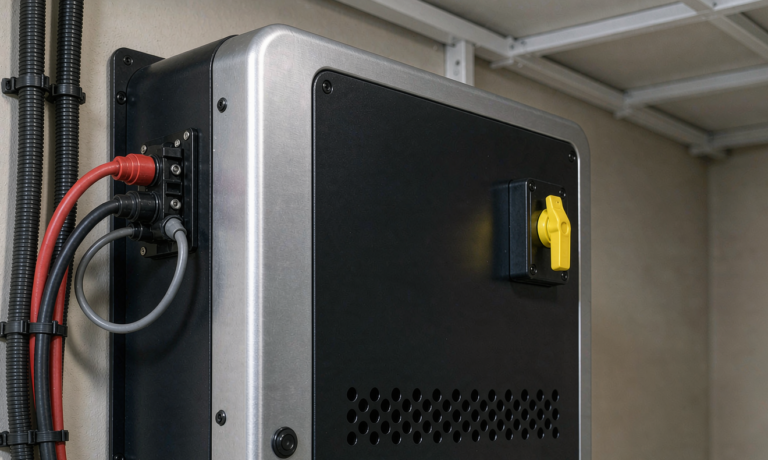
Home Energy Storage Safety for Apartments
I am Karl Huang, Senior lithium battery Engineer at Horizon Power. Over the past six years I have signed off on residential pack designs for single-family retrofits, townhouses, and — the hardest category by far — multi-family apartment buildings. Single-family safety work is mostly an engineering problem. Apartment work is an engineering problem wrapped in a code problem wrapped in a neighbour problem. The cell chemistry that sails through a detached-garage install can get rejected outright three floors up in a residential tower, and the rejection usually has nothing to do with the cell itself.
This article is the checklist I walk through when a developer, installer, or building owner asks whether a home energy storage system can go into an apartment: aggregate energy limits, enclosure and separation requirements, the test reports inspectors ask to see, and the BMS behaviours that matter when the nearest qualified technician is two hours away. Every number here comes from standards documents or from our own test lab.
Why Apartment Installations Are a Different Safety Class
In a detached house, a thermal event in a lithium battery is a property loss. In an apartment, the same event is a life-safety event for people who never agreed to host a battery. Codes reflect that asymmetry, and so should your design.
Three structural differences drive everything else. First, egress: apartment corridors and stairwells are the only way out, so no energy storage equipment may reduce the effective width or fire rating of an egress path. Second, aggregation: code writers care about total stored energy in a fire area, not just what one tenant installed. Third, maintenance access: in a rental unit a fault indicator behind a closet door can be ignored for a year, which is why remote telemetry stops being a convenience feature and becomes a safety control.
When I quote a custom battery solution for multi-family work, I price in the code documentation package from day one. On our last four apartment projects, engineering hours on documentation exceeded hours on electrical design by roughly 1.4 to 1.
The Standards Floor: What an Inspector Will Actually Ask For
There is no single document that says “apartment battery.” Compliance is a stack, and inspectors read the stack from the bottom up.
- Cell and module level: IEC 62133-2 and IEC 62619. IEC 62619 is the one that matters for stationary storage, because it covers internal short-circuit and propagation-oriented requirements.
- System level: UL 1973 for stationary batteries, UL 9540 for the complete system including power conversion.
- Fire propagation: UL 9540A — a test method, not a pass/fail listing, run at cell, module, unit, and installation level. Multi-family jurisdictions increasingly demand the unit and installation-level reports.
- Installation code: NFPA 855, plus its local adoption — commonly IFC Section 1207 in North America.
- Grid interconnection: IEEE 1547 and the conformance tests in IEEE 1547.1 where the system exports.
- Transport: UN 38.3 T.1 through T.8 — altitude at 11.6 kPa, thermal cycling 72 ± 2 °C to −40 ± 2 °C, vibration 7 to 200 Hz, 150 g shock, and external short circuit at ≤ 0.1 Ω with the cell at 57 ± 4 °C. If a supplier cannot produce that report, nothing further matters.
I keep the FAA and EASA state-of-charge guidance in the same binder even for stationary work, because the principle transfers directly: never ship or store a lithium battery at high SoC, and never leave a commissioned-but-unenergised pack near full charge for months.
The energy limits that decide feasibility
NFPA 855 sets the numbers that most often kill an apartment project before design begins. In dwelling units, the widely adopted limit is 20 kWh per individual energy storage unit, and 40 kWh aggregate within a single dwelling unit or a utility closet serving it, with 80 kWh permitted in attached garages or detached structures under specific conditions. Where multiple units share a fire area, aggregate energy in that area must be evaluated, and separation of 3 ft (0.9 m) between individual units is a common requirement unless large-scale fire testing per UL 9540A demonstrates that a smaller spacing does not propagate.
The practical consequence: a 10 kWh to 15 kWh usable LFP pack per apartment is comfortably designable. A 30 kWh ambition per unit in a stacked residential building normally requires either a dedicated fire-rated room outside the dwelling or an installation-level UL 9540A report supporting the layout. I say this on the first call, because discovering it after the mechanical drawings are done costs weeks.
Chemistry Choice Is a Safety Decision, Not a Cost Decision
For apartment work we specify lithium iron phosphate, and I will argue the point with anyone. LFP olivine structure begins meaningful exothermic decomposition in the 200 °C to 250 °C region, against roughly 150 °C to 200 °C for typical NMC cathodes, and the peak heat release rate in our accelerating rate calorimetry runs is materially lower. In our own module-level abuse testing, a 280 Ah prismatic LFP cell driven into thermal runaway by a 3 mm nail penetration test vented at surface temperatures around 210 °C to 240 °C without flaming propagation to adjacent cells when 2 mm of aerogel and 0.4 mm mica separation was present. The same fixture with a high-nickel cell propagated to the neighbouring cell in under 90 seconds.
Cycle life supports the choice: our production LFP cells deliver 4,000 to 6,000 cycles to 80 % of initial capacity at 0.5C / 0.5C, 25 °C, 90 % DOD, giving a daily-cycled 10 kWh pack a realistic 12 to 16 year service window. A lithium battery that lasts the length of a mortgage is safer than one replaced by an unqualified installer in year six.
Two adjacent technologies come up in customer conversations. Sodium-ion suits cold, unconditioned spaces — our sodium-ion cells hold 85 % to 88 % of rated capacity at −20 °C where LFP typically holds 55 % to 70 % — and it ships at 0 V, which simplifies logistics. The trade-off is energy density, roughly 145 Wh/kg to 160 Wh/kg against 160 Wh/kg to 200 Wh/kg for LFP. Semi-solid state cells at 300 Wh/kg to 360 Wh/kg raise runaway onset by 30 °C to 50 °C, but cost keeps them in high-value lines such as our drone battery and aerospace programmes rather than wall-mounted home units.
Enclosure, Location, and Separation: The Part Installers Get Wrong
Location decisions cause more failed inspections than any electrical detail. My rules, in order of how often they are violated:
- Never in an egress path. No battery in a corridor, stairwell, lobby, or the space beneath a stair that serves as egress. This is not negotiable in any jurisdiction I have worked in.
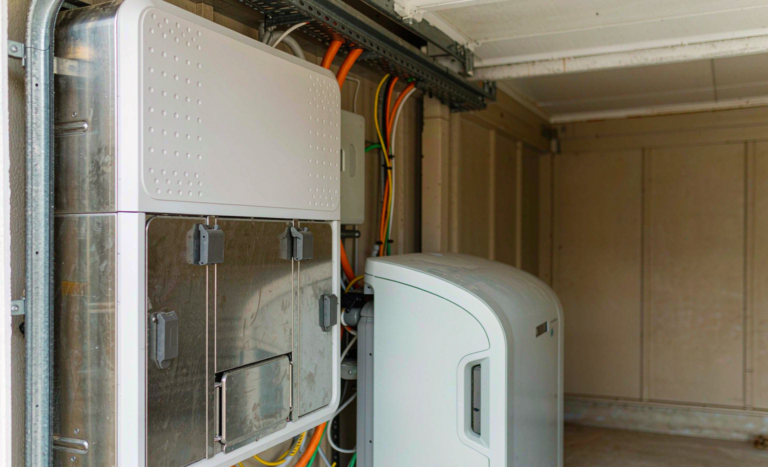
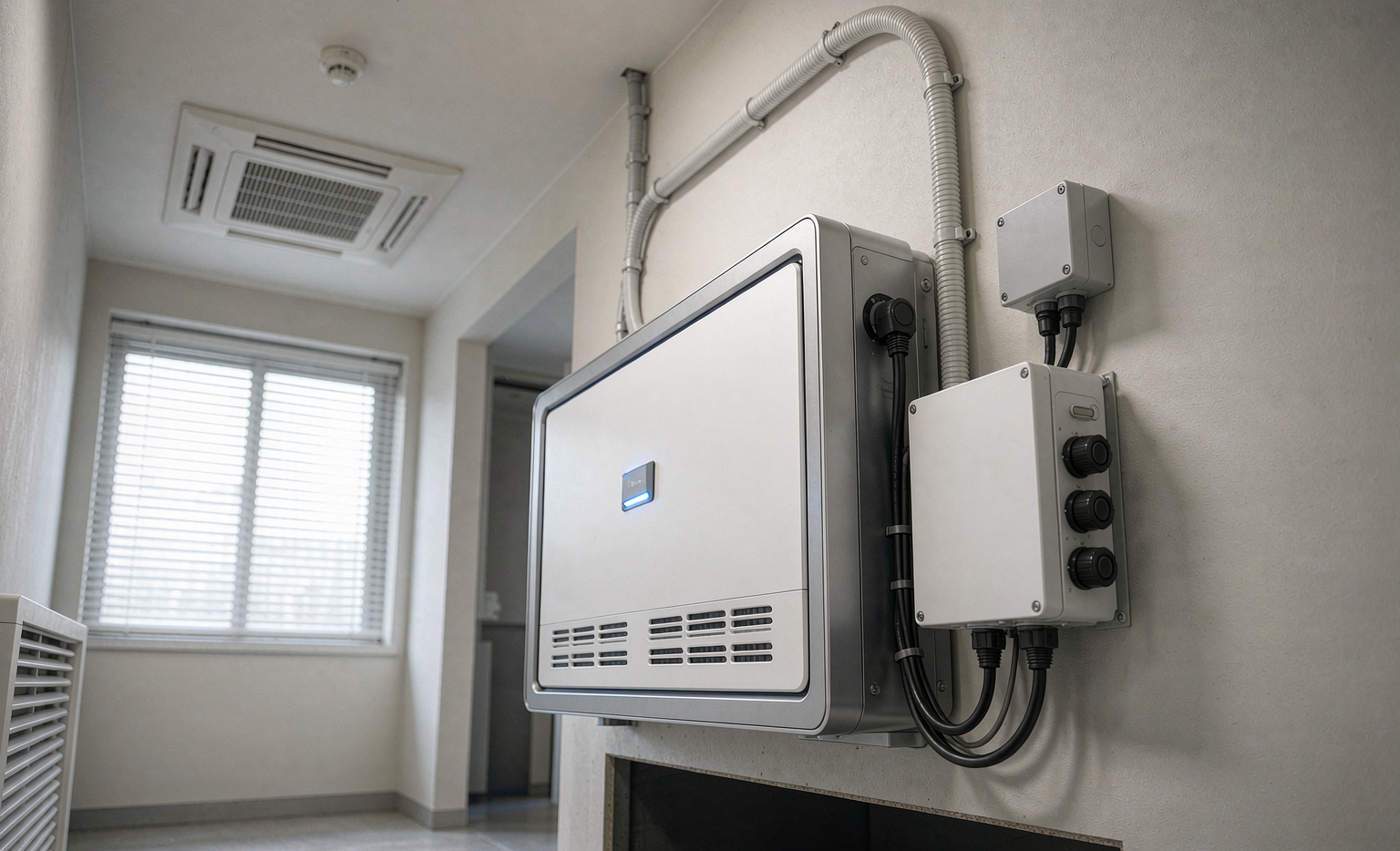
- Never in a sleeping room, and not in a space that opens directly into one without a fire-rated separation. Utility closets, laundry rooms, and dedicated service alcoves are the workable candidates.
- Fire-rated separation. Where the battery sits inside the dwelling envelope, expect a requirement for 1-hour fire-resistance-rated construction between the storage space and habitable areas. In practice that is 5/8 in (15.9 mm) Type X gypsum on the battery side, taped and finished, with penetrations firestopped to the same rating.
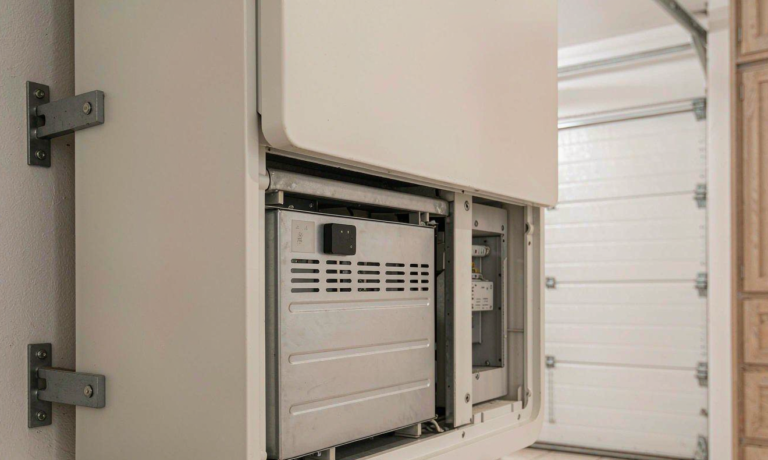
- Clearances. We design to 3 ft (0.9 m) working clearance in front of the enclosure, 6 in (150 mm) side clearance minimum for convective airflow, and 12 in (300 mm) above. Mounting height matters too: keep the enclosure base above expected flood level and never directly above a water heater.
- Detection. Smoke detection in the room plus a heat detector rated 57 °C to 60 °C inside or immediately above the enclosure, interlocked to the building fire alarm where one exists. Off-gas detection alarms on hydrocarbons and CO at ppm level well before visible smoke, and is worth specifying for shared-corridor installations.
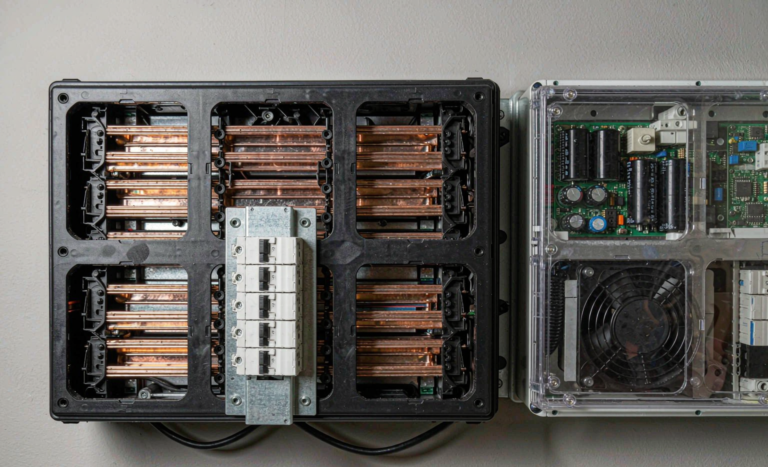
- Ingress protection. IP54 as a floor indoors, IP65 where a hose stream is credible. Our apartment cabinets ship IP55 with removable filter media on the intake louvre.
One field detail worth more than it sounds: label the DC disconnect location on the outside of the closet door, and keep the disconnect reachable without entering the enclosure envelope. Fire crews will not open an unlabelled cabinet.
BMS and Electrical Protection: Where Safety Is Actually Enforced
Standards define the floor. The battery management system defines whether you ever get near it. These are the protection settings we ship on apartment-class packs, and the reasoning behind each.
- Cell voltage window: 2.50 V to 3.65 V per LFP cell, hardware backup at 2.30 V and 3.75 V. Software limits are configurable; hardware limits deliberately are not.
- Charge temperature lockout: no charge below 0 °C without active heating, heater engagement below 5 °C. Lithium plating from sub-zero charging is the most common latent cause of internal short circuits I have investigated.
- Discharge window: −20 °C to 55 °C, derated above 45 °C.
- Monitoring: ± 2 mV sampling accuracy, per-cell voltage and per-module temperature logged at 1 s, delta-V alarm at 50 mV and fault trip at 120 mV.
- Current protection: continuous 0.5C, 1C for 30 minutes, hardware trip at 1.5C, class aR fuses rated 18 kA to 22 kA on the DC side.
- Insulation and ground fault: isolation ≥ 1 MΩ at 500 VDC verified at commissioning, plus residual current detection at 30 mA with a 300 ms trip on the AC side.
- Thermal gradient: module-to-module spread under 5 °C, 0.8 m/s to 1.2 m/s face velocity on forced-convection units.
- Telemetry and SoH: daily state-of-health reporting; a 25 % DCIR rise over baseline generates a service ticket before the tenant notices anything.
State of charge management deserves a note. For apartment installs we default the maximum daily charge target to 95 % rather than 100 %, and configure long-idle storage at 40 % to 60 %. The energy sacrifice is under 3 % of annual usable capacity on a self-consumption profile; the reduction in calendar ageing is worth far more.
Commissioning and Handover: The Six Records I Refuse to Skip
A safe design installed carelessly is not a safe installation. The pack does not get energised until all six records are captured:
- Insulation resistance measured and logged at ≥ 1 MΩ at 500 VDC, phase and DC bus.
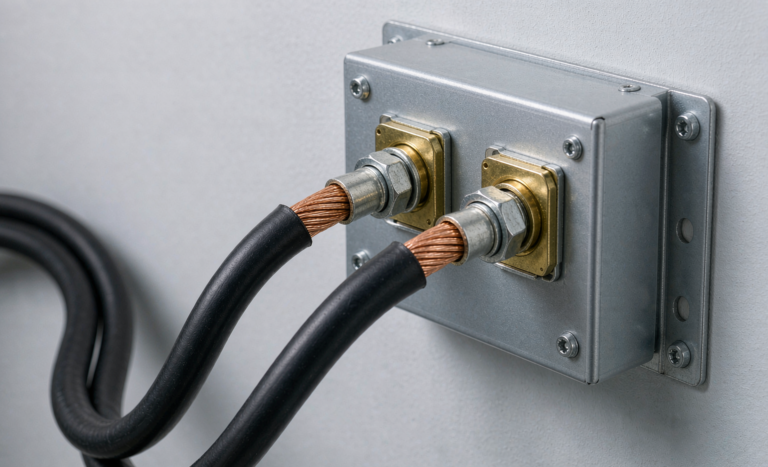
- Torque verification on every power connection to specification, typically 10 N·m to 12 N·m ± 10 % on M8 busbar hardware, marked with torque-seal paint.
- Four-wire resistance check on main power joints, target under 0.15 mΩ, recorded per joint.
- Full protection function test: overvoltage, undervoltage, overcurrent, over-temperature, and ground fault each triggered and the trip time recorded.
- Firmware version, serial numbers, and BMS configuration file archived against the unit ID.
- Signed tenant and building-manager handover covering the disconnect location, the alarm meaning, the do-not-cover requirement, and the emergency contact path.
I have seen exactly one apartment thermal incident reach the point of venting. Root cause was a loose DC busbar joint that had never been torque-verified; joint resistance had climbed above 3 mΩ and local heating did the rest. Ten minutes of documented torque work would have prevented it. That single case is why the sheet exists in its current form.
What Three Years of Apartment Fleet Data Taught Us
Across a monitored fleet of 480 apartment-installed LFP home energy storage units, roughly 71 % of service tickets originated from balance-of-system components — inverters, gateways, AC protection — not from the battery. Cell-level faults accounted for under 4 %. Capacity fade after three years of daily cycling averaged 6.8 % with a 2.1 % standard deviation, tracking the LFP cycle-life model closely.
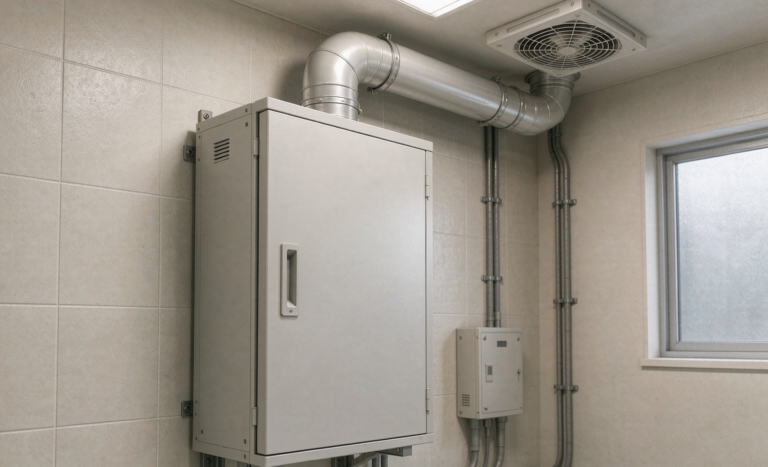
The most useful finding was about temperature, not chemistry. Units in unventilated interior closets ran 6 °C to 9 °C warmer than units in laundry rooms with passive louvres, and their capacity fade was about 1.6 times higher. Ventilation is cheap; replacing a pack in a fourth-floor apartment is not. If I could change one thing industry-wide, it would be a hard requirement for a passive ventilation path on every indoor enclosure.
Frequently Asked Questions
Is it legal to install a home energy storage battery inside an apartment?
In most jurisdictions that have adopted NFPA 855 or IFC Section 1207, yes — subject to energy limits (commonly 20 kWh per unit, 40 kWh aggregate in a dwelling unit), a permitted location that is not a sleeping room or egress path, fire-rated separation where required, listed equipment to UL 9540, and local fire department approval. Some jurisdictions and many building owners impose stricter rules than code. Always confirm with the authority having jurisdiction before design, not after.
Which chemistry is safest for apartment home energy storage?
Lithium iron phosphate, by a clear margin among commercially available options. Its thermal runaway onset sits roughly 50 °C higher than typical nickel-rich cathodes, its heat release rate is lower, and it does not release oxygen from the cathode during decomposition. Sodium-ion is a credible alternative for cold or unconditioned spaces at the cost of physical size. I do not recommend high-nickel NMC or NCA for in-dwelling residential storage.
How much space and clearance does an apartment battery need?
Plan for a footprint of roughly 0.6 m by 0.25 m of wall area per 10 kWh wall-mounted LFP module, plus 3 ft (0.9 m) of working clearance in front, 150 mm at the sides, and 300 mm above. Where multiple units are installed, expect a 3 ft separation requirement between units unless installation-level UL 9540A testing supports closer spacing.
What certificates should I demand from a supplier?
At minimum: UN 38.3 test summary for transport, IEC 62619 or UL 1973 at battery level, UL 9540 for the complete system, and the UL 9540A test reports at the levels your jurisdiction requires. Ask for the actual reports with test-house identification, not a self-declared certificate of conformity. For any custom battery solution, also request the BMS protection setting table and the commissioning procedure, because those documents reveal how much real engineering sits behind the product.
Do apartment batteries need special monitoring compared with single-family systems?
Yes. Because occupants are frequently tenants rather than owners, and because a fault in one unit has consequences for neighbours, I treat remote telemetry as a safety control rather than a convenience. Specify per-cell voltage and per-module temperature logging, automatic alarm escalation to a monitored service contact, and daily state-of-health reporting. A system nobody is watching is a system that will be discovered by the fire alarm.
Can a lithium battery from an EV or drone be reused for apartment storage?
Practically never in a compliant installation. Second-life EV modules and any repurposed drone battery pack lack the system-level UL 9540 listing and the UL 9540A data that multi-family code requires, and their internal state history is unknown. I have measured cell-to-cell capacity spreads above 15 % in second-life module lots, which makes reliable balancing impossible.
Closing Engineering Note
Apartment home energy storage is fully solvable, but it is solved with documentation, chemistry discipline, and enclosure detail rather than with clever marketing. Specify LFP, stay inside the NFPA 855 energy limits, put the pack in a ventilated non-egress space with fire-rated separation, insist on the full UL 9540 and UL 9540A paperwork, and commission with torque and insulation records in hand. Do those five things and the safety case writes itself. If you are scoping a multi-family project, send me the energy target, the proposed location, and the applicable code edition — those three inputs determine the design more than any other spec on the sheet.