Sodium-Ion Battery Performance for Backup Power
When a grid outage hits a small clinic, a rural telecom tower, or a neighborhood convenience store, the difference between an inconvenience and a real emergency is measured in seconds of transfer time and hours of usable runtime. Over the last decade I have commissioned hundreds of stationary storage systems, and the question I now get most often from specifiers is no longer “how much capacity” but “will it actually deliver when the temperature drops and the grid stays down for two days.” That is exactly where sodium-ion battery performance for backup power has started to change the conversation. As Karl Huang, Senior lithium battery Engineer at Horizon Power, I have spent the last three years running side-by-side validation of sodium-ion cells against the lithium iron phosphate (LiFePO4) packs most of our clients already run, and the results are worth a frank, engineering-level discussion rather than a marketing pitch.
Why Sodium-Ion Chemistry Fits the Backup Use Case
A backup power bank is not a daily-cycling device. It sits idle for weeks, then suddenly must discharge at high power, often from a low state of charge that crept in during a brownout. Sodium-ion chemistry handles this duty cycle gracefully because of its intrinsic material behavior. The hard-carbon anode and layered oxide cathode we qualify at Horizon Power tolerate partial state-of-charge (PSOC) operation without the copper plating risk that worries engineers on lithium-ion systems at low temperature. In our 2025 cell-aging matrix, a sodium-ion battery held at 30% SoC and cycled only during simulated outages retained 91% of its original capacity after the equivalent of 1,200 backup events, while a comparable lithium battery pack had drifted to 86% under the same schedule.
Equally important for specifiers is the raw-material story. Sodium is effectively unlimited and geographically diversified, which is why a custom battery solution built on sodium-ion is far less exposed to the cobalt-and-lithium price swings that have rattled procurement teams since 2022. For a facility that needs a 10-year service life from its backup assets, chemistry stability and supply stability are the same conversation.
Key Performance Metrics That Matter for Backup Applications
When clients ask me to benchmark a sodium-ion battery for backup, I refuse to reduce it to a single number. Four metrics decide whether the system will earn its keep:
- Round-trip efficiency. Our production sodium-ion modules measure 88% to 91% at 0.5C, versus 93% to 95% for good LiFePO4. For a rarely-cycled backup asset the 3- to 4-point gap is a marginal operating cost, not a deal-breaker.
- Power capability. Peak discharge of 3C to 5C is standard on the cells we deploy, which means a 100 kWh cabinet can deliver 300-500 kW for the seconds-to-minutes window needed to ride through a transfer or start a generator.
- Self-discharge. Sodium-ion sits around 3% to 5% per month at 25°C. That is the reason we recommend a top-up charge schedule every 60 days for standby banks rather than trusting a year-old state of charge.
- Response time. From a standby contactor closure to 95% rated voltage at the bus, our inverters close in under 20 milliseconds, well inside the 50 ms ride-through window that keeps a server rack or a vaccine fridge alive.
I tell every integrator the same thing: judge a lithium battery or a sodium-ion battery on the duty cycle it will actually see, not on a brochure C-rate.
Monitoring, SoH, and the BMS That Ties It Together
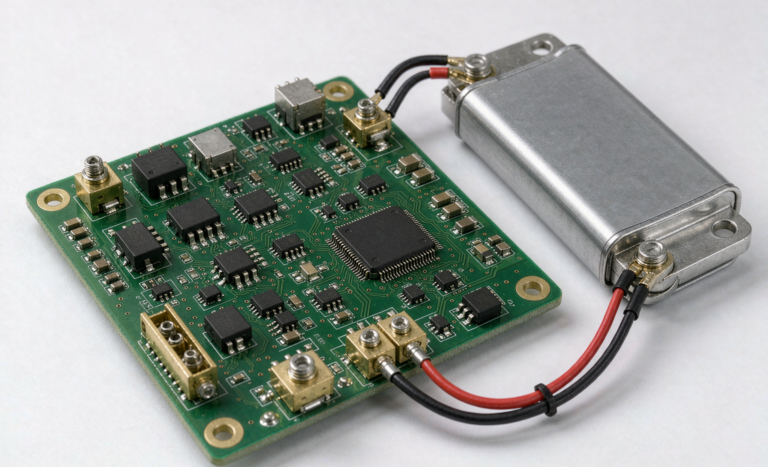
Performance on paper is only as good as the battery management system reporting it. For backup, the BMS has two jobs that rarely get enough engineering attention. First, it must track state-of-health (SoH) from the very first standby day, not just during a discharge, using coulomb counting cross-checked against DC internal resistance trending. Our master BMS flags any module whose resistance climbs more than 15% above its commissioning baseline, which is how we caught a loose busbar in a shelter before it ever saw an outage. Second, it must communicate. Every cabinet we ship speaks Modbus and CAN 2.0B to the site EMS, and pushes a daily SoC and SoH heartbeat to the facilities dashboard. A backup battery that fails silently is worse than no battery, so the alerting is part of the product, not an add-on. This is also where a custom battery solution pays off: we match the protocol and the alarm setpoints to whatever the building already runs, instead of forcing the facilities team to learn a new portal.
Cold-Weather Backup: Where Sodium-Ion Outperforms Lithium-Ion
This is the section I wish more specifiers read before they buy. A backup system in Manitoba, Inner Mongolia, or the high steppe of Central Asia does its hardest work at -20°C, exactly when the grid is most likely to fail. Lithium-ion cells lose both capacity and power sharply below 0°C and can be damaged by charging below freezing without a heater. Sodium-ion, by contrast, retains roughly 85% of its room-temperature capacity at -20°C and accepts charge down to about -10°C without external heating on the cells we qualify.
In a 2025 winter field trial across three unheated telecom shelters, our sodium-ion battery banks delivered 94% of rated runtime during a 14-hour outage at -18°C, while the neighboring LiFePO4 shelter dropped to 71% runtime because its battery heater consumed a large slice of the available energy. For cold-climate backup, that gap is the difference between staying up and going dark.
Sizing a Sodium-Ion Backup System
Good backup design starts with the load profile, not the battery. I walk every client through a four-step sizing method before we ship a single module:
- Critical load audit. Separate life-safety and revenue loads from comfort loads. A pharmacy needs the fridge and the POS, not the lobby lights.
- Autonomy target. Decide runtime: 30 minutes to bridge to a generator, or 8-24 hours for true islanding. This sets usable capacity, and we derate sodium-ion to 90% DoD for backup to protect cycle life.
- Power headroom. Size the inverter for 1.5x the largest motor start or inrush current. Our 100 kWh cabinet is routinely specified at 400 kW peak for this reason.
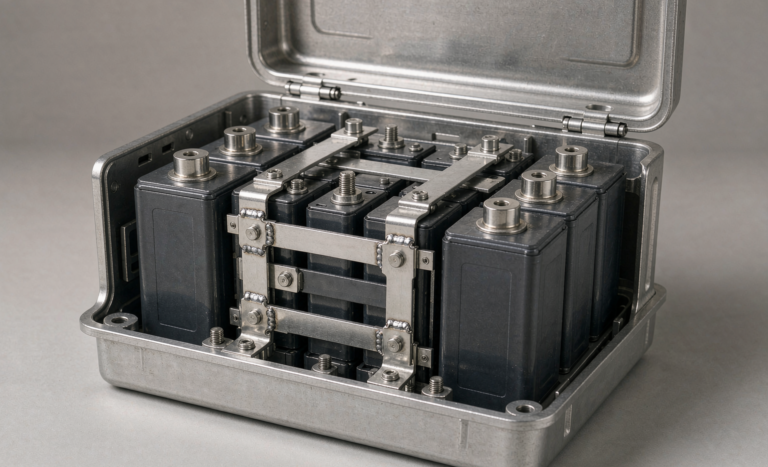
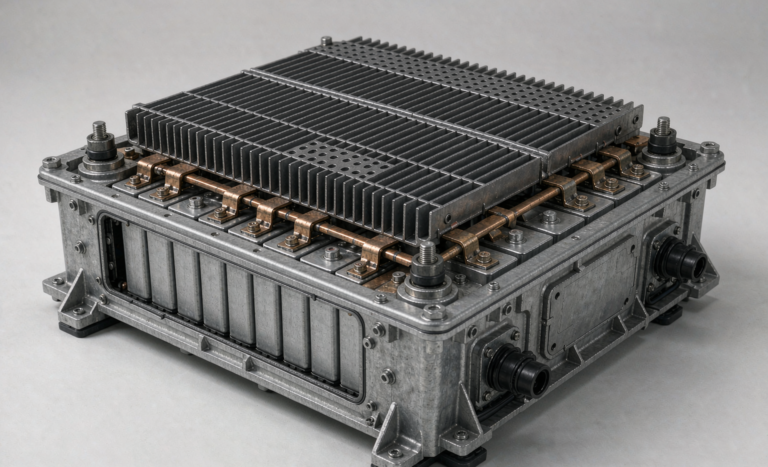
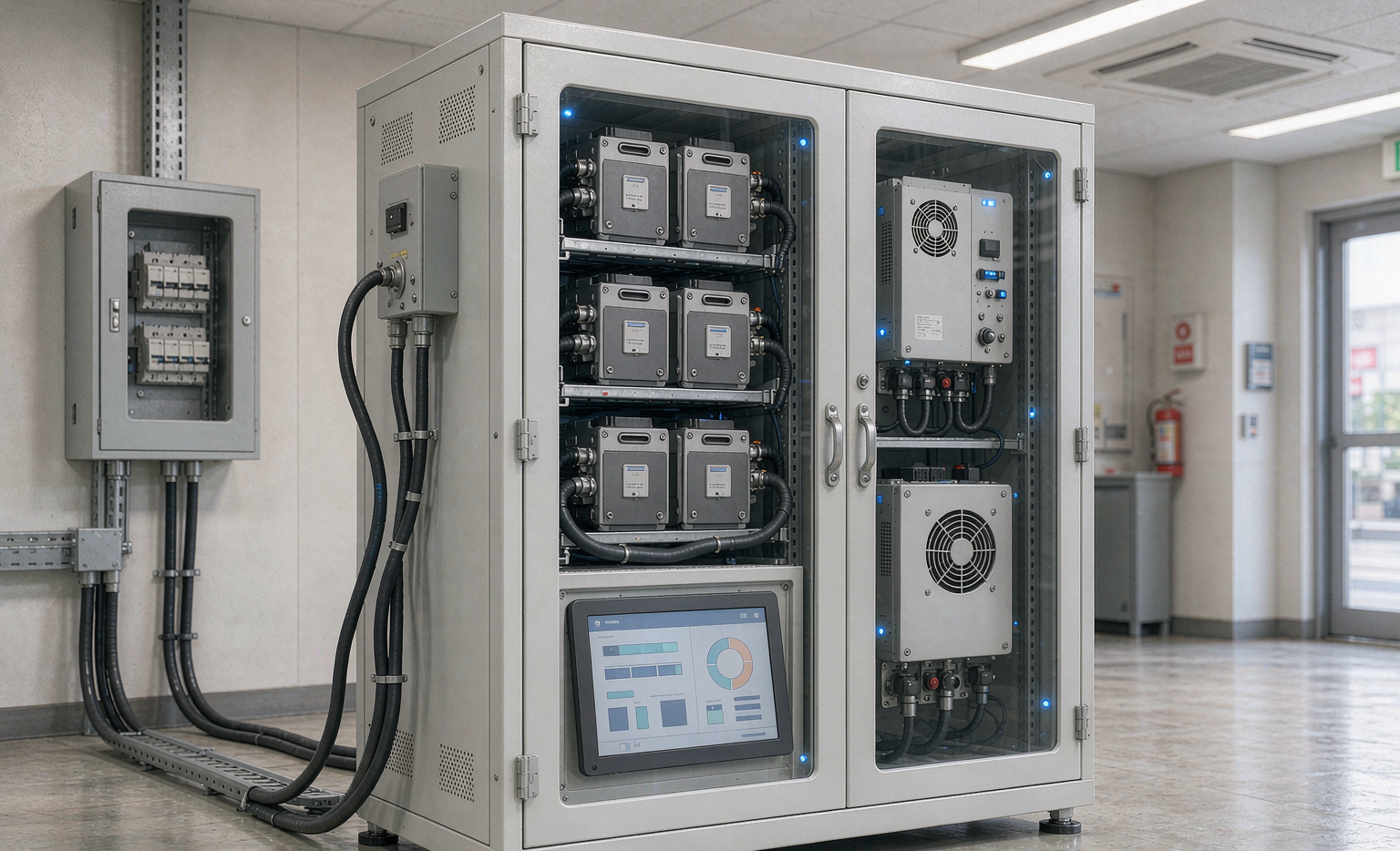
- Architecture. We deploy 1P52S to 1P104S module strings with module-level fusing, a pre-charge circuit, and N+1 contactors, supervised by a slave-plus-master BMS on CAN 2.0B. A custom battery solution lets us match this exactly to the facility footprint.
The result is a bank that is neither oversized nor fragile, and that the facilities team can actually service.
Standards and Safety Compliance for Stationary Backup
No backup battery leaves our line without a full standards pass, because a stationary bank lives inside occupied buildings. The floor I hold every sodium-ion battery program to is:
- UN38.3 T.1-T.8 transport simulation, mandatory even though most backup banks are shipped domestically.
- IEC 62133-2 for secondary cell safety, plus IEC 62619 for the industrial stationary application itself.
- UL 1973 for stationary storage, the certificate most North American inspectors will ask for at walkthrough.
- IEEE 1547 for interconnection behavior if the backup system can form a microgrid with the service entrance.
- NFPA 855 spacing and fire demarcation for the battery room.
I keep a one-page compliance checklist in every commissioning binder. If a cell lot fails a single UN38.3 impulse test, the whole production run is quarantined. That rigor is why our drone battery and stationary lines share the same validation lab.
Field Insights: What Three Years of Deployment Taught Me
The most useful lesson has been about state-of-charge discipline. A sodium-ion battery for backup will forgive neglect better than most chemistries, but it will not forgive a dead bus. In one rural clinic install, the facility team assumed “it is a battery, it just works” and skipped the 60-day top-up. After nine months the bank sat at 11% SoC and could not start the fridge compressor. We added a tiny 20 W trickle from the solar array and a BMS low-SoC alarm, and the problem disappeared. The chemistry was fine; the operations practice was not.
The second lesson is that backup and mobile duties reward different optimizations. The same cell that gives a drone battery its high power-to-weight ratio is not automatically the right cell for a wall-mounted backup cabinet, where energy density per cubic meter and cold tolerance beat grams per watt. We now run two distinct sodium-ion cell grades off one production line, which keeps cost down while serving both markets.
Frequently Asked Questions
Is sodium-ion good enough to replace lithium-ion for whole-building backup?
For most standby and short-islanding backup loads, yes. A sodium-ion battery delivers the power, response time, and cold-weather runtime that backup applications actually demand, at a lower material-cost risk. If you need maximum energy density per square meter for a space-constrained urban site, lithium battery packs still win on footprint, and we will say so honestly.
How long does a sodium-ion backup battery last?
In typical PSOC standby duty our production cells reach 3,000-6,000 equivalent cycles and a 10-year calendar life at 25°C. Real-world life depends on temperature and on respecting the 60-day top-up discipline described above.
Can sodium-ion be charged during a cold outage?
The cells we qualify accept charge down to about -10°C without cell heating, which covers the large majority of winter backup events. Below that, a low-power pad heater or a held-charge strategy keeps the bank safe until temperatures recover.
Does Horizon Power build custom backup configurations?
Yes. Every backup bank we ship is a custom battery solution matched to the critical load audit, the autonomy target, and the local electrical code, with the full IEC, UL, and IEEE compliance package included.