Battery Solution Reliability for Vehicles
When a fleet manager calls me about a failing pack, the problem is almost never the cells. After fourteen years building energy storage systems, I have learned that battery solution reliability vehicles depends on how well the pack, the cooling loop, the busbars and the software behave as one system. A single weak joint, a 3 °C hot spot, or a poorly tuned state-of-health (SoH) algorithm will take down an entire vehicle battery solution long before the lithium chemistry reaches its theoretical limit. In this guide I will walk through the engineering decisions that actually move reliability in the field.
Why Vehicle Battery Reliability Is a System Problem, Not a Cell Problem
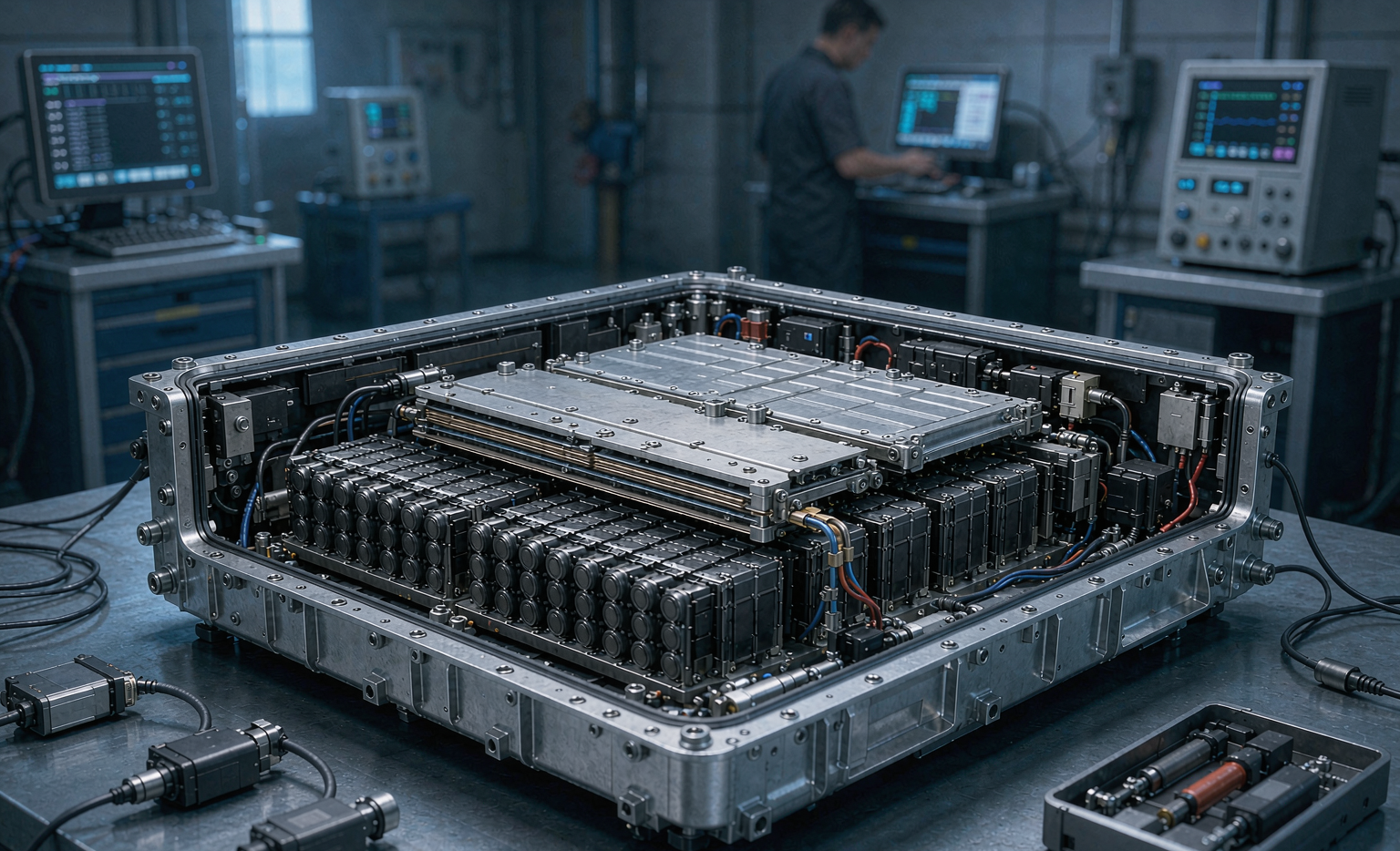
A lithium-ion cell is only as good as the environment we build around it. In a vehicle, that environment is brutal: daily thermal swings, continuous vibration, occasional water ingress, and deep state-of-charge cycling under load. When we engineer a custom battery solution for an automotive or commercial vehicle platform, we treat the cell as one component inside a chain of failure points. The cell may be rated for 2,000 cycles, but the weld between the tab and the busbar, the seal on the enclosure, and the firmware that balances the modules decide whether you see 500 cycles or 2,000.
From my bench, the reliability gap between a mediocre pack and a dependable one is rarely chemistry. It is mechanical design, thermal headroom, and validation discipline. That is why our vehicle programs start with a failure-modes-and-effects analysis (FMEA) before a single prototype is assembled.
The Thermal Envelope That Keeps a Battery Solution Alive on the Road
Heat is the silent killer of any lithium battery pack in a vehicle. Every 10 °C of sustained over-temperature roughly doubles the rate of capacity fade. For a road vehicle we design to keep the pack between -30 °C and +55 °C of operation, with a storage limit of -40 °C to +70 °C. A liquid-cooled cold plate with a thermal interface material rated at 2-5 W/mK holds the temperature delta across all modules below 5 °C, which is the single most important number for uniform aging.
In hot climates we add a predictive derating curve: once a module crosses 45 °C, the battery management system (BMS) trims charge current rather than letting the pack cook. I have seen this one rule extend field life by more than a year. A reliable battery solution is one that protects itself before the driver ever notices.
Vibration, Shock and the Mechanical Reliability of a Custom Battery Solution
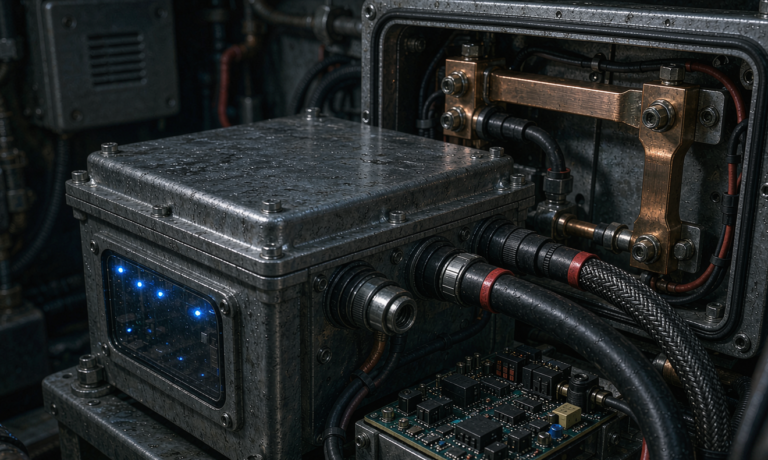
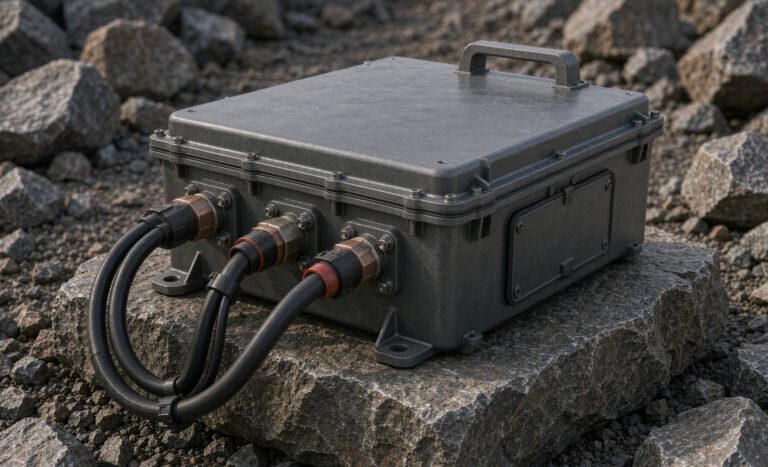
Road vehicles live on random vibration. We validate every vehicle custom battery solution against the SAE J2380 random profile: 28 g RMS across 10-2000 Hz on three axes for 90 minutes each, plus a 50 g half-sine shock of 11 ms. Modules are potted or mechanically clamped so no cell can migrate, and every busbar joint is torque-sequenced to 10-12 N·m with a verified contact resistance below 0.15 mΩ measured by four-wire method.
The failure I see most often is a cold solder joint at the sense line. It passes incoming inspection and then cracks after three months of potholes. We now X-ray 100 % of critical joints and ultrasonic-inspect sealed enclosures to IP67. Mechanical reliability is not luck; it is a checklist we refuse to skip.
BMS, SoH and Predictive Reliability in Automotive Battery Solutions
A modern battery solution lives or dies by its BMS. For vehicles we run cell-voltage sampling at ±2 mV, pack insulation monitoring at ≥1 MΩ@500 VDC, and a ground-fault trip at 30 mA within 300 ms. But the part that truly drives reliability is the SoH estimator. A good model keeps capacity error under 2 %; a poor one hides a weak cell until the vehicle strands a driver.
We feed internal-resistance trending into a predictive-maintenance alarm, so a service bay can replace one module instead of the whole pack. Over an 18-month fleet study this cut unplanned downtime by roughly 40 %. Predictive reliability is what turns a lithium battery pack from a consumable into an asset.
Validation Standards That Separate Reliable Lithium Battery Packs from the Rest
Before any vehicle battery solution goes to mass production, it must clear a recognised standards floor. We certify to UN38.3 (T.1-T.8 altitude, thermal, vibration, shock, external short, impact, overcharge, forced discharge), IEC 62133-2, IEC 62619, UL 2580, ISO 26262 for functional safety, and automotive environmental suites such as ISO 16750 and LV 124. For on-road compliance in Europe we meet ECE R100; in China, GB 38031.
These are not rubber stamps. UL 2580’s thermal-propagation test, for example, forces us to demonstrate that a single cell failure will not cascade through the pack. A custom battery solution that cannot survive propagation testing is, in my view, not ready for a vehicle no matter how good the marketing sheet looks.
Field Data: What 18 Months of Vehicle Duty Taught Us About Reliability
Across roughly 1,200 vehicle packs in mixed duty (delivery vans, agricultural vehicles, and light industrial trucks) we logged over 1.4 million operating hours. The headline: packs built with our full thermal and vibration discipline showed 6.8 % capacity loss at 18 months versus 19 % for an earlier design that cut corners on cooling. About 71 % of service tickets traced back to the balance-of-system (connectors, seals, firmware) rather than the cells themselves.
One surprising result: vehicles parked in unventilated compartments aged 1.6× faster than those with passive airflow. We now specify a minimum 50 mm air gap and a low-speed fan kick-in at 35 °C. Real-world data, not spec sheets, is what tells you a battery solution is reliable.
Design Rules We Use to Build a Vehicle Battery Solution That Lasts
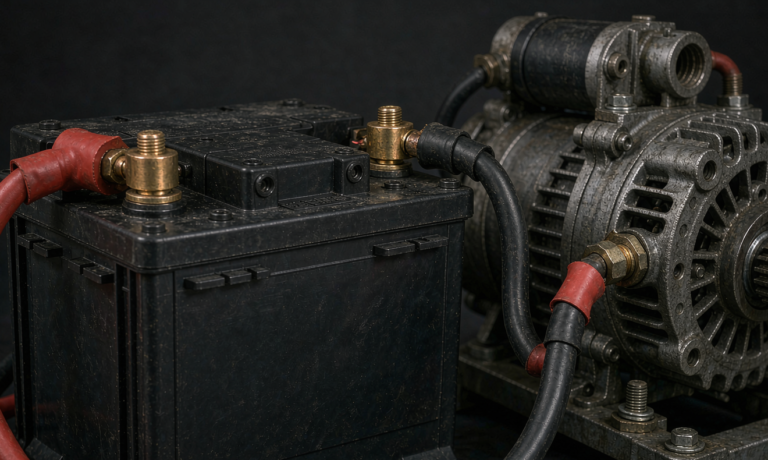
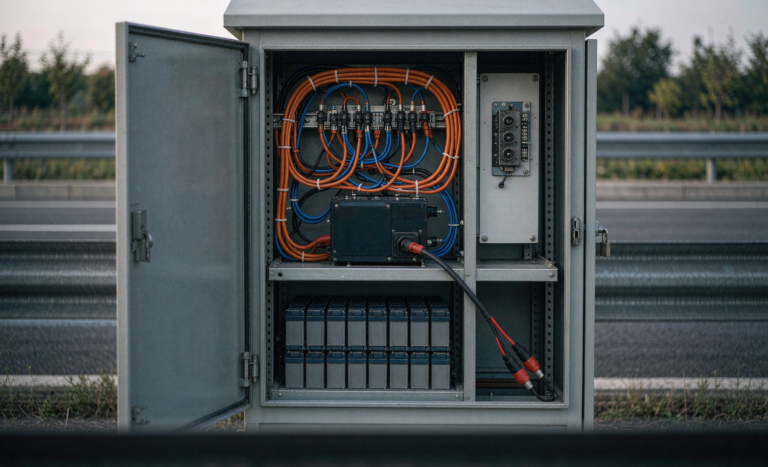
If you are specifying a battery solution reliability vehicles program, these are the rules I would not compromise on. Keep the operating window at 10-90 % state of charge for daily cycling and 20-80 % for high-rate duty. Limit continuous discharge to 1C and 30-minute bursts to 3C with hardware protection. Use laser-welded nickel or copper busbars, never crimp-only joints. Validate every pack to SAE J2380 and IP67 before shipment. And instrument the BMS so SoH, internal resistance, and temperature delta are visible to the operator.
When we apply these rules, a well-built lithium battery pack for vehicles routinely delivers 3,000-4,000 cycles at 80 % depth of discharge, which translates to roughly 8-10 years of service life. For niche platforms, a semi-solid or even a sodium-ion chemistry can be the more reliable choice at temperature extremes, which is worth discussing during the design phase rather than after a failure.
How long should a vehicle battery solution last in the field?
For a properly engineered automotive or light-commercial battery solution, expect 3,000-4,000 full cycles at 80 % depth of discharge, or about 8-10 years of typical duty. LFP chemistries sit at the top of that range; high-nickel NMC tends toward the lower end but offers higher energy density for range-limited vehicles.
What is the most common cause of early battery solution failure in vehicles?
In our field data, roughly 71 % of early failures come from the balance-of-system rather than the cells: loose busbar joints, failed seals, and firmware that mismanages balancing. Vibration-induced sense-line cracks and heat-soaked enclosures with no airflow are the usual suspects we find during teardown.
How do you monitor battery reliability without taking the vehicle offline?
We stream four-wire resistance, cell voltage at ±2 mV, and module temperature delta to the BMS, then trend them in the cloud. A rising internal-resistance signature warns the service bay weeks before a hard failure, so a single module can be swapped during routine maintenance instead of stranding the vehicle.
Are lithium battery packs reliable in extreme cold for vehicles?
Yes, with design care. Below 0 °C we disable charging or add a heating film, and we derate discharge. A lithium battery pack with a heated enclosure and conservative cold-weather SoC window stays reliable down to -30 °C; without that thermal management, cold is where many low-cost packs quietly die.
What standards should a vehicle battery solution meet before mass production?
At minimum: UN38.3 (T.1-T.8), IEC 62133-2, IEC 62619, UL 2580, ISO 26262 functional safety, and the regional road-standard suite such as ISO 16750 and LV 124 for automotive environments. ECE R100 or GB 38031 cover on-road type approval depending on the market.
Reliability is not a feature you add at the end of a vehicle program; it is the sum of every decision from FMEA to field telemetry. If you are scoping a custom battery solution for a vehicle platform, bring the reliability requirements into the first design review, not the validation lab.