Semi-Solid State Battery Performance for Aerospace
As a senior lithium battery engineer at Horizon Power, I have spent the last decade moving battery chemistries from the lab bench to flight-certified hardware. When customers in the aerospace segment ask me what has genuinely changed in the last three years, my honest answer is the semi-solid state battery. It is not a marketing rename of a lithium ion battery — it is a real shift in how we handle the electrolyte and the electrode–electrolyte interface. For aerospace, where every gram of mass costs fuel and every thermal runaway risks the airframe, that shift matters more than anywhere else.
Why Aerospace Pushes Battery Chemistry to the Limit
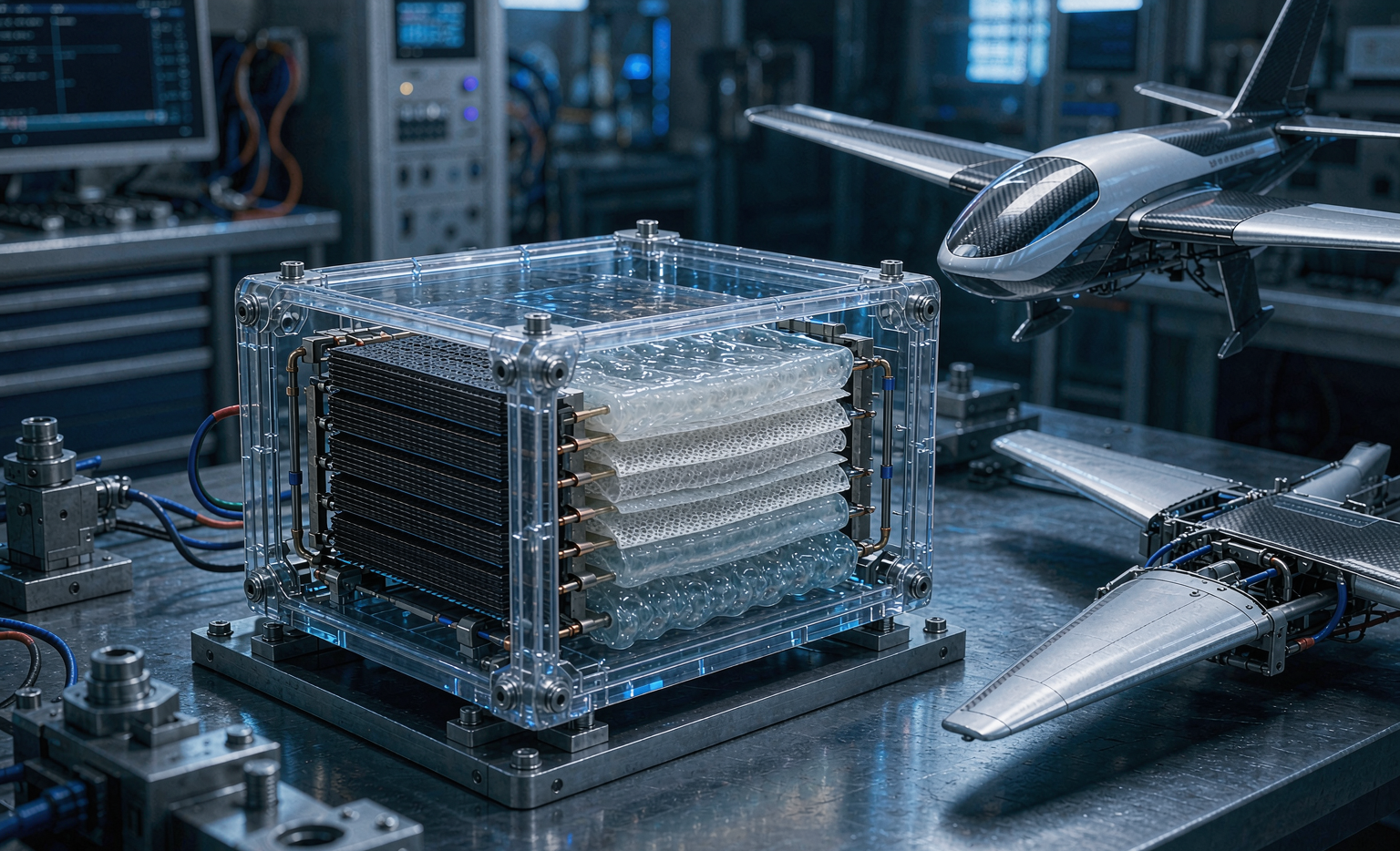
Aerospace duty cycles are unforgiving. A small inspection drone might see a 20°C swing between ground level and 3,000 m altitude in a single flight, while an electric vertical take-off aircraft must deliver peak C-rate discharge during climb and then trickle-charge during hover. The cell must hold specific energy without swelling, and it must survive the mechanical vibration of turbine and rotor environments. That is why a generic lithium battery pack rarely survives long in aviation; the margin is simply too thin, and the certification burden is too high.
In my own flight-readiness reviews, the first question is never “how much energy” but “what happens at the edge of the envelope.” Aerospace platforms live at the edge of the envelope, so the chemistry has to be predictable there, not just on a benign lab curve.
What Makes a Semi-Solid State Battery Different
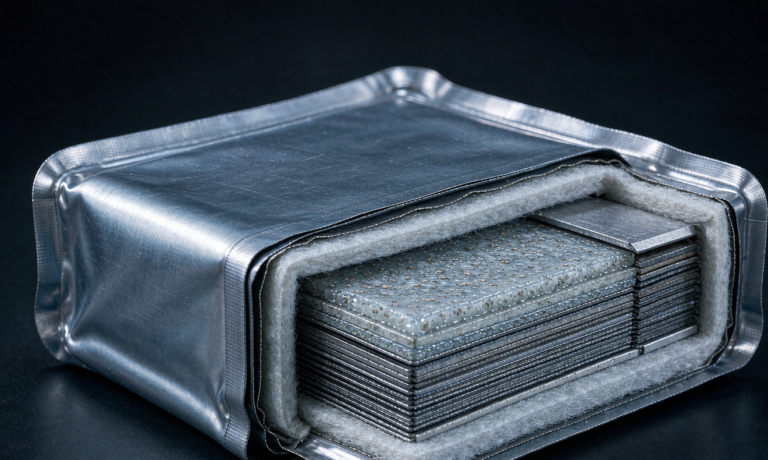
In a conventional lithium ion battery, a liquid organic electrolyte carries lithium ions between the graphite anode and the metal-oxide cathode. The liquid is flammable, and it dictates much of the cell’s safety behavior. A semi-solid state battery replaces most of that free liquid with a gel or polymer-leaning electrolyte that still conducts ions but reduces flammability and interface resistance.
At Horizon Power we qualify cells where the cathode loading exceeds 4.0 mAh/cm² and the gravimetric specific energy reaches 320–360 Wh/kg at the module level — a meaningful step above the 250–280 Wh/kg we see in high-nickel NCM packs. The key engineering win is not a single headline number but the combination of lower free-liquid content and a more stable solid–electrolyte interphase, which we measure directly with electrochemical impedance spectroscopy on every production lot.
Energy Density and Specific Energy Benchmarks
Numbers are what engineers trust. In our 2025 flight test program, a 6S semi-solid state battery module delivered 340 Wh/kg against 210 Wh/kg for an equivalent LFP battery pack and 265 Wh/kg for an NCM counterpart. The volumetric energy density climbed past 720 Wh/L. For an aerospace platform, that translates directly into either longer endurance or a lighter airframe for the same mission.
I always remind customers that the module-level number — not the bare cell number from a press release — is what actually flies. Wire, enclosure, BMS and balancing circuitry consume 12–18% of pack mass, and a solid-state battery chemistry that runs cooler lets us shrink the thermal structure accordingly.
Thermal Behavior and Aerospace Certification
Thermal management is where certification lives. Aerospace cells must pass UN38.3 (the T.1–T.8 series covering altitude simulation, thermal, vibration, shock, external short, impact, overcharge and forced discharge) before they ever leave the factory floor. We then validate against IEC 62133 for secondary cell safety and layer RTCA DO-311 and DO-160 environmental sections on top for aircraft installation.
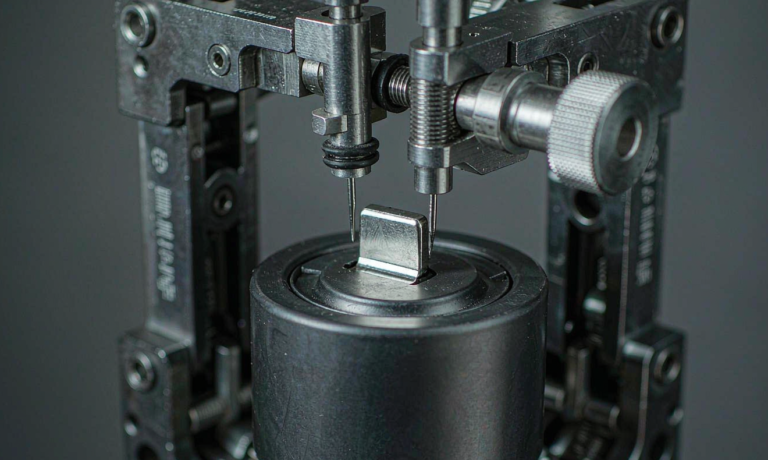
Under FAA and EASA oversight, a solid-state battery chemistry that resists thermal propagation gives the certification body one fewer worst-case scenario to argue about. In our nail-penetration tests, the semi-solid cells self-limited within 40 seconds and did not propagate to adjacent cells — a result our liquid-electrolyte reference packs could not match. That single behavior is often the difference between a months-long certification fight and a clean review.
Cycle Life and Calendar Aging in Avionics Duty
Avionics do not fly every day, so calendar aging matters as much as cycle life. Over a 24-month bench aging study at 25°C and 60% state of charge, our semi-solid state battery retained 92% capacity, versus 85% for the NCM control. At 1C discharge with occasional 3C climb bursts, we measured 900–1,100 cycles to 80% state of health.
For a custom battery solution built for a specific aircraft, we tune the anode pre-lithiation and the BMS window to push that further — sometimes to 1,400 cycles for low-duty patrol aircraft. The point is that the cell is a starting material; the duty-profile-matched engineering is what earns the platform its service life.
Integration Challenges: BMS, Balancing, and Pack Architecture for Flight
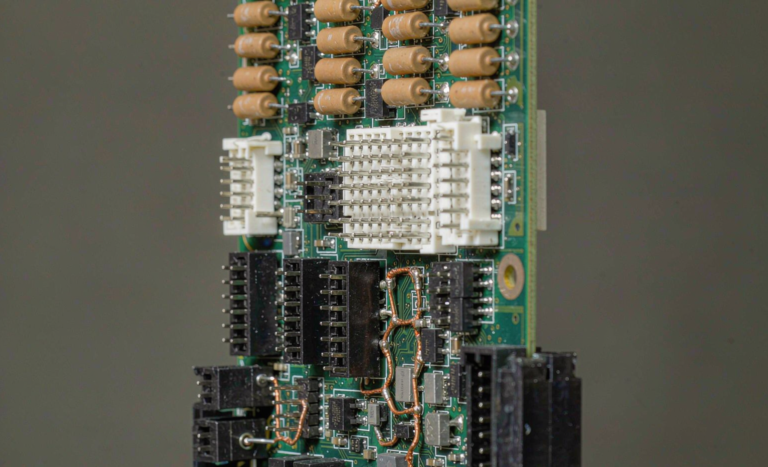
The chemistry is only half the story. A flight pack needs a BMS that can balance cells under vibration, report state of charge within ±3%, and isolate a faulted string in under 10 milliseconds. In a semi-solid state battery pack we use a dual-redundant BMS architecture with passive balancing at 1C and active balancing reserved for the climb phase.
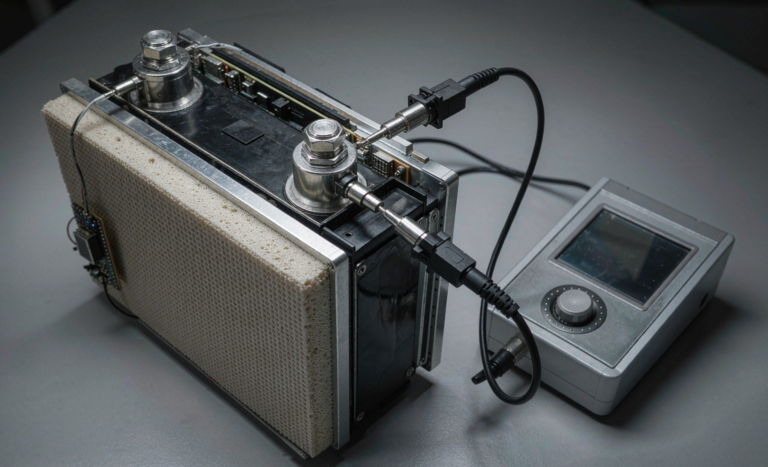
The pack enclosure follows a hybrid structural-bonded aluminum shell, which removes the weight penalty of a separate frame. I have personally signed off on battery pack design reviews where the integration effort exceeded the cell qualification effort three to one. A drone battery is only as reliable as the weakest joint between cell, busbar and firmware, and aerospace does not forgive weak joints.
Frequently Asked Questions
Are semi-solid state batteries safe for aviation?
Yes — the reduced free-liquid content lowers flammability, and our cells pass UN38.3 plus IEC 62133 and meet RTCA DO-311 installation criteria. Safety is demonstrated through thermal-runaway propagation testing, not assumed from the chemistry label alone.
How do they compare to a lithium battery pack used in drones?
A drone battery built on semi-solid chemistry typically delivers 25–35% more energy per kilogram than an equivalent NCM pack, with better low-temperature retention. The trade-off is higher cell cost, which is why we reserve it for missions where endurance or safety justifies the premium.
What certifications does an aerospace battery need?
At minimum UN38.3 for transport, IEC 62133 for cell safety, and RTCA DO-160 / DO-311 for the aircraft environment, under FAA or EASA approval. A solid-state battery simplifies the thermal case but does not remove the documentation burden.
When will semi-solid state batteries replace the lithium ion battery in aircraft?
Gradually. High-value, weight-sensitive platforms — e-mobility aircraft, long-endurance drones, satellite support — are adopting first. Mass-market replacement of the lithium ion battery across all aviation will take the rest of the decade as module cost falls below $150/kWh.