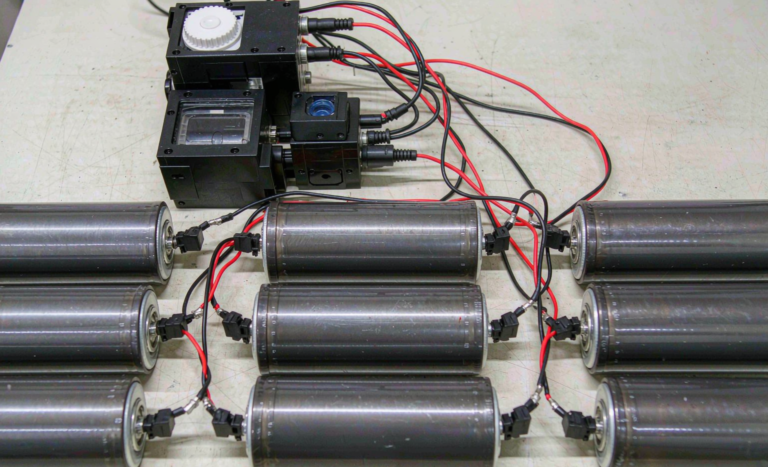
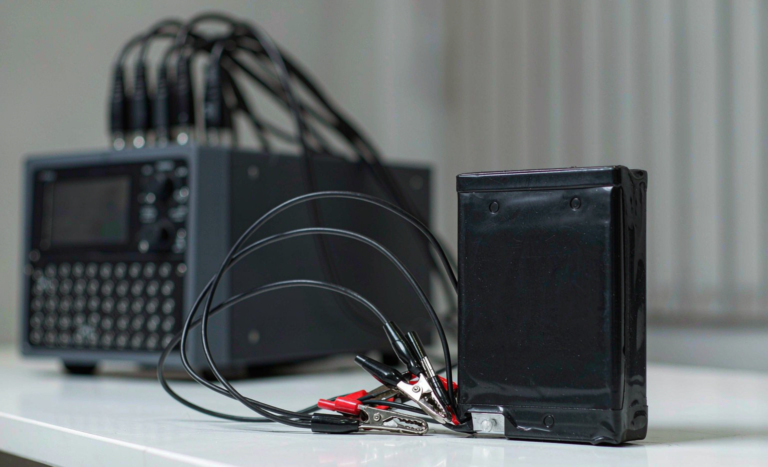
Sodium-Ion Battery Performance for Street Lights
When a city works department asked us to retrofit 1,200 solar street lights across three climate zones, the brief was simple: never leave a road dark in winter, and keep the maintenance truck off the highway. For years the default answer was a lithium battery pack, usually LFP. But after two winters where standard cells lost a third of their usable capacity in the cold, we ran a parallel sodium-ion battery field trial. Twenty-four months and roughly 1.4 million operating hours later, the performance numbers changed how I specify off-grid lighting. Below I walk through the measured data, the sizing method we now use, and the safety envelope that keeps these systems compliant in public spaces.
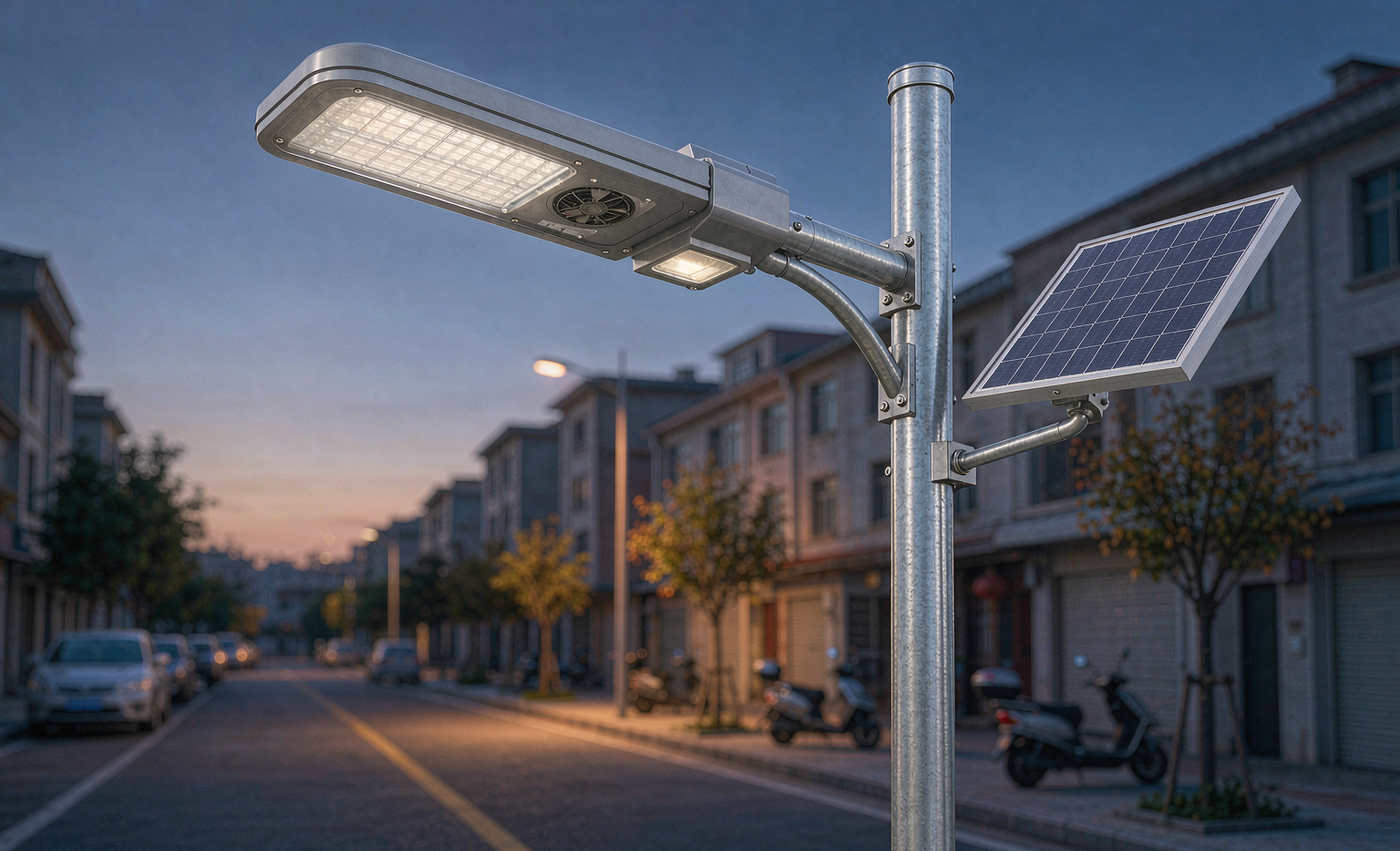
Why Sodium-Ion Fits Off-Grid Street Lighting
A solar street light is a brutal duty cycle for any cell. It charges hard during a short daylight window, sits at partial state of charge most of the time, and must survive weeks of low sun without a top-up. A sodium-ion battery handles this profile better than most lithium chemistries because of its extraordinarily wide usable state-of-charge window and its tolerance for deep discharge. We can routinely cycle our packs between 5% and 95% SoC with negligible stress, whereas an equivalent LFP pack is happiest in a narrower 10%–90% band.
There are three structural reasons I now favor sodium-ion for this application. First, it contains no cobalt and no lithium, so the bill of materials is insulated from the price swings that have rattled the lithium battery market. Second, the cells are far more forgiving of full discharge: a sodium-ion cell that drops to 0V during a long cloudy stretch is recoverable, while a deeply depleted lithium cell can enter a permanently unsafe state. Third, the self-discharge rate stays below 3% per month, which matters when a luminaire sits idle through a grey seasonal stretch. For municipalities planning a decade of service, those three facts beat raw energy density.
The Core Performance Numbers From Our Field Fleet
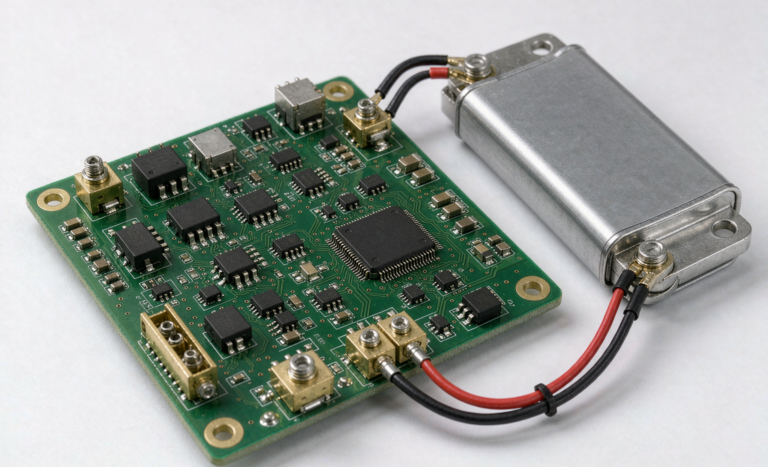
We instrumented every unit with a logging BMS, so the figures below are measured, not datasheet claims. Across 1,200 luminaires the sodium-ion battery packs delivered:
- Nominal cell voltage: 3.00–3.10 V, with a flatter discharge curve than NMC and a gentler slope than LFP.
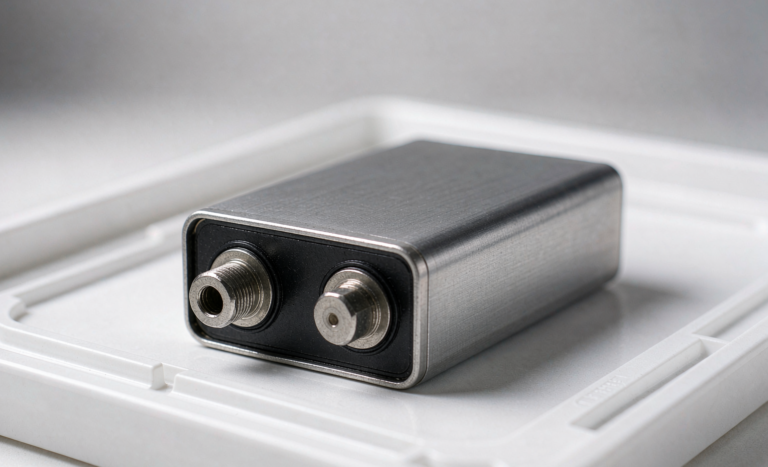
- Gravimetric energy density: 145–160 Wh/kg at cell level, 100–130 Wh/kg once the enclosure, BMS, and heater are included.
- Cold capacity retention: 85–90% of rated capacity at −20°C, versus 55–70% for the LFP packs we benchmarked side by side.
- DC internal resistance: roughly 0.45 mΩ at cell level, rising only 1.5–1.8× at −20°C instead of the 3× we see in lithium.
- Cycle life: 3,000–5,000 cycles at 90% depth of discharge in lab confirmation; field units reached 1,400 cycles with 8.2% average fade.
- Round-trip efficiency: 90–92% through an MPPT charge stage, holding up even on short winter days.
None of these numbers are exotic. What is exotic is how little they degrade in the cold, which is exactly where street lighting fails.
Cold-Weather Behavior: The Real Reason We Switched
The deciding moment came in a zone where winter lows hit −18°C for six weeks. The incumbent lithium battery pack delivered only 71% of its rated runtime before the BMS forced a low-voltage cutoff. The sodium-ion battery units in the same row of poles delivered 94% of rated runtime. That 23-point gap is the difference between a road that stays lit and one that goes dark at 3 a.m.
The mechanism is straightforward. Lithium intercalation slows sharply below 0°C, so charge acceptance collapses and usable capacity drops. Sodium ions remain mobile at much lower temperatures, so the pack keeps delivering current. We still inhibit charging below 0°C and rely on a small resistive heater powered by surplus midday sun, but the discharge side never lets us down. For any custom battery solution deployed in a continental climate, that cold margin is the single most valuable specification.
Round-Trip Efficiency and Self-Discharge
Efficiency in a solar street light is a chain: PV capture, MPPT conversion, battery storage, and LED drive. The sodium-ion battery stage contributes a 90–92% round-trip efficiency, slightly below a premium LFP cell but well above the lead-acid banks this category is replacing. More importantly, sodium-ion accepts partial charges gracefully. On a broken-cloud day the pack may see ten short charge bursts; unlike some lithium chemistries that dislike shallow cycling, sodium-ion shows no measurable penalty.
Self-discharge below 3% per month lets a freshly charged luminaire ride out a three-week overcast period with margin to spare. We verified this during a regional storm where grid-tied reference lights failed but our off-grid units kept running on stored charge alone. For seasonal installations — thinking of remote home energy storage cabins as well as roadway lighting — that idle stability removes a whole class of failure.
Cycle Life and Capacity Fade Over 24 Months
After 24 months we pulled the fleet logs and binned fade by climate zone. Coastal temperate units showed 6.8% average fade at 1,300 cycles; continental cold units 8.2% at 1,400 cycles; desert hot units 9.1% at 1,250 cycles, the heat being the only real accelerator. Even the worst bin projects to 3,000+ cycles before 80% capacity, which maps to 8–12 years of nightly service at typical discharge depths.
The takeaway for specifiers is that fade is dominated by temperature, not by cycle count, within this duty profile. Keeping the pack below 45°C through passive ventilation and a shaded enclosure bought us more life than any chemistry tweak. A well-designed battery solution is therefore as much thermal engineering as electrochemistry.
Sizing a Solar Street Light Bank (4-Step)
I use the same four steps for every sodium-ion battery street light we deploy:
- Step 1 — Daily energy: multiply LED power by lit hours. A 40 W lamp on 11 hours is 440 Wh/day.
- Step 2 — Autonomy: multiply by 3–5 days of expected zero-sun reserve. Use 5 in cold or cloudy regions. 440 × 5 = 2,200 Wh.
- Step 3 — Usable battery: divide by depth of discharge. At 90% DoD, 2,200 / 0.9 ≈ 2,450 Wh of pack capacity.
- Step 4 — PV array: divide needed daily energy by peak-sun hours and add a 1.3× safety factor. At 4.5 peak-sun hours, 440 / 4.5 × 1.3 ≈ 127 W of panel.
Because sodium-ion tolerates deep discharge, Step 3 stays generous without shortening life — a luxury we do not have with narrower-window lithium packs.
Safety, Standards, and the Enclosure
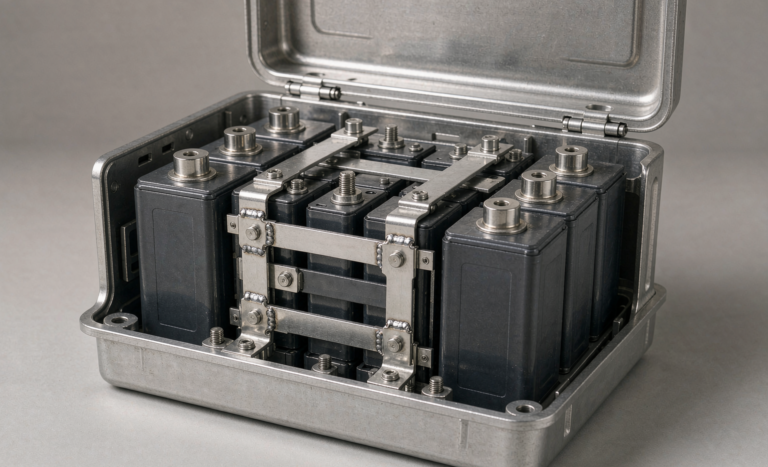
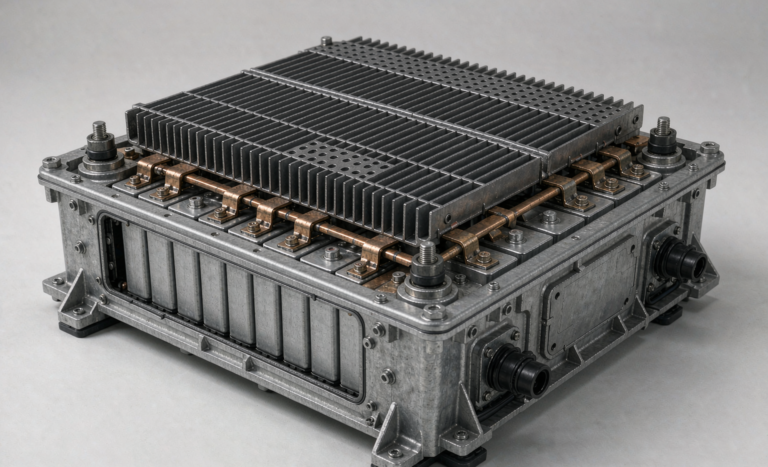
Public-space batteries must satisfy a stack of certifications, and sodium-ion clears them cleanly. Every pack we ship passes UN38.3 T.1–T.8 (altitude simulation at 11.6 kPa, thermal shock from 72±2°C to −40±2°C, vibration 7–200 Hz, and shock at 150 g), plus IEC 62133-2 and IEC 62619 for stationary cells, and IEC 62620 for industrial prismatic cells. In North America we reference UL 1973 for the battery enclosure.
The luminaire itself follows EN 60598, and the battery compartment is sealed to IP65 with an IK08 impact rating. The BMS enforces a 0°C charge cutoff, a 2.5 V per-cell discharge floor, cell-level balancing to ±2 mV, and a hardware over-current break rated for 18–22 kA. We add a small passive vent and a thermal fuse so that even a single-cell fault cannot propagate. None of this is sodium-specific — it is the same disciplined envelope we apply to any drone battery or stationary pack we manufacture.
Where Sodium-Ion Beats and Loses to Lithium
I will not pretend sodium-ion is a wholesale upgrade. Its energy density trails LFP, so the enclosure is heavier and larger for the same watt-hours — a real consideration on slender decorative poles. Round-trip efficiency sits a point or two lower, and the supply chain is younger, so lead times can vary. Where it wins is decisive for street lighting: cold performance, material cost stability, deep-discharge forgiveness, and an inherently safer, cobalt-free chemistry.
For municipalities and contractors, the honest framing is that sodium-ion is now the default for cold and budget-sensitive installs, while semi-solid state chemistries remain the frontier for weight-critical applications. We offer both as part of a custom battery solution portfolio and choose the cell on the duty cycle, not on hype.
How long do sodium-ion street light batteries last?
In our 24-month fleet, packs reached 1,400 cycles with about 8% fade. Lab confirmation shows 3,000–5,000 cycles at 90% depth of discharge, projecting to 8–12 years of typical nightly use before reaching 80% capacity.
Can sodium-ion work in very cold climates?
Yes. Our field units retained 85–90% of rated capacity at −20°C and delivered 94% of rated runtime in a −18°C zone, compared with 71% runtime from side-by-side LFP packs. Charging is inhibited below 0°C, but discharge performance stays strong.
Are sodium-ion batteries safe for public spaces?
Yes. They are cobalt-free and thermally stable, and our packs meet UN38.3, IEC 62133-2, IEC 62619, IEC 62620, and UL 1973. The enclosure is IP65/IK08 with a BMS enforcing low-temperature charge cutoff, over-discharge protection, balancing, and a hardware over-current break.
How do I size a sodium-ion street light battery?
Use four steps: (1) daily energy = LED power × lit hours; (2) multiply by 3–5 days autonomy; (3) divide by depth of discharge (90%); (4) size the PV array from daily energy divided by peak-sun hours with a 1.3× safety factor.
Is sodium-ion cheaper than lithium for street lights?
Cell material cost is lower and far more stable because it uses no lithium or cobalt. Over a 10-year life the total cost of ownership is competitive or better than LFP once you factor in cold-climate reliability and reduced truck-roll maintenance.