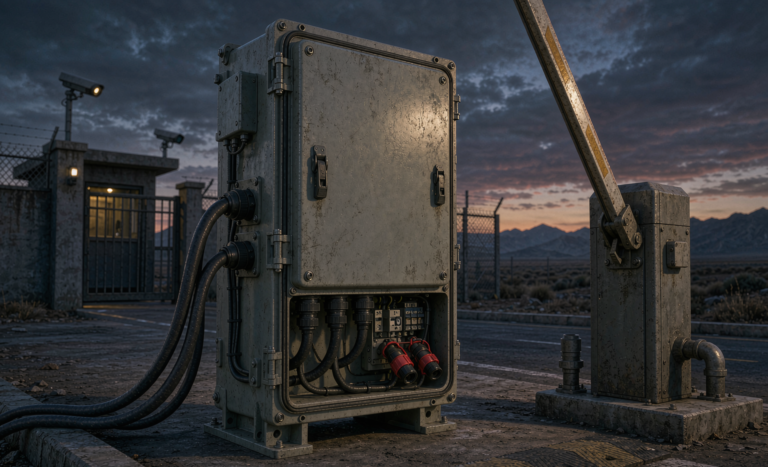
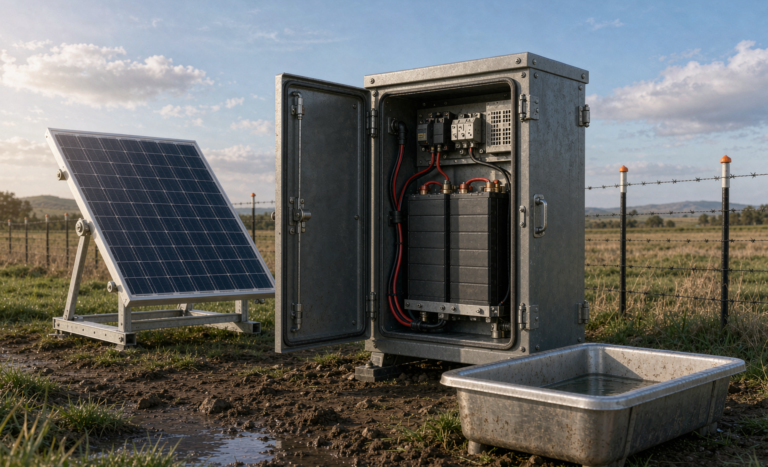
Battery Solution Design for Sensors
Sensors are everywhere now — buried in farmland soil, strapped to rotating turbine blades, bolted under railway tracks, and floating in cold-chain containers halfway across the ocean. In my fifteen years at Horizon Power designing battery solution packages for industrial and commercial buyers, I have learned one uncomfortable truth: the sensor itself is rarely the point of failure. The power source is. A wireless vibration sensor that dies after three months instead of three years quietly turns a “predictive maintenance” program into an expensive mystery. That is why battery solution design sensors work has become one of the fastest-growing requests we receive from B2B engineering teams, and why I want to walk you through exactly how we approach it.
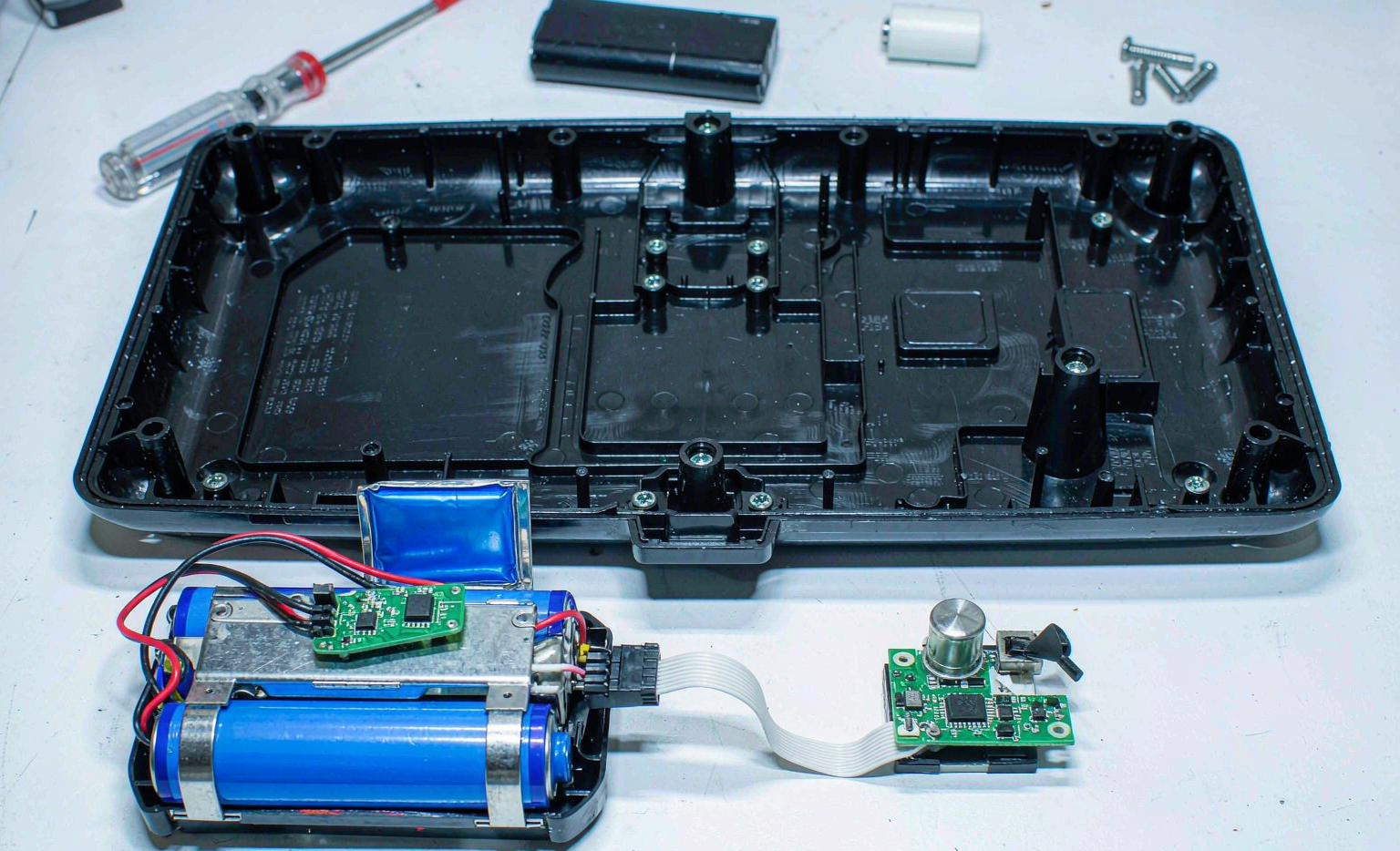
When a procurement manager tells me they need “a battery for our sensor,” the first thing I do is stop them and ask for the duty cycle. Average current draw, peak current, operating temperature window, target service life, and whether the unit will ever be serviced. Those five numbers decide 90% of the architecture. This article is the field guide I wish every buyer had before their first call with a cell vendor.
Why Sensor Power Is a Design Problem, Not a Component Problem
A phone or a drone burns energy in obvious, predictable bursts. A sensor node is the opposite: it sleeps for 99.9% of its life, then wakes, spikes current to transmit a LoRa or NB-IoT packet, and goes back to sleep. That sleep-to-spike ratio is brutal on the wrong chemistry. A standard lithium battery rated for steady discharge can collapse under a sharp pulse if its internal impedance is too high at low temperature. The fix is almost never “a bigger cell” — it is a better custom battery solution with the right chemistry, pulse tolerance, and often a small reservoir capacitor at the load.
I have seen teams spec a 2,000 mAh pack when a 600 mAh Li-SOCl2 cell with the correct pulse architecture would have delivered ten years. Oversizing wastes cost and, in sealed enclosures, adds thermal mass you do not want. The goal of good battery application solution engineering is the smallest pack that still hits the service-life target with margin.
Choosing the Right Chemistry for the Duty Cycle
There is no universal “sensor battery.” Here is the short version of how we triage at Horizon Power.
- Li-SOCl2 (lithium thionyl chloride): The king of low-draw, long-life static sensors — water meters, gas detectors, perimeter alarms. Typical capacity 1,200–19,000 mAh, self-discharge under 1% per year, and a 10–20 year shelf life. The catch is high internal impedance and poor pulse capability, so we pair it with a hybrid layer capacitor or a Li-MnO2 boost cell for transmit spikes.
- Li-MnO2 (lithium manganese dioxide): Better pulse response than Li-SOCl2, wide temperature range, common in tracking tags and medical sensors. Good middle ground when you need occasional bursts but still years of life.
- Li-ion / LiPo (lithium-ion polymer): The choice when average draw is higher — actively sampling environmental sensors, cameras, or edge-AI nodes. Rechargeable, energy-dense, but you must respect the 0–45°C charge window or the pack degrades fast.
- LiFePO4: Used in outdoor, thermally exposed sensor cabinets where safety and cycle life beat raw energy density. Stable, long-lived, and forgiving.
The decision matrix is always current profile first, then temperature, then life. A battery solution that ignores the pulse shape will fail in the field even when the math says it should not.
How We Size a Battery Pack for a Sensor Node
Let me give you the actual calculation we run. Suppose a municipal water-pressure sensor samples every 15 minutes, transmits a 2-second NB-IoT burst at 350 mA, and sleeps at 15 µA the rest of the time. Annual consumption looks like this:
- Sleep: 15 µA × (31,536,000 − 4,200) seconds ≈ 0.47 Ah per year.
- Transmit: 350 mA × 2 s × (4 bursts/hour × 8,760 hours) ≈ 0.61 Ah per year.
- Total ≈ 1.08 Ah/year, plus a 20% coulombic and temperature derate ≈ 1.3 Ah/year.
For a 10-year target that is roughly 13 Ah. A single Li-SOCl2 D-cell at 19,000 mAh covers it with margin, but its pulse impedance at −20°C would sag on the 350 mA burst — so we add a 0.47 F hybrid capacitor to absorb the spike. That is a custom battery solution, not an off-the-shelf cell, and it is the difference between a sensor that survives a cold winter and one that drops offline every January.
Thermal and Certification Reality for Industrial Sensors
Sensors live where people do not. A pack rated only at 25°C is useless for a node bolted to a Arctic pipeline or a desert solar array. We validate every battery application solution across the real operating band, and for shipped goods we certify to the standards buyers actually audit:
- UN38.3: Mandatory air-transport safety testing (altitude, thermal, vibration, shock, external short, impact, overcharge, forced discharge). Without it your sensors cannot legally fly.
- IEC 62133: The baseline safety standard for portable sealed secondary cells, expected by most European and Asian OEMs.
- IP and ingress pairing: We specify cell enclosures that match the sensor’s IP rating so condensation never reaches the terminals.
- RoHS / REACH: Documented for EU-bound industrial shipments.
I tell every new customer: a certification packet is not paperwork, it is what lets your product clear customs and pass your client’s incoming inspection. We build the dossier alongside the pack.
Integration Tips That Prevent Field Failures
Most sensor power problems are integration problems. Three patterns I flag in every review:
- Voltage window mismatch: A 3.0V Li-SOCl2 cell feeding a 3.3V radio needs a boost converter with its own quiescent current budget. Ignore the converter’s sleep draw and you halve the life.
- Cold pulse collapse: Add a capacitor reservoir sized to the transmit burst; do not rely on the cell alone below 0°C.
- Reverse charge from energy harvesting: If you add a solar or thermal trickle, the BMS must block reverse current or you will silently drain the primary cell.
These are the details a battery solution design sensors engagement exists to catch before mass production, not after a 5,000-unit recall.
When to Move From Standard Cells to a Custom Pack
If you are building fewer than 500 units a year, a well-chosen standard cell with a protection circuit is usually enough. Past that volume, or the moment your enclosure, temperature band, or life target exceeds what a catalog cell offers, a custom battery solution pays for itself. We have taken B2B clients from a fragile two-cell arrangement to a single molded pack that dropped their failure rate from 4% to under 0.3% in the first winter. The engagement is straightforward: we profile your load, model the chemistry, build prototypes, qualify them on your duty cycle, then hand you a certified, sourced pack.
Cost Versus Service Life: A Buyer’s Trade-off
Procurement almost always opens with price per cell, but for sensors the honest metric is cost per operating year. A primary Li-SOCl2 pack that costs three times a cheap alkaline arrangement but runs ten years is dramatically cheaper once you factor in a single truck-roll to replace a dead node in a remote substation. I build the total-cost-of-ownership table with every client: cell price, expected field life, replacement labor, and the risk cost of a missed reading. In nearly every industrial case we have modeled, the battery solution with the longest certified life wins on TCO even at a higher upfront unit cost. The right question is never “what is the cheapest cell” but “what is the cheapest decade of reliable data.”
Frequently Asked Questions
What is the best battery for a low-power IoT sensor?
For static, low-draw nodes (water, gas, temperature logging), lithium thionyl chloride (Li-SOCl2) delivers the longest life — often 10–20 years. If the sensor transmits frequent high-current bursts, lithium manganese dioxide or a Li-ion pack with a pulse reservoir is usually the better fit.
How do I make a sensor battery last 10 years?
Start from the real duty cycle, not the datasheet average. Minimize sleep current, add a capacitor to absorb transmit pulses, derate capacity by 20–30% for temperature, and certify the pack to UN38.3 and IEC 62133. A correct battery solution is sized to the worst-case month, not the lab at 25°C.
Can I use a rechargeable lithium battery in an outdoor sensor?
Yes, with caveats. Li-ion and LiFePO4 work well when you have solar or thermal harvesting and can keep charging inside the 0–45°C window. Below freezing, charging must be disabled by the BMS or the pack ages rapidly. For unsealed, unserviced nodes, a primary lithium cell is often safer and simpler.
Why does my sensor die every winter if the battery still reads half full?
Because cold raises the cell’s internal impedance, so a normal-voltage pack can no longer deliver the transmit pulse. The radio browns out and the node drops offline. The fix is a pulse-tolerant chemistry plus a reservoir capacitor — exactly the kind of detail a proper battery application solution review catches.
Do sensor batteries need special certifications?
If they ship by air or sell into regulated markets, yes. UN38.3 is required for transport, IEC 62133 for portable secondary cells, and RoHS/REACH for EU compliance. We deliver the full packet with every custom pack so your sensors clear inspection without delay.