Battery Solution Design for Vehicles
Over the last nine years as a senior lithium battery engineer at Horizon Power, I have designed vehicle battery systems for everything from compact delivery robots to 12-tonne airport tugs. The phrase battery solution design for vehicles sounds generic, yet the engineering reality is anything but. A vehicle is a moving, vibrating, thermally hostile environment where a custom battery solution is not a luxury—it is the difference between a product that ships and one that recalls. In this article I walk through how we turn a duty-cycle brief into a certified, field-proven battery solution that survives real roads, real fleets, and real warranties.
Why Vehicle Battery Systems Demand a Custom Approach
A lithium battery that works perfectly in a stationary home energy storage cabinet will fail inside a forklift within months. Vehicles impose simultaneous mechanical shock, continuous thermal swing, and deep daily depth-of-discharge (DoD) that stationary systems rarely see. When a client asks for a battery application solution for a new vehicle platform, the first thing I do is reject the idea of dropping in an off-the-shelf pack. Generic packs ignore the vehicle’s mass, acceleration profile, regen braking current, and underbody clearance—and those four variables decide whether cells live for 6 months or 6 years.
Our battery solution design for vehicles workflow therefore starts with telemetry, not with a catalogue number. We instrument a reference vehicle for two weeks, log current at 1 Hz, and only then pick cell format, topology, and cooling. That discipline is what separates a reliable battery pack from an expensive liability.
Core Cell Chemistries for Vehicle Applications
Two chemistries dominate our vehicle work: NMC (nickel-manganese-cobalt) and LFP (lithium iron phosphate). NMC 811 cells deliver 200–250 Wh/kg and 450–550 Wh/L, ideal where mass is mission-critical—passenger EVs and aerial platforms. LFP offers 155–170 Wh/kg but 3,000–6,000 cycles at 80% DoD and an ARC (accelerating rate calorimetry) onset above 250 °C, making it the default for commercial fleets where safety margin and cycle life outweigh raw energy density.
For cold-climate vehicles, we sometimes blend chemistries or add a low-temperature heating film that warms cells to 5 °C before a fast charge, keeping capacity retention above 90% at −20 °C. The choice is never ideological; it is a trade study balancing mass, cost per kWh, cycle life, and the thermal-runaway window we are willing to certify.
Mechanical and Thermal Architecture of a Vehicle Battery Pack
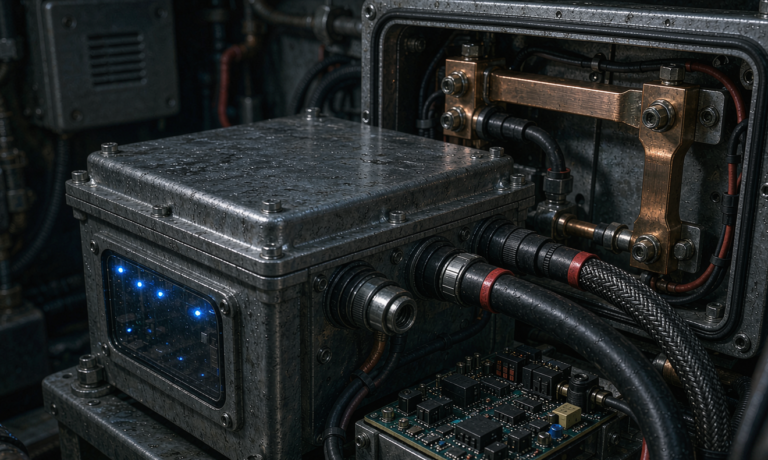
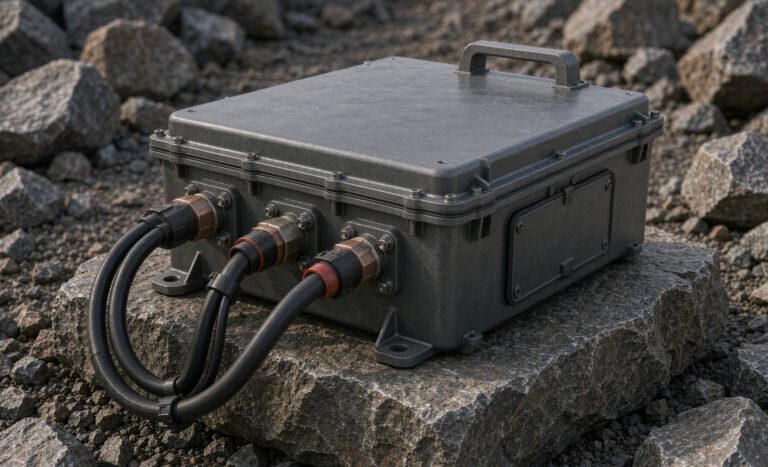
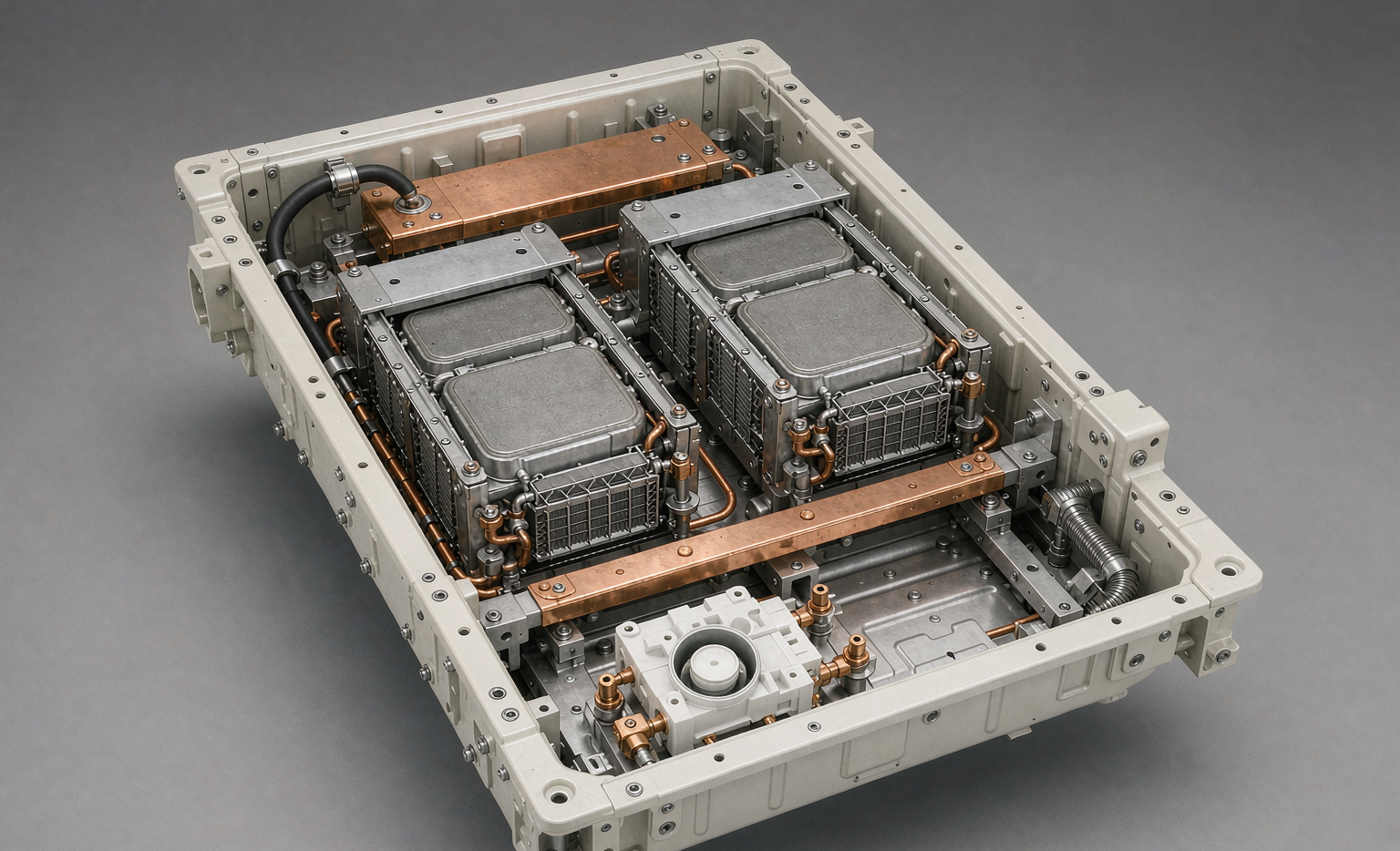
A battery pack for a vehicle is a structural component, not a loose assembly. We typically use 6061-T6 aluminium trays with laser-welded busbars rated for 2–5 C continuous discharge. Thermal management is the single biggest reliability driver: liquid-cooled plates hold cell-to-cell gradient below 5 °C during a 2 C charge; for cost-sensitive AGVs we use aluminium extrusion fins with forced air and accept a 10 °C gradient. Both approaches keep cells inside the 15–45 °C window where ageing is minimised.
Vibration isolation matters more than most spec sheets admit. We mount modules on silicone dampers tuned to the vehicle’s dominant 20–80 Hz road frequency, then verify with random-vibration testing to IEC 60068-2-64. A custom battery solution that survives the lab bench but not a pothole is not a solution at all.
Safety and Compliance Standards We Design Against
Every vehicle battery solution we ship is validated to a stack of standards that I treat as non-negotiable. UN 38.3 (T.1–T.8: altitude, thermal, vibration, shock, external short, impact, overcharge, forced discharge) is the transport baseline. IEC 62133-2 governs secondary cells; IEC 62619 covers industrial cells; UL 2580 is the North American EV battery safety standard. For road EVs we add ISO 6469-1/2/3 and, in the Chinese market, GB 38031-2020. Industrial trucks need EN 1175. FAA and EASA considerations enter the picture whenever the same cell format also feeds aerial platforms, because a drone lithium battery and a ground vehicle pack share cells but face different certification regimes.
Sizing and Energy Management for Real Duty Cycles
We never size from nameplate capacity. A delivery vehicle with 120 stops per day has a completely different load profile than a highway shuttle running constant speed. We model the microcycle using the 1 Hz telemetry and size the pack for a 20% state-of-charge reserve, so end-of-life capacity fade never strands the vehicle mid-route. The BMS enforces a 10–90% daily window for LFP and 5–95% for NMC, which alone adds roughly 30% to calendar life compared with full 0–100% cycling.
Regen handling is where many battery application solution designs fail quietly. A 15 kW motor can dump 40–60 A back into the pack during a single deceleration. Our BMS caps regen current dynamically and diverts excess to a bleed resistor when cell temperature is near the upper limit, protecting both cells and contacts.
Cost Engineering and Total Cost of Ownership
Specifying cells is easy; hitting a target cost-per-kWh over the pack’s full life is the hard part. We model total cost of ownership (TCO) rather than sticker price. An NMC pack at $138/kWh with 1,200 cycles yields a throughput cost around $0.115/kWh, while an LFP CTP (cell-to-pack) design at $126/kWh with 4,000 cycles drops that to roughly $0.031/kWh—a 70% reduction that changes the fleet’s unit economics. Cell-to-pack construction also lifts volume utilisation from 40–50% to 60–70%, so the custom battery solution is smaller for the same energy, which directly lowers vehicle mass and therefore energy consumption in a virtuous loop.
We share this TCO model with every client so the battery solution design for vehicles decision is made with finance, not just engineering, at the table. A second-life path matters too: once a vehicle pack reaches 80% SOH after a decade, it still serves a stationary battery application solution for another 3–5 years, recovering 15–25% of the original cell cost and keeping the programme’s carbon story credible.
Validation Testing Before a Design Ships
Before any custom battery solution reaches a vehicle, it passes a gauntlet. We run vibration per RTCA DO-160 Category 20 or IEC 60068-2-64 random profiles; thermal shock from −30 °C to +60 °C; a 500-cycle ageing block with capacity and DCIR (direct current internal resistance) checks every 50 cycles; and abuse tests—nail penetration and overcharge—on witness cells. The enclosure is verified to IP67, and the high-voltage bus is tested to 1 MΩ insulation at 500 VDC with a ground-fault trip at 30 mA within 300 ms.
Only when all of those pass do we approve a pilot build of 20 packs for fleet trial. This is slower than shipping from a catalogue, but it is why our field return rate sits below 1%.
Field Lessons From Vehicle Deployments
In one airport tug deployment, we discovered the original 8 mm busbar suffered micro-fretting after 90 days of constant vibration. The fix was a 12 mm copper busbar with torque-locking hardware and a redesigned clamp geometry—no cell change required. Another lesson: a drone battery development programme taught us that burst-discharge connectors rated for 15 C on the bench rarely survive 10,000 duty cycles at 5 C without gold-plated contact surfaces. We now specify those contacts across every vehicle platform.
The biggest surprise was thermal: a refuse-collection vehicle in the Gulf ran pack temperature 8 °C higher than our European model predicted, purely from ambient. We retrofitted a larger liquid-cooling circuit and recovered full cycle life. Duty cycle and geography, not the spec sheet, write the real design rules.
What is the difference between a drone battery and a vehicle battery pack?
A drone battery is optimised for maximum specific energy and burst discharge in a lightweight airframe, often rated 5–15 C, with minimal structure. A drone lithium battery and a ground vehicle pack share cell chemistry but diverge completely in packaging: vehicles need structural trays, thermal plates, IP-rated enclosures, and a functionally-safe BMS. The same lithium battery cell can serve both, but the battery pack design is an entirely different engineering problem.
How do you choose between NMC and LFP for vehicles?
If mass and range are the constraint—passenger EVs, aerial vehicles—NMC’s 200–250 Wh/kg wins. If cycle life, cost, and thermal safety dominate—forklifts, AGVs, buses—LFP’s 3,000–6,000 cycles and >250 °C ARC onset make it the better battery solution. For most commercial fleets we default to LFP unless range forces NMC.
What certifications does a vehicle battery solution require?
At minimum UN 38.3, IEC 62133-2, and IEC 62619. For road EVs add UL 2580, ISO 6469, and GB 38031 where applicable. Industrial vehicles often need EN 1175. We compile the full test dossier before mass production so the battery solution design for vehicles is defensible to any auditor.
How long should a vehicle battery pack last?
A well-designed custom battery solution delivers 8–10 years or 3,000–6,000 cycles at 80% DoD for LFP, and 1,000–2,000 cycles for NMC. We warranty to 80% state-of-health, validated by accelerated ageing rather than optimistic vendor curves.
Can one custom battery solution serve multiple vehicle types?
Partially. We design a modular battery application solution with common cells and BMS, then vary the tray, cooling, and enclosure per vehicle. This cuts certification cost while keeping each vehicle’s safety profile intact—the essence of efficient, repeatable battery solution design for vehicles.