Lithium Battery Deployment for Mobility Devices
Why lithium battery Deployment for Mobility Devices Is a Different Discipline
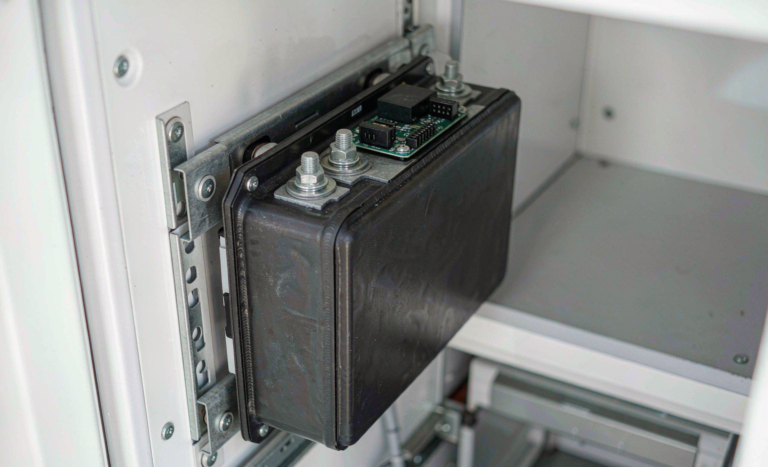
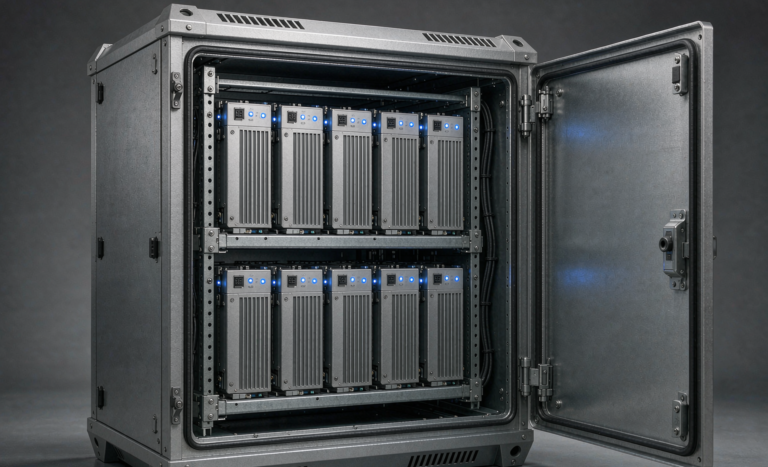
Over the past eleven years I have personally signed off on lithium battery packs for cargo drones, telecom backup cabinets, and home storage walls, but nothing keeps me up at night quite like lithium battery deployment for mobility devices. A wheelchair, a mobility scooter, or a powered exoskeleton carries a human being who often cannot simply step away from the product if something goes wrong. The battery sits centimetres from the user’s legs, sometimes inside a sealed chassis with almost no natural airflow, and it gets charged in a bedroom overnight. That combination — human proximity, thermally constrained enclosures, and unattended charging — changes how we engineer, qualify, and deploy every pack.
When a fleet operator or OEM asks me for a mobility device battery quotation, the first thing I explain is that this is not a drone pack with a different connector. The duty cycle, the certification expectations, the failure tolerance, and even the logistics of getting packs to the customer all differ. In this article I will walk through the decisions that matter most when deploying a lithium battery in mobility devices: chemistry selection, pack sizing, safety architecture, compliance, and the field practices that determine whether the fleet still performs well in year five.
Matching Cell Chemistry to the Mobility Duty Cycle
The first fork in the road is chemistry. For mobility devices, I see three realistic options:
- NMC (nickel manganese cobalt): the highest gravimetric energy density, typically 200–250 Wh/kg at cell level. This is my default for powered wheelchairs and travel scooters where every kilogram matters and the user needs airline-legal range from a compact pack. The trade-off is a lower thermal runaway onset temperature, which pushes more responsibility onto the BMS and the mechanical design.
- LFP (lithium iron phosphate): roughly 120–160 Wh/kg, but with exceptional cycle life — many cells are rated for 3,000–5,000 cycles at 80% depth of discharge — and a much higher thermal runaway onset, typically above 200 °C. For fleet scooters, shared mobility devices, and anything charged dozens of times a week, LFP is what I recommend, even though the pack ends up 20–30% heavier.
- Semi-solid and hybrid chemistries: emerging in premium mobility products where abuse tolerance and calendar life justify the cost. We deploy these selectively when a customer’s safety committee wants extra margin for puncture or crush scenarios.
A useful rule I use with procurement teams: if the device is charged more than 200 times per year, LFP’s cycle life will almost always win on total cost of ownership. If the device must be lifted into a car boot by the user twice a day, NMC’s energy density wins. There is no universal answer, and anyone who gives you one without asking about your duty cycle is selling cells, not a solution.
Sizing the Pack: Voltage, Capacity, and Range Targets
Mobility platforms cluster around a few standard voltages. Entry-level scooters and smaller wheelchairs run 24 V systems, mid-range devices 36 V, and performance wheelchairs plus larger scooters 48 V. I always push customers toward 36 V or 48 V when the mechanical budget allows, because resistive losses in harnesses and connectors scale with the square of current — a 48 V system drawing 15 A delivers the same power as a 24 V system drawing 30 A, with a quarter of the I²R heating in every copper run.
Capacity sizing starts from an honest range specification, not a marketing number. I ask the customer for three data points: the target range on flat ground at typical user weight, the worst-case route (hills, headwinds, carpeted interiors), and the reserve they want at end of charge. A practical example: a Class 3 mobility scooter drawing an average of 180 Wh per kilometre that must cover 40 km with a 15% reserve needs roughly 180 × 40 ÷ 0.85 ≈ 8.5 kWh usable. At 48 V that is around 175 Ah of usable capacity, which immediately tells us whether the chassis has room for a single large pack or whether we should design two smaller packs with a parallel bus — my usual preference, because it gives redundancy and lets the user charge one pack at a time in a small apartment.
One deployment detail that gets overlooked: derating. Cell capacity is specified at 25 °C, but mobility devices live outdoors. Below 0 °C, a lithium battery must not be charged at full current without preheating, because lithium plating on the anode permanently damages the cell and creates internal shorts. Our packs for outdoor mobility fleets therefore include a heating film and a BMS that blocks charge below 0 °C until the cells warm up. It adds a few dollars of cost and has saved our customers from an entire category of warranty claims.
BMS and Safety Architecture for Human-Adjacent Packs
The battery management system is where a mobility pack earns its certification. On devices that carry people, I specify a two-level protection architecture as a minimum:
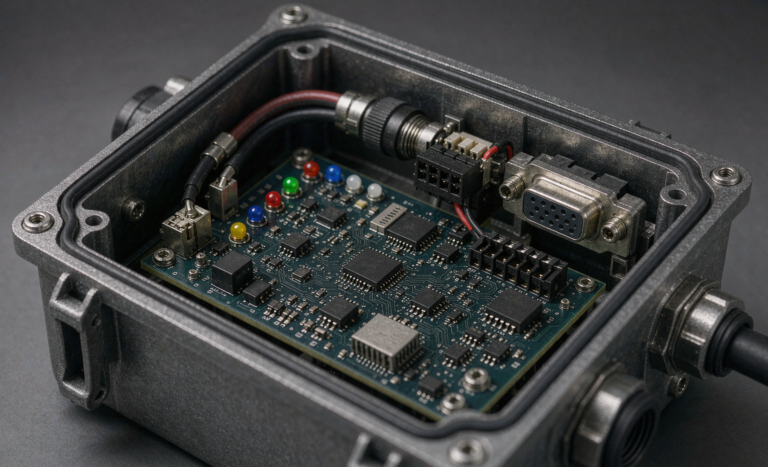
- Primary protection (BMS): per-cell voltage monitoring, overcharge and over-discharge cutoffs, over-current protection, short-circuit protection, and temperature sensing on at least three points across the pack — not just one thermistor glued to the hottest cell. The BMS should be built on a separate, isolated board from the fuel gauge, so a gauge firmware crash can never disable protection.
- Secondary protection: an independent, non-resettable device — typically a thermal fuse or a one-time cutoff — that opens the circuit if the BMS itself fails. Certification bodies under IEC 62133-2 and UL 2271 specifically look for this independence in single-fault analysis.
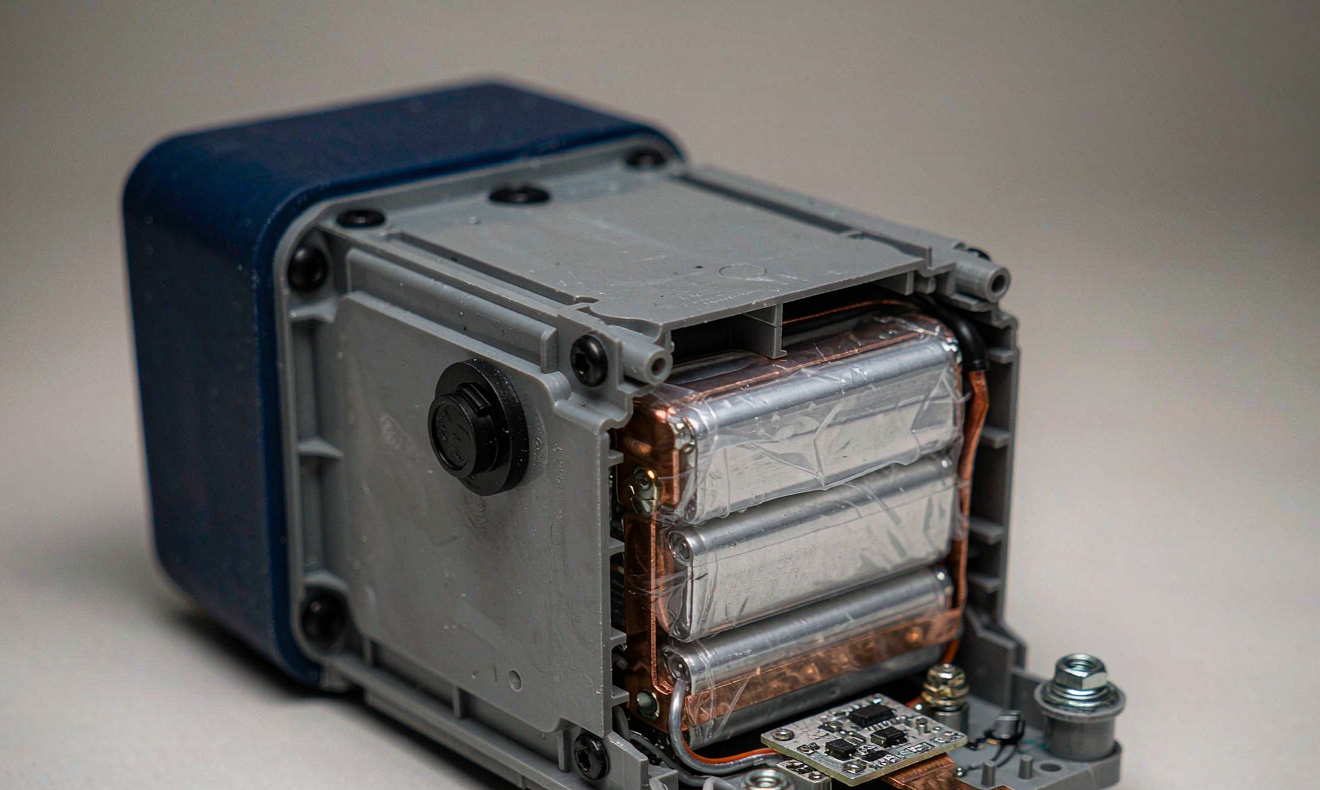
Mechanically, mobility packs deserve the same treatment as aviation packs. Cells should be compression-held or potted so that vibration from pavements and kerb crossings cannot work solder joints loose. We run random vibration profiles equivalent to ASTM D4169 Truck Dimensional Assurance profiles on our mobility designs, plus a 1.2 m drop test on the enclosed pack. Every wire that crosses a metal edge gets a grommet; every cell interconnect gets strain relief. These sound like small details until you open a field-return pack after two years of daily kerb impacts and see what fatigue actually does to a rigid nickel strip.
Charging safety deserves its own paragraph. Unattended overnight charging in a home is the single highest-risk scenario in this industry. I require our mobility packs to support charge termination validation: the BMS confirms with the charger that current has actually tapered to the termination threshold before declaring full, and it latches out if the charger keeps pushing current after full charge. Combined with a certified charger matched to the pack’s charge profile, this closes the most common failure loop we see in the field.
Regulatory Compliance: UN38.3, IEC 62133-2, and the Standards That Matter
Compliance is not paperwork theatre; it is the checklist that prevents the incidents that end product lines. For lithium battery deployment in mobility devices, the baseline stack looks like this:
- UN38.3 — mandatory for every lithium battery that ships anywhere, by any mode. Eight tests including altitude simulation, thermal cycling, vibration, shock, external short circuit, impact/crush, overcharge, and forced discharge. Note that shipping by air brings additional requirements: under the IATA Dangerous Goods Regulations, which implement ICAO Technical Instructions and align with FAA and EASA expectations for carriage, lithium-ion cells and batteries must be at a state of charge not exceeding 30% when tendered as Section II or IB air cargo. If your supplier cannot produce a current UN38.3 test summary from an accredited lab, walk away.
- IEC 62133-2 — the safety standard for portable sealed secondary lithium cells and batteries, and the reference most mobility certification schemes in Europe and Asia are built on. It covers the same family of abusive conditions as UN38.3 but from a product-safety angle.
- UL 2271 — “Batteries for Use in Light Electric Vehicle and Micro-Mobility Applications.” Increasingly demanded by North American fleet buyers and insurers for e-scooters and seated mobility products.
- EN 12184 and ANSI/RESNA WC-1/WC-2 — the wheelchair and scooter product standards, which include battery system requirements such as containment of electrolyte, secure mounting, and behaviour during a charging fault.
I also encourage customers to plan for the EU Battery Regulation (2023/1542) early. It introduces the battery passport, carbon footprint declarations, and removability expectations that will reshape how mobility OEMs design their battery interfaces. Designing a serviceable, tool-light pack now costs marginally more today and avoids a redesign in 2027.
Deployment Best Practices from the Field
Hardware is half the story. The other half is how the fleet or the end user actually lives with the pack. These are the practices I bake into every deployment plan:
- Partial-state-of-charge storage. Devices that sit unused for weeks should be stored at 40–60% state of charge. Full-charge storage at elevated temperature is the fastest way to destroy calendar life; a pack left at 100% in a summer conservatory can lose 15–20% of capacity in a single season.
- Fleet telematics with battery health flags. For B2B fleets, our packs log per-cell impedance trends and capacity estimates. When a cell group drifts more than 30 mV from its siblings at rest, the fleet manager gets a maintenance flag before the user ever notices reduced range. Catching one failing cell group early typically saves the whole pack.
- Charging infrastructure placement. Charging bays should be on non-combustible surfaces, away from egress routes, with smoke detection. This is now written into fire codes for shared micromobility in several cities, and I recommend the same discipline for healthcare facility charging rooms.
- Trained replacement workflow. Field battery swaps should be tool-light and polarised so that a mis-connected pack cannot damage the device. Every one of our mobility packs uses keyed connectors with mechanical coding.
One story that shaped my thinking: a home-care fleet operator in Northern Europe ran scooters that returned each night to heated garages at 18 °C, but the chargers were in an unheated annexe at 2 °C. Operators wheeled the cold scooters into the warm bay and charged immediately. Condensation formed on the connectors, and within a winter we saw a cluster of corrosion-related returns. The fix cost nothing — a policy that packs rest 30 minutes before charging, plus BMS interlock on connector humidity sensing in the next hardware revision. Deployment is where engineering meets habit, and the habit usually wins.
When a custom battery solution Beats an Off-the-Shelf Pack
Standard packs — the 36 V 10 Ah bricks sold by the thousand — are genuinely good products, and for a low-volume mobility brand they are the right call. But when the device shape is dictated by an industrial designer, when the duty cycle is unusual, or when the fleet demands telematics and predictive maintenance, a custom battery solution pays for itself. In our own engineering process, a custom pack typically starts from the load profile and the mechanical envelope, works backward to cell selection and thermal design, and then wraps the whole thing in the certification plan. The lead time is longer — 12 to 16 weeks from specification freeze to certified pilot build — but the fleet avoids the classic failure mode of forcing a generic pack into a bespoke chassis with cable bends it was never rated for.
The questions I ask before recommending custom: How many units per year? What is the service model — swap, repair, or replace? Does the platform roadmap require capacity upgrades? If a customer ships more than a few hundred units a year and cares about uptime data, custom almost always wins on lifecycle cost, and the certification dossier becomes an asset the OEM owns rather than rents.
Frequently Asked Questions
How long does a lithium battery last in a mobility device?
A well-engineered NMC pack delivers 500–800 full cycles (roughly 3–5 years of daily use) before reaching 80% capacity, while an LFP pack in the same duty cycle can exceed 2,000 cycles, or 5–8 years. Real-world longevity depends far more on charging habits and temperature exposure than on the calendar. Partial charging — stopping at 80–90% — can add years.
Can I take a mobility scooter lithium battery on a plane?
Yes, with conditions. Under IATA rules enforced by FAA and EASA member authorities, lithium-ion batteries up to 100 Wh generally ride in carry-on with airline approval, batteries between 100–160 Wh require airline approval, and anything above 160 Wh is cargo only. Most mobility scooter packs exceed 160 Wh, so travellers typically need a dry-cell or spill-proof-compliant option arranged with the airline well in advance — always confirm with the carrier before booking.
Is LFP better than NMC for wheelchairs and scooters?
Not universally. LFP offers longer cycle life and better thermal stability, which suits shared fleets and high-utilisation devices. NMC offers 30–50% more energy per kilogram, which suits personal devices where the user lifts the battery. The right answer follows the duty cycle, not the chemistry fashion of the month.
What certifications should I require from a battery supplier?
At minimum: UN38.3 test summary, IEC 62133-2 or UL 2271 report from an accredited lab, and CE/UKCA documentation for the pack as placed on market. For fleet deployments, ask for ISO 9001 certification of the factory and the cell COA (certificate of analysis) per lot. A supplier who resists sharing these documents is telling you something.
How should I store a mobility device battery over winter?
Charge or discharge to 40–60%, power the device off fully (not standby), and store it between 10 °C and 25 °C away from direct sunlight. Top the charge back up to that band every two to three months. Never store a pack flat at 0% — deep self-discharge below the BMS cutoff can permanently damage the cells.
Closing Thoughts from the Factory Floor
Lithium battery deployment for mobility devices rewards the teams who respect the user’s proximity to the chemistry. Choose the chemistry for the duty cycle, size the pack against honest range data, double up the protection, certify against the standards your market actually enforces, and then invest as much thought in charging habits and fleet telemetry as you did in the cells. Do those five things and the pack will outlive the warranty, the service contract, and probably the scooter’s plastic shrouds — which is exactly what a human-adjacent battery owes the person relying on it.