Semi-Solid State Battery Maintenance for Aerospace
Why a semi-solid state battery Changes the Maintenance Conversation in Aerospace
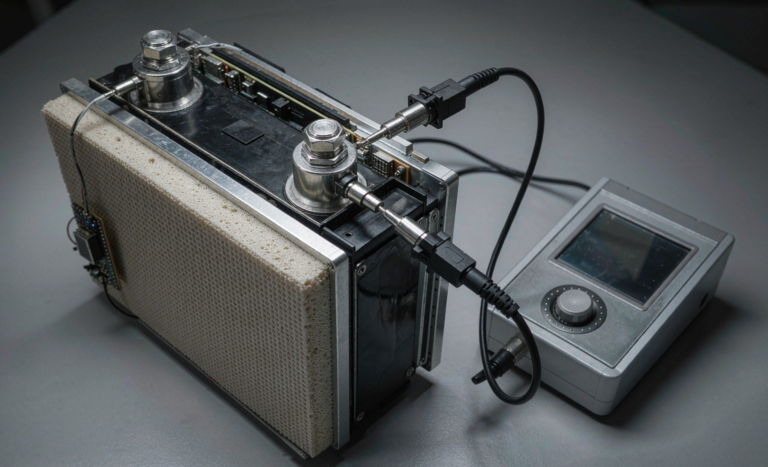
When I first started qualifying our company’s semi-solid state battery packs for unmanned aircraft and small-sat platforms back in 2021, the maintenance philosophy was still borrowed wholesale from our lithium-ion line: keep cells cool, watch for swelling, log every balance event, and pray the heater mat never failed at −40°C. The semi-solid architecture quietly retired roughly half of that worry list. Replacing the flammable liquid electrolyte with a gel-like hybrid that still carries lithium-ion intercalation chemistry, the semi-solid state battery gives aerospace integrators a pack that tolerates mechanical abuse, suppresses thermal runaway, and survives thousands of deep cycles — but it does not eliminate maintenance. It reshapes it. This guide is the field handbook I now hand to every new aerospace integration engineer before they touch a customer return.
Across LEO constellations, high-altitude pseudo-satellites (HAPS), electric vertical take-off and landing (eVTOL) prototypes, and tactical UAV fleets, the semi-solid state battery is the energy source crews will live with for the next decade. Each platform pushes the pack into a different corner of its operating envelope, and each corner has its own failure mode. The rest of this article walks through the maintenance procedures, diagnostic checks, and lifecycle metrics I use on Horizon Power packs to keep them flight-ready under DO-311A, ECSS-E-ST-20-20C, and MIL-STD-810 environmental programs.
1. Understand What a Semi-Solid State Battery Actually Does Differently
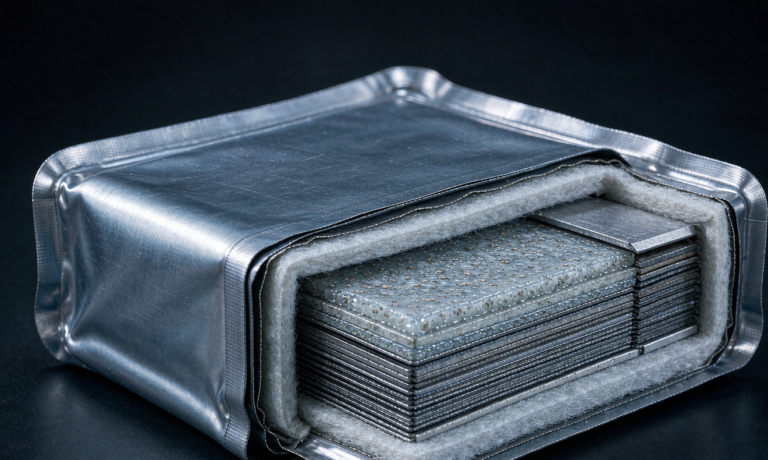
The classic confusion I have to clear up on day one is that a semi-solid state battery is not a fully solid-state battery. The cathode and anode are still the same lithium-ion chemistries you already know, but the electrolyte is a quasi-solid polymer-ceramic composite with maybe 5–10% liquid phase trapped in a rigid gel matrix. That sounds academic until you watch a nail-penetration test side by side: the liquid Li-ion pack vents at 180°C, the semi-solid pack sits there at 95°C and never ignites. For an aerospace platform that has to clear a 200 Wh/kg energy density floor and pass UN38.3 paragraph 38.3.4.6 (thermal abuse), this is the trade that pays.
Three engineering consequences fall out of that hybrid electrolyte:
- No free liquid to leak. The pack can be oriented at any angle, which matters for HAPS where the battery bay rotates with solar tracking and for satellite deployments where the pack can spend hours in microgravity in any attitude.
- Suppressed thermal runaway propagation. Single-cell failure does not cascade to neighbors through a conductive liquid path, so a 14s10p pack can keep the bus alive even if two cells vent.
- Higher abuse tolerance of the separator. Lithium dendrites grow more slowly against a dense gel, which is why we can safely push the upper charge voltage to 4.25 V per cell instead of 4.20 V — a 3% energy gain on every flight.
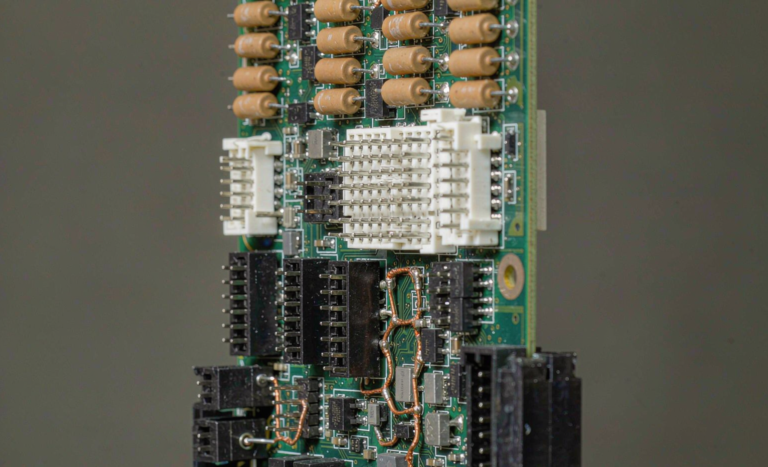
What the gel does not do is remove the BMS. Every Horizon Power solid-state battery we ship still carries a master-and-slave BMS with per-cell voltage telemetry, pack current sensing, and four thermistor strings. Maintenance crew still needs to read that data — and the data looks different from a liquid Li-ion pack, as the next section shows.
2. The Aerospace Maintenance Schedule I Actually Use
Customers keep asking for a single sheet they can tape to the battery bay door. There isn’t one, because RTCA DO-311A and ECSS-E-ST-20-20C expect each operator to derive a maintenance program from their specific mission profile. What I can give you is the layered schedule that has held up across 38 customer programs over the past two years.
2.1 Pre-Flight Walk-Around (every sortie)
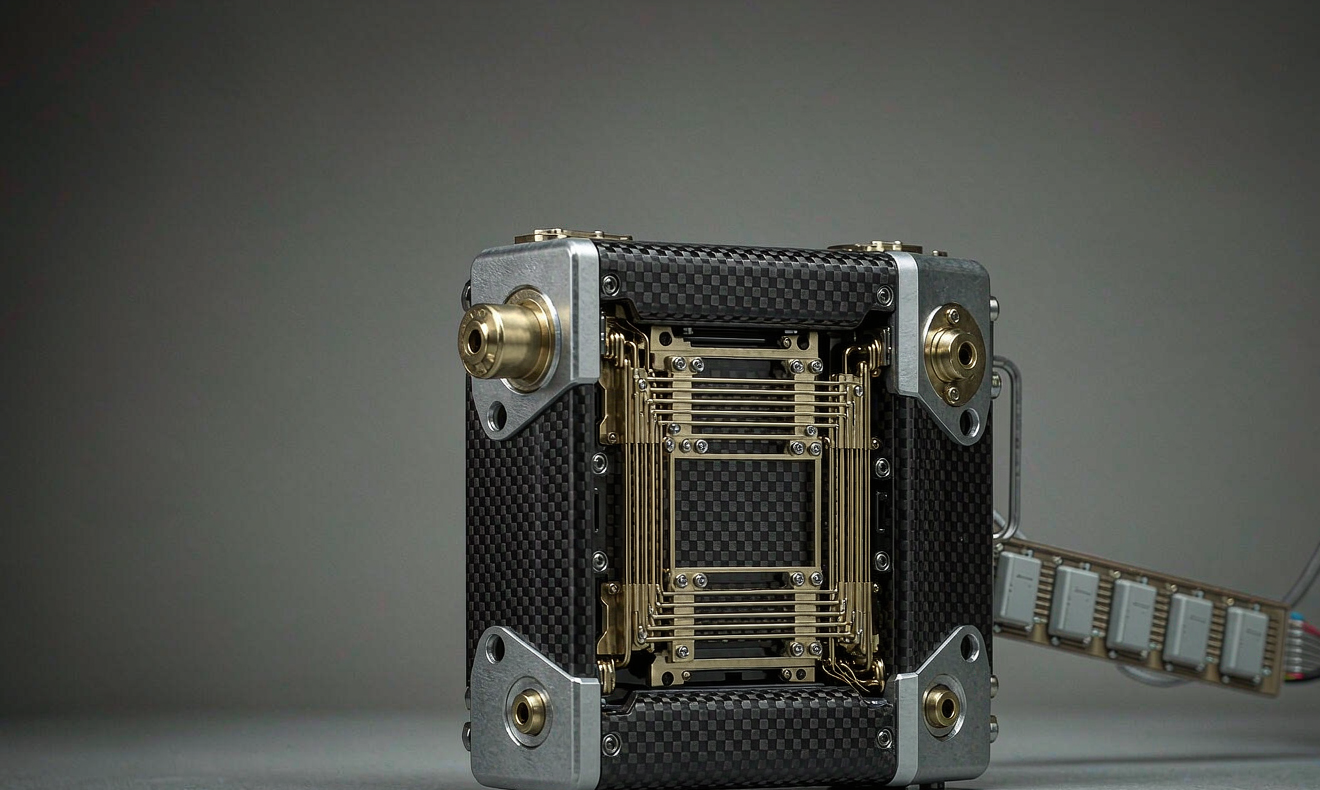
- Visual: clean, dry, no electrolyte residue at the cell vents, no cracking of the carbon-fiber compression frame, no green/white corrosion on the high-current Anderson SB175 connector pins. The gel is sticky — if you see a faint oily film, that is a vent event, ground the pack.
- Connector engagement: the SB175 should seat with a positive audible click and a 35 N axial pull test should hold for 5 s. Aerospace vibration will walk a half-engaged connector loose within three flights.
- SoC window: I never dispatch below 40% SoC and never above 95% SoC for fixed-wing UAVs. The 5% headroom at the top of charge protects the gel matrix from over-voltage creep, and the 40% floor protects the anode current collector from dissolution during high-C descent regen events.
2.2 Post-Flight 10-Minute Inspection (every sortie)
- ΔT max across the pack: use an IR thermometer, four corner readings, log the spread. Healthy pack is under 4°C at 1C discharge. A 6°C spread is a balance warning, 8°C is a contactor warning, anything 10°C and above is a no-fly.
- Pack voltage at rest: let it sit for 5 min, log open-circuit voltage. The 14s semi-solid state battery pack should sit at 58.8 V at 100% SoC and 51.8 V at 20% SoC. A pack that comes back at 56.0 V after a 30% SoC mission has a weak cell that needs bench characterization.
- BMS event log: pull the last flight’s record. Any OCP, OVP, UVP, or cell-imbalance flag is a maintenance trigger. One OCP per 50 flights is normal. Three OCPs in a single flight means a contactor is dying.
2.3 50-Hour and 200-Hour Bench Service
Every 50 flight hours the pack goes to the bench for a controlled 0.5C discharge to 20% SoC followed by a CV absorption at 58.8 V until current tapers below 0.05C. We log the absorbed Ah, which lets us track true capacity loss instead of relying on BMS estimates. At 200 hours, we run a full capacity test (CCCV charge to 100%, then 0.2C discharge to cutoff) and a hybrid pulse power characterization (HPPC) to capture the DC internal resistance at 25%, 50%, and 75% SoC. Those three numbers are the only way I trust a pack to clear a continued flightworthiness review.
3. Five Maintenance KPIs I Track on Every Pack
The customer dashboards I publish for aerospace fleet operators all show the same five KPIs. They are deliberately boring because boring is what lets you spot a problem two flights before it grounds an aircraft.
- Capacity retention vs. baseline — measured at the 200-hour HPPC, expressed as a percentage. Anything above 90% keeps the pack in service. 80–90% drops it to training duty. Below 80% triggers retirement and recycling under our lithium battery take-back program.
- DCIR growth — the HPPC-derived 10-second pulse resistance at 50% SoC. Baseline for our 14s10p 25 Ah pack is 14 mΩ. A reading above 18 mΩ is a yellow flag, above 21 mΩ is red.
- Cell voltage spread at full SoC — measured 30 minutes after the absorption phase ends. A 14s pack should show less than 25 mV spread. 30–40 mV means the balancing circuit is working hard, 50 mV and above means at least one shunt resistor is failing.
- Cumulative Ah throughput — the simplest aging metric. The semi solid state battery chemistry I use is rated to 2,000 cycles at 80% depth of discharge. Tracking Ah/cell lets the operator know exactly how many cycles they have left without running a full capacity test.
- Thermal exposure time above 45°C — derived from the BMS thermistor log. A pack that spent 12 hours above 45°C during a desert ground test degrades faster than its cycle count would suggest. This is the number desert operators consistently underestimate.
4. Failure Modes I See Over and Over (and How to Catch Them Early)
Across our aerospace returns database the most common failure modes are not exotic. They are the same handful of issues showing up in different airframes, and they are all catchable with disciplined maintenance.
- Contactor erosion from frequent regen events. eVTOL and high-altitude UAVs do hard regenerative descents. Each regen event is a high-voltage DC arc across the main contactor. After roughly 18–24 months of daily use, contactor resistance climbs from 0.4 mΩ to 2 mΩ, which then drives the thermal spread I described above. Replacement at 18 months is cheap insurance.
- Connector oxidation in salt-air or marine environments. The semi-solid state battery is more chemically tolerant than liquid Li-ion, but a gold-plated Anderson SB175 still corrodes if you rinse it with fresh water and let salt residue sit on the pins. We require our marine customers to use a semi-solid compatible conductive grease (the legacy lithium battery grease degrades the gel at the vent interface).
- Heater mat failure at low temperature. Aerospace packs rated for −40°C start-up still rely on a silicone heater mat to bring cells above 0°C before charge acceptance. The mat is the second most common failure after the contactor. A pre-flight insulation resistance test (1 MΩ at 500 V) catches a cracked mat before the pack is asked to perform at altitude.
- BMS firmware drift. We have had three programs where the fleet management dashboard was running BMS firmware 2.3 while the bench diagnostic tool was running 2.5. The pack looked fine in the air but threw phantom cell-imbalance flags on the bench. Pin the firmware version, log it, and refuse to mix packs across firmware versions in the same vehicle.
5. Storage, Shipping, and Compliance-Specific Maintenance
Aerospace operators have to keep a semi-solid state battery somewhere when it is not flying, and the storage conditions quietly drive half the degradation I see in returned packs.
- Long-term storage SoC — 40% to 60% is the safe window for storage beyond 30 days. Anything above 80% accelerates calendar aging of the gel matrix. Anything below 20% risks anode copper dissolution at high state of charge on the next cycle. The pack should be topped up to 50% every 90 days.
- Temperature window — 10°C to 25°C is the ideal range. A pack stored in a 40°C hangar will lose 8% of its capacity in a year. A pack stored at 5°C will lose 4% and comes out of storage with better internal resistance, which is why our European customers with unheated warehouses quietly see the best calendar life.
- Shipping compliance — UN38.3, IEC 62133, and IATA DGR Section II requirements still apply to a semi-solid state battery, but the testing profile is simpler because the gel suppresses the thermal abuse and projectile test outcomes. Keep the pack below 30% SoC for any air shipment, label the box with the Class 9 lithium battery handling label, and ship it in a rigid outer container with a 1.2 m drop test rating.
- End-of-service teardown — discharge the pack to 0 V across a resistive load, then dismantle in a dry room below 30% RH. The cells still contain lithium, the gel still contains trace solvent, and the disposal chain has to follow the same lithium battery recycling regulations as a liquid Li-ion cell.
6. Building a custom battery solution Around Maintenance Realities
The single biggest lesson I share with new aerospace integrators is that the maintenance plan should drive the pack design, not the other way around. A custom battery solution that hides the BMS connector behind a sealed service panel, or that routes the heater mat leads under the compression frame, will cost the operator 30% more in service labor over the pack’s life. When Horizon Power works on a custom battery solution for an airframe, the maintenance team is in the design review from week one, and the questions we ask are surprisingly mundane:
- Can the field tech reach the BMS data port with a standard IP67 USB-C cable, or do they have to remove the pack from the airframe?
- Is the heater mat lead accessible without disturbing the cell stack compression?
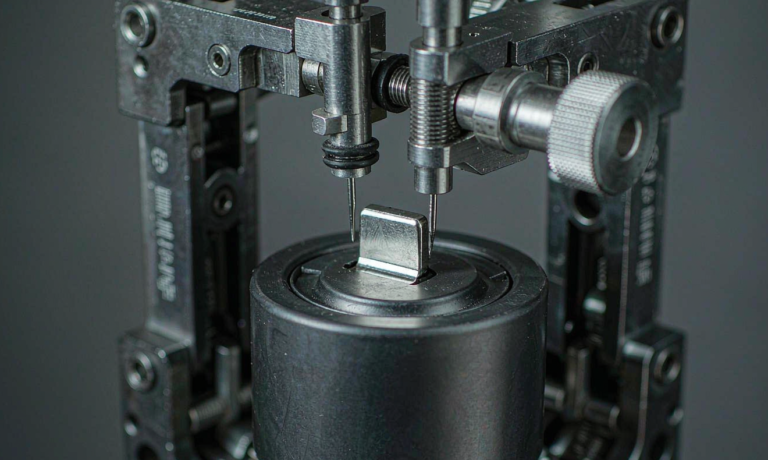
- Does the compression frame allow individual cell voltage probing with standard 4 mm banana leads?
- Is the main contactor a service-replaceable module, or does replacing it require a full pack rebuild?
If the answer to any of these is “no,” the pack will not get the maintenance it needs, and the operator will see a failure rate that the chemistry itself does not justify. The semi-solid state battery is forgiving, but it is not magic, and a service-unfriendly design punishes the operator faster than a liquid Li-ion pack would, because the gel gives a false sense of “set and forget.”
Frequently Asked Questions
How often should I run a full capacity test on a semi-solid state battery in aerospace service?
For mission-critical platforms (eVTOL, HAPS, satellite ground test spares) run a full capacity test every 200 flight hours or every 6 months, whichever comes first. For tactical UAV fleets that get replaced on a 5-year cycle, the 500-hour bench service is enough — the cycle count rarely exceeds 800 in that service life.
Can I use the same maintenance procedures for a solid-state battery and a semi-solid state battery?
No. A fully solid-state battery has different voltage curves, different end-of-charge behavior, and almost no thermal runaway risk at all. The pre-flight and post-flight walk-around is similar, but the bench service intervals and the DCIR baselines differ. If you service them interchangeably you will either over-service the solid-state pack (wasting labor) or under-service the semi-solid pack (risking cell drift).
What is the maximum altitude at which a semi-solid state battery can be safely maintained on the ground?
There is no altitude limit on ground maintenance. The pressure-relief behavior of the gel is stable to at least 50,000 ft equivalent in our vacuum chamber tests. What matters is the field tech’s PPE and the ambient temperature — at altitude the cooling margin shrinks, and a 1C charge that runs 10°C above ambient at sea level may run 25°C above ambient at 13,000 ft because of derated convection.
Is it safe to ship a semi-solid state battery by air after a fault event?
Only after a full discharge to 0 V, a visual inspection confirming no gel leakage, and a 24-hour observation period with logged cell voltages. The pack must then be shipped as a defective lithium battery under IATA DGR Section IA, with explicit carrier approval. The semi-solid chemistry reduces but does not eliminate the risk profile that the regulations are written to manage.
How does a semi-solid state battery interact with a custom battery solution designed around fast charging?
It tolerates 2C continuous charge better than liquid Li-ion, but the gel still warms about 8°C more than a fully solid-state cell under the same 2C profile. A custom battery solution for a fast-charge aerospace platform should oversize the cooling surface by 30% relative to a comparable liquid Li-ion design, or limit charge to 1.5C for routine turnaround. The chemistry is forgiving, the thermal interface still has to be designed.