Lithium Battery Reliability for Solar Kits: An Engineer’s
I have spent more than a decade specifying and testing lithium battery packs for off-grid and portable power products, and if there is one lesson the field keeps teaching me, it is this: a solar kit is only as reliable as the lithium battery inside it. Panels are forgiving — they degrade slowly and predictably. Charge controllers either work or they do not. The battery, however, sits at the intersection of every engineering discipline in the product: electrochemistry, thermal management, connector reliability, firmware logic and user behavior. When a solar kit fails in year two or three, my post-mortem almost always traces back to a battery decision made on a spreadsheet long before the first unit shipped.
In this guide I want to walk through lithium battery reliability for solar kits the way I approach it on the factory floor and in field returns: chemistry selection, sizing and state-of-charge windows, charge-profile integration, thermal design, certification gates, and the failure modes I actually see coming back in RMA bins. Whether you are sourcing a 12V lithium battery for a portable solar generator or engineering a fixed off-grid installation, the same physics applies.
Why Battery Reliability Defines a Solar Kit’s Real Lifespan
Marketing departments like to quote panel warranties — 25 years on glass, easy. But the component that determines when a customer’s kit “dies” is nearly always the storage battery. A lead-acid battery in a cycling solar application typically delivers 300–500 full cycles before capacity falls below 80%, which translates to 1.5–2 years of daily use. A well-engineered LFP (lithium iron phosphate) pack routinely achieves 3,000–6,000 cycles at 80% depth of discharge, pushing real service life to 8–12 years. That is not a marginal improvement; it changes the entire value proposition of the product.
Reliability, though, is more than cycle life on a datasheet. In my failure analysis work I separate three lifetimes: cycle life (how many charge-discharge cycles the chemistry tolerates), calendar life (how fast the cell ages even while sitting, dominated by temperature and state of charge), and interface life (connectors, BMS solder joints, terminal torque, cable strain relief). A pack can have spectacular cycle life and still fail in year one because an Anderson connector was crimped with the wrong tool, or because the BMS was placed directly above a hot FET bank. Solar kits live outdoors, get transported, get dropped, and get charged in 40°C heat — the design has to survive all of it, not just the lab cycling schedule.
Chemistry Selection: Why LFP Wins for Solar Kits
The first and highest-leverage decision is cell chemistry. For solar storage the practical contest is between LFP and NCM (nickel-cobalt-manganese, often written as an NMC battery in older literature). Both are lithium-ion chemistries; they differ in what they trade away.
- LFP (LiFePO4): nominal 3.2V per cell, thermal runaway onset above roughly 270°C, flat discharge curve, excellent calendar stability at high state of charge. Cycle life at 25°C and 0.5C is typically 4,000–6,000 cycles to 80% capacity for quality prismatic or cylindrical cells. Cobalt-free, which simplifies sourcing ethics and cost stability.
- NCM: nominal 3.6–3.7V, higher gravimetric energy density (180–250 Wh/kg vs 120–170 Wh/kg for LFP), better performance in cold charge acceptance, but thermal runaway onset near 200–210°C and noticeably faster calendar fade when held at 100% state of charge in heat — precisely the condition a solar kit experiences every sunny afternoon.
For a solar kit, I specify LFP almost without exception. The exception worth noting: ultralight portable kits where every gram matters and the duty cycle is shallow may justify NCM, but then the BMS and enclosure design must work proportionally harder. As a lithium battery manufacturer, we see the difference most clearly in warranty data — LFP-based solar kits show field failure rates a fraction of comparable NCM builds, primarily because LFP tolerates the “float at full charge in the sun” lifestyle that solar products impose. When customers ask why an LFP battery costs 15–25% more than an equivalent NCM pack, I show them the 10-year total cost curve: at daily cycling, LFP works out to roughly one-third the cost per delivered kWh over its life.
Sizing and the State-of-Charge Window
Undersizing is the most common root cause of early failure I see in returned solar kits. A pack that is cycled from 100% to 0% every single day ages at the maximum rate the chemistry allows. Two sizing rules protect it:
First, size for 1.3–1.5× the daily energy need. If the load budget is 500 Wh per day, a 700–750 Wh usable pack lets the battery cycle through a shallower window — say 90% to 40% instead of 100% to 10%. Cycle life roughly doubles for every 20–30% reduction in depth of discharge. On a datasheet specified at 100% DoD, 80% DoD operation can extend cycles 1.5–2×.
Second, engineer the operating window, not just the capacity. I ask integrators to configure the low-voltage cutoff so the pack rests around 15–20% state of charge rather than deep-discharging to the BMS limit, and to cap solar charge at 95–100% only when a full balancing session is needed. Calendar aging is exponentially sensitive to state of charge and temperature: an LFP cell held at 100% SoC at 35°C can lose 3–4% capacity per year, while the same cell cycling gently around 50% at 25°C loses well under 1%. For seasonal cabins or emergency kits that sit mostly idle, I recommend storage at 40–60% SoC — a habit that alone can add years to shelf life.
Charge Profile Integration with the Solar Charge Controller
The charge controller is where battery design meets system design, and mismatch here quietly kills packs. An MPPT controller configured for “generic 12V lithium” may push absorption voltage too high (cooking the cells above 3.65V/cell), too low (chronic undercharge and sulfate-like capacity stratification in LFP), or skip the balancing window entirely.
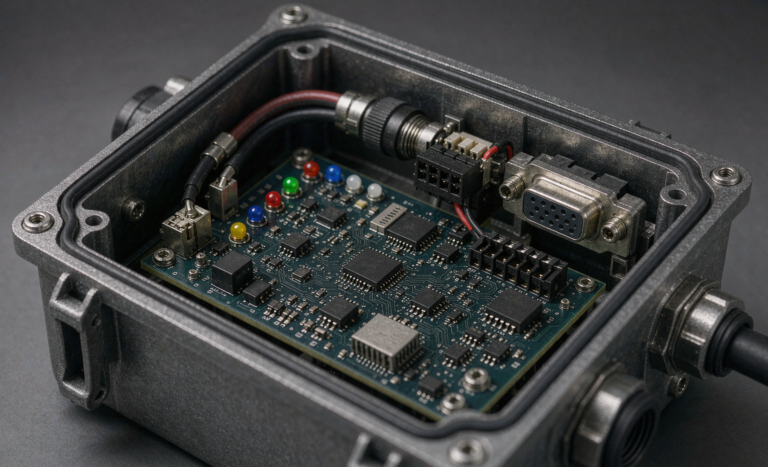
For a 4S 12V lithium battery, the profile I validate on every new pack design is: bulk/constant-current charge at 0.2–0.5C (a 100Ah pack should not see more than about 50A from the controller), absorption at 14.2–14.4V held until charge current tapers below 0.05C, then — critically — float disabled or set to 13.5–13.6V maximum. Unlike lead-acid, LFP does not want to be held at elevated voltage indefinitely. And below 0°C, the BMS must block charging outright or the controller must have a temperature-compensated profile, because lithium plating during sub-zero charging is permanent and dangerous. IEC 62133-2 requires this charge-temperature interlock for certified packs; a solar kit battery without it fails our incoming audit regardless of whose logo is on the case.
Thermal Design and Installation Practice
Heat is the silent tax on every lithium battery pack. As a working rule, every sustained 10°C above 25–30°C roughly halves calendar life. In solar kit installations I routinely measure enclosure interiors 15–20°C above ambient on a sunny afternoon — a black polycarbonate case in direct sun is an oven. Three countermeasures earn their cost every time:
- Shade and orientation: mount the battery enclosure on the shaded side of the structure, never behind the panel it serves. This single decision is free and worth more than any heat sink.
- Thermal mass and ventilation: an aluminum chassis plate spreading cell heat, plus vented enclosure geometry that prevents hot spots at the BMS. Avoid sealed foam-potted packs for daily-cycling solar duty; potting is fine for vibration, terrible for heat.
- Cold planning: self-heating pads (drawn from the pack itself, enabled below 2–5°C) or simply accepting reduced charge current in winter. Discharge in cold is far more forgiving than charge.
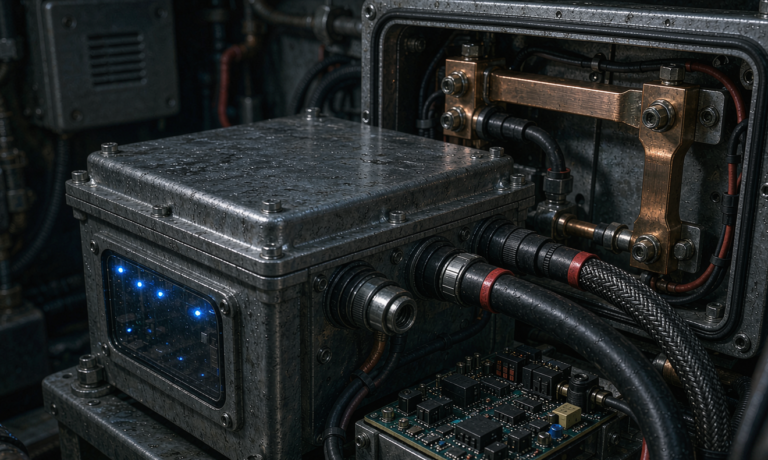
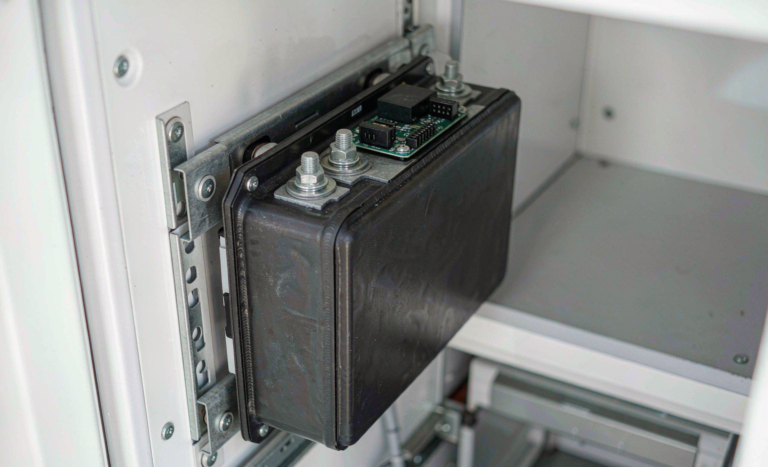
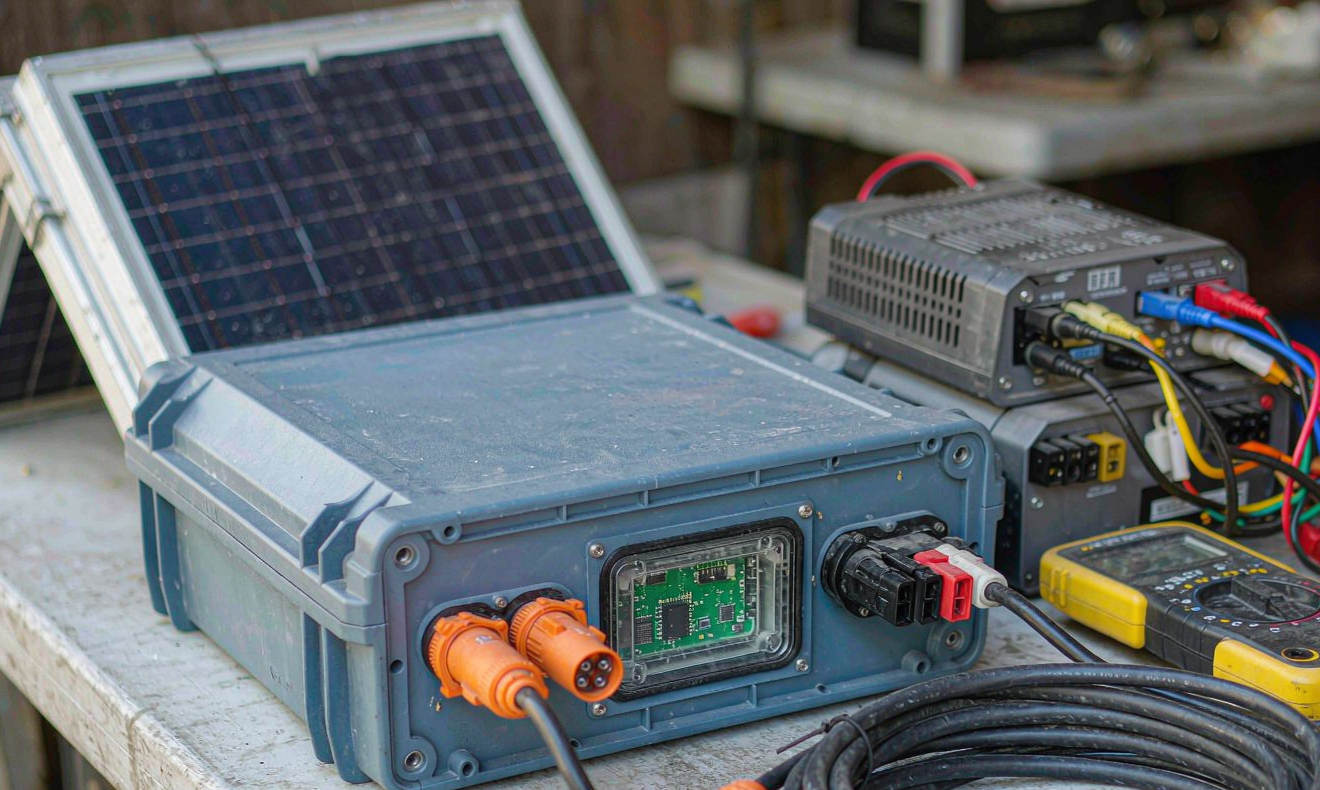
Installation practice matters as much as thermal design. Torque every terminal to spec (for M6 battery studs, 8–10 N·m is my standard) and mark it with torque stripe — I have traced a surprising share of “dead battery” field calls to loose connections that produced heat, melted insulation, and tripped BMS protection. Use properly crimped MC4 and Anderson connectors, never solder-only joints on high-current solar leads, and provide strain relief so cable flex never loads the terminal directly.
Certification and Quality Gates Before You Ship
Reliability is designed in, but it is verified through standards and incoming inspection. For any lithium ion battery crossing borders inside a solar kit, the minimum stack I require is:
- UN 38.3 — mandatory transport testing (altitude, thermal, vibration, shock, external short, impact, overcharge, forced discharge). No lithium battery ships by air or sea without it; ask for the full test summary, not just a certificate cover page.
- IEC 62133-2 — the baseline safety standard for portable lithium cells and packs, including the charge-temperature interlocks mentioned above.
- IEC 62619 — safety for industrial/stationary applications, increasingly demanded by commercial solar kit buyers in the EU and Australia.
- UL 1973 — the reference standard for light electric rail and stationary storage batteries in North America; paired with UL 9540A thermal-runaway propagation data when kits integrate into larger systems.
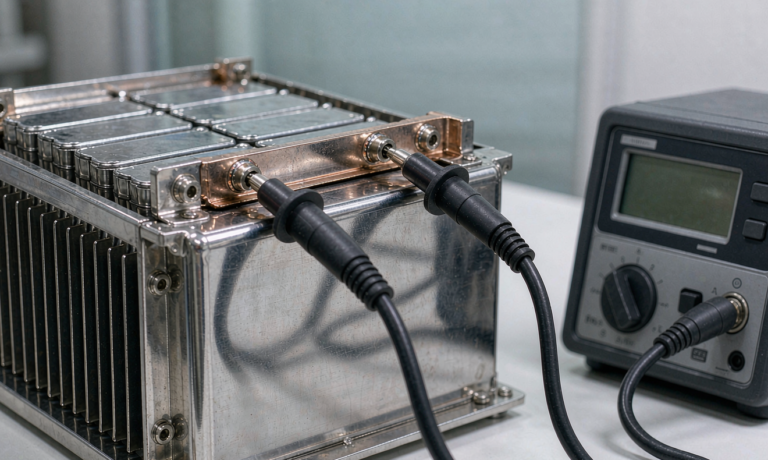
On top of certifications, our factory gates every production lot with three checks I consider non-negotiable: 100% cell grading and capacity matching (cells in a parallel group should match within 1–2% capacity and ≤5 mV open-circuit voltage), an end-of-line functional test that cycles the BMS through every protection (overcharge, over-discharge, over-current, short circuit, charge-temperature lockout), and a DCIR measurement at 0.5C for 10 seconds, baseline-recorded so future warranty returns can be compared against birth data. A pack that skips these steps may test fine on day one and still be a warranty liability in month fourteen.
Field Failure Modes and a Practical Maintenance Checklist
After years of teardown analysis, here is what actually fails in solar kit batteries, in rough order of frequency: connection corrosion and loosening, BMS component failure (often the charge MOSFET, stressed by undersized controllers), cell capacity divergence (one weak cell dragging the series string), water ingress at gland entries, and — rarely, when the above are done right — genuine cell wear. Notice that only the last item is “the battery wore out.” The rest are integration and quality problems, which is exactly why I tell product managers that lithium battery reliability for solar kits is a systems discipline, not a cell selection exercise.
For end users and fleet operators, a twice-yearly checklist catches most issues early: inspect terminals for corrosion and re-verify torque; check the BMS app or status LEDs for cell-voltage imbalance (more than 50 mV spread at rest on a 4S pack warrants a balancing session); confirm charge voltage at the battery terminals matches the controller setting; look for case swelling, discoloration, or melted connector bodies; and log full-charge capacity annually if the system supports it. Five minutes, twice a year — that is the difference between a battery that retires gracefully at year ten and one that fails silently at year three.
Frequently Asked Questions
How long does a lithium battery last in a solar kit?
A quality LFP battery cycled daily in a temperate climate typically delivers 3,000–6,000 cycles to 80% capacity — roughly 8–12 years of daily use. NCM packs in the same duty usually manage 1,000–2,000 cycles, or 3–5 years. Calendar aging from heat and holding high state of charge can shorten either figure, which is why installation environment matters as much as the cells themselves.
Is LFP really better than NCM for solar storage?
For solar kits, yes in most cases. LFP offers 2–3× the cycle life, a thermal runaway onset around 270°C versus roughly 210°C for NCM, and far better tolerance of sitting at full charge in warm conditions — exactly how solar batteries live. NCM retains an edge in energy density for weight-critical portable products, but for anything that charges from the sun every day, the LFP battery is the engineering default.
Can I charge a lithium solar battery below freezing?
Not safely at normal current. Charging below 0°C causes lithium plating on the anode — permanent capacity loss and, in severe cases, internal short-circuit risk. Use a pack whose BMS blocks sub-zero charging or a controller with a temperature-gated profile; self-heating packs solve this for winter installations. Discharging in cold is acceptable, with reduced available capacity.
What size battery do I need for my solar kit?
Budget daily load in watt-hours, add 20–30% for inverter losses and aging headroom, then multiply by 1.3–1.5 so the pack cycles in a shallow window. For example, a cabin drawing 500 Wh per day is well served by a 700–900 Wh usable 12V lithium battery — about 55–70 Ah nominal. If loads run through an inverter all day, add its standby draw to the daily budget.
Why does my solar kit battery die faster in summer?
Heat accelerates both calendar and cycle aging: every sustained 10°C above 25–30°C roughly halves calendar life, and a battery enclosure in direct sun can run 15–20°C above ambient. Move the pack into shade, ventilate the enclosure, and avoid storing the pack at 100% charge during idle hot periods. Those three changes routinely recover several years of service life.
Do I need a special charge controller for a lithium battery?
You need one with a user-configurable lithium profile: bulk current ≤0.5C, absorption at 14.2–14.4V for a 4S LFP pack, low or disabled float (13.5–13.6V max), and a temperature sensor input. A controller stuck in lead-acid mode will float the pack at elevated voltage all afternoon, which quietly consumes cycle life. Configure it once, verify the voltage at the battery terminals, and re-check after firmware updates.