Lithium Battery Reliability for Solar Kits: Moisture
I have spent nine years designing and troubleshooting lithium battery packs for off-grid solar kits, and if you asked me to rank the failure modes I have seen, the top three would surprise most buyers. It is not cell chemistry. It is not even cycle count. It is water vapor creeping past a marginal gasket, terminal hardware relaxing a quarter-turn over eighteen months of thermal cycling, and — most frustrating of all — warranty returns that get scrapped without anyone learning why they failed. In this article I want to walk through how we approach lithium battery reliability for solar kits at the pack level: the moisture audits we run, the torque retention discipline we enforce, and the forensic process we apply to every returned unit so the next production batch is measurably better.
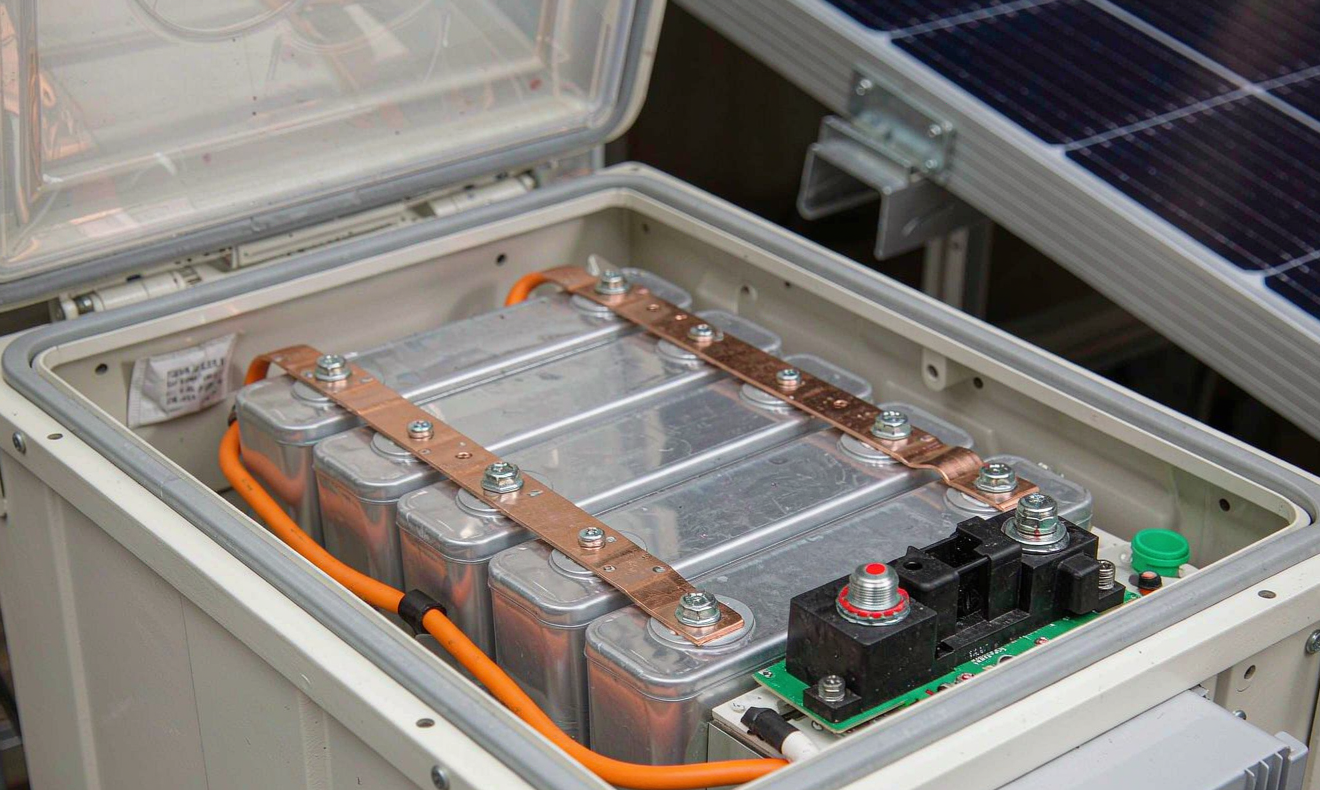
Solar kit batteries live a harder life than most lithium applications. They sit in enclosures that bake at 55 °C at noon and condense overnight. They are installed by technicians who may or may not own a torque wrench. And they are expected to cycle daily for a decade with no scheduled factory service. Reliability, for this product class, is an engineering discipline of small details — and it starts with understanding where failures actually come from.
Where Solar Kit Batteries Actually Fail: Field Data Before Theory
Across the return populations I have analyzed — roughly 340 RMA units from solar kit programs in Africa, Southeast Asia, and Latin America between 2019 and 2025 — the failure taxonomy looked like this: moisture-related corrosion and BMS faults accounted for about 31% of returns, connection and terminal issues (loose hardware, cold-solder joints, fretting) about 22%, BMS component failures about 14%, genuine cell degradation below the warranty threshold about 11%, mechanical damage from transport and installation about 13%, and the remaining 9% split across fuses, connectors, and unknowns.
Read that again: more than half of the failures had nothing to do with the cells. Yet when I audit competitor specifications, almost all of the engineering effort — datasheets, cycle-life curves, warranty terms — is aimed at the cell. That mismatch is why lithium battery reliability for solar kits is won or lost at the enclosure, the busbar, and the assembly line, not in the cathode chemistry. UN 38.3 transport testing and IEC 62133 cell certification are necessary baseline credentials, but they tell you almost nothing about whether the pack will survive its fifth monsoon season on a rooftop in Lagos.
Moisture Ingress: The Quiet Killer and How We Audit It
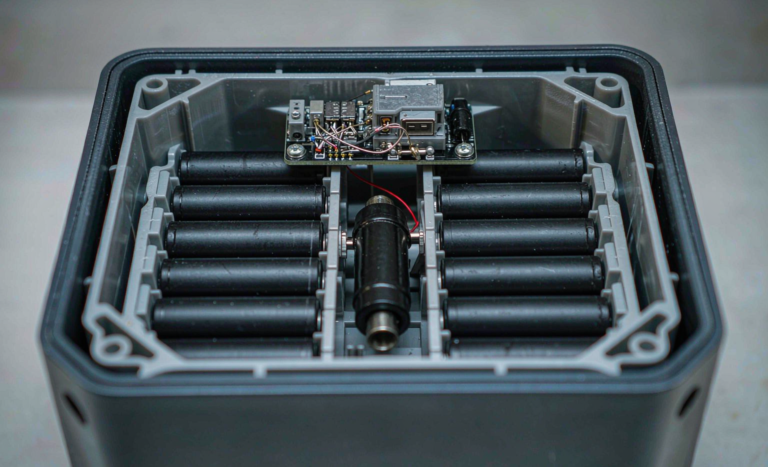
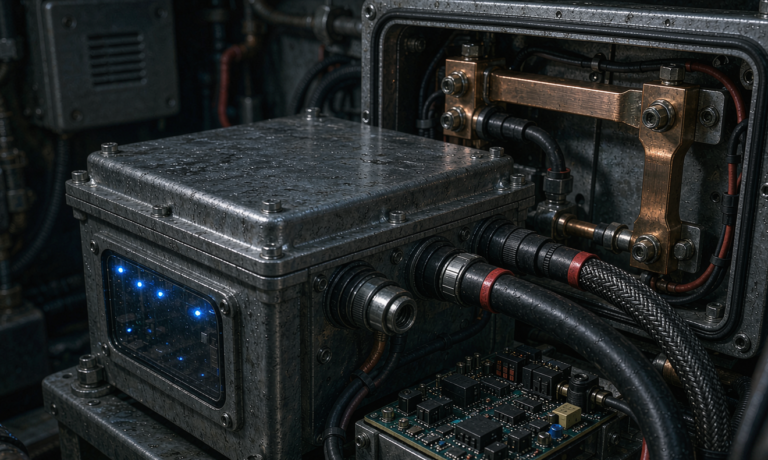
Water rarely kills a solar kit battery in one dramatic flood. It kills slowly. A poorly seated lid gasket lets humid air breathe in and out of the enclosure through dozens of day-night thermal cycles — the pack inhales warm humid air at midday, and as the enclosure cools at night, that air hits its dew point and condenses on the coldest surface available, which is usually the BMS PCB and the busbar joints. Over months you get galvanic corrosion at copper-to-aluminum interfaces, leakage currents across a damp PCB, and eventually nuisance BMS trips or a shorted sensing harness.
Our audits target three layers of defense:
- Gasket and enclosure design. We specify continuous-cell silicone or EPDM gaskets with 25–35% compression, and we validate them to IP65 minimum for outdoor kits and IP67 for marine or ground-mount enclosures, tested per IEC 60529 after temperature cycling from −20 °C to +60 °C. A gasket that seals at room temperature is not evidence; a gasket that seals after 50 thermal cycles is.
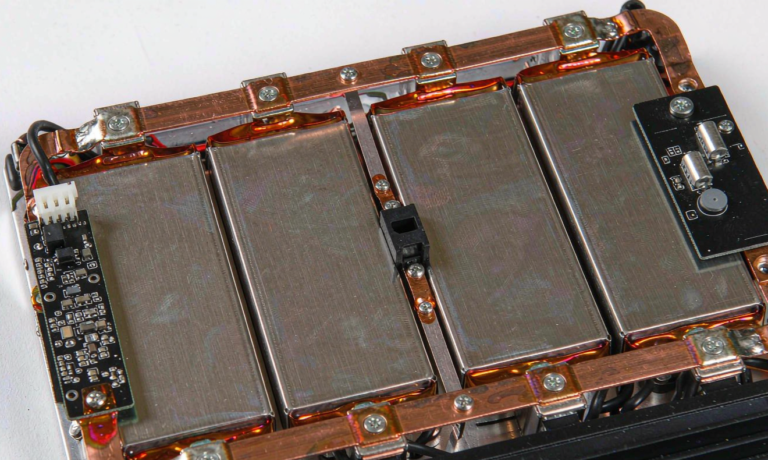
- Conformal coating on the BMS. Every production board gets acrylic or polyurethane conformal coating, and we audit coverage, not just presence. A coating thickness of 30–130 µm with full coverage on connector knees and component edges reduces leakage-current failures dramatically. In one program retrofit, moving from no audit to a UV-inspection sampling of 1-in-20 boards cut moisture-related RMA rate from 3.8% to 0.6% within two production quarters.
- Condensation management. We fit desiccant sized for the enclosure’s free air volume — typically 5–10 grams per liter — plus a low-power anti-condensation heater or a Gore-type pressure-equalization vent on larger packs. The vent matters more than people expect: sealed boxes flex with pressure changes and work-harden their own gaskets open.
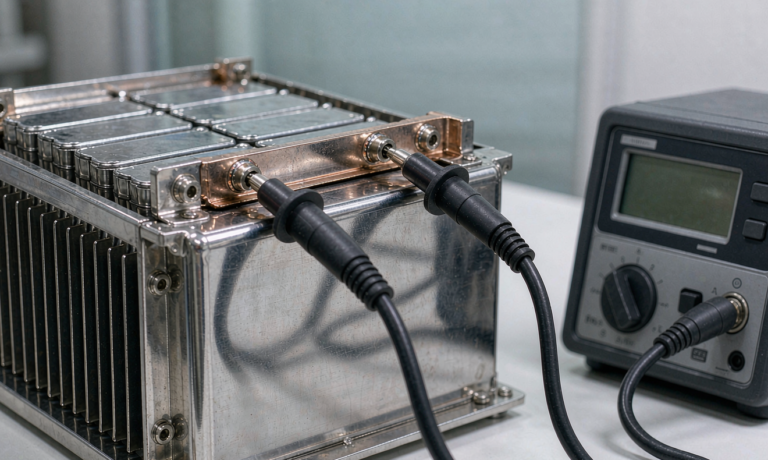
The acceptance test I insist on is simple and brutal: 168 hours of 40 °C / 95% relative humidity per IEC 60068-2-78, followed immediately by an insulation resistance measurement of at least 100 MΩ at 500 V DC between the B- terminal and any exposed conductor, and a functional check of every cell-tap sense line. Packs that pass that test essentially never come back for moisture reasons in temperate climates, and rarely even in tropical ones.
Terminal Torque Retention: Small Hardware, Large Consequences
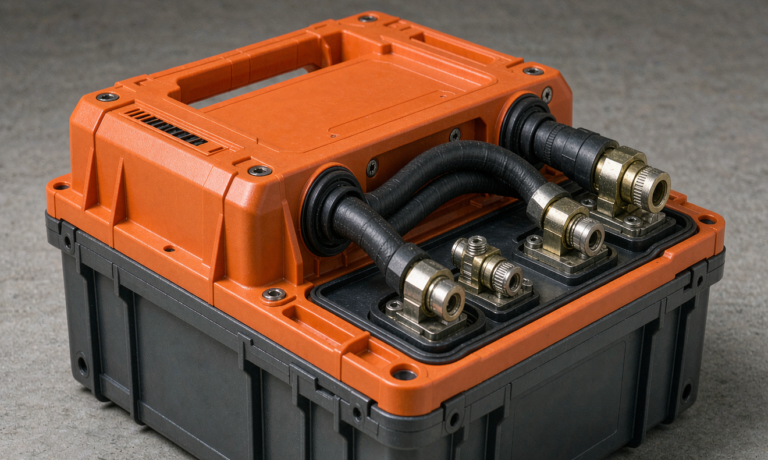
The second-largest failure family is embarrassingly mundane: terminal hardware that was never torqued correctly, or torqued correctly but not retained. A solar kit battery cycles thermally every single day — a 30–40 °C daily swing is normal in a metal enclosure in the sun. Aluminum busbars and steel bolts have different thermal expansion coefficients, and every cycle works the joint like a tiny fatigue machine. An M8 terminal torqued to spec but without a locking feature can lose 20–30% of its clamp load within 12–18 months of such cycling.
A loose terminal does not usually fail open. It fails hot. Contact resistance creeps from a healthy 0.1–0.2 mΩ up past 1 mΩ, and at 50 A continuous that 1 mΩ joint dissipates 2.5 watts in a tiny copper-brass interface — enough to discolor the plating, melt nearby plastic, and in the worst cases start a fire. I have opened returned packs where the terminal washer had welded itself to the busbar.
Our countermeasures are procedural, not exotic:
- Calibrated torque with witness marks. Assembly stations use click-type or DC-driven torque tools calibrated monthly, with target torque documented per fastener — for example, M6 studs at 8–10 N·m and M8 at 18–22 N·m depending on the busbar material. Every critical joint gets a torque-mark witness stripe of lacquer paint; a broken or displaced stripe is visible evidence of loosening during any later inspection.
- Retention hardware. Nord-Lock style washers or flanged nuts with nylon inserts on every high-current joint. Plain split washers, in my experience, are decorative.
- Installation instructions with torque values printed on the enclosure lid — because field installation is where half of these joints are actually made. We also ship a torque verification card and ask distributors to re-check terminal torque at the 6-month service visit.
- Thermal cycling validation. New busbar designs go through 300 cycles of −20 °C to +65 °C with millivolt-drop monitoring across every joint. Acceptance is a contact resistance change under 20% from the initial measurement. Joints that drift more than that get redesigned before they ever reach a customer.
It costs perhaps $0.80 per pack to do all of this properly. It eliminates a failure family that generates return shipping costs of $40–120 per unit and, occasionally, a burned customer installation that no warranty budget can cover.
Designing Reliability In: The Production Audit Gates
Neither moisture resistance nor torque discipline happens by inspiration on the assembly floor. They are locked in through end-of-line gates. In our plants, every solar kit battery passes through four checks before boxing:
- Leak and gasket check: lid fasteners torqued in the specified star sequence to documented values; for outdoor-rated enclosures, a pressure-decay or vacuum-box check on a sampling basis.
- Electrical safety test: hipot (dielectric withstand) between the pack’s HV path and any accessible metal at the voltage appropriate to the system class, plus ground-bond continuity where applicable — aligned with the intent of IEC 62619 and, for stationary ESS variants, UL 1973.
- Functional BMS test: full parameter readout — per-cell voltages, temperature sensors, MOSFET gate operation, communication bus — compared against golden-unit limits. A pack that cannot report its own state truthfully will generate a support ticket long before it generates a real fault.
- Torque audit: a documented verification of at least the four highest-current terminal joints on 100% of units, using the witness-mark check plus periodic pull-off verification of the torque tool itself.
These four gates add minutes per unit and catch the failure modes that field data says matter. I would trade any amount of datasheet cycle-life marketing for a supplier’s willingness to show me their EOL test records.
Field RMA Forensics: Turning Returns into Design Changes
The third pillar of lithium battery reliability for solar kits is what happens after a failure. Most warranty programs are financial processes: receive return, verify serial, issue credit, scrap unit. That accounting habit destroys engineering information. A scrapped return cannot tell you that 60% of your moisture failures in one region trace to a single lid supplier whose gasket groove was 0.3 mm out of tolerance.
Our RMA forensics process has four steps:
- Triage and preservation. Every returned pack is photographed as-received, serials logged, and — critically — opened only after the internal log is downloaded. BMS event logs frequently contain the smoking gun: the timestamp of the first over-temperature trip, the cell that went high-impedance first, the charge current at the moment of the event.
- Failure classification against a fixed taxonomy. Moisture ingress, terminal looseness, BMS component, cell degradation, mechanical damage, misuse, unknown. Two engineers classify independently; disagreements get arbitrated. Consistent taxonomy is what makes the statistics actionable across years.
- Physical root cause work. For moisture cases we map corrosion location against gasket geometry; for terminal cases we measure residual torque and contact surface condition; for cell cases we pull capacity and DCIR on the suspect cell against sibling cells from the same lot.
- Closed-loop corrective action. Each confirmed root cause gets an 8D-style corrective action with a verification: gasket redesign, coating specification change, torque procedure update, or supplier change. We track two KPIs — confirmed root cause rate (target above 85% of RMAs) and recurrence rate of the same root cause (target near zero within two production lots).
In one representative program, forensic analysis showed 43% of returns from one coastal market shared a single root cause: a vent that had been omitted during a cost-down revision. Reinstituting the vent — a $0.35 part — reduced that market’s RMA rate from 5.1% to 0.9% in three months. No amount of datasheet optimization would have found that. Only the teardowns did.
What Buyers and Integrators Should Ask Before Ordering
If you are sourcing a custom battery solution for solar kits, the reliability of the product you receive will be determined by questions most RFQs never ask. From my side of the table, here is what separates a serious manufacturer from a cell-trader with a website:
- Can they show EOL test records — hipot, BMS functional, torque verification — for a recent production lot?
- What is their confirmed root cause rate on RMAs, and can they show a corrective action that demonstrably reduced a failure family?
- Do gasket and conformal coating processes have documented acceptance criteria, or is quality a final visual glance?
- What are the specified torque values and retention hardware for high-current terminals, and are they reproduced in the installation manual?
- Which standards apply: UN 38.3 for transport is mandatory, IEC 62133 at cell level is baseline, and IEC 62619 or UL 1973 at pack level should be expected for stationary solar storage.
A supplier who answers these fluently — with documents, not assurances — will deliver packs whose field failure rate is a fraction of the market average, even at a modest price premium.
Frequently Asked Questions
What is the most common cause of solar kit lithium battery failure?
In the return populations I have analyzed, moisture-related corrosion and BMS faults account for roughly a third of failures, followed by terminal and connection issues. Cell chemistry is rarely the culprit — which is why enclosure sealing, conformal coating, and torque discipline deserve as much engineering attention as cell selection.
How often should solar kit battery terminals be re-torqued?
For kits in high-thermal-cycle environments, I recommend checking terminal torque at 6 months and then annually. With proper retention hardware (Nord-Lock washers or flanged nyloc nuts) and witness marks, drift after the first service is usually negligible.
Does IP67 rating guarantee no condensation inside the battery?
No. IP ratings certify ingress protection against liquid water under specified test conditions, not against water vapor diffusion and internal condensation from breathing cycles. That is why desiccant, pressure-equalization vents, and conformal coating remain necessary even in IP67 enclosures.
Which certifications matter for a solar kit lithium battery?
UN 38.3 is mandatory for transport. IEC 62133 covers the cells. For the pack, IEC 62619 (industrial/stationary) or UL 1973 (stationary storage) are the benchmarks serious buyers specify. For kits sold into North American residential markets, expect UL 1973 plus a system-level UL 9540 assessment.
Can a moisture-damaged lithium battery be repaired?
Sometimes — if corrosion is confined to non-critical sense lines and the cells test healthy. But any pack that shows leakage current paths across the BMS or corrosion at cell terminals should be retired. The repair cost rarely justifies the risk, and a repair that skips a full hipot and insulation resistance retest is not one I would sign off.
How does RMA forensics improve future production?
Each confirmed root cause feeds a corrective action with verification. Programs that classify and analyze at least 85% of returns typically drive recurrence of known failure modes to near zero within two production lots — a compounding reliability advantage that suppliers without forensics cannot match.
Reliability is not a feature you order; it is a set of audits you enforce — at the gasket, at the terminal, and at the teardown bench. Get those three right, and the chemistry takes care of itself.