Lithium Battery for Scissor Lifts and Aerial Work Platforms
I have spent more of my career than I expected standing next to an aerial work platform that would not start on a Monday morning. The machine was usually fine. The battery was the problem, and it was the problem because somebody specified it like a golf cart battery: pick a voltage, pick a big amp-hour number, bolt it in. Scissor lifts are among the harder duty cycles a lithium battery can be asked to serve. The load is violently peaky, the machine is weight sensitive, and the fleet manager measures success in shifts completed per year. Here is how I size, specify, and qualify packs for this class of machine.

What a Scissor Lift Demands From Its Battery
A scissor lift is not a vehicle. A forklift spends its energy moving mass horizontally; a scissor lift spends almost all of it pumping hydraulic oil against gravity in short hard bursts, then sitting still. There is no regenerative braking to recover any of it. Most machines in this class lower under gravity through a proportional descent valve, so the energy you put into the platform is dissipated as heat in the orifice and the tank.
That produces a load profile with a very low average and a very high crest. On a typical 19 foot electric slab lift the power pack pulls 3 to 4 kW during a lift, which on a 24 V system is 130 to 170 A for eight to twenty seconds. A stalled drive motor adds a sharper transient of two to three times running current. Between those events the machine draws almost nothing. I have logged shifts averaging under 300 W with a one second peak above 5 kW. The pack is sized for the average; the electronics are rated for the peak.
Flooded lead-acid coped with this duty for decades because it delivers a ten second surge without complaint, but it fails on energy density, depth of discharge, and maintenance. The real prize in a conversion is not the weight saving but that the machine can be topped up between shifts instead of being parked for a full charge cycle.
Sizing From a Measured Shift, Not From a Nameplate
The most useful thing a fleet can do before converting is to log one representative week of current. A clamp meter with a data logger on the main battery cable gives you four numbers I always ask for: amp-hours consumed per shift, the fifteen minute peak current, the one second peak current, and the overnight standing draw. The first tells you the energy, the two peaks set the ratings, and the standing draw tells you whether something is quietly draining the pack overnight, which is a common finding and not the battery’s fault.
On a 19 to 26 foot slab lift working a normal interior fit-out shift I usually see 2.0 to 2.8 kWh drawn per eight hours. That surprises people, because the lead-acid pack on the machine is rated at 5.3 kWh. The gap has two causes. The first is Peukert: at the one hour rate that 220 Ah C20 battery gives roughly 130 to 150 Ah effective. The second is the depth of discharge limit. You do not take flooded lead-acid below fifty percent without destroying cycle life, so the usable part of that nameplate is closer to 1.8 kWh.
A 25.6 V 200 Ah LiFePO4 pack is 5.12 kWh on the label, which looks like a downgrade. It is not. Lithium has almost no Peukert effect at these rates, so a factor of 0.98 rather than 0.7 is honest, and ninety percent depth of discharge is routine. Usable energy is about 4.6 kWh against roughly 1.8 kWh, a two and a half times gain from a pack that weighs half as much. The right conclusion is not to buy a bigger pack but to match your measured shift energy plus a margin, and take the weight and the runtime as free gains.
Voltage, Surge Current, and the Gauge Problem
Most small and mid-size scissor lifts run a 24 V nominal system. Larger rough-terrain units and most boom lifts moved to 48 V years ago for the obvious reason: half the current for the same power, which means thinner cable and smaller contactors. You must match the machine’s nominal voltage exactly, not approximately. A 25.6 V LiFePO4 pack, eight cells in series, sits correctly in a 24 V machine. A 29.4 V or 29.6 V NMC pack does not, despite some catalogs calling it twenty-four volt, because its end of charge voltage exceeds what the controller was qualified for.
The rating that gets missed is the surge. I specify every pack for this duty with three current numbers rather than one: continuous, a thirty second rating, and a one to three second rating covering pump inrush and a stalled drive. On a 24 V machine that typically means 150 A continuous, 300 A for thirty seconds, and 500 to 600 A for one second. A BMS rated only for continuous current will open its contactor on the first lift of the morning, with a worker on the platform, so always ask for the short duration trip curve.
One more thing to plan for: the flat discharge curve of LiFePO4 will break the machine’s fuel gauge. A lead-acid pack sags from about 26 V to 23 V as it empties and the gauge is calibrated to that slope; a lithium pack holds 26.0 to 25.2 V for ninety percent of its capacity and then falls off a cliff. The gauge reads full, then the BMS opens and the machine stops dead with no warning. The fix is a state of charge signal over CAN from the BMS, or a shunt based coulomb counting gauge in the battery bay. I prefer the shunt, which keeps reading if the CAN link drops.
Opportunity Charging and Cycle Life Under Shift Work
The operational change that matters most is opportunity charging. A flooded pack wants eight hours plus a cool down, and interrupting it repeatedly causes stratification and sulfation. An LiFePO4 pack accepts charge at 0.5C to 1C whenever you offer it, with no gassing, no water topping, and no memory of the previous cycle. In practice an operator can plug in for forty minutes at lunch and add a couple of kilowatt-hours, enough to finish a shift that would otherwise strand the machine.
On cycle life, LiFePO4 at 25 degrees Celsius and 0.5C gives three thousand to five thousand cycles to eighty percent capacity at eighty percent depth of discharge. On one shift a day, five days a week, three thousand cycles is eleven to twelve years. Compare that with the five hundred to one thousand cycles from a well maintained flooded pack and the ownership case is clear before you count watering labour or a ventilated charging room. Charging below 0 degrees Celsius plates metallic lithium onto the anode permanently, so every pack needs a charge inhibit below about 2 degrees Celsius. Where machines work through winter outdoors I prefer a 200 to 400 W internal film heater over derating charge to 0.05C, which takes twenty hours and no rental operation will tolerate.
Mechanical Fit, Restraint, Vibration, and Washdown
The weight saving is what gets the purchase approved, but it has an often overlooked consequence. On a 19 foot slab lift, swapping roughly 120 kg of flooded lead-acid for 50 to 55 kg of lithium removes 65 to 70 kg of mass that sat low in the chassis and was effectively part of the machine’s stability. ANSI A92.20 in North America and EN 280 in Europe both require a static and dynamic stability test with a specified load, and the battery is part of that calculation. Removing it is not automatically unsafe, but it must be verified against the manufacturer’s data rather than assumed. I have seen conversions eat enough margin to matter on machines with cantilevered extension decks. Get the OEM’s written position, or fit a ballast plate to restore the original mass distribution.
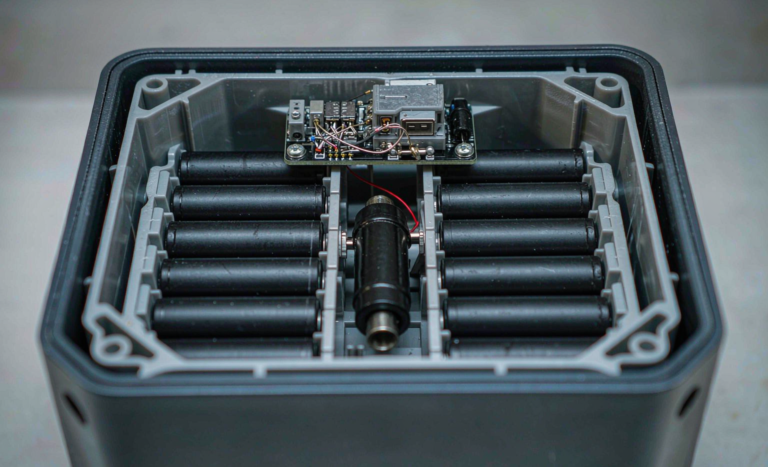
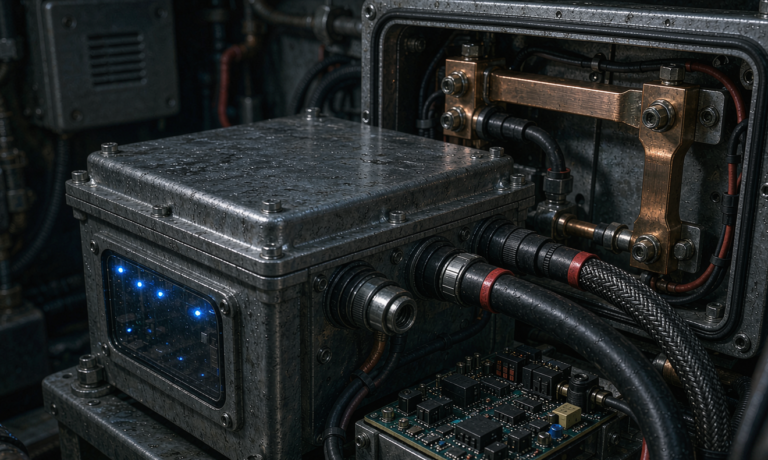
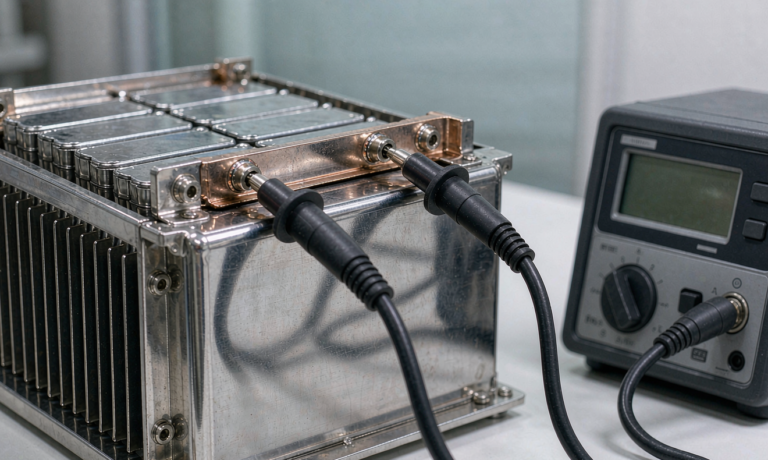
The restraint system needs rework too, because a lighter pack still has to survive the same abuse. Scissor lifts are driven over debris, expansion joints, and dock plates, and the shock loads reaching the tray are substantial. I specify a random vibration profile plus mechanical shock at pack level, and I want the lithium battery pack restrained at cell level rather than the module bolted down. Cell level brackets, bonded busbars, and thread locker on every fastener in the current path are cheap insurance: a busbar bolt that vibrates loose inside a sealed pack is invisible until the machine stops.
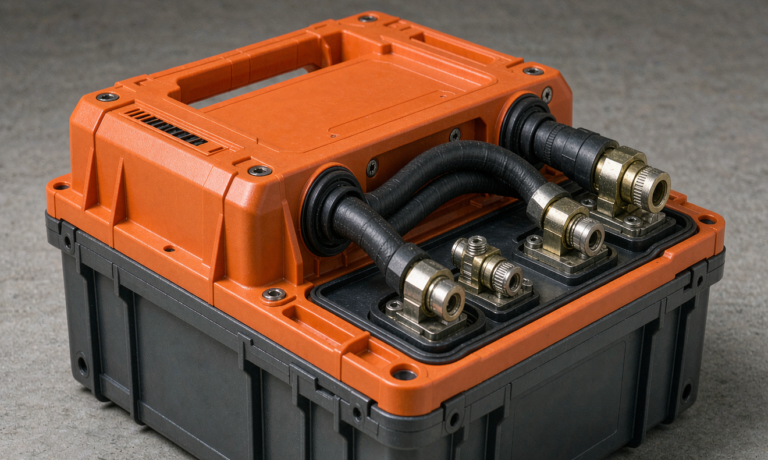
On ingress, IP54 is the practical floor for outdoor work and I push to IP65 for anything that gets pressure washed, which in a rental fleet is most machines. The trap is that a pack rating is meaningless if the cable gland installation is worse, and the gland is usually fitted in the field. Specify the enclosure and gland as one assembly, and require a bottom drain path so a seal that eventually weeps does not turn the tray into a bath.
Compliance and What to Put in the Purchase Specification
This is a machinery application, so the compliance picture is broader than the battery. On the pack side I require a UN 38.3 test summary for transport, an IEC 62619 report covering mechanical and electrical abuse tests for industrial secondary lithium batteries, and UL 1973 where North America expects it. On the machine side the references are ANSI/SAIA A92.20 for design, A92.22 for safe use, A92.24 for training, and EN 280 in Europe. The interface between the two is where conversions fail, so write those requirements into the purchase order rather than leaving them to inference.
My standard checklist runs to eight items. Match the machine nominal voltage exactly and state the end of charge voltage. Give all three current ratings with the BMS trip curve attached. Require a low temperature charge inhibit, plus an internal heater where machines see freezing. State the state of charge interface, CAN or shunt, and do not accept a voltage based gauge. Specify the ingress rating for the enclosure and the gland as one assembly. Require cell level restraint and a documented vibration qualification. Require a tool free service disconnect in a location confirmed with the safety officer. Finally, require the UN 38.3 summary and a transport state of charge declaration with every shipment; a missing document strands machines.
One functional safety point is worth raising early. The contactor that the BMS opens on a fault is performing a safety function on a machine that carries people. Depending on the risk assessment it may need to be assessed under ISO 13849-1 for performance level, or at minimum be redundant with a mechanical backup. It is not the battery supplier’s decision alone, but it is far cheaper to resolve at specification stage than after the first conversion. Any competent custom battery solution partner should be able to work through this list with you.
Frequently Asked Questions
Can I use the existing lead-acid charger with a lithium pack?
Possibly, but verify three things first. Check that the absorption voltage sits at or below the pack’s end of charge voltage, which for a 25.6 V LiFePO4 pack is about 28.8 V. Check whether the charger has an equalization or desulfation mode, because those push 30 to 32 V and will trip the BMS on overvoltage, and disable it if it exists. Check whether it has temperature compensation that raises voltage in cold weather, because an elevated float all night is a genuine aging mechanism. If any of the three fail, replace the charger.
Why does the fuel gauge read full until the lift stops?
Because the gauge was calibrated for lead-acid and you installed LiFePO4. A lead-acid pack sags from roughly 26 V to 23 V as it discharges and the gauge maps that slope to a fuel level. A lithium pack holds between 26.0 and 25.2 V for about ninety percent of its capacity and then drops quickly at the end, so the gauge reports full until the BMS opens on low cell voltage and the machine dies with no warning. Fix it with a state of charge signal over CAN from the BMS, or with a shunt based coulomb counting gauge in the battery bay.
How much runtime do I gain by converting to lithium?
Expect roughly two to two and a half times the usable runtime, and it comes mostly from depth of discharge rather than nameplate capacity. A 220 Ah flooded pack is 5.3 kWh on the label but only about 1.8 kWh usable after Peukert and the fifty percent discharge limit. A 5.1 kWh LiFePO4 pack delivers around 4.6 kWh usable. Measured against a logged shift of 2.0 to 2.8 kWh, that turns a machine that barely finishes one shift into one that finishes with forty percent left.
Does removing battery weight affect the lift’s stability rating?
It can. The battery sits low in the chassis and contributes to resistance to tipping, so removing sixty or seventy kilograms changes the stability calculation the manufacturer performed under ANSI A92.20 or EN 280. On many machines there is enough margin to make no practical difference, but on compact slab lifts with extension decks it is thinner than people expect. Ask the OEM for a written statement covering the model and pack mass, or fit a ballast plate equal to the removed lead-acid.
Can the lift charge outdoors in freezing weather?
Only with a low temperature charge inhibit and a way to warm the cells first, which normally means an internal heater. Without one, a pack that has sat overnight at minus 10 degrees Celsius will simply refuse to charge. With a 200 to 400 W film heater and a thermostat around 5 degrees Celsius, the pack warms itself in thirty to sixty minutes from a mains or generator feed and then charges normally. Also allow for thicker cold hydraulic oil, which raises pump current ten to twenty percent on the first lift of a cold morning.
What IP rating should a scissor lift battery enclosure have?
IP54 is the floor for outdoor use and IP65 is what I specify for anything that will ever see a pressure washer, which covers most rental machines. The number applies to the enclosure as tested, not to the installation, so the weak point is almost always the cable gland or the vent. A sealed enclosure with a bottom drain path and a correctly torqued gland will outlast a higher rated box drilled in the field. In marine or de-icing salt environments, add a corrosion allowance on terminal hardware.
Further Reading
References