Smart Panel Load Shedding for Home Energy Storage
A smart panel turns a home energy storage system from a dumb backup box into an energy manager. The battery stores kilowatt-hours, but the panel decides where those kilowatt-hours go, second by second, when the grid is down or when a utility demand program is active. I have commissioned dozens of residential lithium battery installations, and the difference between a system owners love and one they complain about is rarely the battery. It is the load shedding logic. This article explains how smart panel load shedding actually works, how to classify and prioritize loads, what hardware does the switching, and how to size and commission the whole chain without overspending.
Why the Panel Is the Real Control Point of Home Energy Storage
A residential inverter has a fixed power rating, commonly 5 to 12 kW of continuous output. The house, however, does not care about that rating. A well insulated 2,500 square foot home can draw 400 W at 3 a.m. and 14 kW when the dryer, the induction range, and a heat pump compressor all start within the same two minutes. Without control, one of two failures happens: the inverter overloads and trips, dumping the whole house into darkness, or the designer oversizes the battery and inverter to feed every load, which can double the system cost.
Load shedding solves the economics. Instead of buying inverter capacity for the worst coincident peak, you buy capacity for the loads that matter and disconnect the rest during an outage. The smart panel is where that decision is executed because every circuit in the house passes through exactly one point. A control system that acts at the panel can drop a 6 kW electric water heater in 100 milliseconds and keep a refrigerator running for two more days on the same stored energy.
There is a second, quieter benefit that shows up on the utility bill. Many tariffs now include demand charges or time-of-use rates even for homes. A smart panel that sheds a pool pump or delays an EV charger during a peak window can cut monthly demand charges by 20 to 40 percent in the field data I have reviewed, independent of any outage protection.
How Measurement Works: Current Transformers and Metering Accuracy
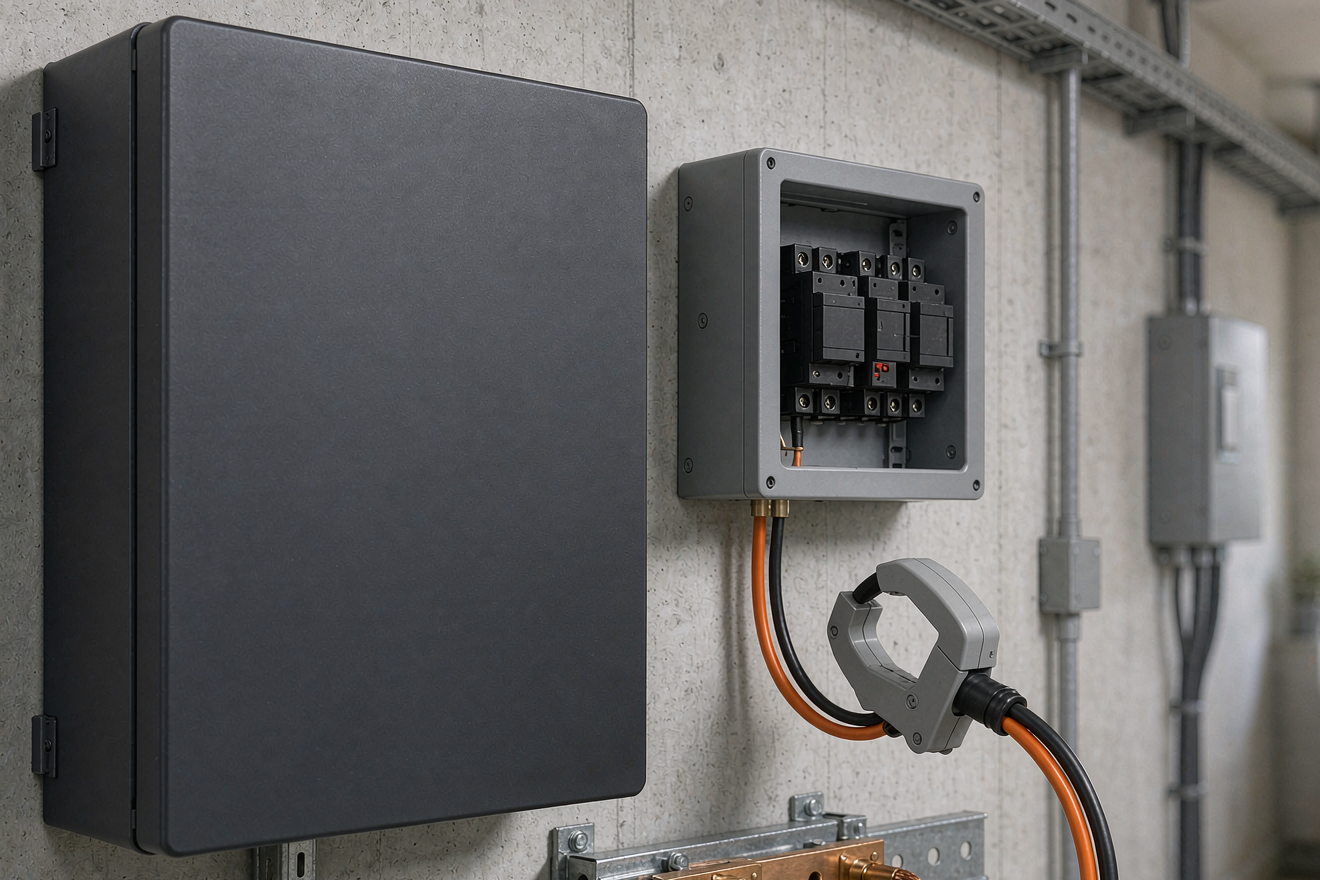
Every shedding decision starts with a measurement, and the measurement quality sets the ceiling on everything else. The standard approach uses split-core current transformers clamped around each service conductor, feeding a metering chip that computes real power at a sample rate of one reading per second or faster. Three details decide whether that data is trustworthy.
First, CT placement. The CTs must sit upstream of every circuit the system controls and downstream of any generation that should be netted out. I have seen systems read phantom consumption of 800 W because a CT was installed on the wrong side of a solar backfeed breaker, so the controller shed loads the battery was not actually serving.
Second, accuracy class. A revenue-grade CT paired meter holds about 1 percent error. Cheaper solid-core CTs bundled with some inverters can drift 3 to 5 percent, which sounds small until you set a shedding threshold at 90 percent of a 7,600 W inverter rating. A 5 percent measurement error is 380 W of invisible margin, and the system will either trip early or hover dangerously near the limit.
Third, sampling and aggregation interval. Compressor startups produce inrush currents of 5 to 7 times running current for 200 to 500 milliseconds. A meter that averages over one full second will miss the spike entirely; a meter that samples at 10 Hz or faster with a peak-hold register will catch it. Ask for the aggregation interval in writing. If the vendor cannot state it, assume the worst.
Classifying Loads: The Four-Tier Priority Structure
Shedding logic is only as good as the load classification behind it. After enough commissioning visits, I converged on four tiers, and most well-designed systems follow some version of it.
Tier 1: Life safety and minimum comfort
Refrigeration, medical equipment, sump pumps, a few lighting circuits, and the internet modem. Combined draw is typically 300 to 800 W. These circuits never shed, under any condition, until the battery reaches its depth-of-discharge floor.
Tier 2: Comfort with high value per watt
A heat pump in mild weather, kitchen circuits, the washing machine. These stay connected while state of charge is above roughly 50 percent, then shed first among the keepers. The point is not that they are unimportant; it is that shedding them saves real energy per event.
Tier 3: Deferrable thermal and bulk loads
Electric water heaters, pool pumps, secondary HVAC zones, workshop circuits. Each draws 3 to 6 kW, and none of them causes immediate harm when disconnected. These are the workhorses of load shedding. Shedding a 4.5 kW water heater alone extends backup runtime by more than dropping ten LED lighting circuits.
Tier 4: Everything else, locked out during outages
EV charging, electric resistance heat at full blast, sauna, and similar loads that simply exceed what a residential battery should ever serve. These circuits get hard lockout during grid loss rather than dynamic control.
The classification exercise takes one hour with the homeowner and a clamp meter, walking the panel breaker by breaker. Skipping it and using a vendor default template is the most common mistake I see, because defaults never match a specific house.
Switching Hardware: Smart Breakers, Contactors, and Hybrid Architectures
Three hardware families execute the shedding commands, and they differ sharply in cost, speed, and failure behavior.
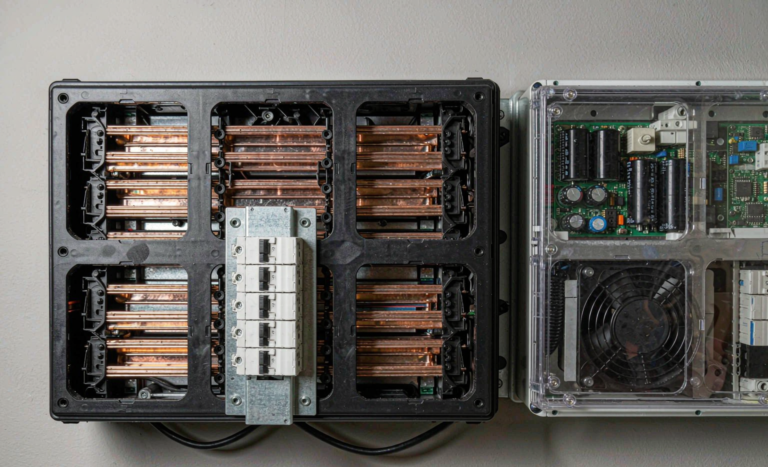
Smart breakers replace standard breakers with electronic units that switch and meter each circuit. They offer the finest granularity and per-circuit energy data, at roughly 8 to 15 times the cost of a standard breaker. Installation is clean, but a residential panel with 30 controlled circuits can carry 3,000 dollars or more in breaker cost alone, and early generations had higher standby quiescent draw than the loads they served at night.
Contactor-based control keeps standard breakers for protection and adds motor-rated contactors or latching relays on the few circuits worth shedding. A 30 A contactor costs 25 to 60 dollars and handles years of daily cycling. Latching types hold state without coil power, so a shed circuit stays shed through a control-system reboot. For most homes, controlling 4 to 8 circuits with contactors delivers 90 percent of the benefit of a full smart panel at 15 percent of the cost.
Hybrid architecture, which I install most often now, uses a smart load center for the main measurement point and a handful of contactors on deferrable loads. The National Electrical Code accommodates this through Article 712 for power control systems, added in the 2023 edition, which finally gives listed power-control equipment a clear legal path in dwelling units. Verify that any panel or control device carries listing to UL 916 or is evaluated under the PCS provisions, because a homemade relay board will fail inspection in most jurisdictions.
Timing and Transition Behavior: What Happens in the First Second
The worst moments of any outage are the first two seconds. When the grid fails, the battery inverter must detect the loss, stop following the grid, and establish its own voltage and frequency. Grid-forming inverters do this in under 20 milliseconds; older grid-tied designs compliant with IEEE 1547 must disconnect, wait, and reconnect, which can leave a gap of 2 to 5 seconds. During that gap, the control system has its own jobs.
A well-sequenced controller does three things. It freezes all shed states at their pre-outage configuration, because re-energizing a 6 kW water heater at the same instant the inverter is starting into a compressor inrush is a recipe for a trip. It staggers reconnection of Tier 2 loads across 10 to 30 second intervals so motor starts never coincide. And it enforces a minimum-off time on compressor loads, typically 3 to 5 minutes, because a heat pump tripped on overload during a transfer will restart into unequalized refrigerant pressure and trip again.
Return to grid power deserves the same care. The controller should shed everything, let the utility connection stabilize for a few seconds, restore Tier 1, then walk up through the tiers while watching frequency and voltage. Systems that slam every circuit back at once create the classic complaint: the lights flicker every time an outage ends.
Sizing the Shedding Headroom: A Worked Example
Here is the arithmetic I run with every homeowner before choosing inverter and battery capacity. Take a realistic critical load profile first.
- Tier 1 continuous: refrigerator 150 W, freezer 120 W, sump pump duty-cycled 90 W average, networking 40 W, lighting 120 W. Subtotal: 520 W.
- Tier 2 evening peak: heat pump 1,800 W, kitchen small-appliance diversity 800 W. Subtotal: 2,600 W.
- Non-coincident motor starts: heat pump inrush adds 5 times 1,800 W for 0.5 seconds, so the inverter must tolerate a 9,000 W surge for half a second on top of whatever else is running.
With smart panel load shedding active, the Tier 1 plus Tier 2 case needs roughly 3.2 kW continuous and 9 kW transient. A 7,600 W inverter with a 15 kW, 3-second surge rating handles it with margin. Without shedding, add an electric water heater at 4,500 W and a dryer at 5,000 W and the continuous figure becomes 12,700 W, which pushes you to a 15 kW Class system at roughly double the hardware cost.
Battery capacity follows from energy, not power. If the priority is multi-day resilience for Tier 1 loads alone, 520 W times 48 hours equals about 25 kWh, but LFP chemistry should not cycle below 10 to 20 percent state of charge regularly, so a usable-to-nameplate planning factor of 0.8 applies. That yields a 30 to 32 kWh nameplate for full 48-hour Tier 1 autonomy, or a 10 kWh unit if the goal is simply riding through short outages. The shedding architecture is what makes either choice honest, because without it the same 10 kWh battery dies in 90 minutes serving a whole house.
Commissioning Checklist: Testing the Logic Before You Need It
A shedding system that has never been tested is a hypothesis, not a system. My commissioning sequence takes about two hours and has caught a defect on nearly every install.
- Verify each CT reading against a calibrated clamp meter at three load levels: 200 W, 2,000 W, and near full rating. Accept nothing worse than 2 percent disagreement.
- Force each shed event manually and confirm the correct physical circuit dies. Mislabeled panels are common; I once found a contactor wired to the garage instead of the water heater, which no amount of software review would have caught.
- Pull the utility disconnect under representative load and record the transfer gap, the inverter pickup sequence, and whether any Tier 1 circuit blinked.
- Stagger-test motor restarts: run the heat pump, shed and restore it, and confirm the minimum-off timer holds for the configured interval.
- Check the low state-of-charge behavior by lowering the floor in software and confirming tiers drop in the planned order, not all at once at the battery cutoff.
Document the final priority table and leave it inside the panel door. Five years from now, a different technician will thank you, and so will the homeowner who wants to move a circuit between tiers.
Standards and Compliance Notes
Several standards shape this work. NEC Article 706 covers energy storage systems and Article 705 covers interconnection, with the 712 power control system article new in 2023. UL 9540 is the system-level listing for the storage package and UL 9540A provides the thermal runaway test data that most AHJs now request. Inverter behavior at the grid interface falls under UL 1741 Supplement SB and IEEE 1547. Control hardware carries UL 916 for energy management equipment. None of these documents tells you which circuits to shed; they define the safety envelope inside which your priority table operates. When a client asks for documentation, the combination of the listing certificates plus your commissioning test record is what inspectors actually want to see.
Frequently Asked Questions
Can I add load shedding to an existing battery system?
Usually yes, if the inverter exposes a dry-contact or open API for load control. Adding two to four latching contactors driven by those outputs costs a few hundred dollars and delivers most of the benefit. Full smart load centers suit new construction or major panel upgrades better than retrofits.
How many circuits should a smart panel actually control?
In practice, four to eight sheddable circuits covers the high-value loads in most homes: water heater, dryer, one HVAC zone, pool pump, and EV charger. Controlling every circuit adds cost and complexity with little runtime benefit, because the energy lives in a few big loads.
Does load shedding work when the grid is up?
Yes, and that is where much of the payback hides. During utility peak-price windows or demand-charge periods, the same shedding logic can run the house from the battery while deferrable loads wait. Owners in demand-rated tariffs often recover cost faster from peak management than from outage protection.
What happens if the control system itself fails?
Design for fail-safe: contactors should default to connecting the Tier 1 circuits and shedding Tier 3 when control power is lost. Hardwired bypass for life-safety circuits, so they never depend on any contactor, is standard practice in my installs. Ask any vendor specifically what their hardware does at zero control power.
Do smart breakers waste standby power?
Some early models drew 1 to 2 W per circuit continuously, which across 30 circuits is a steady 30 to 60 W, or roughly 25 kWh per month. Current-generation devices are better, but it is a fair question to ask, and the datasheet answer should be under 0.5 W per controlled circuit.
Is a smart panel required for home energy storage?
No. A system can back up a single critical-loads subpanel with nothing smarter than a transfer switch. The smart panel earns its cost when the owner wants whole-house transfer, dynamic shedding under changing conditions, or utility program participation, which is increasingly the norm rather than the exception.
Further Reading
References