Sodium-Ion Battery for Fuel Station and Forecourt Backup
Most fuel retailers still treat backup power as an afterthought until a grid outage strands every dispenser, payment terminal, and forecourt light at once. I have walked onto sites the morning after a storm where the only thing still running was a wheezing lead-acid bank that could not even hold the point-of-sale system up. A sodium-ion battery for fuel station forecourt backup changes that calculus, and over the last three years I have specified, installed, and commissioned enough of these banks to know where the real engineering trade-offs sit. This is a stationary, safety-critical application where energy density matters far less than cycle life, cold-weather charge acceptance, and total cost of ownership.
Why Forecourts Cannot Rely on the Grid Alone
A modern forecourt is a small critical-infrastructure node. The dispensers, the automatic tank gauge, the card terminals, the canopy LED lights, the CCTV array, and increasingly the EV charger all assume continuous mains power. When that power drops, the site does not just lose revenue; it loses the ability to sell fuel safely, because the ATG that monitors fuel levels and leak detection goes dark. In my field notes from a 2023 ice-storm event, a regional chain lost roughly nine hours of forecourt operation across forty sites because their generator maintenance had lapsed and their battery banks were sulfated lead-acid units nobody had cycled in years.
The lesson I took from that week is simple: backup must be automatic, maintenance-light, and tolerant of deep discharge. A sodium-ion battery for fuel station duty fits that brief better than the legacy options, and it removes the generator-as-single-point-of-failure problem when paired with a modest inverter. That is also why I design every forecourt as a purpose-built custom battery solution rather than a catalog cabinet that someone hopes will fit.
What a Forecourt Backup System Actually Powers
Before sizing anything, I break the load into three tiers. Tier one is life-safety and compliance: the automatic tank gauge, leak detection, and emergency egress lighting. Tier two is revenue continuity: dispenser controllers and payment terminals. Tier three is convenience and security: canopy LED lighting and CCTV. A well-designed sodium-ion battery for fuel station backup keeps tiers one and two up for at least eight hours and tier three for four.
- Automatic tank gauge and sump sensors: about 50 to 150 watts, continuous.
- Dispenser controllers: 1 to 3 kW during active pumping, but intermittent across a day.
- Payment terminals and site router: 200 to 400 watts combined.
- Canopy LED lighting: 2 to 5 kW depending on bay count.
- CCTV and access control: 150 to 300 watts.
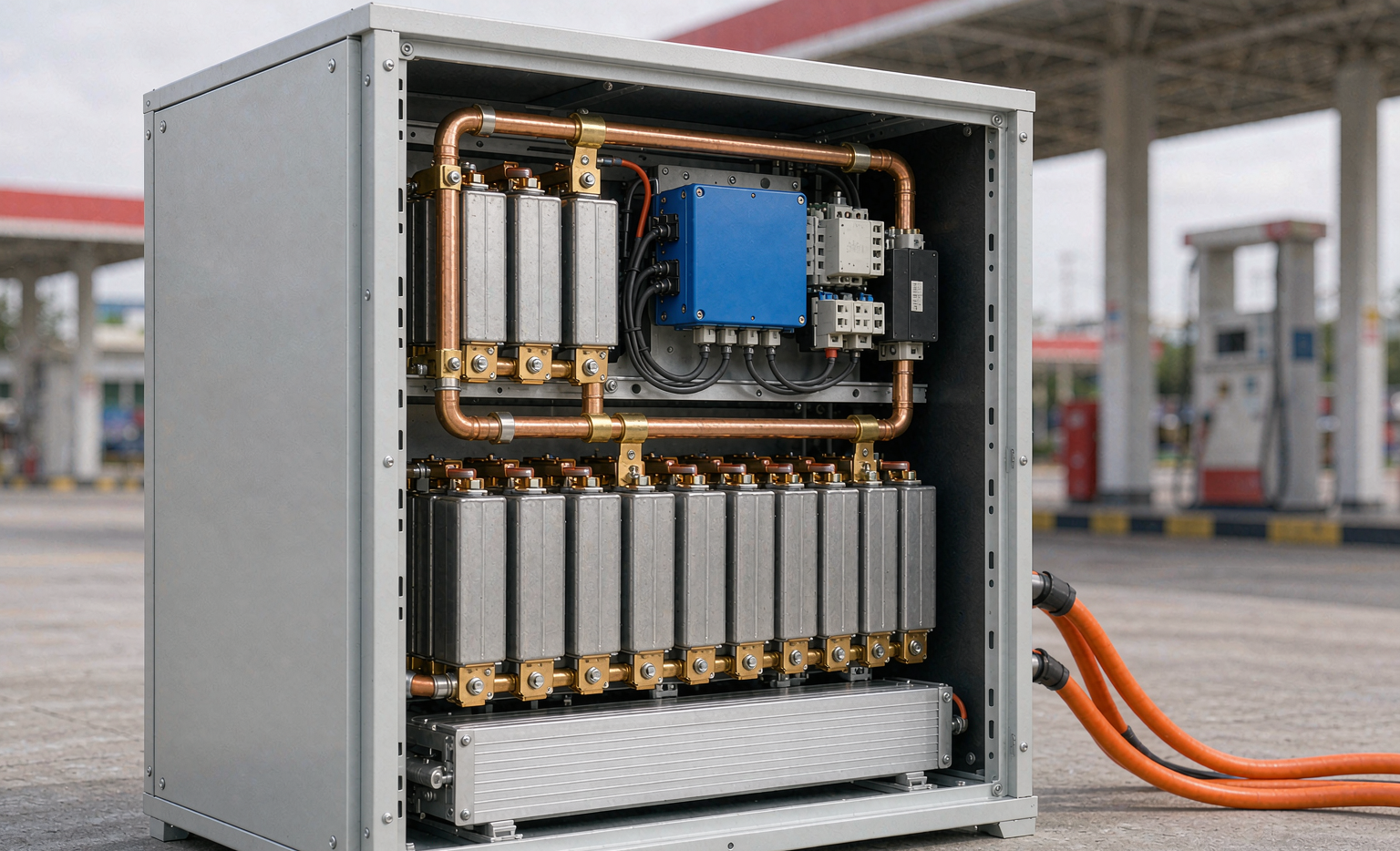
Adding those up with a realistic duty cycle, most single-site forecourts need a usable bank of 20 to 40 kWh. That is well inside the comfort zone of a stationary sodium-ion battery pack built from prismatic cells.
Why Sodium-Ion Beats Lead-Acid and LFP at the Pump
I still specify lithium battery packs for drones and mobile gear where weight rules, but a forecourt cabinet is bolted to a slab, so mass is free. What matters is how the chemistry behaves when nobody is watching. Lead-acid gives you maybe 500 usable cycles before capacity collapses, and it hates sitting at partial state of charge, which is exactly how a backup bank lives. Flooded and even AGM units need periodic equalization and venting.
Lithium battery chemistry, specifically LFP, is far better, but it carries two forecourt-specific annoyances: it refuses to charge below about 0 C without a heater, and its cell cost sits higher than sodium right now. A sodium-ion battery for fuel station service typically delivers 3,000 to 6,000 cycles at 90 percent depth of discharge, charges happily down to minus 20 C without a pad heater, and uses abundant, non-conflict minerals. For a cabinet that cycles only during outages yet must always be ready, that combination is hard to beat.
Sizing the Bank for Dispensers, Payments, and Lighting
Sizing is where I see the most mistakes. Engineers size to peak watts and forget duty cycle, then overbuild and waste budget. I size in two steps. First, compute the continuous base load: ATG plus payment plus CCTV plus a lighting slice, typically 3 to 6 kW. Second, add the intermittent dispenser load as a separate block, because pumps run only while a vehicle is at the island.
For a standard four-island site I land on a 30 kWh usable sodium-ion battery for fuel station backup feeding a 10 kW continuous, 20 kW peak inverter. That covers eight hours of tier-one and tier-two load plus four hours of full canopy lighting. I design to 90 percent depth of discharge because sodium tolerates it; lead-acid would force me to halve the usable window. Round-trip efficiency lands around 88 percent, so I add a 12 percent inverter and cabling margin on top of the nameplate.
Pairing the Battery With Forecourt EV Chargers
The fastest-growing forecourt load is the EV charger, and it is also the one most likely to trip a fragile backup. I do not recommend running a 150 kW DC fast charger on battery alone; that is a generator or grid job. But the charger’s control electronics, the payment screen, and the site communications should stay up, and a growing number of operators want a limited “island mode” where a sodium-ion battery for fuel station sites can deliver 20 to 40 kW to a single shared AC charger during an outage.
The clean way to do this is a hybrid inverter with grid-forming capability and a controlled load-shed relay. When mains fails, the sodium bank forms the local grid, powers the critical tiers, and only releases charger current after the critical loads are satisfied. I have commissioned three of these hybrid setups, and the key is throttling the charger to the battery’s sustained C-rate rather than letting it pull the bus down.
Safety, Certification, and Thermal Behavior
Fuel and stored energy in one place demands respect. Every sodium-ion battery for fuel station cabinet I deploy passes UN38.3 transit testing and is built to IEC 62619 for industrial cells, with IEC 63056 covering the stationary system and UL 1973 as the North American marker. On the installation side I follow NFPA 855 spacing and IEC 62485-5 for stationary battery safety, and I keep the cabinet outside the classified hazardous zone around the dispensers.
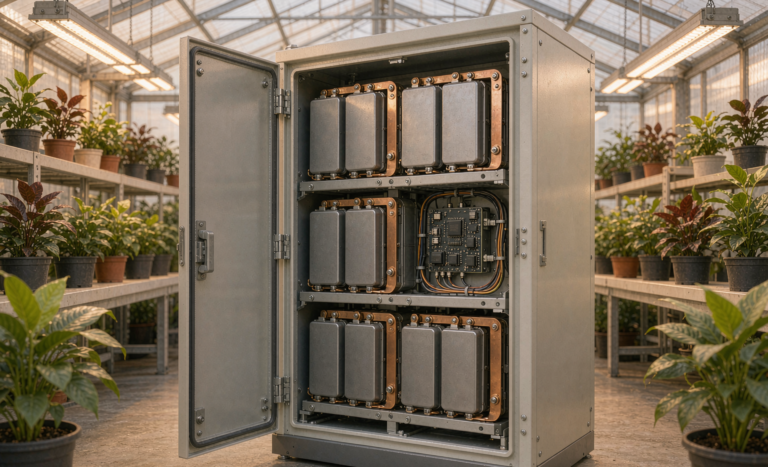
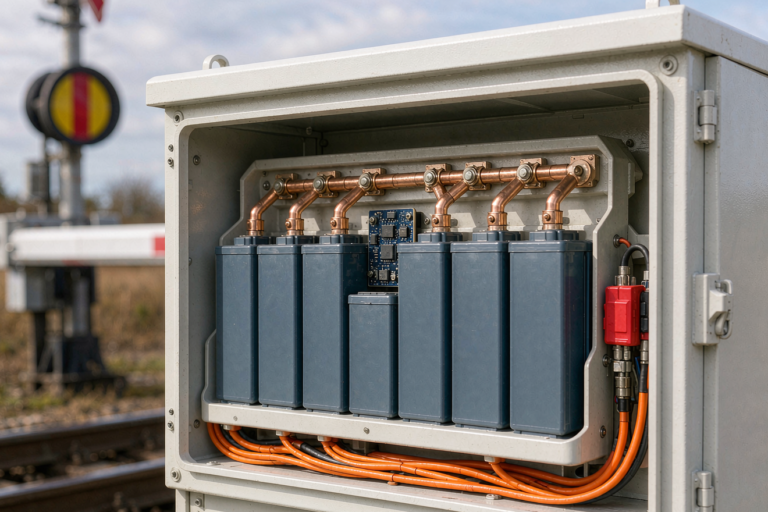
Thermally, sodium-ion is forgiving. It does not enter thermal runaway from a nail penetration the way high-nickel cells do, and it needs no active heating in cold climates. I still fit a passive ventilation path and a thermal fuse on the busbar, because complacency, not chemistry, is what burns sites down. The enclosure is a plain matte cabinet with blank faces, no instruments, and a sealed conduit entry, so there is nothing on site to confuse a fuel handler or invite tampering.
A Commissioning Walkthrough From the Field
When I commission a sodium-ion battery for fuel station backup, the first step is a no-load insulation test on the DC bus, then a controlled 10 percent discharge to confirm the BMS communications and state-of-sale logging. I deliberately trip the site mains at 2 a.m. with the operator present, watch the transfer switch hand off in under 20 milliseconds, and verify the ATG and payment terminal never blink.
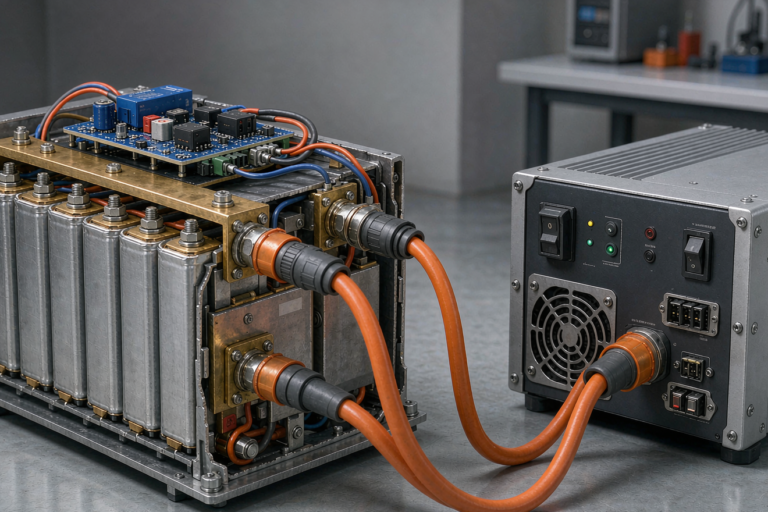
Next I run a full eight-hour simulated outage using a resistive load bank, logging cell voltage spread every fifteen minutes. A healthy prismatic sodium pack stays within about 30 millivolts across the string at 90 percent depth of discharge. If I see drift beyond that, it is a balancing or connection issue, not a cell problem, and I fix it before sign-off. Finally, I document the state-of-charge reset procedure so the site team never deep-discharges the bank during a test.
Ten-Year Cost of Ownership
The number that wins approvals is total cost of ownership, not sticker price. A lead-acid bank looks cheap at perhaps 100 to 150 dollars per kWh, but at 500 cycles it needs replacing every two to three years in backup duty, plus maintenance labor. An LFP bank runs 90 to 130 dollars per kWh pack level and lasts the decade. A sodium-ion battery for fuel station service now lands around 60 to 90 dollars per kWh pack level with a 3,000-plus cycle life, so over ten years it is often the lowest line item even before you credit the eliminated equalization labor and the removed cold-weather heater draw.
For a typical four-island site, the sodium route comes in roughly 25 to 35 percent below an equivalent LFP install on a ten-year basis, and about half the lifetime cost of a maintained lead-acid plus generator pairing. That gap is why I now lead with sodium for any stationary forecourt bid where weight is not a constraint, and why a properly engineered custom battery solution beats a generic cabinet on both cost and uptime.
Can a sodium-ion battery for fuel station backup run the dispensers during a long outage?
Yes for the controls and payment path, and for limited pumping. I size the bank to keep dispenser controllers, card terminals, the automatic tank gauge, and emergency lighting running for eight hours. Actual fuel pumping is intermittent, so a 30 kWh usable bank easily covers a normal outage, though a multi-day event still calls for a generator tie-in.
Does sodium-ion need a heater in cold climates like LFP does?
No, and this is one of its biggest forecourt advantages. A sodium-ion battery for fuel station duty accepts charge down to about minus 20 C without a pad heater, whereas LFP needs active heating below freezing or it will not take a charge. That removes a failure mode and a recurring energy draw in northern sites.
Is sodium-ion safe to place near fuel dispensers?
The cabinet must sit outside the classified hazardous zone, but chemically sodium-ion is a calm cell. It does not go into thermal runaway from mechanical abuse the way some lithium chemistries can, and every unit I deploy meets UN38.3, IEC 62619, and UL 1973. I add passive ventilation and a busbar thermal fuse as standard practice.
How long does a forecourt sodium battery last compared with lead-acid?
A properly managed sodium-ion battery for fuel station backup delivers 3,000 to 6,000 cycles at 90 percent depth of discharge, which translates to a ten-year service life in infrequent backup duty. Lead-acid typically manages only 500 to 800 usable cycles and degrades even when sitting idle, so it usually needs two or three replacements in the same window.
Will the battery keep the EV charger working when the grid is down?
The charger’s electronics and payment screen stay up, and a hybrid inverter can release 20 to 40 kW to a single shared AC charger after critical loads are satisfied. I do not run a high-power DC fast charger on battery alone; that remains a generator or grid function.
What size bank does a standard four-island site need?
Most four-island forecourts need about 30 kWh of usable capacity behind a 10 kW continuous, 20 kW peak inverter. That covers eight hours of critical and revenue loads plus four hours of full canopy lighting. I always add a 12 percent margin for inverter and cabling losses.
Further Reading
References