Lithium Battery for Cordless Circular Saws: A Field Guide
Cordless circular saws have moved from the jobsite periphery to the center of the cut list, and the reason is simple: a well-built lithium battery packs enough energy to rip through sheet goods without the trip hazard of a cord or the noise of a gas engine. I am Karl Huang, Senior Lithium Battery Engineer at Horizon Power, and over the last decade I have spec’d and field-tested packs for everything from 6.5 inch trim saws to 7.25 inch rear-handle beasts used by framing crews. This guide walks through what actually matters when you choose or design a lithium battery for a cordless circular saw: cell chemistry, voltage platform, amp draw, thermal behavior, and the safety standards that keep both the tool and the operator safe.
Why a Circular Saw Is a Tough Load for a Battery
A circular saw is one of the most demanding portable loads you can place on a lithium battery pack. Unlike a drill, which sees short intermittent pulses, a saw pulls a sustained, high current for the entire length of the cut. A 7.25 inch saw driving through 3/4 inch plywood can draw 30 to 50 amperes continuously, and the inrush when the blade first bites into the material can spike well above that. That sustained draw is exactly what separates a pack that lasts a full season from one that swells and loses capacity after a month of hard use.
The blade speed itself is the clue. A 7.25 inch blade spinning at roughly 5,000 revolutions per minute has a tip speed near 150 feet per second, and maintaining that under load demands steady power. When the cells sag, the motor slows, the cut wanders, and the operator pushes harder, which raises the current further. A good lithium battery pack is engineered to hold voltage under that load, not just to look full on the charger.
Cell Chemistry: NMC Versus LFP in a Saw Pack
Most cordless saws ship with NMC (nickel manganese cobalt) cells because they offer high energy density and strong discharge capability. An 18650 NMC cell rated at 3.0 amp-hours and 20 amps continuous can deliver the burst a saw needs in a compact can. LFP (lithium iron phosphate) cells trade some energy density for cycle life and thermal stability. For a lithium ion battery built for daily jobsite abuse, LFP’s resistance to thermal runaway is appealing, even though the pack will be a little larger for the same runtime.
In our lab we have logged NMC saw packs reaching 60 degrees Celsius at the cell surface during a long rip cut, while an equivalent LFP pack stayed closer to 45 degrees Celsius. That 15 degree Celsius gap may not sound large, but it is the difference between a pack that ages gracefully and one that loses twenty percent of its capacity in a single hot summer of use. For a crew that charges a pack three times a day, chemistry choice is a real operating cost, not a spec sheet footnote.
Voltage Platforms and What They Mean for Runtime
Cordless saws cluster around three voltage platforms: 18V/20V (the same pack is marketed as “20V max” and “18V nominal”), 36V/40V, and the newer 54V/60V flex systems. Nominal voltage sets the motor’s no-load speed and the current the battery must supply for a given power. A 20V pack delivering 600 watts pulls about 30 amps; a 60V pack delivering the same 600 watts pulls only about 10 amps. Higher voltage means lower current for equal power, which reduces I2R heating in both the cells and the nickel strip interconnects.
Runtime is a function of watt-hours, not just voltage. A 20V 5.0 amp-hour pack holds 100 watt-hours; a 40V 5.0 amp-hour pack holds 200 watt-hours. The higher-voltage pack will run roughly twice as long on a single charge for the same saw power, assuming the tool is built for that platform. When buyers compare a lithium battery by amp-hours alone, they miss the voltage, and they miss half the story.
Sizing Cells: 18650, 21700, and 4680 Formats
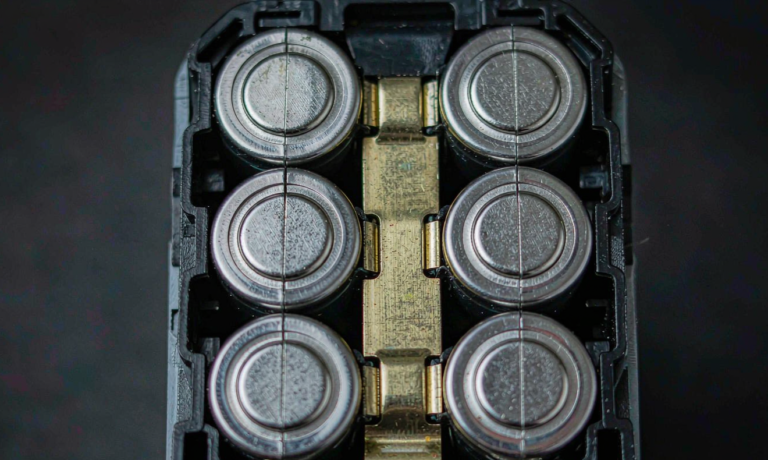
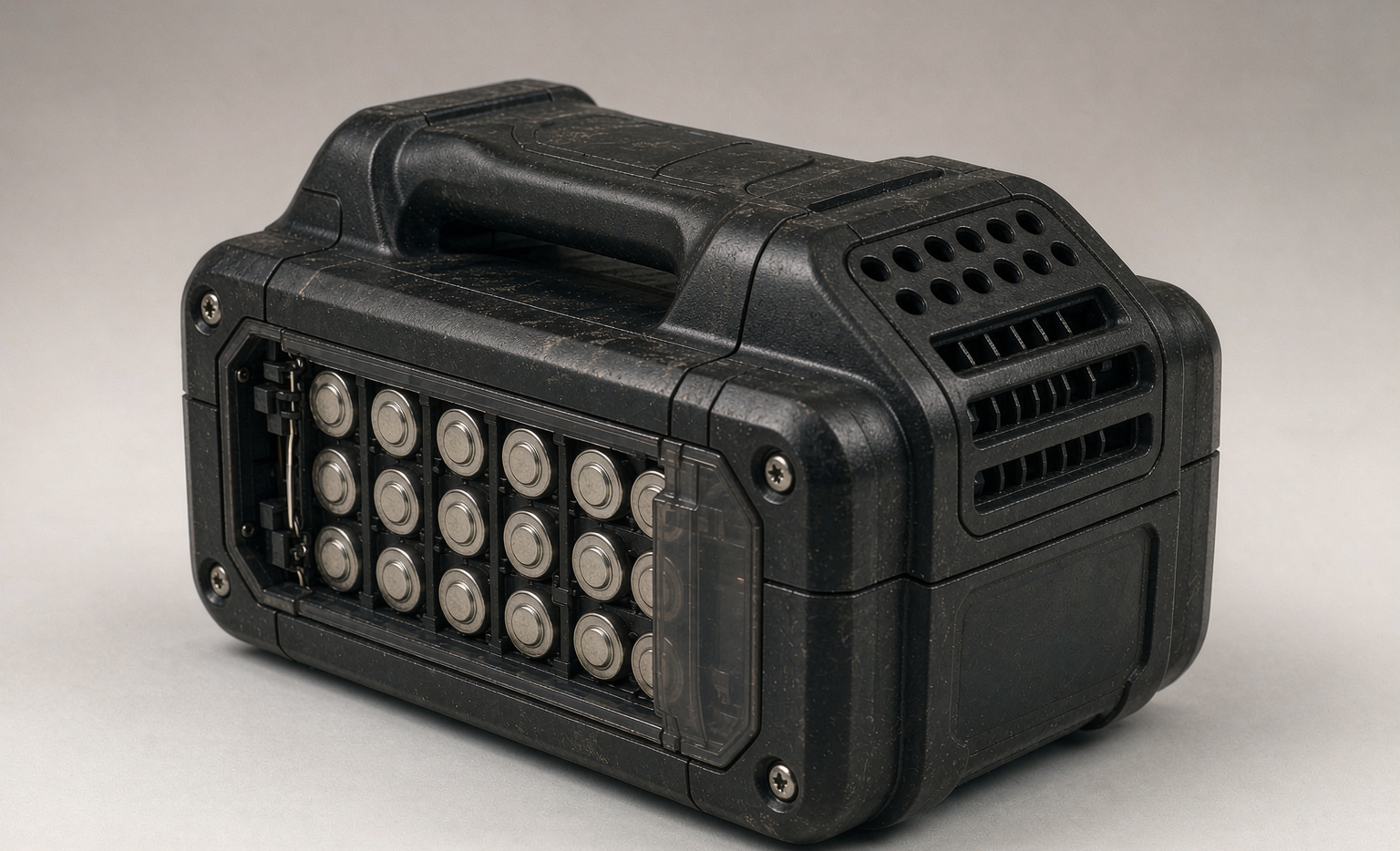
The cell format drives both capacity and discharge capability. The 18650 cell is the legacy workhorse of early cordless tools; the 21700 cell offers roughly fifty percent more capacity in a slightly larger can, which is why most modern saw packs have migrated to it. The 4680 format is still rare in power tools but promises even higher capacity per cell and a better thermal path. When we design a lithium battery pack for a circular saw, we usually place three to five 21700 cells in parallel per series group to hit the required amp-hour rating while keeping per-cell current in a safe 15 to 20 amp window.
Parallel grouping is the key safety margin. If one cell in a parallel group weakens, the healthy cells carry a larger share of the load, and that imbalance accelerates unless the BMS balances it. For a saw that sees hard, repeated cuts, we prefer more parallel cells at lower per-cell current over fewer cells pushed to their limit.
The BMS and Protection You Cannot See
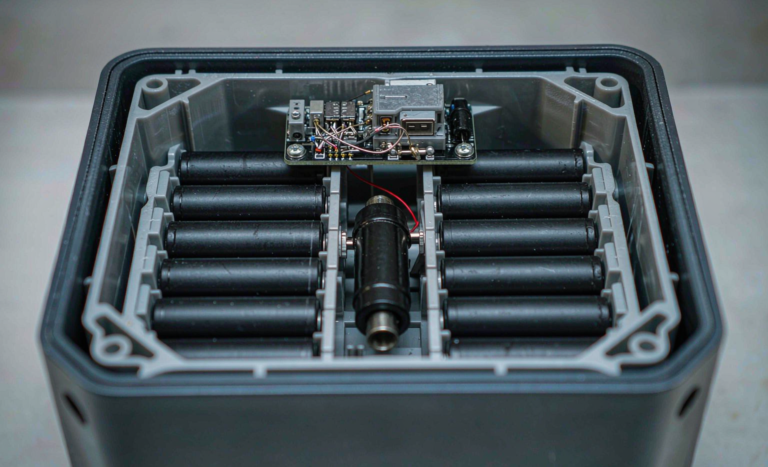
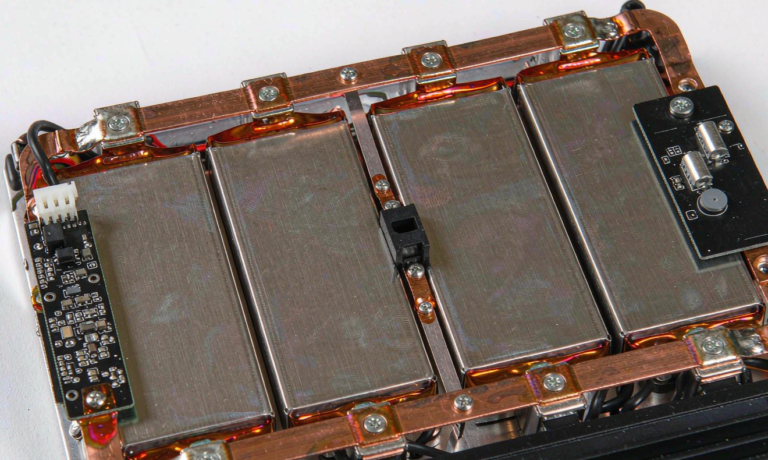
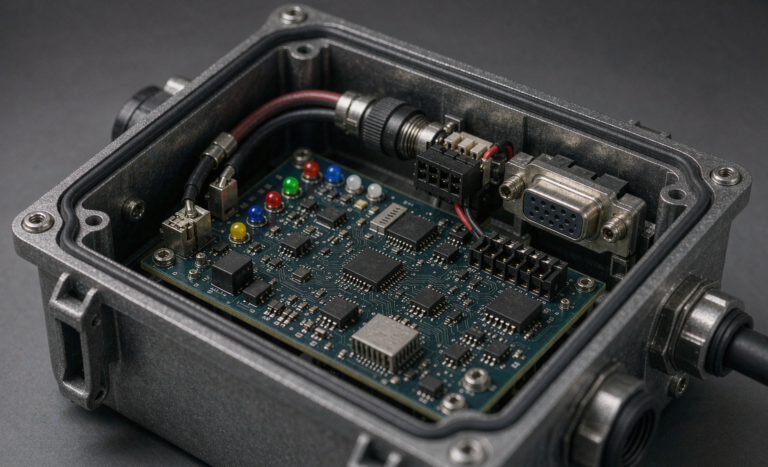
Every serious pack hides a battery management system, and for a saw the BMS must watch pack voltage, per-group balance, temperature, and most importantly discharge current. A good BMS cuts the load at around 60 degrees Celsius or when any cell drops below its safe minimum voltage, preventing the deep discharge that permanently damages cells. Over-current protection is what saves the pack when a dull blade binds and the motor tries to pull everything the cells can give.
We also spec a pre-charge resistor and a fuse on the pack side, because a saw motor presents a large inrush that can weld a contactor closed if it is not managed. None of this is visible to the user, but it is the difference between a pack that fails safe and one that fails loudly. A custom battery solution for an OEM saw always starts with the BMS specification, never with the cell count.
Standards and Safe Transport
Saw packs are consumer lithium batteries, which means they fall under UN38.3 for transport testing and IEC 62133 for safety construction. In the United States the FAA limits spare lithium batteries in checked baggage and caps carry-on cells at 100 watt-hours without airline approval; a typical 20V 5.0 amp-hour pack sits right at that 100 watt-hour boundary. In Europe EASA follows similar rules. We print the watt-hour rating on every Horizon Power pack for exactly this reason, because a worker who flies to a job should know the limit before reaching the gate.
On the jobsite the relevant safety habit is charging discipline. Charge on a non-combustible surface, never leave a pack on the charger once full for long periods, and retire any pack that has taken a hard impact or shows swelling. A lithium battery that has been dropped from a ladder deserves a visual and voltage check before it goes back into a saw.
Runtime Expectations for Common Cuts
As a rule of thumb, a 20V 5.0 amp-hour pack will deliver about 40 to 60 linear feet of 3/4 inch pine on a single charge, and roughly half that in dense hardwood like oak. A 60V 6.0 amp-hour flex pack roughly doubles those numbers because the higher voltage platform draws less current for the same power. These figures assume a sharp blade and a steady feed; a dull blade can cut runtime in half and triple the heat in the pack. In fleet testing we track cost per linear foot rather than cost per pack, because that is the number that shows up in the bid.
Frequently Asked Questions
How many cells does a 20V circular saw battery need?
A standard 20V 5.0 amp-hour pack is built from ten 21700 cells in a 5-series, 2-parallel arrangement, giving a nominal 18 volts and about 5 amp-hours. Smaller 2.0 amp-hour packs drop to a single parallel group of five cells, which cuts weight but also cuts both runtime and the safe current margin.
Can I use an LFP pack instead of NMC in my saw?
Yes, an LFP lithium battery pack will run a circular saw and offers longer cycle life and better heat tolerance, but it will be physically larger for the same runtime and may deliver slightly less peak power on a hard cut. For light trim work the difference is minor; for all-day framing it shows up.
Why does my circular saw battery shut off under load?
A sudden cutoff is almost always the BMS protecting the cells from over-current, over-temperature, or under-voltage. A dull blade, a pinched cut, or a hot pack will all trigger it. Let the pack cool and check the blade before resuming the cut.
How should I store circular saw batteries?
Store packs at about 30 to 50 percent state of charge in a dry place around 20 degrees Celsius. Avoid leaving a fully charged pack in a hot truck cab, because high temperature and high state of charge together accelerate calendar aging faster than the actual cutting does.
Are cordless saw batteries safe to fly with?
Packs at or below 100 watt-hours are allowed in carry-on baggage under FAA and EASA rules, with airline approval required above that limit. Never pack loose lithium batteries in checked luggage, and keep the terminals protected from short circuits with the original cap or tape.
Further Reading
References