Lithium Battery for Cordless Drills and Drivers
Why Cordless Drills Moved to Lithium
When I started designing portable packs for power tools in 2009, most cordless drills still ran on nickel cadmium cells. Those cells were rugged but heavy, suffered from memory effect, and lost charge sitting on the shelf. Over the next five years, lithium ion took over almost completely, and for good engineering reasons. A lithium ion cell stores roughly three times the energy per kilogram of a nickel cadmium cell, so a drill that used to weigh 2.4 kilograms now ships at 1.5 kilograms with the same or better torque. As a battery engineer I still see the legacy chemistries in used equipment, but for any new cordless platform the choice is lithium, full stop.
The real win is not just weight. Lithium cells hold their voltage flatter through the discharge curve, so a drill keeps spinning at near full speed until the pack is nearly empty, instead of gradually slowing the way nickel chemistries do. That single behavior changed how users expect a cordless drill to feel in the hand.
Cell Chemistry Choices for Drill Packs
Two lithium chemistries dominate the cordless drill market. The first is nickel manganese cobalt oxide, usually called NMC. The second is lithium iron phosphate, called LFP. I specify NMC far more often for drills because it delivers higher energy density and better low temperature performance, which matters when a contractor is working in an unheated garage in winter. NMC cells in a typical 18650 format reach 3.6 volts nominal and about 2.5 ampere hours of capacity.
LFP is heavier and lower voltage at 3.2 volts nominal, but it is extremely tolerant of abuse and will not easily enter thermal runaway. For shop tools that get charged daily and abused, LFP earns its place. The trade is weight and a slightly weaker cold weather curve. My rule of thumb: choose NMC for consumer and professional drills where weight and power density rule, choose LFP for fleet or rental tools where cycle life and safety margin beat every other concern.
Voltage Platforms and What They Mean
Cordless drills are sold by a platform voltage that is really a count of cells in series. A 10.8 volt or 12 volt pack is three cells in series. An 18 volt pack, often marketed as 20 volt maximum in North America, is five cells in series. A 36 volt or 40 volt maximum pack is ten cells in series. The “maximum” number is the fully charged voltage, not the working voltage, so do not let the marketing labels confuse the engineering.
For most drilling and driving tasks, the 18 volt platform is the sweet spot. It gives enough torque for 8 millimeter wood screws and 10 millimeter masonry bits while keeping the pack light. I reach for a 12 volt platform only for light assembly work, and a 36 volt platform for auger bits and large hole saws where sustained current matters more than weight.
Capacity, Runtime, and the C-Rate Reality
Capacity is printed on the pack in ampere hours. A 4.0 ampere hour, 18 volt pack stores about 72 watt hours of energy. Runtime depends entirely on the load. Driving a 4 millimeter screw draws maybe 5 amperes, so a 4.0 ampere hour pack lasts a comfortable working session. Drilling a 25 millimeter hole in softwood can draw 20 amperes, which is a 10C rate on a 2.0 ampere hour cell and will empty the pack in minutes.
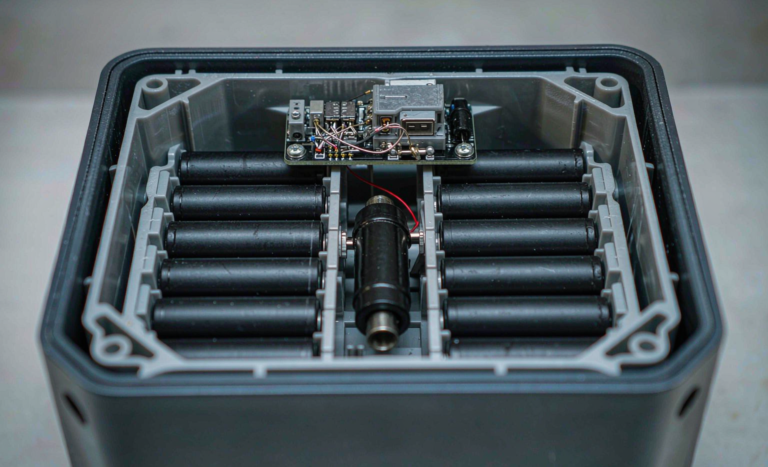
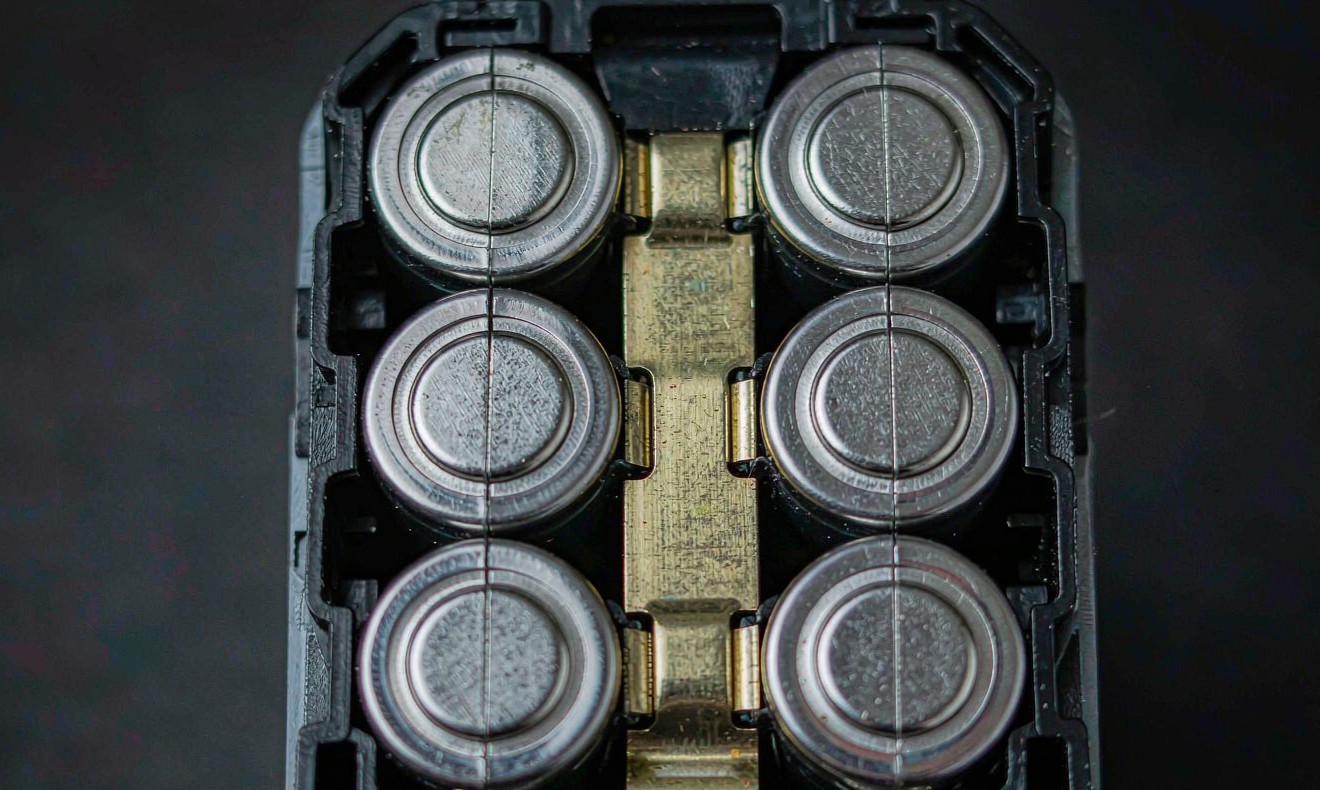
This is where pack design gets serious. A single 18650 cell cannot deliver 20 amperes without heavy voltage sag, so a real drill pack places cells in parallel. A 5 series, 2 parallel pack of 2.5 ampere hour cells gives 18 volts at 5.0 ampere hours and can sustain the current a drill motor actually demands. When I size a pack I start from the motor’s peak current, then choose parallel groups so no cell exceeds about 15C, leaving margin for cold weather where internal resistance climbs.
Battery Management and Protection
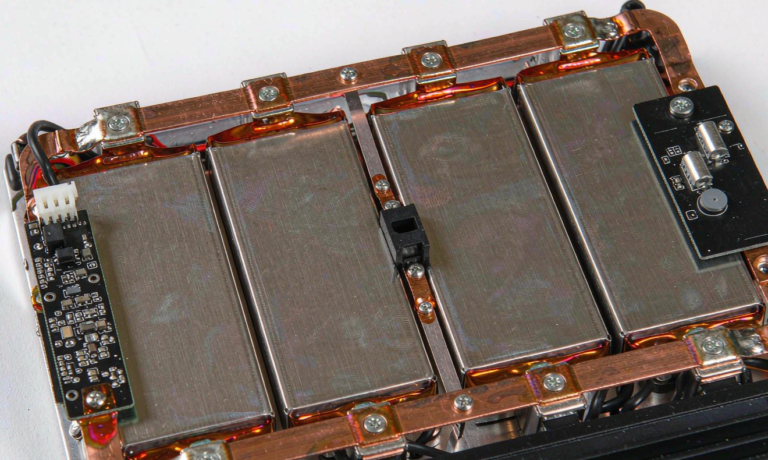
A bare lithium cell is not a battery. A drill pack needs a protection circuit module that watches every cell group. The three faults I design against are over discharge, over current, and over temperature. Over discharge below 2.5 volts per cell permanently damages NMC, so the protector cuts the load at that point. Over current from a stalled bit can spike past 40 amperes, so the protector opens within a fraction of a second.
Thermal management in a drill is passive. The pack sits in an enclosure with some airflow, and the protection circuit also watches cell temperature through a thermistor. If the pack crosses about 60 degrees Celsius it stops output until it cools. I have torn down packs that failed only because the thermistor lead broke, which is a reminder that the protector is only as reliable as its wiring.
Charging, Cycle Life, and Storage
A good charger for a drill pack is a constant current, constant voltage unit. It pushes a fixed current until the cells reach 4.2 volts each, then holds voltage while current tapers. A full charge on an 18 volt pack takes about 30 to 60 minutes on a fast charger. I tell users to avoid leaving packs on a trickle charger for months, because keeping cells at 100 percent state of charge accelerates aging.
Cycle life for a quality NMC drill pack runs 500 to 800 full cycles before capacity falls to 80 percent. LFP reaches 1500 to 2000 cycles. For storage, I recommend charging to about 50 percent state of charge and keeping the pack around 15 degrees Celsius. These packs must also meet transport and safety standards: UN38.3 governs the shock and thermal tests for shipping cells, and IEC 62133 covers the safety requirements for portable sealed cells and batteries. A pack that skips these certifications is a liability, not a product.
How to Size a Pack for a Given Drill
Sizing is straightforward once you know the motor. Take a drill rated at 18 volts and 25 amperes peak. Five cells in series gives 18 volts. To keep each cell under 15C, divide 25 amperes by 15, which calls for at least 1.7 ampere hours per parallel group, so choose 2.0 ampere hour cells in a 5 series, 1 parallel layout at minimum, or 5 series, 2 parallel for more runtime. Multiply cells by group count: a 5s2p pack holds ten 18650 cells.
From there, capacity sets runtime and cell count sets weight. I usually present the customer with two options, a light 5s1p pack for overhead work and a heavier 5s2p pack for deck building, then let the job decide. The engineering is the same; only the parallel count changes.
How many cells are in a typical 18 volt drill battery?
A standard 18 volt pack is 5 cells in series. The total cell count depends on parallel groups: a 5s1p pack has 5 cells, a 5s2p pack has 10 cells, and a 5s3p pack has 15 cells. More parallel groups mean more capacity and longer runtime, but also more weight.
Can I use a higher capacity battery on the same drill?
Yes, as long as the voltage platform matches. An 18 volt drill accepts any 18 volt pack from the same system because the tool only cares about voltage and the protection circuit inside the pack handles the rest. A higher capacity pack gives longer runtime and the same power, with extra weight as the only trade.
Why does my drill battery die suddenly in cold weather?
Lithium cells gain internal resistance as temperature drops, so they cannot deliver the same current without the voltage collapsing. The protection circuit sees an under voltage condition and cuts power even though the cells still hold charge. Warming the pack to room temperature restores normal performance.
How many charge cycles does a lithium drill battery last?
A quality NMC drill pack lasts 500 to 800 full cycles to 80 percent capacity, while an LFP pack lasts 1500 to 2000 cycles. Partial discharges count as fractions of a cycle, so a user who tops up often will see more calendar life than the raw cycle number suggests.
Is it safe to leave a lithium drill battery on the charger?
Modern chargers stop at full charge and the pack protection circuit adds a second layer, so occasional leaving is fine. For long term storage, remove the pack and store it at about 50 percent state of charge in a cool, dry place rather than sitting on the charger for months.
Further Reading
References