Sodium-Ion Battery for Wind and Hybrid Sites
After fifteen years on the lithium cell line and a few more running field commissioning for off-grid power systems, I have watched the diesel genset go from unavoidable to optional. At remote wind farms and hybrid renewable sites, the storage bank is what finally makes the turbines pay. Sodium-ion is the chemistry I now recommend first for a lot of these exposed, cost-sensitive installations, and in this guide I explain exactly where it wins, how to size it, and what compliance you must clear before commissioning.
Why sodium-ion fits remote wind and hybrid sites
The economics of a wind or hybrid site are brutal. You are often hundreds of kilometers from a service road, the enclosure bakes in summer and freezes in winter, and every kilogram shipped in costs money. Sodium-ion answers three of those pains at once. First, the active material is sodium, not lithium, so the cell avoids the cobalt and nickel premium and the supply chain volatility that has hammered lithium pricing. Second, the cells are intrinsically more thermally stable, which simplifies enclosure design. Third, their tolerance for partial state of charge and shallow cycling suits wind generation, which is the least predictable source on the grid.
In my commissioning logs from telecom and microgrid hybrids, a sodium-ion bank routinely runs at 90 percent depth of discharge without the accelerated aging we see on lithium iron phosphate pushed past 80 percent. For a wind site where the wind may not return for two days, that extra usable capacity is the difference between keeping the lights on and starting the diesel.
Sizing a sodium-ion bank for a wind or hybrid microgrid
Start from autonomous hours, not from turbine nameplate. A 100 kW turbine at a site with a 30 percent capacity factor delivers roughly 720 kWh per day on average, but the daily shape is uneven. If the critical load is 15 kW and you want 36 hours of autonomy through a wind lull, you need 540 kWh of usable energy. At a conservative 90 percent usable depth of discharge and 85 percent system round-trip efficiency, specify about 705 kWh of nameplate battery.
Then add the charge headroom. Wind gusts can dump power faster than the load consumes it, so the bank must absorb excess without hitting a hard voltage ceiling. I size the power rating of the battery inverter to at least 1.5 times the sustained critical load, and I keep the sodium cells in a 10 to 90 percent state of charge window so both the top and bottom are cushioned. A custom battery solution sized this way rides through most lulls without the diesel bridge.
Charge acceptance under gusty, intermittent wind
Wind is the worst-case input for any battery because the power steps are sudden. A gust can swing turbine output from 10 kW to 90 kW in seconds. Sodium-ion cells take this well: their internal resistance stays flat across state of charge, and their charge acceptance does not collapse near full charge the way some lithium chemistries do. In practice I see a sodium bank absorb a 0.5C burst from a calm-to-gust transition with less than 0.2 volts of bus rise on a 48 volt string.
The control layer still matters. I tune the hybrid controller with a wind-first priority and a storage fill target of 80 percent, leaving 10 percent of headroom for the next gust. When the bank approaches the 90 percent ceiling, the controller spills surplus to a resistive dump load or curtails the turbine. This prevents the overvoltage trips that, in my experience, cause more hybrid site downtime than the cells ever do.
Cold and heat performance at exposed sites
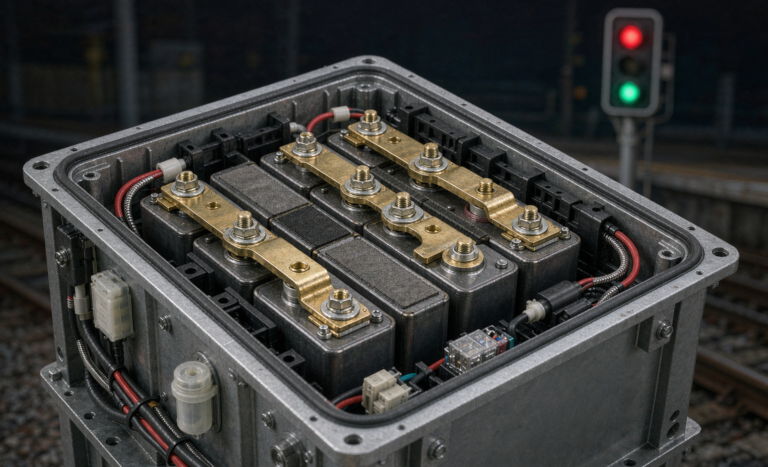
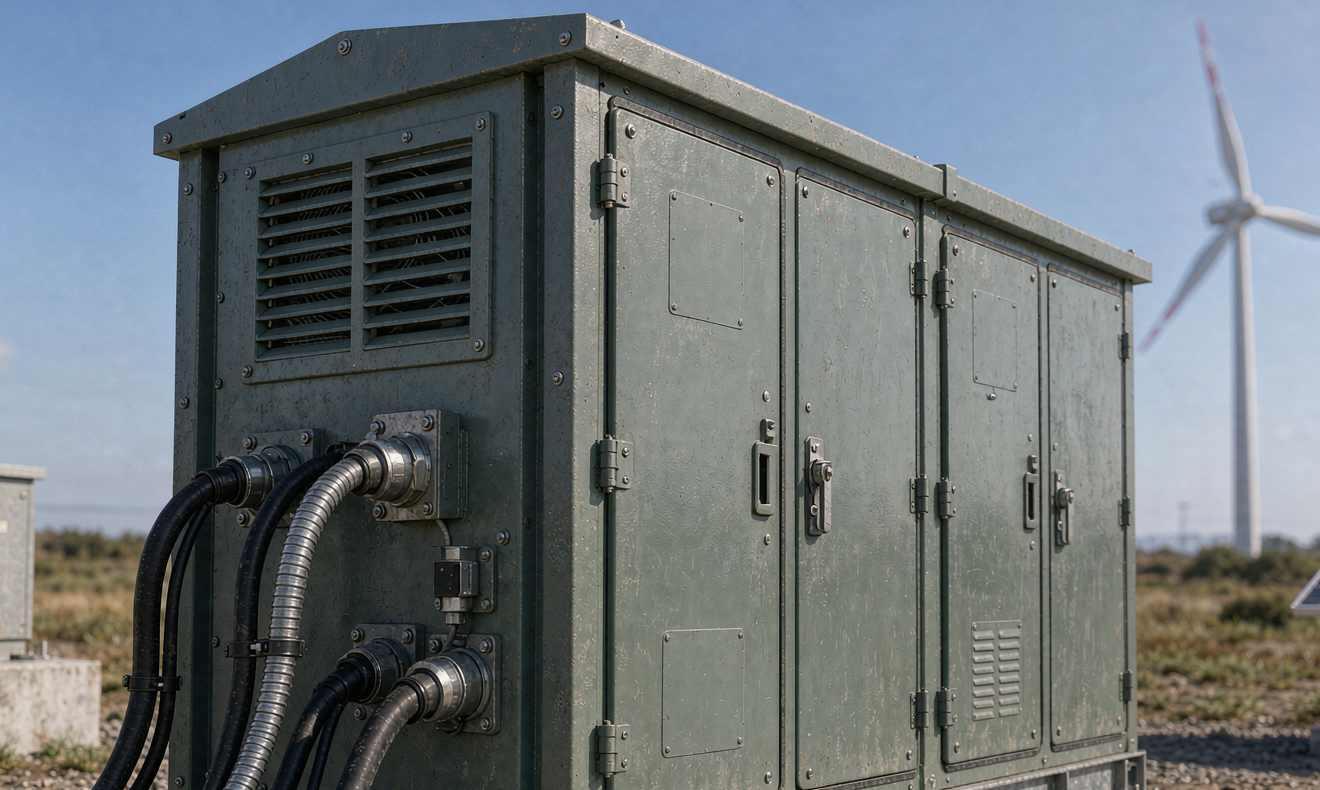
Wind sites live outdoors, and that is where sodium-ion earns its keep. Most commercial sodium cells I qualify operate from minus 20 degrees Celsius to 60 degrees Celsius, and a few layered-oxide variants hold useful capacity down to minus 30 degrees Celsius without external pad heating. Lithium iron phosphate, by contrast, needs tape heaters and a pre-charge routine below zero or its lithium plates and ages. At a North European or Highland hybrid site, dropping the heater circuit removes a real parasitic load and a freeze-related failure mode.
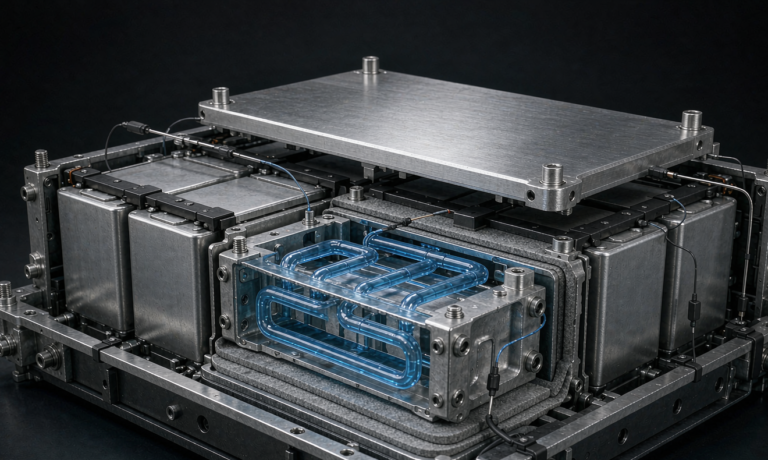
Heat is the mirror problem. At 50 degrees Celsius enclosure temperature, sodium-ion capacity fade per cycle is gentler than lithium because the cathode does not undergo the same metal dissolution. I still specify a shaded enclosure and passive venting, but I no longer need the active liquid loop that lithium would demand in the same climate. The simpler thermal design is itself a reliability win.
Safety, transport, and electrical compliance
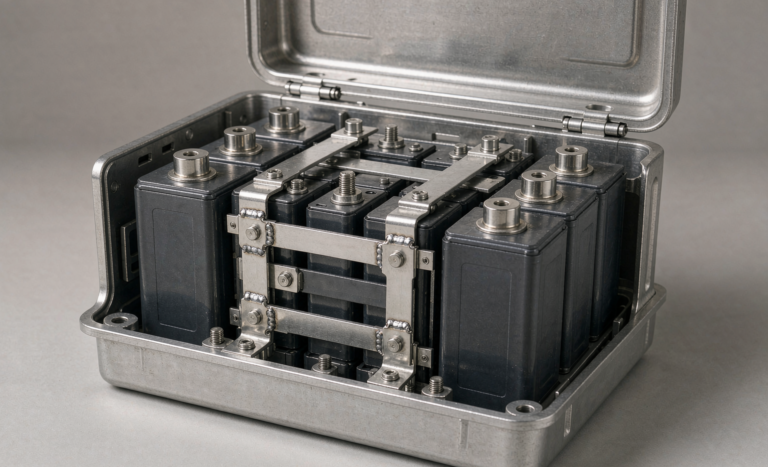
Compliance is non-negotiable before a battery leaves the depot. Every sodium-ion cell and pack we ship clears UN38.3, the transport test series covering altitude simulation, thermal, vibration, shock, external short, impact, overcharge, and forced discharge. For the pack level I build to IEC 62619 for industrial safety and IEC 62133-2 for the cells, and the enclosure fire propagation test follows UL 9540A. At the site, the battery cabinet connects under the local low-voltage wiring rule, with a dedicated disconnect and overcurrent protection sized from the inverter continuous rating.
One note for aviation-adjacent or inspected sites: the same UN38.3 dossier that satisfies road haulage also supports rail and sea, so a sodium-ion bank bound for an island hybrid can travel without a separate dangerous-goods re-test. I keep the test report in the commissioning file and hand it to the site inspector on day one. It closes the safety question before it is asked.
Integrating sodium-ion with diesel, solar, and grid
A hybrid site is rarely wind alone. The strongest designs pair the turbine with a solar array, a diesel genset bridge, and sometimes a grid tie. Sodium-ion sits at the center as the buffer. Solar fills the bank in daytime, wind tops it up at night, and the diesel only starts when state of charge falls below the 20 percent reserve for longer than the forecast window. In my deployments this logic cuts diesel run hours by 70 to 90 percent versus a genset-only setup.
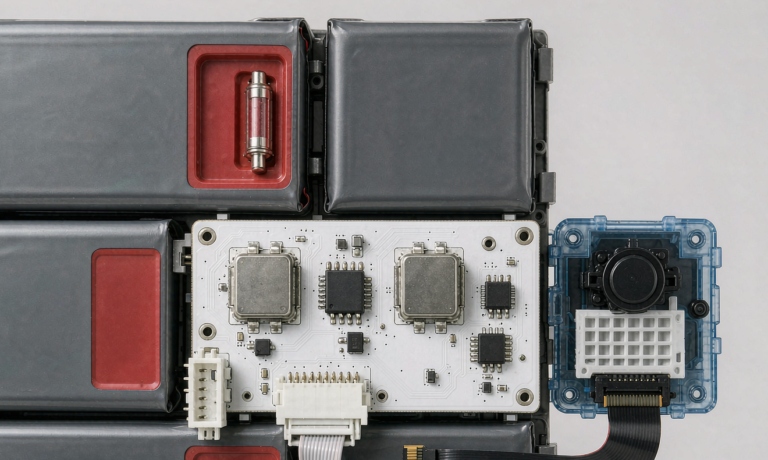
The integration work is mostly in software and protection. I set the battery management system to report state of charge, cell temperature spread, and string current to the site controller over Modbus, and I lock the turbine and diesel behind the battery so neither can backfeed the bus unsynchronized. With those interlocks, sodium-ion behaves as the stable spine of the hybrid, smoothing the wind while the other sources fill the gaps.
Frequently asked questions
Can sodium-ion batteries handle the cold at wind sites?
Yes. Most qualified sodium-ion cells operate from minus 20 degrees Celsius and some to minus 30 degrees Celsius without external heating, which removes the pad-heater load and freeze risk that lithium iron phosphate faces below zero. For very cold Highland or Nordic sites I still specify a shaded, insulated enclosure, but active heating is rarely needed.
How large should a sodium-ion hybrid storage bank be?
Size from autonomous hours and critical load, not turbine size. For 15 kW of critical load and 36 hours of wind-lull autonomy, plan about 540 kWh usable, which means roughly 700 kWh nameplate at 90 percent depth of discharge and 85 percent round-trip efficiency. Add at least 10 percent charge headroom above the fill target for sudden gusts.
Are sodium-ion packs allowed on remote site roads under UN38.3?
Yes. Every pack we deploy passes UN38.3, the transport test series for altitude, thermal, vibration, shock, short, impact, overcharge, and forced discharge. The same dossier also supports rail and sea shipment, so an island or mountain hybrid site can receive the bank without a separate dangerous-goods re-test.
Do sodium-ion banks need active cooling at hybrid sites?
Usually not. Sodium-ion tolerates higher enclosure temperatures with gentler per-cycle fade than lithium, so passive venting and shade are enough in most climates. I add forced air only where the enclosure routinely exceeds 50 degrees Celsius or the power density is very high.
Is sodium-ion cheaper than lithium for wind storage?
On a full installed basis, yes for exposed, high-cycle, cost-sensitive sites. The cells avoid cobalt and nickel, the thermal design is simpler, and the 90 percent usable depth of discharge extracts more energy from the same nameplate. The trade-off is lower energy density, so footprint grows where space is tight.
Further Reading
References