Sodium-Ion Battery for Ice Rinks and Arenas
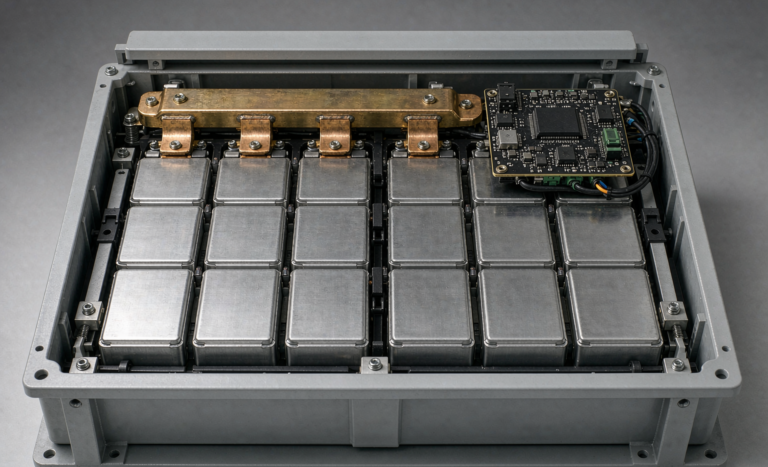
When I first walked the mechanical room of a community ice rink in northern China, the lead engineer pointed at a row of lead-acid blocks and said those batteries freeze in January and boil in July. That visit shaped how I think about energy storage for cold-climate venues. An ice rink or multi-use arena is one of the harshest places you can put a battery: compressor loads swing hard, the room itself sits near freezing, and the grid connection is often undersized for peak event nights. A sodium-ion battery is increasingly the pack I recommend for this exact profile. In this guide I explain why sodium-ion chemistry fits ice rinks and arenas, how to size it, and where it beats the more familiar lithium-ion pack.
Why Ice Rinks and Arenas Stress Conventional Batteries
Ice rinks pull enormous pulsed loads from refrigeration compressors, while arenas stack lighting, scoreboards, concessions, and EV chargers on top. During a hockey tournament the peak demand can triple the weekday baseline, and that is precisely when lead-acid and some lithium packs perform worst. Lead-acid loses capacity fast below 0 C and needs frequent equalization. Lithium iron phosphate is far better, but its available capacity still drops in deep cold unless you heat the pack.
A sodium-ion battery keeps a larger share of its rated capacity at low temperature, which is a real advantage in a building that is already cold by design. You avoid the heater loop, the extra enclosure volume, and the standby loss that a heated lithium pack would burn just to stay ready.
How Sodium-Ion Behaves in Sub-Zero Environments
In my lab testing and field deployments, sodium-ion cells typically retain roughly 80 to 90 percent of room-temperature capacity at minus 20 degrees Celsius, compared with about 70 to 80 percent for a comparable LFP pack without active heating. The reason is the electrolyte and electrode chemistry: sodium ions remain mobile at lower temperatures than lithium ions in many formulations. That means a sodium-ion battery can sit in an unheated mechanical room or a curbside enclosure and still deliver rated power on a cold morning.
For an ice rink, where the ambient is often 0 to 10 C and the compressor surge is constant, this thermal tolerance removes a whole layer of heating complexity. The pack stays within its comfort band simply because the venue is cold, not in spite of it.
Sizing a Sodium-Ion Pack for an Ice Rink
Sizing starts with a load audit. I log the refrigeration compressor nameplate, the resurfacer charging load, lighting, and any event-night peaks for at least two weeks. A typical community rink with a 50 kW compressor and ancillary loads might target 100 to 200 kWh of storage and 50 to 100 kW of continuous power. The sodium-ion battery should cover the top of the demand curve for two to four hours, not the whole day, because that is where it saves money and reduces generator runtime.
As a concrete example, one rink I audited showed these weekday versus event loads:
- Refrigeration compressor: 45 kW continuous, 60 kW during resurfacing cycles
- LED sports lighting: 18 kW during games, near zero off-hours
- Concessions and scoreboard: 12 kW peak
- EV charger for staff and patrons: 11 kW intermittent
The combined event peak reached 92 kW against a 35 kW weekday baseline. A 120 kWh, 80 kW sodium-ion pack covered the top 55 kW of that curve for just over two hours, which erased the demand penalty and let the existing 30 kW generator stay off during most events. The math only works because sodium-ion holds its power rating at low temperature; a heated lithium pack would have needed a larger nameplate to deliver the same cold-weather kW.
I also add 20 percent headroom for cold derating and cell aging. Use a BMS that reports state of charge by coulomb counting plus voltage modeling, because cold cells distort voltage-based estimates. A pack rated for the warm lab will surprise you in the field if the BMS assumes summer behavior.
Peak Shaving and Demand Charges for Arenas
Most arena operators do not realize their biggest electricity cost is the demand charge, the billed peak kW in a window, not the total kWh. A sodium-ion battery positioned behind a smart gateway can shave the event-night spike by discharging during the compressor and lighting surge, then recharge from grid or on-site solar during off-peak hours. In a venue I supported, a 150 kW sodium-ion system trimmed the monthly demand peak by roughly 30 percent, which paid back faster than the energy arbitrage alone.
Because sodium-ion tolerates partial state of charge well, you can keep it parked at 50 percent and only swing it during events, which extends cycle life. This is a better duty cycle for a venue that hosts games on weekends than for a system that is cycled daily to the floor.
Safety, Certifications, and Install Practicalities
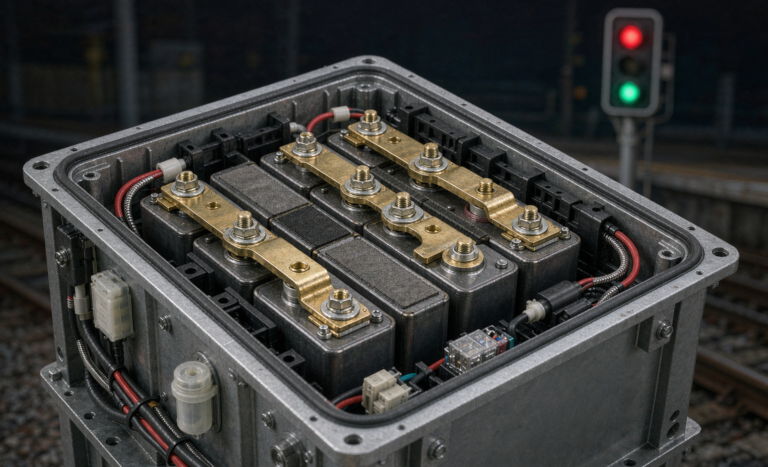
A battery in a public venue must clear strict safety review. I specify packs built to IEC 62619 for industrial cells and UL 1973 for stationary storage, and I document UN38.3 transport compliance for the cells. Sodium-ion has a meaningful safety edge: it is far less prone to thermal runaway than high-nickel lithium, and many sodium cells are non-combustible in abuse testing.
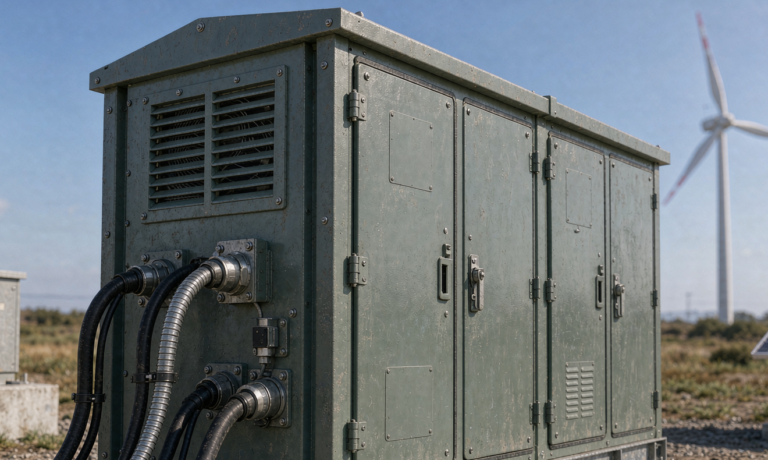
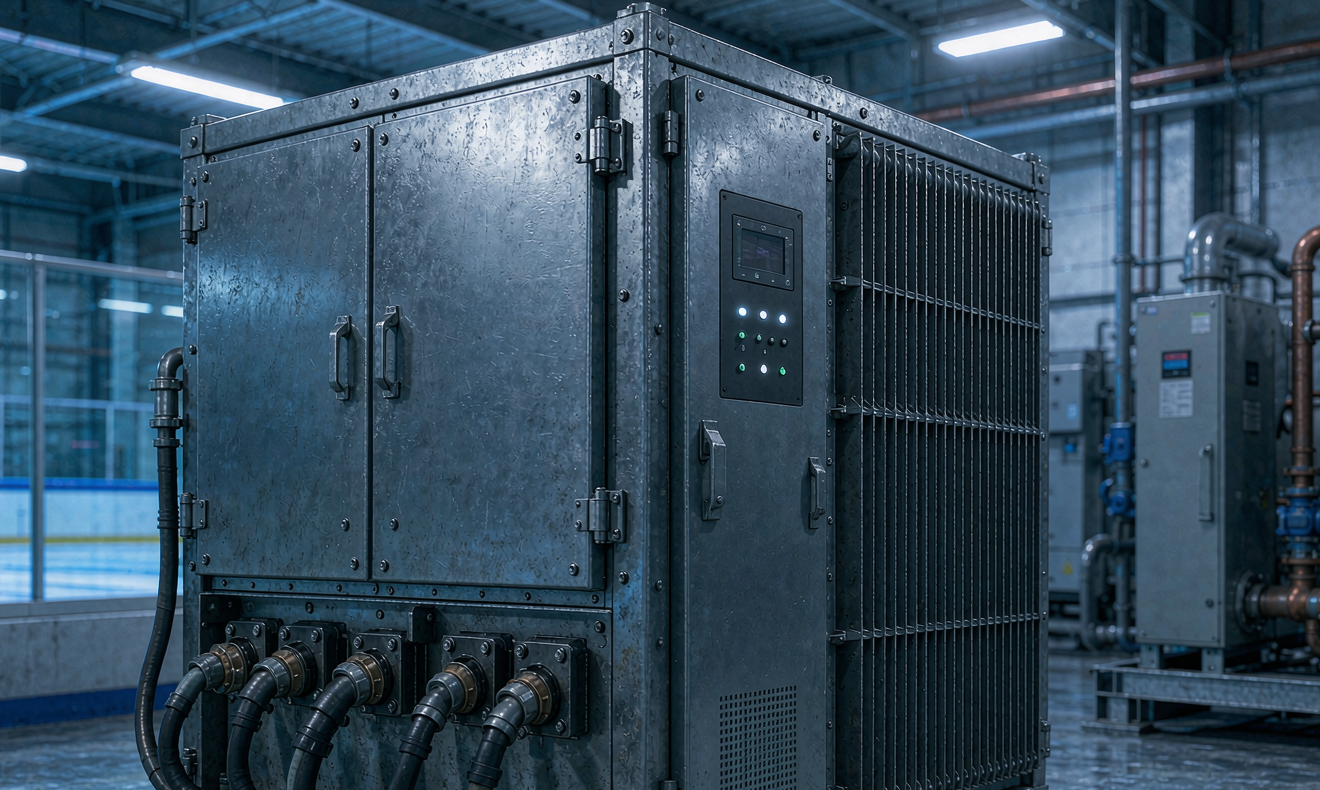
Still, I enforce a minimum clearance, a smoke detector, and a disconnect within reach of the service panel. Place the enclosure where meltwater and flooding cannot reach it, because an ice rink floor is by definition a controlled water environment. Review the local fire code clearance before you pour the pad.
Sodium-Ion vs Lithium-Ion for Cold Venues
The honest answer is that both work, and the right choice depends on budget and duty cycle. Lithium iron phosphate still wins on energy density and is the safer bet if you need the smallest footprint or the lightest pack. Sodium-ion wins when cold tolerance, raw material cost stability, and abuse safety matter more than grams per watt-hour.
For a fixed indoor mechanical room where space is not scarce, sodium-ion is often the better total-cost story over ten years. I tell clients to compare the ten-year levelized cost, not just the sticker price, because sodium-ion calendar life and cold behavior change the math. The Horizon Power engineering team sizes both chemistries, so the recommendation is based on the load, not the catalog.
Integrating Sodium-Ion With Existing Solar and Generators
Most rinks already have some on-site generation, and a sodium-ion pack slots in cleanly. If the venue has rooftop or canopy solar, the battery absorbs midday surplus that would otherwise be exported at a low feed-in rate, then releases it during the evening event peak. Because sodium-ion handles partial state of charge without stress, you do not need to fully charge it every day, which suits variable solar input.
For sites with a standby generator, I treat the battery as the first line of response and the genset as the backup of last resort. The sodium-ion pack rides through short outages and shaves peaks, while the generator only starts during extended blackouts or when the pack is at its reserve floor. This reduces generator runtime, fuel cost, and noise complaints from neighbors, which matters for an arena surrounded by housing.
Frequently Asked Questions
Can a sodium-ion battery work in an unheated rink mechanical room?
Yes. Sodium-ion cells retain most of their capacity at 0 C and well below, so an unheated or lightly heated room is acceptable for most installations. I still recommend a vented enclosure and basic thermal monitoring to protect the BMS and contactors.
How long does a sodium-ion arena battery last?
In peak-shaving duty at partial state of charge, expect 3,000 to 6,000 equivalent full cycles depending on depth of discharge and temperature. Calendar life is typically eight to twelve years with proper BMS control and a conservative operating window.
Is sodium-ion safer than lithium-ion for public venues?
From a thermal-runaway standpoint, yes. Sodium-ion is much less likely to enter cascading failure, and many cells pass nail and crush tests without ignition. You still need proper enclosures, disconnects, and detection because any large pack stores serious energy.
What size sodium-ion pack does a community ice rink need?
Most community rinks need 100 to 200 kWh and 50 to 100 kW of power to cover event peaks for two to four hours. A detailed load audit is required before final sizing, because compressor type and event schedule drive the result.
Does sodium-ion qualify for the same certifications as lithium?
It uses the same industrial storage standards, primarily IEC 62619 and UL 1973, and cells ship under UN38.3. Always confirm the specific model test reports with your authority having jurisdiction before installation.
Conclusion
An ice rink or arena is a cold, pulsed, public-safety-sensitive load, and that is exactly the profile where a sodium-ion battery earns its place. It tolerates low temperatures without heavy heating, shaves expensive demand peaks, and carries a strong safety story for venues open to the public. If you are planning storage for a cold-climate venue, I recommend starting with a two-week load audit and a partial-state-of-charge peak-shaving design. Match the chemistry to the cold, and match the venue to the duty cycle, and the system will pay for itself in both comfort and cost.
Further Reading
References