Bulldozer Battery Pack: Sizing and Duty Cycle Guide
When I first started engineering battery systems for earthmoving equipment, the working assumption was simple: take an off-the-shelf lithium module, bolt it onto the machine, and call the job done. Three field failures in a single season changed that view completely. A bulldozer is one of the harshest environments a battery will ever see. It lives with continuous low-frequency vibration from the tracks, sharp shock loads every time the blade hits compacted ground, abrasive dust that finds its way into every seam, and thermal swings from idling in desert heat to cold-start in an alpine winter. This guide walks through how we at Horizon Power size and build a battery bulldozer pack that survives those conditions and still delivers a predictable duty cycle shift after shift.
Why a Bulldozer Battery Is Not a Rebadged Forklift Pack
The first mistake teams make is treating a dozer like a larger version of a warehouse truck. It is not. A forklift moves on smooth concrete, runs a few hours a day, and rarely sees more than a moderate current draw. A crawler dozer runs for ten or twelve hours straight, often with the hydraulics and traction motors pulling hard at the same moment. The pack has to absorb both a steady propulsion load and sudden hydraulic spikes without the voltage sagging below the inverter cutoff.
In my experience the cell chemistry decision sets the ceiling for the whole program. Lithium iron phosphate, or LFP, is the default for most earthmoving battery solution work because its thermal runaway threshold sits around 270 degrees Celsius, far above the nickel-based chemistries, and it tolerates the partial-state-of-charge cycling that dozers impose. Nickel manganese cobalt cells can deliver higher energy density, but the added cooling burden and the stricter enclosure requirements usually erase the weight saving on a machine this size. A custom battery solution for a dozer almost always lands on LFP unless the weight budget is absolutely unforgiving.
Pack Architecture for Vibration and Shock Loads
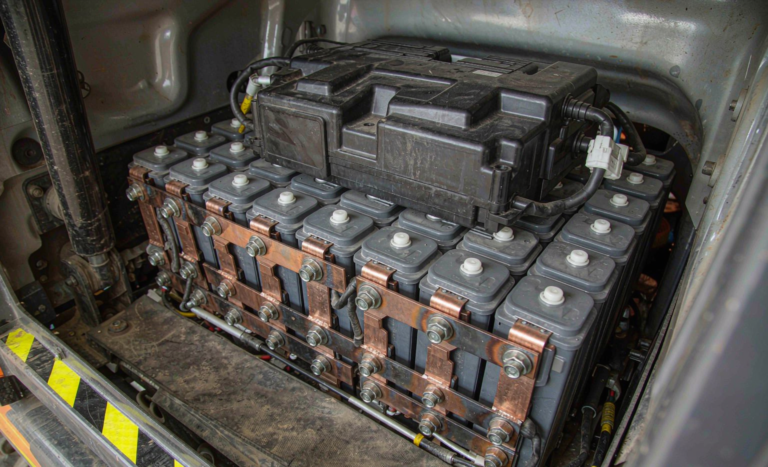
Track-driven machines transmit a brutal spectrum of vibration into the chassis. We qualify every dozer pack against random vibration profiles aligned with IEC 60068-2-64 and the shock sections of MIL-STD-810H, because the standardized transport tests simply do not reproduce what a blade-first impact delivers. The failure mode is rarely the cell itself. It is the busbar joint, the cell-to-busbar weld, and the module mounting points that work-harden and crack over thousands of cycles.
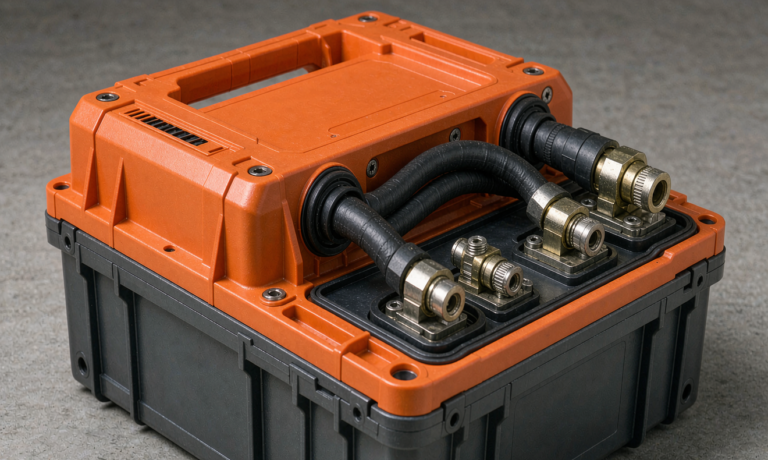
Our answer is a modular architecture with individually potted modules, floating mounts that decouple the pack from the chassis resonance, and a single-point load path that routes shock into the frame rather than the cells. We also derate the continuous current rating by roughly twenty percent versus the cell datasheet to leave headroom for the spike events. A battery bulldozer that drops a weld at hour eight hundred of its service life costs far more than the small weight penalty of conservative design.
Sizing the Pack for Real Dozer Duty Cycles
Sizing starts with the duty cycle, not with the marketing number on a spec sheet. A mid-class crawler dozer on a grading pass draws perhaps thirty to eighty kilowatts on average from the traction and hydraulic systems, with peaks that can briefly touch one hundred fifty to two hundred fifty kilowatts when the blade bites and the tracks fight for traction. We log a representative week of site telemetry, build a load histogram, and size the usable energy to cover the target shift with a ten to fifteen percent reserve.
The voltage architecture follows the machine class. Smaller utility dozers run on forty-eight or eighty volt systems carried over from diesel-electric conversions, while larger production machines trend toward high-voltage four hundred to six hundred volt architectures to keep cable mass and ohmic loss reasonable at the current levels involved. Whatever the bus voltage, the pack must hold its voltage inside the inverter window through the entire discharge, which is why we model the tail of the curve, not just the nameplate capacity, before committing to a cell count.
Thermal Management in a Sealed, Dusty Enclosure
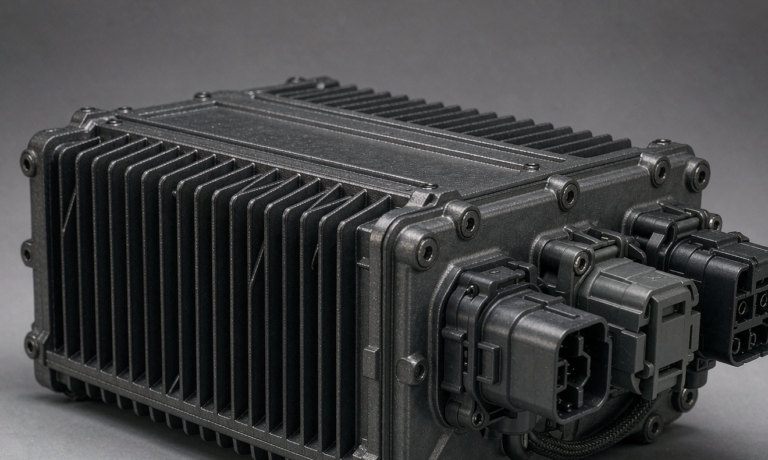
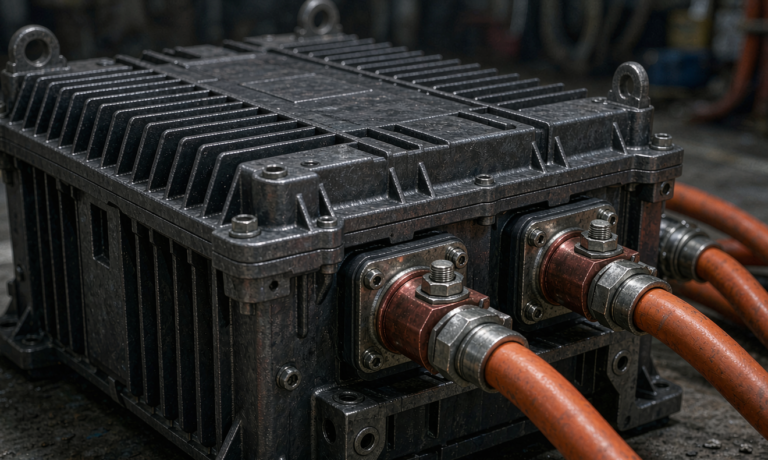
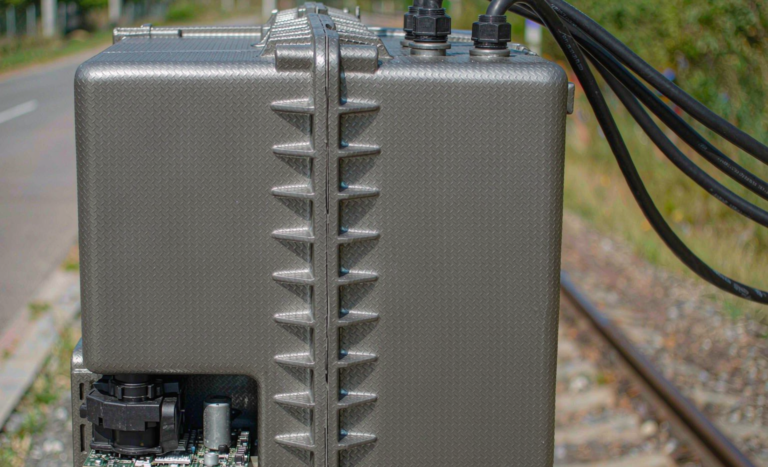
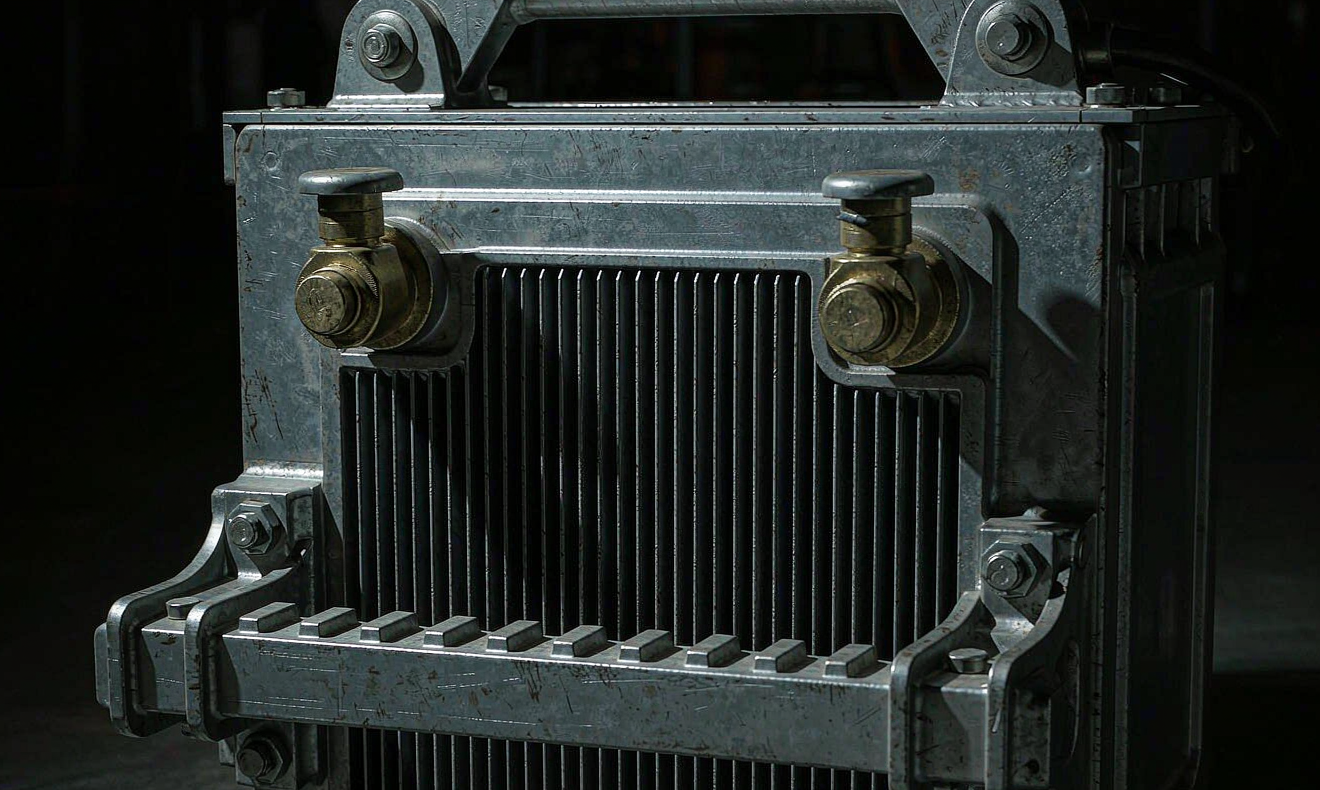
Dust is the silent enemy. An enclosure rated below IP67 lets fine abrasive powder past the seals, and once it settles on a cell surface it traps heat and accelerates aging. We specify a minimum of IP67 for the pack shell and use positive-pressure filtered breathers so the interior stays cleaner than the jobsite air outside. The cooling strategy depends on climate: temperate sites get passive aluminum skids with generous fin area, while hot or enclosed operations get liquid plates bonded directly to the module base.
The battery management system watches cell temperature at multiple points and trims current well before any cell reaches its limit. For a bulldozer battery operating between roughly minus twenty and plus fifty-five degrees Celsius, the BMS enforces a soft ramp on charge and discharge rather than a hard trip, because a sudden cutoff on a loaded blade is both unproductive and unsafe. The thermal model we build during design is validated with on-machine infrared scans during the first field trial, and the thresholds are tuned from that data.
Certification and Jobsite Compliance
No battery leaves our facility without the certifications the logistics chain and the site regulator expect. Every pack is built and tested to UN38.3 for transport safety, which covers the altitude simulation, thermal, vibration, shock, external short, impact, and overcharge sequence that proves the cells will not fail in transit. The pack level carries IEC 62133-2 for secondary lithium cell safety, and we document the construction and protection circuit against that standard for the customer file.
For machines that will ship by air as spares or to remote sites, we also align the documentation with the relevant civil aviation expectations from FAA and EASA so the batteries clear cargo handling without a last-minute hold. On the jobsite itself, the enclosure labeling, isolation contactor, and manual disconnect follow the local electrical and machinery rules. I have seen otherwise good battery solution programs stall at customs or at the site gate purely because the paper trail was incomplete, so we treat the certificate package as part of the product, not an afterthought.
Charging Strategy and Opportunity Charging
Dozers rarely return to a depot on a tidy schedule, so opportunity charging during operator breaks is the realistic model. We design the pack and charger as a pair. A cooled, moderately paced charge around zero point five to one times capacity protects cell life, while a short high-rate top-up during a lunch break keeps the machine productive without cooking the pack. The BMS and charger speak over the standard industrial bus so the charger never pushes current the cells cannot take at their current temperature.
The single biggest lifespan lever is avoiding a permanent full state of charge in hot storage. We recommend fleets hold packs around eighty percent between shifts and only charge to full immediately before a long run. A battery bulldozer that sits at one hundred percent in the summer sun ages markedly faster than one managed this way, and the difference shows up as lost capacity within a single construction season.
Fleet-Level Battery Management
One machine is an engineering problem. A fleet is a logistics problem. We equip each pack with a cellular or site-network telemetry link that reports state of charge, cell balance, temperature history, and fault codes to a central dashboard. That data lets the operator rotate packs, plan maintenance before a weak cell strands a machine, and prove to the project owner that the electric equipment is actually available when promised.
For contractors standardizing on a custom battery solution across several dozer classes, the payoff is consistency. Common module form factors, shared chargers, and one spare-parts list cut the inventory and training burden dramatically. The upfront engineering is heavier than buying a generic box, but the total cost across a multi-year fleet is where the economics settle.
Frequently Asked Questions
How long does a bulldozer battery last per charge?
For a typical grading shift, a properly sized pack covers roughly eight to ten hours of mixed blade and track work, with the exact figure driven by the duty-cycle telemetry we log during commissioning. Machines on continuous heavy push work sit at the lower end, while lighter finishing passes stretch toward the upper end.
What voltage is typical for a crawler dozer battery system?
Utility-class machines commonly use forty-eight or eighty volt systems, while larger production dozers move to four hundred to six hundred volt architectures to keep cable mass and losses manageable at the high currents involved. The right bus voltage is fixed during the sizing study, not chosen from a catalog.
Can a lithium battery replace a diesel starter battery on a dozer?
Yes, but the starter battery and the traction pack are different problems. A lithium cranking module handles the cold-start surge well, while the traction pack carries the working load. We generally keep them as separate, purpose-built assemblies so each can be optimized for its role.
How do you keep a dozer battery cool in hot climates?
We use liquid cooling plates bonded to the module base for hot or enclosed sites, paired with a BMS that ramps current down before any cell reaches its thermal limit. An IP67 sealed enclosure with filtered positive-pressure breathers keeps dust off the surfaces so heat can actually leave the pack.
Is a custom battery solution required for bulldozers?
For a single retrofit, an adapted standard pack can work. For a production machine or a multi-unit fleet, a custom battery solution pays back through better packaging, shared chargers, and a maintenance plan built around your actual duty cycle rather than a generic assumption.
Conclusion
A reliable battery bulldozer is the product of disciplined sizing, conservative mechanical design, honest thermal modeling, and complete certification paperwork. At Horizon Power we treat those four pillars as non-negotiable, because a dozer that quits mid-shift costs more than the engineering time saved by skipping it. If you are planning an electric or hybrid dozer program, start from your duty-cycle data and let the pack follow the machine, not the other way around.
Further Reading
References