Lithium Battery for Flashlights and Headlamps
When a flashlight or headlamp fails on a job site, a trail, or during a power outage, the cause is almost never the LED. In my fifteen years designing lithium battery packs at Horizon Power, the failures I have investigated trace back to cell selection, protection circuitry, or thermal layout, not the emitter. A lithium battery for flashlights and headlamps is not the same animal as a phone cell or a drone battery. The duty profile is bursty, the enclosure traps heat, and the buyer expects years of shelf life followed by sudden full-power draws. This article explains how our engineering team specifies cells, calculates real runtime, and keeps portable lighting products safe and certifiable.
Understanding the Duty Profile of Portable Lighting
The first mistake lighting brands make is treating a torch like a constant-load device. A lithium battery for flashlights sees a very different load curve than a drone battery that discharges at a steady several-amp rate for twenty minutes. A headlamp cycles between standby, a low trail mode at a few hundred milliamps, and a turbo burst of three amps for ninety seconds before thermal step-down. That burst is the design-defining event.
In the lab we profile the LED driver, not the marketing claim. A 1000 lumen emitter at three volts draws roughly 3.2 amps at the cell after driver losses. If the cell cannot hold above 3.0 volts under that load, the driver shuts down or the light flickers. We therefore select cells with a continuous discharge rating of at least 8 amps even when the average draw is under 2 amps. Headroom, not average, sets the cell.
Standby self-discharge matters more than spec sheets admit. A lithium battery for flashlights left in a drawer for a season should lose under 3 percent per month. We qualify cells at 25 degrees Celsius for ninety days and reject any batch above 5 percent. A headlamp that is dead when you need it has failed its only job.
Cell Chemistry Choices: 18650, 21700, and LiFePO4
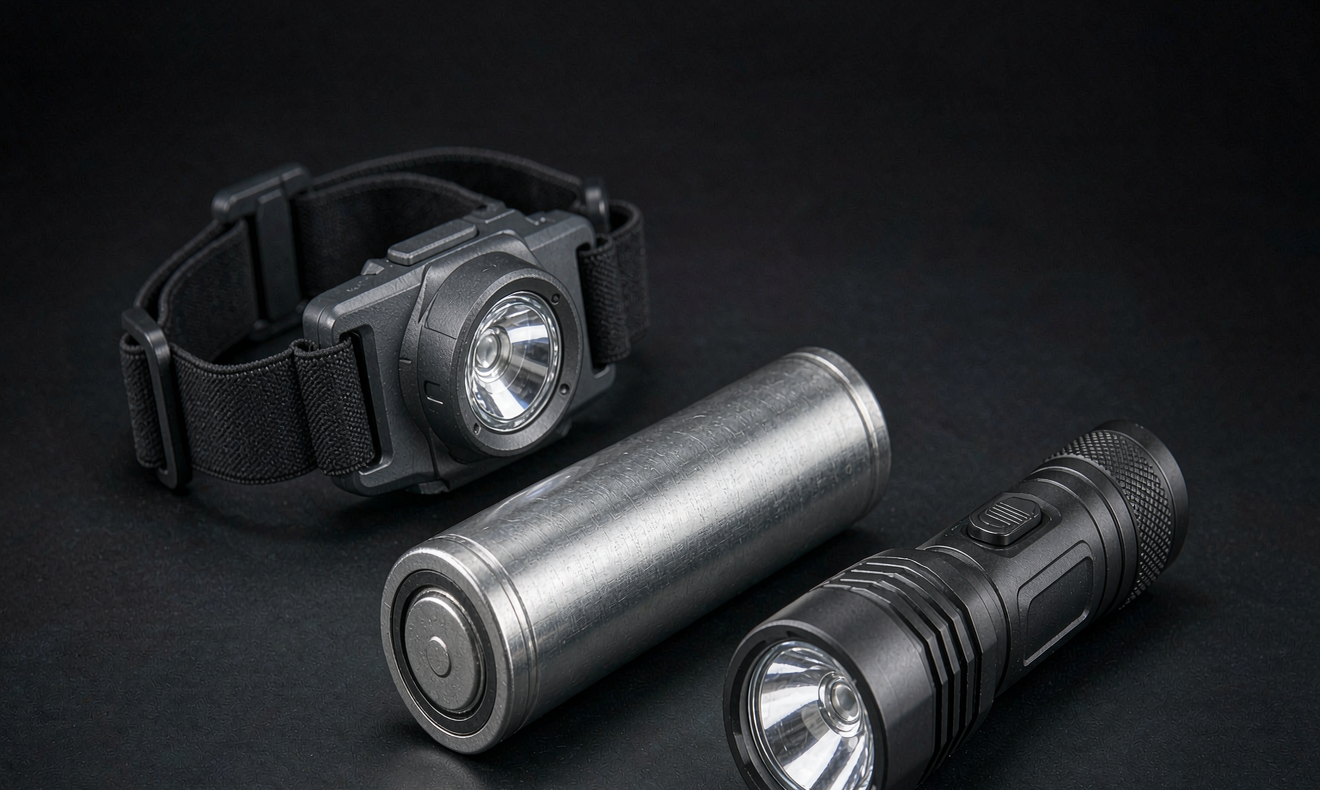
Most premium lighting uses cylindrical lithium-ion cells. The 18650 remains the workhorse, typically 3.0 to 3.6 amp-hours at a 3.6 or 3.7 volt nominal. A quality 18650 rated at 3.45 amp-hours gives a compact headlamp a respectable two to four hour runtime at usable output. The 21700 is the modern upgrade: at 4.0 to 5.0 amp-hours in nearly the same diameter and only 5 millimeters more length, it adds 30 to 40 percent runtime for a small size penalty. For a lithium battery for flashlights where every gram counts, the 21700 is now our default recommendation.
For rugged, long-life, or high-temperature products we turn to LiFePO4. At 3.2 volts nominal with an inherently stable chemistry, it tolerates abuse, survives thousands of cycles, and stays cooler under load. The trade is energy density: a LiFePO4 pack is about 20 percent heavier for the same watt-hours. We spec it for industrial headlamps, mining cap lamps, and any product that will be charged daily for years.
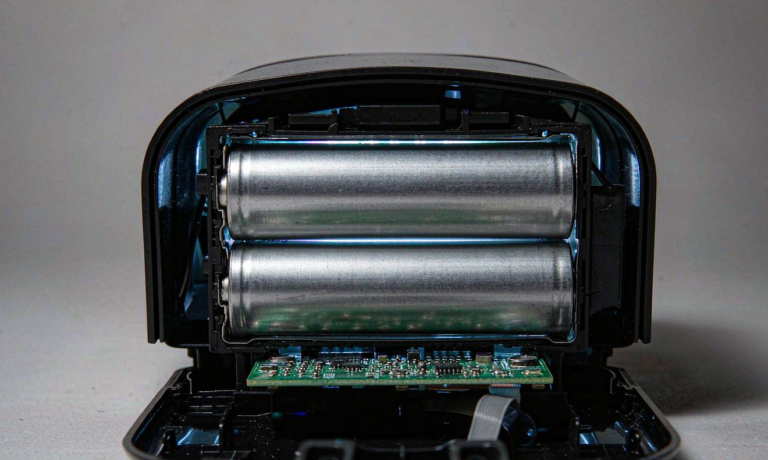
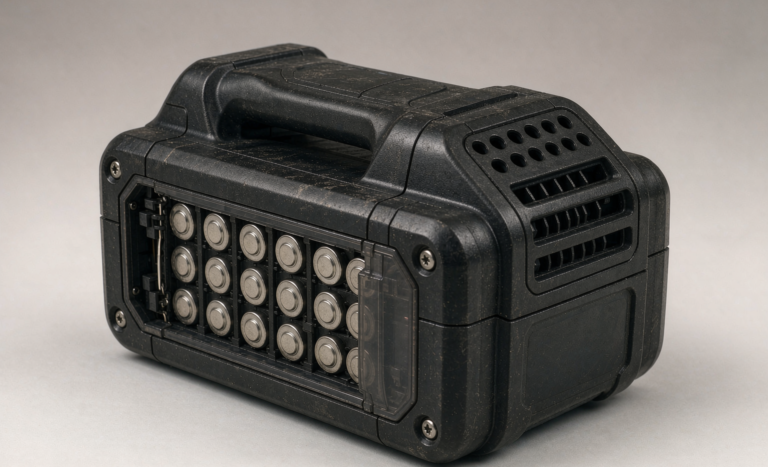
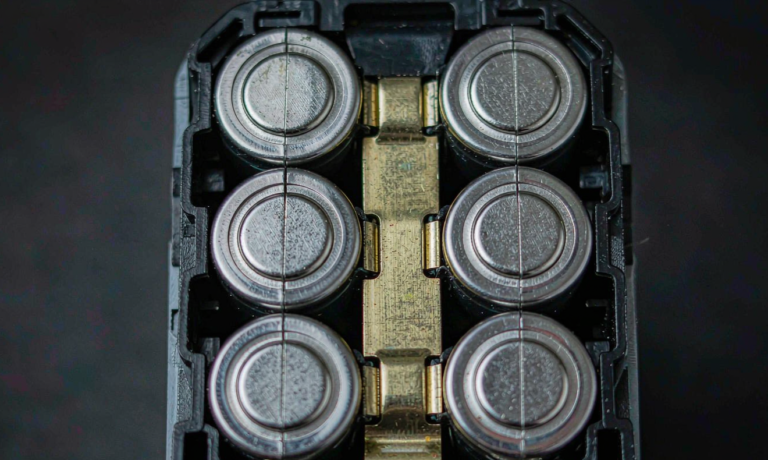
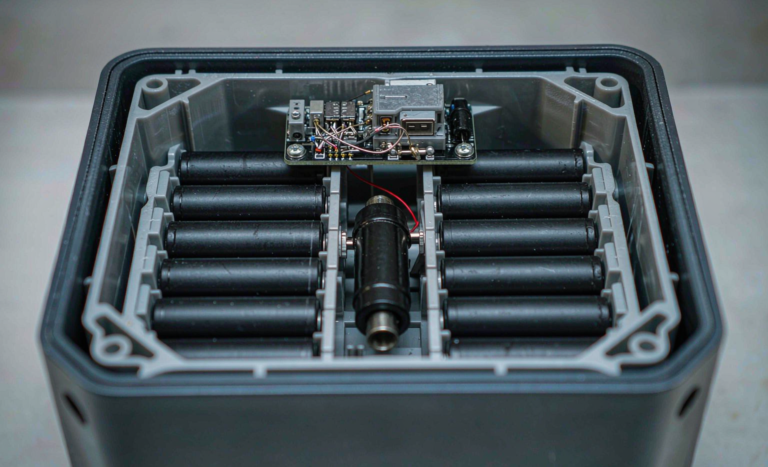
We never ship loose cells in a lighting product. A custom battery solution wraps the cells in a spot-welded nickel strip frame, a protected PCB, and a thermoformed shell that matches the product. The pack, not the bare cell, is what the user actually buys and trusts.
Capacity, Runtime, and the Numbers That Matter
Runtime is not simply capacity divided by current, because the LED driver is not perfectly efficient and the cell voltage sags. A practical rule we use is to take the cell watt-hours, multiply by 0.85 for driver and cable loss, then divide by the emitter wattage at the chosen mode. A 21700 at 18 watt-hours driving a 3 watt trail beam delivers about 5 hours of real light, not the 6 hours a naive calculation predicts.
Turbo mode breaks this model. A lithium battery for flashlights rated at 3 amp-hours may deliver only 2.4 amp-hours if you pull 5 amps continuously, because high-rate discharge loses capacity to internal resistance and heat. We publish two numbers to customers: capacity at 0.2C and capacity at 2C, because the gap is exactly where complaints come from.
For headlamps we also model the step-down curve. After ninety seconds of turbo the reflector hits 55 degrees Celsius and the driver throttles to half power. The honest runtime figure includes that ramp, and we print it on the pack label rather than the marketing mode.
Thermal Behavior Inside a Reflector Housing
A flashlight is a heat box. The LED dumps waste heat into an aluminum reflector, and the lithium battery for flashlights sits inches away. At a 3 amp burst the cell surface can climb past 45 degrees Celsius within minutes if airflow is poor. Our limit for sustained cell surface temperature is 60 degrees Celsius, and we design housings with at least a 2 millimeter air gap and a conductive path from cell to shell.
Thermal step-down is not a defect, it is protection. A well-designed driver reads an NTC thermistor on the cell and reduces current before damage occurs. We have tested packs that survived forty full turbo cycles only because the firmware capped temperature at 58 degrees Celsius. A product without that cap cooks its cells and swells the housing within a single season.
For cold-environment headlamps, lithium behaves poorly below zero degrees Celsius. Capacity at minus 10 degrees Celsius can fall to 70 percent, and charging below zero is dangerous. We add a low-temperature cutoff in the protection circuit and mark the pack clearly for users who work in freezers or on winter trails.
Certification and Air-Travel Rules for Lithium Lighting
Portable lighting crosses borders, which means it crosses regulatory lines. Every lithium battery for flashlights we build is qualified to UN38.3, the international transport test that includes altitude simulation, thermal, vibration, shock, external short circuit, impact, overcharge, and forced discharge. A pack that has not passed UN38.3 should never leave the factory, full stop.
For cell and pack construction we follow IEC 62133-2:2017, the safety standard for lithium systems, supported by IEC 61960 for performance marking. These let a buyer compare a lithium battery for flashlights against a stated capacity that is tested, not imagined.
Air travel is the surprise trap. Under IATA Dangerous Goods Rules, with FAA and EASA enforcement, spare lithium batteries must travel in carry-on luggage, must be under 100 watt-hours for unrestricted carry, and must have protected terminals. A headlamp with a fitted pack is fine in checked or carry-on, but loose 21700 spares need terminal caps. We print the watt-hour figure on every pack so travelers are not stopped at security.
Designing a Custom Battery Pack for Your Lighting Product
Off-the-shelf cells are a starting point, not a finished product. A custom battery solution for a lithium battery for flashlights begins with the mechanical envelope: does the pack sit in a tube, a flat headlamp brick, or a swappable sled? We then choose protection grade. A basic PCM covers over-voltage, under-voltage, over-current, and short circuit. For professional gear we add over-temperature protection and a fuel-gauge chip that reports state of charge to the LED display.
Connector choice decides reliability. Spring contacts wear and corrode; a soldered or welded tab connection outlasts them in wet or dusty use. We specify IP-rated gaskets for headlamps used in rain and test to IPX4 minimum, IPX6 for fishing and caving lights. A lithium battery for flashlights that dies from a splash is a warranty claim waiting to happen.
Finally we document the pack: cell batch, protection thresholds, and a cycle-life curve at the real discharge rate. That paperwork is what turns a cell into a product a brand can stand behind for three years.
Frequently Asked Questions
Can I use a 18650 lithium battery in any flashlight?
No. Many flashlights accept only button-top protected cells, while others need flat-top high-drain cells. A lithium battery for flashlights must match the device’s length, protection, and discharge rating, or it will fail to make contact or overheat in use.
How long does a lithium headlamp battery last?
A quality 21700 cell gives 4 to 6 hours of usable trail light and several years of standby. Real runtime depends on output mode, because turbo bursts drain a lithium battery for flashlights far faster than the rated capacity suggests.
Is it safe to carry lithium flashlight batteries on a plane?
Yes, but only in carry-on luggage. Spare cells under 100 watt-hours need terminal protection, and we print the watt-hour rating on every pack so travelers clear security without delay.
What is the difference between 18650 and 21700 for headlamps?
The 21700 holds 30 to 40 percent more energy in nearly the same size, so a lithium battery for flashlights built on it runs longer. The 18650 remains valid where space is tight and cost is the priority.
How should I store lithium batteries for seasonal lighting?
Store at about 40 to 60 percent charge in a cool, dry place near 15 degrees Celsius. A lithium battery for flashlights kept fully charged and hot ages fastest, while a half-charged cell in a drawer stays healthy for years.
Further Reading
References