Battery Solution for Boom Lifts and Cherry Pickers
When a maintenance crew needs to reach a 20 meter facade or change a lighting rig over a crowded concourse, the machine of choice is usually a boom lift or a cherry picker. As a senior lithium battery engineer at Horizon Power, I have spent the last decade specifying battery packs for access equipment, and the electrical demands of these machines are unlike any other mobile application. They combine a heavy hydraulic pump, a long duty cycle at height, and harsh outdoor exposure in a single chassis. This guide explains how to build a reliable battery solution for boom lifts and cherry pickers, covering voltage platforms, peak power, thermal behavior, charging, and the safety standards that govern transport and use.
Why Boom Lifts and Cherry Pickers Need a Dedicated Battery
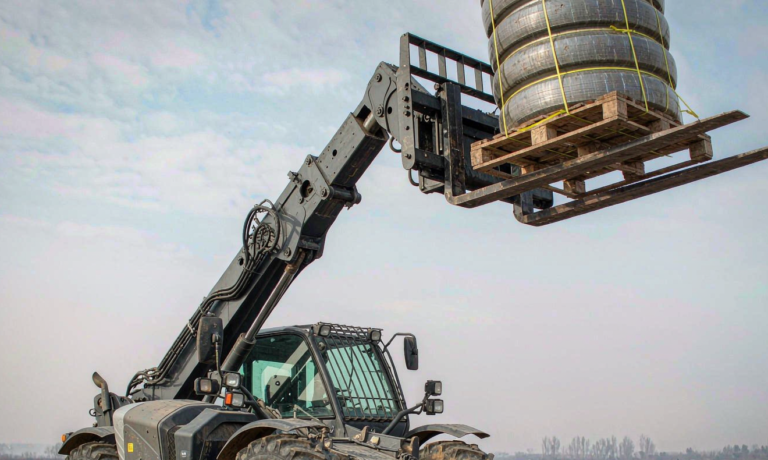
A boom lift is not simply a scissor lift with a longer arm. The articulation point, the hydraulic outreach, and the need to hold a platform steady in wind all change the load profile. A cherry picker, which is essentially an articulating boom on a van or truck chassis, draws a sharp surge when the lift pump engages and a steady current while the platform is held. The battery solution for boom lifts must absorb these surges without voltage sag that triggers a low-voltage cutoff mid-operation.
In my field experience, the most common failure mode is not capacity loss but voltage collapse under pump load. A pack sized only on amp-hours will look adequate on paper yet stall the boom at 30 percent state of charge. We therefore design around peak power and internal resistance, not just energy.
Choosing the Right Voltage Platform
Modern boom lifts and cherry pickers run on 24 V, 48 V, or 80 V systems. Smaller indoor units and trailer-mounted cherry pickers typically use 24 V, while rough-terrain articulated booms almost always use 48 V, and the largest telescopic units use 80 V. The higher voltage reduces current for the same power, which cuts copper weight and I squared R heating in the cables and connectors.
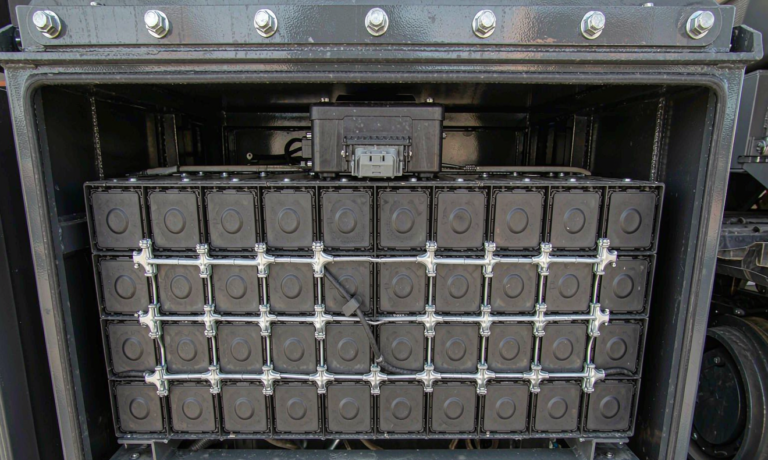
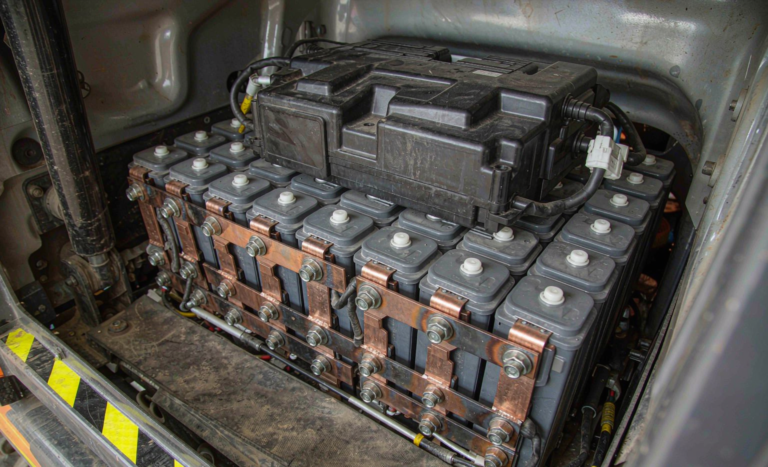
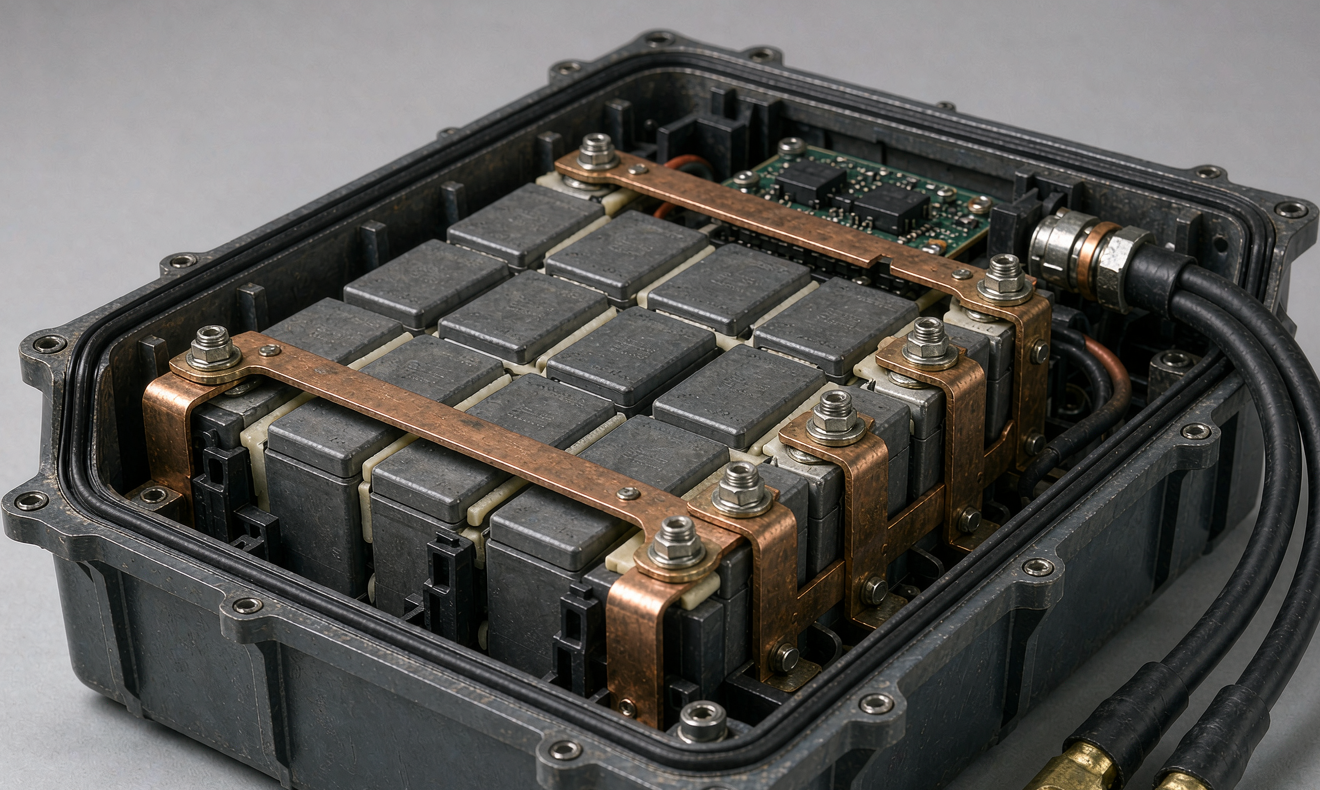
For a custom battery solution, 48 V has become the default sweet spot. It keeps peak currents in the 150 to 250 A range for a 7 to 12 kW hydraulic pump, which is manageable with standard contactors and a well-designed busbar. We standardize our 48 V modules around prismatic lithium iron phosphate cells because of their thermal stability and long cycle life.
Duty Cycle and Peak Power for Hydraulic Pumps
The hydraulic pump is the dominant load. A typical lift cycle spends 10 to 20 percent of the time pumping and the rest holding or driving. Peak pump power can reach 10 kW on a 48 V system, demanding roughly 230 A before efficiency losses. The pack must deliver this without the terminal voltage dropping below the inverter low-voltage threshold.
We spec cells with a continuous discharge rating at least 1.5 times the expected steady pump current and a pulse rating three times higher for the first two seconds of engagement. A well-matched boom lift battery holds above 44 V under full pump load even at 20 percent state of charge, which is what keeps the machine productive through a full shift.
Outdoor and Rough-Terrain Demands
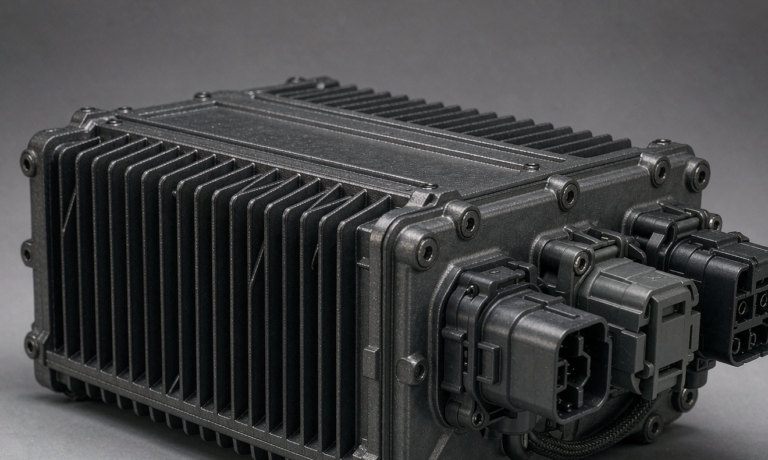
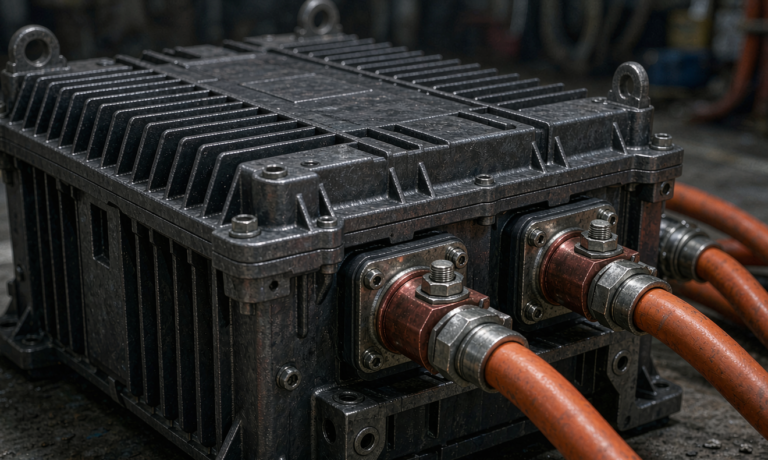
Unlike warehouse equipment, boom lifts work in rain, dust, salt spray at ports, and on uneven ground. The enclosure must meet at least IP65 to keep the pack sealed against driving rain and fine abrasive dust. For coastal or de-icing environments we add a conformal coating on the battery management system boards and specify marine-grade stainless hardware.
Rough-terrain units also experience constant vibration from the chassis suspension and the pump. We secure every cell with structural adhesive and a mechanical retention frame, then validate the assembly on a vibration table to IEC 60068-2-64 before release. A loose cell tab is the fastest route to an intermittent fault at height, which is unacceptable for access equipment.
Thermal Management and Cold-Weather Operation
Lithium cells lose available power as temperature drops. Below 0 degrees Celsius, a lithium iron phosphate pack can lose 20 to 30 percent of its discharge capability, and charging must be limited to protect the anode. For cherry pickers working in refrigerated yards or winter construction, we integrate a low-power pad heater controlled by the battery management system that warms the cells to 5 degrees Celsius before allowing fast charge.
On the hot side, a pack sealed in a dark enclosure on a summer jobsite can see ambient temperatures above 45 degrees Celsius. We size the cell spacing and add passive vents so the internal temperature stays under 55 degrees Celsius during continuous pump duty. The battery management system logs temperature at three points to catch hotspot trends before they become failures.
Charging Strategy and Opportunity Charging
Access equipment is often shared across a fleet, so downtime for charging cuts utilization. We recommend opportunity charging during operator breaks using a 48 V 30 A charger that returns 80 percent state of charge in about 90 minutes. Lithium iron phosphate tolerates partial-state charging far better than lead-acid, so this practice does not shorten pack life.
For depots with many units, a sequenced charger bank prevents a demand spike that trips the site supply. We configure each charger with a staggered start delay set in the battery management system, which spreads the load and keeps the incoming feeder within its rating. A clear state-of-charge readout on the machine dashboard removes operator guesswork.
Safety Standards and Compliance
Any battery solution for boom lifts that ships internationally must clear UN38.3, the transport test sequence covering altitude simulation, thermal, vibration, shock, external short circuit, impact, and forced discharge. We also build every pack to IEC 62133 for portable cell safety and apply CE marking with a documented risk assessment. In North America, many rental fleets expect compliance with the relevant UL recognition for the cell and the pack assembly.
Beyond certification, the field reality is redundant protection. Our packs include a contactor that opens on over-current, a fuse sized to the cable, and a battery management system that isolates the load on any cell fault. For aerial work, a single layer of protection is never enough, so we design with defense in depth and log every fault code for the maintenance team.
Frequently Asked Questions
What voltage battery does a boom lift use?
Most modern articulated and telescopic boom lifts use 48 V systems, with smaller indoor cherry pickers on 24 V and the largest units on 80 V. The right choice depends on pump power and cable weight limits.
How long does a boom lift battery last on one charge?
A properly sized lithium iron phosphate pack supports a full 8 hour shift of typical lift and drive duty. Peak pump surges are the limiting factor, so capacity alone does not predict runtime.
Can I use a regular forklift battery in a cherry picker?
No. Forklift batteries are built for different duty cycles and often lack the sealed enclosure and battery management system needed for outdoor aerial work. A dedicated boom lift battery is safer and more reliable.
Is cold weather a problem for lithium boom lift batteries?
Below 0 degrees Celsius the cells lose power and must not be fast charged. We add a managed heater so the pack stays in its safe operating window through winter work.
Do these batteries need special chargers?
Yes. Use a charger matched to the pack voltage and chemistry with communication to the battery management system. Opportunity charging with a 48 V lithium charger is the most efficient depot practice.
What certifications should the pack have?
At minimum UN38.3 for transport and IEC 62133 for cell safety, with CE marking and documented compliance for the markets you serve. UL recognition is common for North American rental fleets.
Conclusion
Specifying a battery solution for boom lifts and cherry pickers is about peak power, sealing, vibration, and temperature as much as it is about capacity. At Horizon Power we design 48 V lithium iron phosphate packs with the surge capability, IP65 enclosure, and redundant protection that access equipment demands, then validate them against vibration and thermal standards before they ever reach a jobsite. If you are electrifying a lift fleet, start the conversation with your duty cycle data and we will engineer a custom battery solution that keeps your platforms steady at height.
Further Reading
References