Sodium-Ion Dairy Farm Battery: Sizing and Power Guide
I have spent fifteen years specifying battery systems for agricultural sites, and dairy farms remain the most misunderstood electrical loads I meet. A milking parlor does not draw power the way a house does. It draws it in hard, repeated pulses: a vacuum pump that starts every few minutes, a milk cooling compressor that works hardest right after each milking, and washdown water heaters that can double the morning peak. When a rural feeder drops out during a storm, the farmer does not need a battery that looks good on a datasheet. They need a pack that survives daily deep cycling, tolerates a dusty and damp plant room, and does not add a fire risk beside feed and bedding. That is the practical case for a sodium-ion dairy farm battery, and it is a case built on load behavior rather than chemistry fashion.
__IMG__
The Real Electrical Load of a Milking Operation
Before I size anything, I log the site. On a typical 120-cow dairy with a conventional parlor, the vacuum pump sits between 2.2 and 5.5 kilowatts and cycles with each milking group. The milk cooling compressor is the real peak: 3 to 8 kilowatts running for two to four hours after milking to pull milk from roughly 35 degrees Celsius down to 4 degrees Celsius. Add circulation pumps, a 6 to 12 kilowatt water heater for washdown cycles, ventilation fans, water booster pumps, electric fencing, and a telemetry radio, and a mid-size farm commonly consumes 40 to 120 kilowatt-hours per day with short peaks of 20 to 40 kilowatts.
Two features matter more than daily energy. First, the compressor inrush can reach four to seven times running current for a few hundred milliseconds, so the battery must deliver power, not just capacity. Second, the load arrives in windows, not evenly. A sodium-ion dairy farm battery sized only on average kilowatt-hours will sag at the moment the compressor kicks in. I always record a seven-day profile with a clamp meter at the main distribution board before choosing any cell format or inverter.
Why Sodium-Ion Chemistry Fits a Dairy Plant Room
I am often asked why I recommend sodium-ion over lead-acid or lithium iron phosphate for this duty. The answer is tolerance, not headline energy density. Sodium-ion cells have no copper current collector at the anode and can be transported and stored at zero volts, which removes a class of handling incidents I have seen with lithium cells on remote farms. Their layered oxide variants nominally sit near 3.0 volts and charge to about 3.90 to 4.00 volts, while polyanionic variants sit near 3.2 volts and top out around 3.65 to 3.75 volts. Both tolerate wide state-of-charge swings better than lithium nickel chemistries.
In a dairy plant room the ambient temperature routinely reaches 35 to 40 degrees Celsius in summer and drops near freezing in an unheated shed. Sodium-ion retains usable capacity far better at the cold end than LFP, and its internal resistance, typically 1.0 to 2.5 milliohms at cell level, keeps voltage sag predictable under compressor starts. I still insist on a vented, shaded enclosure and a clearance around the cabinet, because no chemistry benefits from being stacked against a warm milk cooling condenser.
Sizing Power and Energy for the Milking Peak
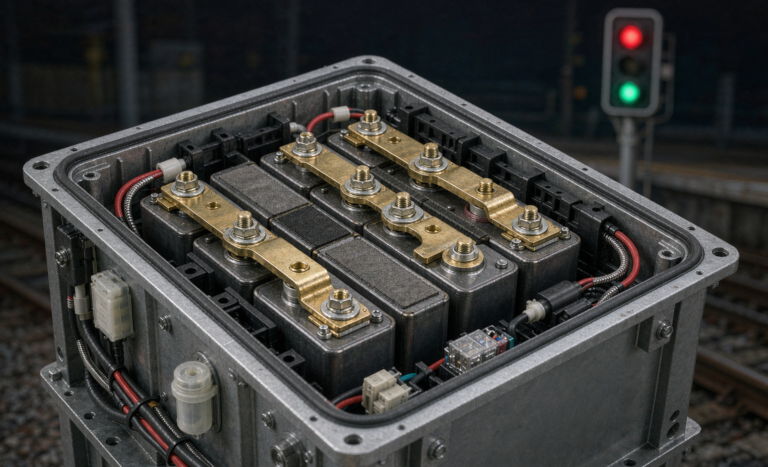
My sizing method is deliberately boring. I take the logged daily energy, divide by the usable depth of discharge window, and then check the result against the largest simultaneous load. For sodium-ion I hold the routine window between 10 and 90 percent state of charge, which preserves cycle life and keeps headroom for an outage. A farm using 80 kilowatt-hours a day therefore needs roughly 100 kilowatt-hours of installed capacity once inverter and wiring losses are included. If the milking peak is 30 kilowatts, the inverter and the pack must both be rated above that figure with margin for inrush.
I then apply a diversity factor. The vacuum pump, cooling compressor, and water heater rarely run flat out at the same second, but a cold morning can line them up. I size for that alignment rather than the average. Where the grid is unreliable, I add a second day of autonomy for milk cooling only, because losing cooling spoils product faster than any other outage on the farm. The result is a specification that reads as kilowatts and kilowatt-hours, not as a number of batteries.
Charging, Solar, and Tariff Behavior
Most dairy roofs are large, unshaded, and ideal for photovoltaic generation, and the milking load lines up reasonably well with daytime solar. I program the charger to prioritize direct solar supply, then refill the bank during the lowest tariff hours. Sodium-ion accepts moderate charge rates well, but below 0 degrees Celsius I limit charge current to roughly 0.05 to 0.10C and suspend charging above 70 percent state of charge unless the pack is warmed. That rule alone prevents the plating damage that shortens cold sheds’ battery life.
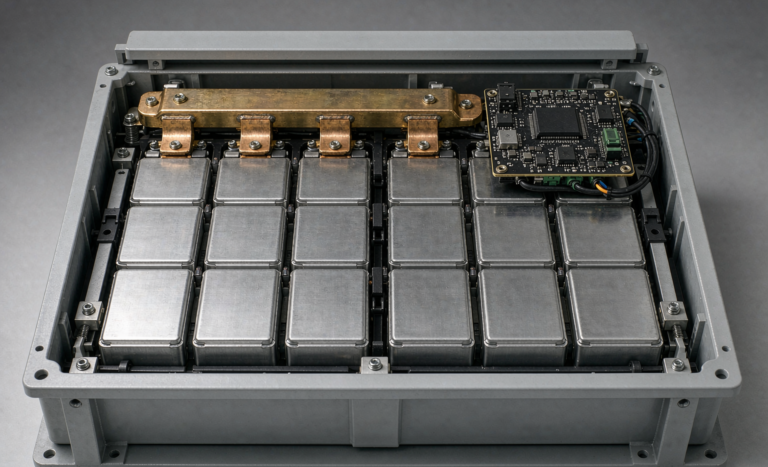
Balancing deserves attention on a farm bank that sits at partial state of charge for months. I set the passive balancing trigger around 30 millivolts of cell difference and taper the constant-voltage phase below 0.03C, closing the window at roughly 10 millivolts. A bank that is never allowed to reach a proper top balance drifts apart, and the weakest cell then decides when the whole system shuts down during a milking cycle. A monthly maintenance window to full charge, done with the load off, has solved more farm complaints than any hardware upgrade I have made.
Installation and Safety in a Washdown Environment
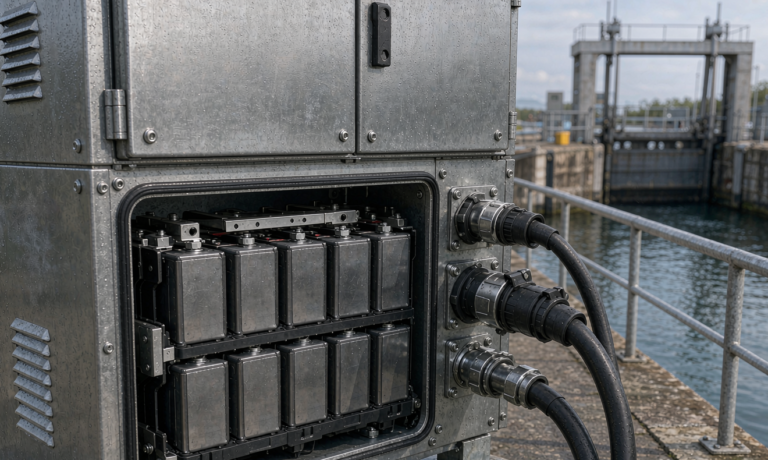
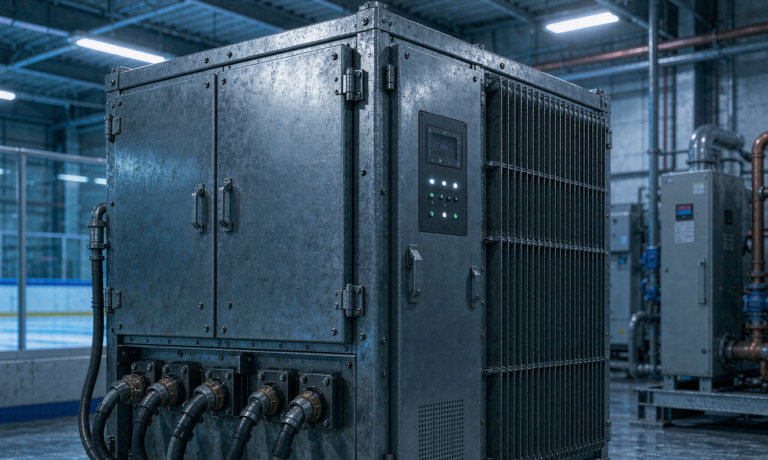
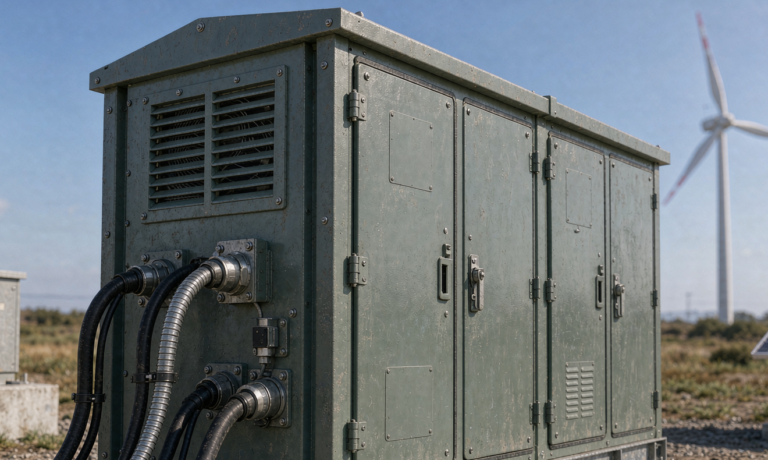
Dairy buildings hose down. Water, milk residue, and fertilizer dust are constant, and a standard indoor cabinet will not survive. I specify a sealed enclosure with an ingress protection rating of at least IP54 for a dry plant room and IP65 where direct washdown occurs, with blank solid matte faces and no open instrument windows. The cabinet sits off the floor on a raised plinth, away from the milk cooling condenser, with clear airflow on all sides. Cable glands face downward and every conduit is sealed against wash water.
Fire behavior is a genuine advantage here. Sodium-ion chemistry has a higher thermal runaway onset temperature and releases less heat than nickel-based lithium cells, which matters in a building full of dry bedding and feed. I still install a ground fault detector, a DC isolator within reach of the door, and a clearly labeled emergency shutdown. The pack is never placed inside the milking parlor itself or directly under a feed store. These are layout decisions, not product features, and they are the ones a certifier will ask about first.
Standards, Transport, and Compliance
Any bank arriving on a farm has traveled as dangerous goods, so UN 38.3 test summary documentation should be in the handover folder. For a stationary agricultural installation I work to IEC 62619, which covers industrial and stationary secondary cells and includes the overcharge and short-circuit requirements that matter here. IEC 62133-2 is a portable-cell standard and is not the right certificate for a fixed farm bank; I see it quoted wrongly in quotations surprisingly often. In North America, UL 9540A fire test data is increasingly requested by insurers before they will cover a battery room.
I also ask for the cell manufacturer’s cycle-life data at the actual depth of discharge we will use, not the optimistic 100 percent figure in the brochure. A sodium-ion dairy farm battery is a fifteen-year asset in most of my projects, and the warranty should be written against commercial cycling, not against a laboratory bench. Keep the transport documents, the cell traceability record, and the commissioning report together in one folder by the distribution board.
Cost, Cycle Life, and What I Tell Farmers
On a pure cost-per-kilowatt-hour basis, sodium-ion is not always the cheapest cell on the shelf today. It becomes the economical choice when I add the cost of thermal management, the cost of fire-rated separation, and the cost of replacing a lead-acid bank every four years. For a farm that cycles daily and wants a decade of service without a climate-controlled room, the calculation usually lands in sodium-ion’s favor. I present it as a total cost of ownership table, with replacement events shown explicitly.
My closing advice is always the same: log the load first, then buy the battery. A verified profile turns a vague request for a bigger battery into a specification that an integrator can actually quote. When the numbers are on the table, the right chemistry becomes obvious, and the discussion moves from brand names to runtime, peak power, and what happens at three in the morning when the feeder trips. That is the conversation worth having.
Frequently Asked Questions
How much battery capacity does a dairy farm need?
It depends on measured daily energy, not herd size alone. A 120-cow parlor often uses 40 to 120 kilowatt-hours per day. Divide that by the usable state-of-charge window, roughly 80 percent for sodium-ion, and add capacity for inverter losses and at least one day of milk cooling autonomy if the grid is unreliable.
Can sodium-ion batteries run milk cooling compressors?
Yes, provided the pack and inverter are rated for the compressor’s inrush current, which can be four to seven times running current. Size on peak kilowatts as well as daily kilowatt-hours, and verify the voltage sag at the compressor terminals during a start test.
Are sodium-ion batteries safe around livestock buildings?
They are a good fit because sodium-ion cells have a higher thermal runaway onset temperature and can be stored at zero volts. Even so, install the bank in a sealed, ventilated enclosure outside the parlor, with a DC isolator, ground fault detection, and clear separation from dry feed and bedding.
What temperature range suits a farm battery room?
Sodium-ion tolerates cold and heat better than LFP, but I aim for a shaded enclosure that stays between freezing and roughly 40 degrees Celsius. Below 0 degrees Celsius, limit charge current to about 0.05 to 0.10C and suspend charging above 70 percent state of charge unless the pack is warmed.
How long will a sodium-ion dairy battery last?
With a 10 to 90 percent state-of-charge window, monthly top balancing, and a moderate temperature environment, I plan on a service life well over a decade. Ask the supplier for cycle-life data at your actual depth of discharge rather than the headline 100 percent figure.
Can I combine solar panels with a sodium-ion dairy battery?
Yes, and dairy roofs are usually excellent solar sites. Program the charger to serve the milking load directly from photovoltaic power first, then refill from the grid during the cheapest tariff hours, with the cold-temperature charge limits applied.
Further Reading
References