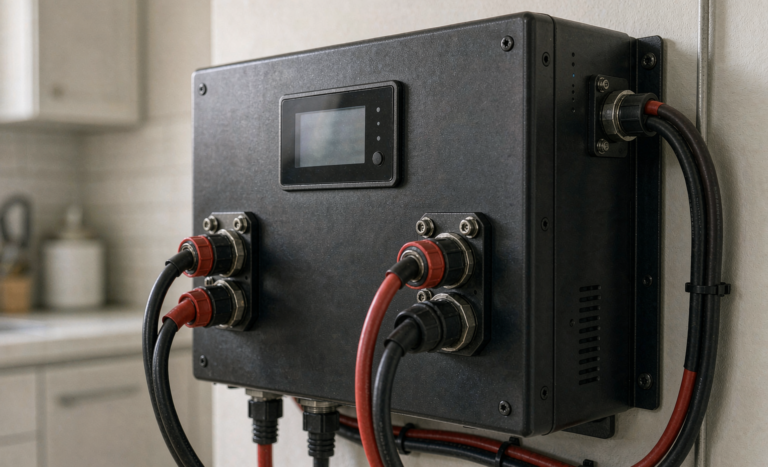
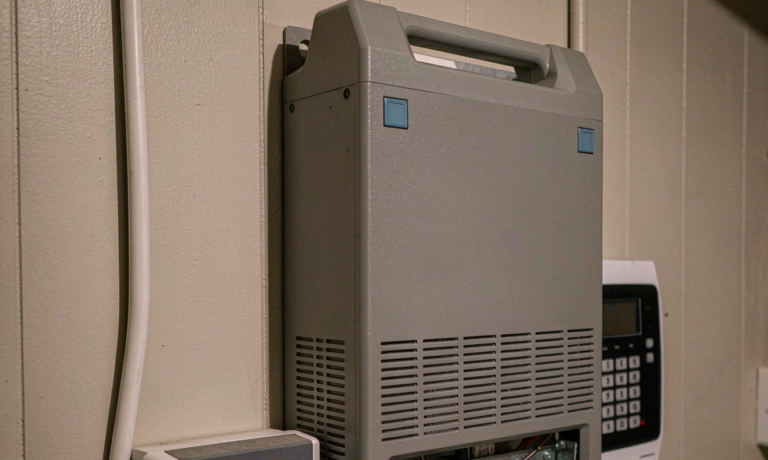
Home Battery Backup Gateway and Transfer Switch
When homeowners ask me to specify a home energy storage system, they almost always focus on battery capacity and inverter rating. In my experience as a lithium battery engineer, the component that actually decides whether the lights stay on during an outage is the backup gateway and the transfer switch. A home battery backup gateway is the brain that disconnects the premises from the utility grid and rides through on stored energy, while the transfer switch is the listed hardware that performs the physical changeover. Get either one wrong and you end up with a system that passes commissioning but fails the first real storm. This guide walks through how the two work together, how to size them, and the codes that govern the install.
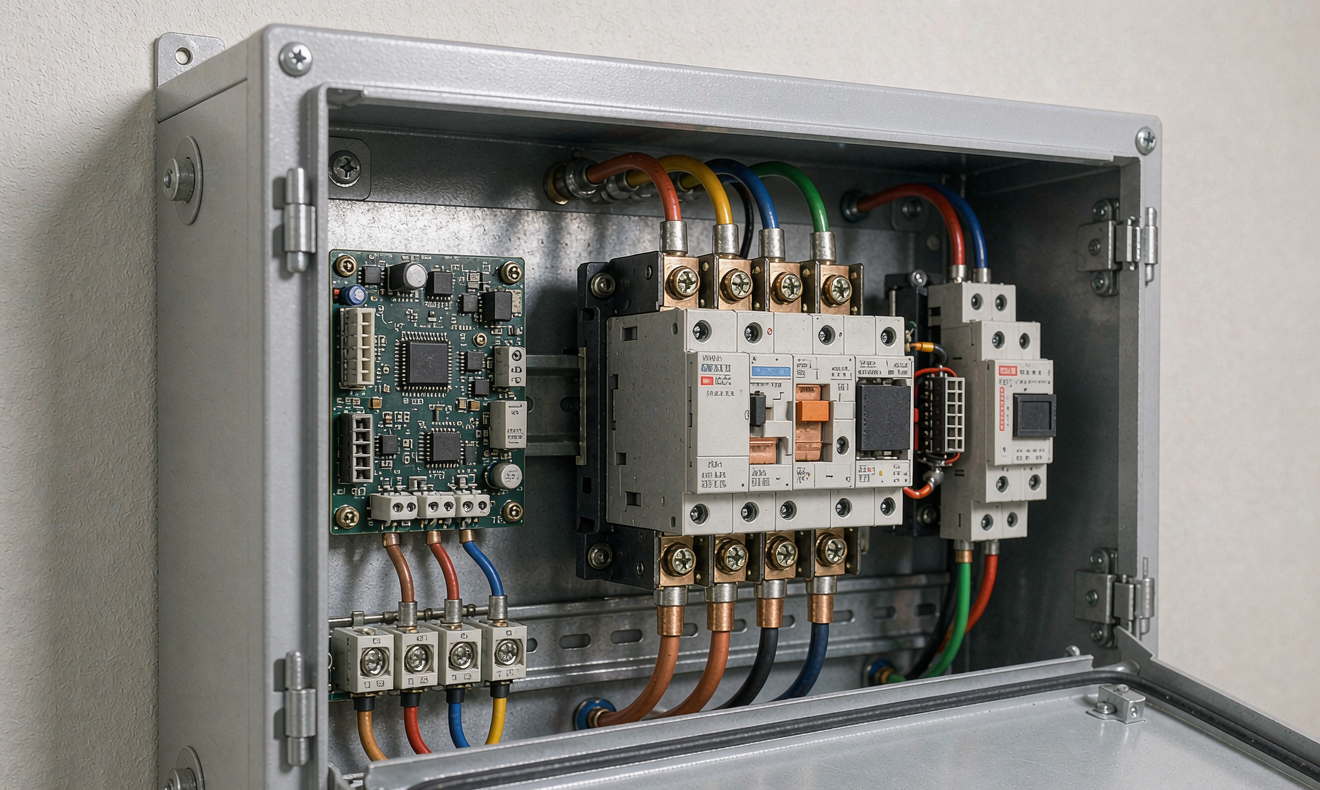
What a Backup Gateway Actually Does
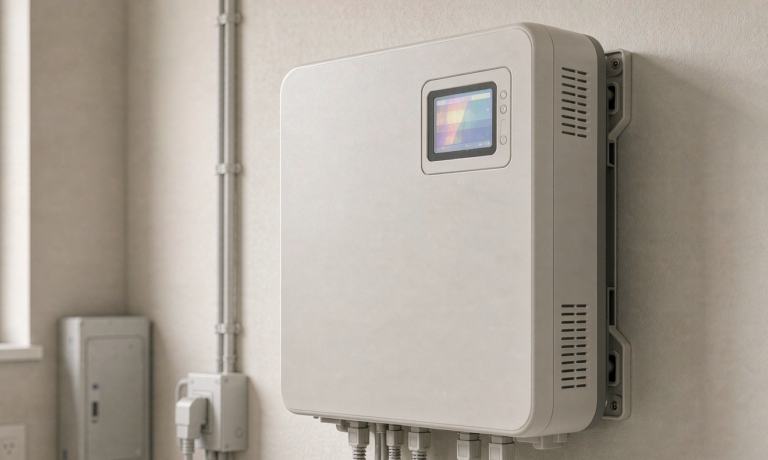
A backup gateway sits between your home energy storage inverter and the utility service. Its job is to sense grid voltage and frequency, then open the connection to the grid the moment those values fall outside the safe window defined by IEEE 1547. In a typical lithium battery based system, the gateway monitors the point of common coupling and, on a grid fault, isolates the premises in well under a second. The gateway also sequences the reconnect: it will not re close to the grid until voltage, frequency, and phase angle have been stable for the utility mandated dwell time, often five minutes for anti islanding recovery.
I treat the gateway as the safety officer of the installation. It prevents back feed onto a dead line, which is a life safety issue for utility workers, and it protects the inverter from out of phase reclosure. A quality home battery backup gateway also logs every transition so you can see how often the system has carried the load and for how long. When customers compare quotes, the gateway firmware and its UL 1741 listing matter as much as the battery cells themselves, because a weak controller will drop the load at the worst possible moment during a real outage.
Automatic vs Manual Transfer Switches
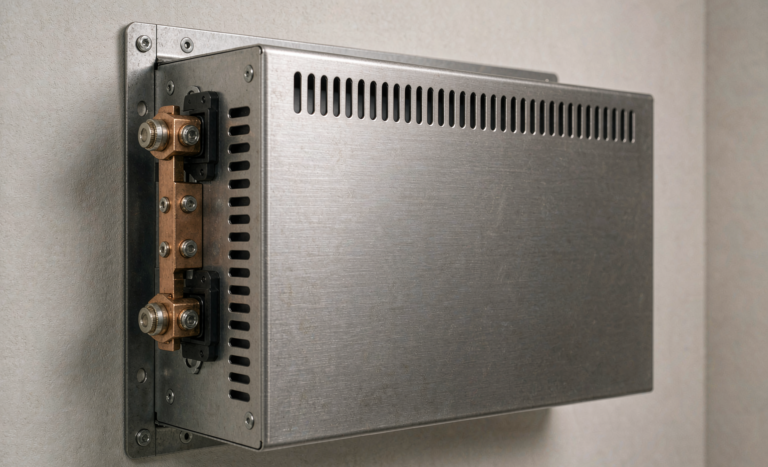
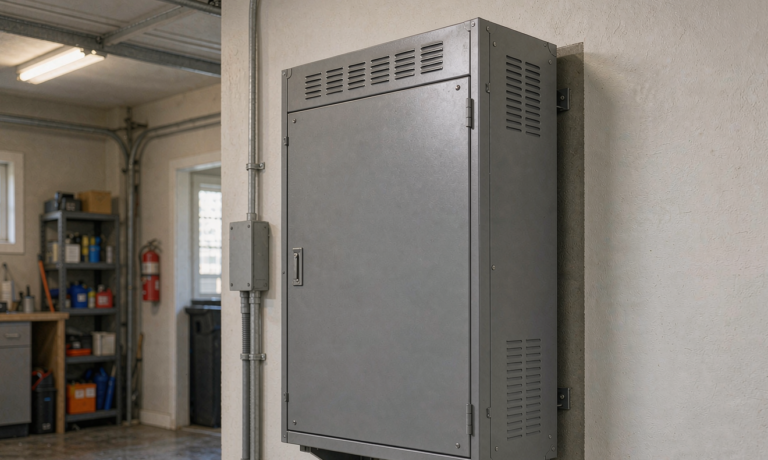
The transfer switch is the device that moves your circuits from grid power to battery power. A manual transfer switch requires a person to throw a handle, which means minutes of darkness before restoration. An automatic transfer switch, or ATS, does this on its own the instant the gateway signals a grid loss. For most home energy storage users I recommend an ATS rated to UL 1008, because that standard verifies the switch can make and break its rated current under fault conditions and survive thousands of operations over its service life.
Open transition ATS models break the grid contact before making the battery contact, so there is a brief power gap of roughly one to ten seconds. Closed transition designs overlap the sources for fifty to one hundred milliseconds, which keeps sensitive electronics alive but requires careful neutral handling. For a custom battery solution feeding a whole house, I usually specify open transition to keep the wiring simple and the cost reasonable, reserving closed transition for sites with medical equipment or server loads that cannot tolerate any interruption at all. Sizing the switch starts with continuous amperage rather than battery energy: a 10 kWh home battery delivering 5 kW across a split phase draws about 21 amps, so I step up to a 60 amp UL 1008 switch to cover motor inrush from a well pump or air conditioner.
Sizing the Transfer Switch for Your Home Battery
Sizing is the step I see done wrong most often. Engineers size to energy, but the switch must be rated for current and for the surge it will see. Start with the inverter continuous output: a 7.6 kW inverter on split phase is about 32 amps, so choose a switch with at least that rating plus headroom. Then add the largest motor load on the critical bus. A 1.5 horsepower well pump can pull over 60 amps at start, and if that pump is on the backed up circuit the switch must clear that inrush without welding its contacts shut.
I also account for the lithium battery discharge capability. A high rate cell pack can deliver far more than the inverter nameplate for a few seconds, so the limiting device is usually the inverter, not the battery. When I design a custom battery solution, I match the switch ampacity to the inverter breaker and keep the critical load subpanel under that number with a comfortable margin. Oversizing the switch is cheap insurance; undersizing causes nuisance trips during the exact outage you bought the system to survive. A battery can run without a transfer switch only when it feeds a separate critical load subpanel through its own breaker, or when it is a portable unit plugged into nothing.
NEC and UL Compliance You Cannot Skip
Three rule sets govern this work in the United States. NEC Article 702 covers optional standby systems like a home battery backup, Article 706 covers energy storage systems, and Article 710 covers stand alone systems. The transfer switch itself must carry a UL 1008 listing, and the inverter must be listed to UL 1741 with the SA suffix for supply side interconnection where applicable. IEEE 1547 sets the interconnection behavior with the utility and is enforced by the serving utility before permission to operate.
From the field, the most common failure is a switch installed on the load side without the service rating it needs, or a neutral that is not switched when the source changes. I always verify that the ATS switches both line and neutral for a separately derived system, and that the grounding electrode conductor remains bonded to the main panel only. Skipping these details is how a home energy storage install passes a quick visual but fails a real inspection, and a failed inspection means the system cannot be energized until it is corrected. In most jurisdictions the gateway and switch are permitted as part of the energy storage permit, with the inspector asking for the UL listings, the wiring diagram, and the anti islanding settings on record.
Wiring Topology: Critical Load Subpanel vs Whole House
There are two ways to wire the changeover. The first is a critical load subpanel, where only essential circuits such as the refrigerator, internet, and a few lights are moved onto the backed up bus. This keeps the transfer switch small and the lithium battery runtime long. The second is a whole house transfer, where the ATS sits at the service entrance and feeds everything, which needs a much larger switch and a larger home battery to deliver acceptable runtime.
For most of the systems I commission, I start with a critical load subpanel and a 30 to 60 amp transfer switch, because it is the most cost effective path and it showcases the home energy storage value immediately. A whole house approach is justified only when the customer has electric heat or a well pump that cannot be easily separated. Either way the backup gateway manages the logic; the switch only performs the move the gateway commands, so the two must be commissioned together as one system. If your existing inverter already has backup terminals and a gateway, you can add a listed transfer switch and move selected circuits to a critical load subpanel without replacing the battery.
Commissioning and First Transfer Test
Commissioning is where theory meets reality. I start with a no load test: force a grid loss at the gateway and confirm the ATS moves to battery within its rated time, then confirm it returns to grid after the dwell period. Next I run a staged load test with the refrigerator and a resistive heater to verify the switch carries current without excessive voltage drop. Finally I check the neutral switching and the grounding with a meter, because those are the items inspectors flag most often during a final walkthrough.
A good first transfer test also logs the event in the gateway so you have a record. I tell customers to repeat the test every six months, because contacts age and firmware changes. A home battery backup gateway that is exercised regularly will behave predictably when the grid actually fails, and that reliability is the whole point of the install. Treat the annual test like a smoke detector check, and the system will be ready the day you need it most.
How do I size an automatic transfer switch for a 10 kWh home battery?
Size the switch by continuous amperage, not battery energy. A 10 kWh home battery delivering 5 kW across a 120 or 240 volt split phase draws about 21 amps, so a 30 amp switch is the minimum. I normally step up to a 60 amp UL 1008 switch to cover motor inrush from a well pump or air conditioner, which can reach three to seven times running current for a few cycles during startup.
Can I use a home battery without a transfer switch?
Yes, but only in two limited cases. If the battery feeds a separate, permanently wired critical load subpanel through its own breaker, a transfer switch is not required because the loads are already isolated. And a portable power station plugged into nothing can run loads directly. For any permanent whole house connection to the main panel, a listed transfer switch or gateway is required by code.
Does a backup gateway need a separate permit?
In most jurisdictions the gateway and transfer switch are permitted as part of the energy storage system permit, not separately. The inspector will want the UL listings, the wiring diagram, and the anti islanding settings on record. Plan for a dedicated review if the switch is service entrance rated, because that work touches the utility interface and often requires the utility to witness the final test.
Can I add a transfer switch to an existing home energy storage system?
Often yes. If your existing inverter already has backup terminals and a gateway, you can add a listed transfer switch and move selected circuits to a critical load subpanel without replacing the battery. If the original system was grid tied only with no backup path, you will need a hybrid inverter or a gateway retrofit before a switch can do anything useful during a grid outage.
What is the difference between a backup gateway and a transfer switch?
The gateway is the control and sensing brain that decides when to disconnect from the grid and manages safe reconnection, while the transfer switch is the listed mechanical device that physically moves the load between grid and battery. The gateway thinks, the switch acts, and both must be correctly listed and sized for a safe home energy storage installation that passes inspection.
How long does a transfer switch take to move from grid to battery?
A manual switch takes minutes because a person must act. An automatic open transition switch typically moves in one to ten seconds, a closed transition switch in fifty to one hundred milliseconds, and a static transfer switch in under five milliseconds. For ordinary homes, the one to ten second window of an open transition ATS is perfectly acceptable for almost all loads.
Further Reading
References