Battery Solution for Harvesters and Combines
When a farmer calls me in late summer asking why his combine keeps throwing low voltage faults during the grain rush, the answer is almost never the battery chemistry. It is the duty cycle. As Karl Huang, Senior lithium battery Engineer at Horizon Power, I have spec’d battery solutions for harvesting equipment across three continents, and the pattern repeats: a combine harvester or forage harvester asks for a short, violent burst of power, then idles, then bursts again, for fourteen hours straight. This article walks through what a real battery solution for harvesters and combines must survive, the numbers we design to, and the mistakes that strand machines at the worst possible moment.
Why Harvesters and Combines Break Ordinary Batteries
A passenger car battery is sized for cranking and a gentle alternator recharge. A harvester battery lives a harder life. The threshing rotor, the separation concaves, the feeder house, and the cleaning fans can pull several kilowatts the instant the crop load spikes, and they do it thousands of times a day. A conventional lead acid or a lightly built lithium battery solution ages fast under that profile because it is the depth and rate of those pulses, not the average draw, that drives wear.
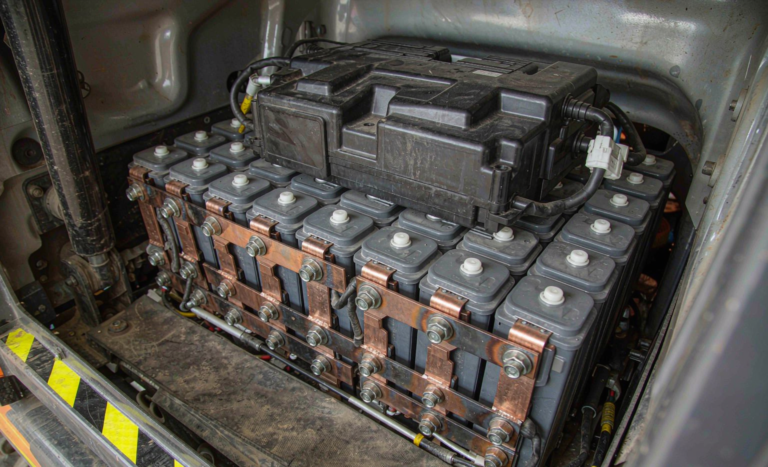
The second killer is vibration. A combine transmits low frequency shaking through every mount, and a battery pack that was fine in a lab will rattle its own cells loose in a field. The third is chaff. Fine dust works into connectors and breather vents, and within a season it turns a clean terminal into a resistive, heat generating mess. Any battery solution for harvesters and combines has to treat all three as design inputs, not afterthoughts.
Peak Power Demand During Threshing and Separation
The headline number on a harvester battery is not capacity, it is pulse power. A mid size combine with a rotor and a cleaning fan can demand 8 to 15 kW of auxiliary electrical load on top of the hydrostatic or electric drive during a heavy crop pass, and that demand arrives as a step change in under a second. We size the pack so its terminal voltage stays above the inverter cutoff at the end of a long day, not just when fully charged.
In practice this means a 48 volt or 80 volt lithium battery pack with a continuous rating of 1.5 to 2.0 C and a ten second pulse rating near 5 C. For a forage harvester with a flywheel and a chopping drum, the pulse can be higher still. We model the worst hour of the day, not the average, because the battery solution that survives the average day fails on the wet, heavy, clogged rotor day that actually matters.
State of charge management matters here. We keep the pack between 20 and 90 percent during operation so the cells never hit the high resistance knee at the top or the voltage cliff at the bottom. That window alone adds roughly a third more usable life compared with running a pack from full to empty.
Dust, Vibration, and Ingress Protection in the Field
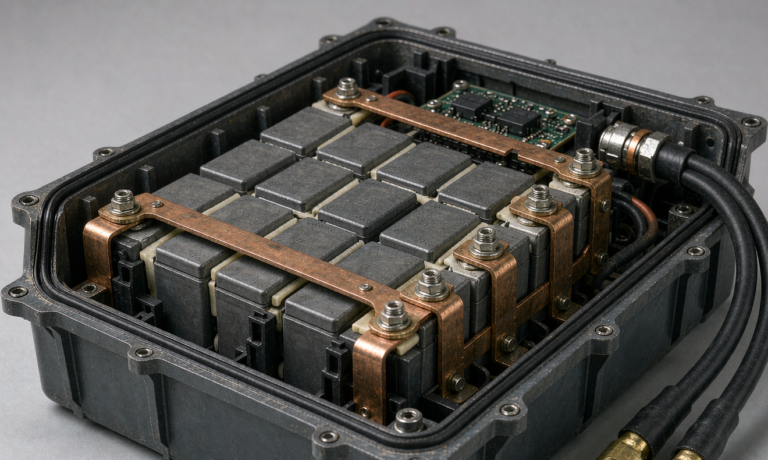
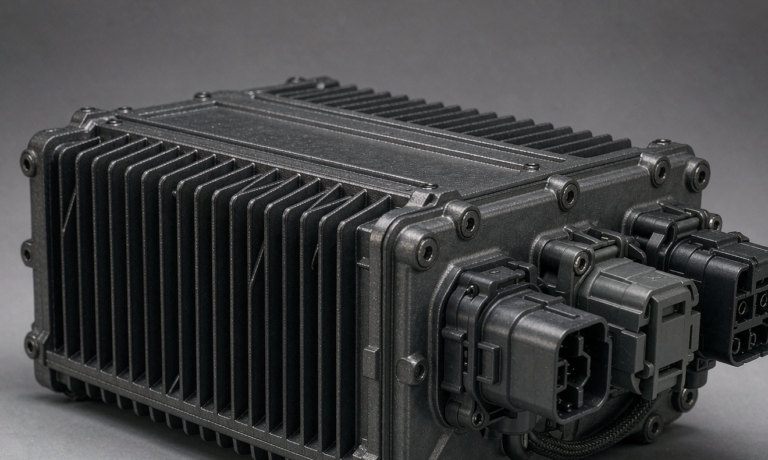
Ingress protection is where most off the shelf battery packs fail a harvester. We specify a minimum of IP65 for the enclosure, and IP67 for any pack mounted low on the machine where chaff and standing water collect. That is not a marketing number; it is what keeps fine abrasive dust off the busbars and the battery management unit.
For vibration we qualify to a profile derived from IEC 60068-2-64 random vibration, plus the repetitive shock of field travel. Every cell is potted or held in a compression fixture so it cannot shift, and every connector is latched and sealed. A harvester battery that passes our in house shake table at 5 to 500 Hz for eight hours is the only kind we ship, because the field is far less forgiving than the test.
Chaff management is unglamorous but vital. We route breather and balance vents to a filtered plenum, and we avoid exposed horizontal surfaces where dust settles. After a season we have pulled packs that looked clean outside yet had a millimeter of fine dust inside a poorly sealed competitor unit, and that dust is what started the thermal event we were called to investigate.
Thermal Management Across a Long Harvest Day
A harvest day runs from first light to past dusk, often in 30 degrees Celsius heat with the pack buried inside a hot machine bay. A lithium battery solution for harvesters and combines needs passive or liquid cooling sized for the worst case, not the brochure case. We budget for a sustained 40 to 45 degrees Celsius pack temperature and design the cells to stay within their safe window even when the ambient is brutal.
We keep peak cell temperature under 55 degrees Celsius and limit the gradient between cells to under 5 degrees Celsius, because uneven cooling is what quietly ages one cell while its neighbors look fine. For high power forage and combine applications we use aluminum cold plates bonded to the module, and we monitor cell temperature at three points rather than trusting a single sensor on the busbar.
Cold starts are the other extreme. In early season frost a pack at 5 degrees Celsius delivers less power and charges slower, so we pre condition the pack with a short low current warm up before the heavy threshing load arrives. It costs a little energy but prevents the voltage sag that strands a machine halfway through a field.
Battery Sizing and Seasonal Duty Cycles
Harvesting is seasonal, and that changes the battery math. A harvester battery may sit idle for eight months a year, then run fourteen hour days for six weeks straight. We size capacity for the peak day with a margin, but we also design the storage behavior so the long idle does not destroy the pack.
For storage we recommend 30 to 50 percent state of charge and a cool, dry location, then a balancing and capacity check before the season starts. A pack left at full charge through a hot summer will arrive at harvest with measurably less life than one stored correctly. We have measured calendar fade of several percent per year at 80 percent state of charge and 40 degrees Celsius, versus under one percent at 40 percent and 25 degrees Celsius.
The sizing tool we hand to OEMs converts the machine’s peak power, the daily energy per hectare, and the number of operating hours into a pack kilowatt hour and a required pulse rating. Most mid size combines land in the 10 to 20 kilowatt hour range for the auxiliary and drive battery solution combined, with the exact number driven by whether the header and separator are electrified.
Certification and Field Service Reality
Agricultural machinery batteries are not exempt from the rules that govern industrial lithium packs. We build every harvester battery solution to UN38.3 for transport, and to IEC 62619 plus UL 1973 for the stationary and motive industrial cells inside. The battery management unit logs faults so a dealer can read why a pack dropped out instead of guessing.
Field service is where the custom battery solution earns its keep. We standardize connectors and keep a documented repair path so a damaged module can be swapped in the field rather than shipping the whole pack back. Training the local dealer to read state of health from the battery management unit cuts downtime from days to hours during the narrow harvest window.
Finally, we never ship a harvester battery without a documented end of life plan. Cells that have lost 20 percent capacity still have value in lower demand roles, and a responsible second life path keeps the pack out of landfill and keeps the farmer’s total cost of ownership honest.
Frequently Asked Questions
What battery voltage do modern harvesters and combines use?
Most modern harvesters and combines run a 12 volt starter system alongside a higher voltage pack for auxiliary and drive loads. The lithium battery solution we build for harvesting equipment is typically 48 volt or 80 volt, chosen to match the inverter and motor ratings while keeping cable size and current manageable.
How do you protect a harvester battery from dust and chaff?
We seal the enclosure to at least IP65, route all vents through a filtered plenum, and avoid exposed horizontal surfaces where fine dust settles. The battery management unit and busbars sit inside the sealed section, and every external connector is latched and gasketed so chaff cannot work into the power path.
Can a combine run its full day on a single battery charge?
For auxiliary and partial drive electrification, yes, a properly sized combine battery covers a full fourteen hour harvest day within its 20 to 90 percent operating window. Fully electric threshing and separation is still niche, and for those we size the pack to the worst hour of the day plus a margin rather than the daily average.
What certifications apply to agricultural machinery batteries?
A compliant harvester battery solution is built to UN38.3 for transport and to IEC 62619 and UL 1973 for the industrial cells and pack. We also qualify vibration and ingress protection to IEC 60068-2 profiles adapted for field conditions, because agricultural duty is harsher than most industrial standards assume.
How should a harvester battery be stored between seasons?
Store the pack at 30 to 50 percent state of charge in a cool, dry place, then run a balance and capacity check before the season. Avoid leaving it at full charge through a hot summer; we measured calendar fade of several percent per year at 80 percent charge and 40 degrees Celsius, versus under one percent at 40 percent and 25 degrees Celsius.
Conclusion
A battery solution for harvesters and combines is not a car battery with a different label. It is a pulse power device that must survive dust, vibration, heat, and an idle season, then deliver full output on the one day the crop cannot wait. At Horizon Power we design to the worst hour of the worst day, certify to UN38.3, IEC 62619, and UL 1973, and build a service path so the pack keeps working through the narrow harvest window. If you are specifying harvesting equipment power, start from the peak power and the duty cycle, and let the capacity follow.
Further Reading
References